How-To Guides & Tutorials
Packing toiletries for TSA screening: check each container
Check each ordinary toiletry container under TSA liquids rules, distinguish a travel organiser from the screening bag and read BSMT INC and NOSGQ claims accurately.
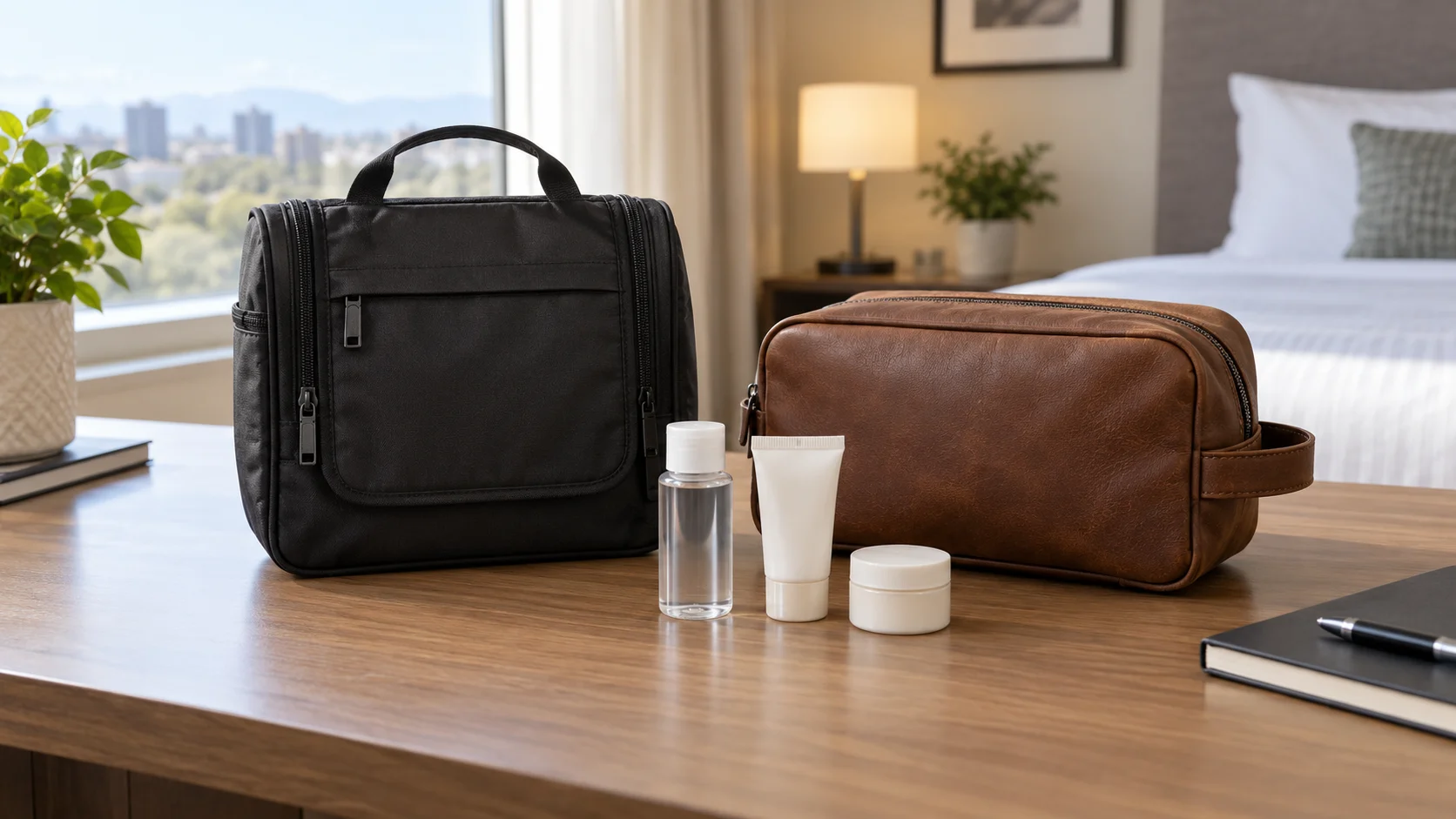
Packing toiletries for TSA screening begins with the actual items and their containers. A travel organiser can keep things together, but its pockets and material do not establish that the contents meet a checkpoint rule. Check the contents first, then decide what job the organiser will do during the trip.
This is a preparation sequence for ordinary toiletries under the US Transportation Security Administration's actual Liquids, Aerosols, and Gels Rule. It does not establish another country's requirements, an airline's baggage allowance or a security officer's eventual screening decision. Medications and infant or child nourishment have separate exemption references that need their own review when relevant.
Identify the items before choosing the bag
Set out the particular toiletries you intend to take and read the container information. Keep each item with its own label while deciding where it belongs. An ordinary bathroom kit can contain several types of contents. The TSA page expressly covers liquids, aerosols, gels, creams and pastes.
Do not limit the check to products whose label uses the word liquid. The agency names creams and pastes too. Read the actual item description before assuming that a cream belongs outside this ordinary-liquids preparation. This guide does not classify every possible cosmetic, medical preparation or grooming accessory from a photograph or marketing name.
Set aside any item whose rules you cannot establish from the applicable official information. Use the item's precise identity when asking about its requirements. A waterproof pocket or leather exterior supplies no missing information about the contents or their screening treatment.
Read carry-on liquids container limits per item
For carry-on liquids container limits, the TSA page states travel-sized containers of 3.4 ounces, or one hundred millilitres, or less per item. Keep that limit attached to each container. The source is not describing an aggregate allowance obtained by adding together several container labels.
Read the container-size information rather than making a permission claim from how much product appears to remain. The page directs items in containers larger than 3.4 ounces or one hundred millilitres into checked baggage. This account provides no exception allowing an oversized ordinary-toiletry container merely because it is nearly empty.
A seller's travel-sized wording does not replace that check. It may describe a bottle, a storage compartment or the intended use of a kit. Establish the actual container information for the item you intend to bring. Neither selected organiser offer supplies a receipt showing that every bottle a traveller might put inside meets the stated limit.
If a label is unclear, keep the question unresolved until you have suitable information about that container. Do not write a new capacity claim from its apparent height or its fit inside a pocket. A product photograph is not a measured-volume specification, and this guide supplies no container-calibration or decanting procedure.
Separate the toiletry bag and screening bag roles
For the toiletry bag and screening bag distinction, TSA's rule page permits a quart-sized bag of the listed contents through the carry-on checkpoint. It says placing those items in the small bag and separating them from carry-on baggage facilitates screening. Keep that actual preparation requirement separate from the general organiser purchase.
TSA's actual frequently asked question adds that each passenger is limited to one quart-size bag of liquids, gels and aerosols. Keep the allowance with the passenger, rather than assigning a new allowance to each compartment or each organiser carried. The two product offers below do not change that passenger limit.
That FAQ names toothpaste, shampoo, conditioner, mouthwash and lotion as common travel items that must comply. Those examples make the review concrete: toothpaste and lotion belong in the check alongside a bottle labelled shampoo. Use the actual item's information and the applicable rule when a different preparation raises a question.
Neither selected organiser is identified as a quart-sized screening bag in its actual description. An outer bag may hold personal supplies during a trip while a different bag performs the particular screening role. Confirm the actual arrangement instead of assuming every compartment in a product called a toiletry bag is an independently permitted liquids allowance.
The word pocket does not define the capacity of the whole organiser. A waterproof-pocket claim also does not establish a quart-size specification. Read each statement with the component it describes. If you need the organiser to accommodate the prepared screening bag, obtain the relevant actual dimensions rather than inferring a fit from a general travel-accessories category.
Prepare the screening contents so you can identify the small bag that contains them. The source's separation statement concerns that bag and the carry-on baggage. It does not provide a detailed layout for either selected organiser or promise that an arrangement of internal pockets will be accepted as the required bag.
Keep BSMT INC's actual Walker description with its identity
The BSMT INC Walker toiletry bag offer identifies model BM0102047AN298, SKU 18570556147 and UPC 850066014004. The actual catalog brand is BSMT INC, even though the public URL contains Bagsmart wording. Preserve the catalog identity when asking about the selected item.
The description names a Black Walker 9.1-inch bag sold as one each. It provides no complete three-dimensional measurement or quart-capacity statement in this account. Keep the stated size wording without converting it into a verified capacity or a guarantee that the packed organiser meets an airline's dimensional allowance.
Its account names a 360-degree hanging hook, a front cosmetics compartment for makeup brushes with a waterproof pocket, a zip-open front pocket, elastic bands for travel-sized bottles and vertical storage pockets. Those are attributed features of this item, without an independent packing or leakage test here.
The bag is described as water-resistant, while the waterproof wording belongs to a named pocket. Do not spread that pocket's description across the entire bag. Neither claim identifies what liquid contents are permitted at a checkpoint or guarantees that a particular bottle closure will contain a leak during travel.
Keep NOSGQ's sparse leather account equally limited
The NOSGQ leather toiletry bag offer has actual catalog brand NOSGQ. Its description calls the item a full-grain leather dopp kit and refers to artisans in India. This article has not independently verified the material, production account or seller's durability language.
The description is visibly incomplete: its durability sentence ends with the words “last a .” The missing wording remains unknown. It does not supply a lifetime, a warranty duration or evidence that a particular filled bag withstands a certain journey. Completing the sentence from expectations about leather would invent information.
The available account supplies no dimensions, litre or quart capacity, named internal layout or verified liquid-containment specification. Obtain the specific information that affects your packing decision. The public title's bathroom, shower and cosmetics wording does not fill those gaps or establish approval under the TSA rule.
Compare the disclosed features when considering these offers. BSMT INC names several compartments and a hook; NOSGQ's short account centres on its leather claim. Do not assign the Walker's elastic bottle bands or waterproof pocket to the NOSGQ item merely because both are sold for toiletries.
Review items that cannot follow the ordinary carry-on route
TSA directs ordinary items in containers larger than the stated limit to checked baggage. That instruction does not settle every other restriction an item could have. This guide concerns the liquids rule; it does not approve prohibited contents for checked baggage or establish an airline's dangerous-goods conditions.
Keep a larger container out of the ordinary carry-on preparation while you resolve its actual permitted route. A bigger organiser does not increase the stated per-container limit. Likewise, finding space beside other toiletries does not answer a separate question about whether an item is allowed in the chosen baggage.
The page separately links medications and infant and child nourishments under exemptions. A traveller with those needs should read the applicable exemption information. Their appearance as linked categories does not provide this article with complete exemption conditions or permission to classify an ordinary cosmetic as medication to avoid the limit.
Recognise the narrower duty-free exception
The same TSA page gives a conditional account for duty-free liquids above the ordinary limit on inbound international flights. It concerns purchases made internationally when travelling to the United States with a connecting flight. Preserve that itinerary condition; it is not a blanket permission for any large bottle bought during a trip.
The listed conditions include a transparent, secure, tamper-evident bag packed by the retailer, with no signs of tampering when presented to TSA. The original receipt must be present and the purchase within forty-eight hours. Those conditions describe that particular exception, without turning either selected toiletry organiser into the retailer's secure bag.
The contents still must be screened and cleared. TSA says an item that alarms or cannot be screened will not be permitted in carry-on baggage under that account. It recommends checked baggage for liquids, gels and aerosols above the ordinary limit even when they are in a secure, tamper-evident bag. Consult the full current rule for the actual journey.
Finish the item check while the labels are available
Review the prepared ordinary-liquids contents against the actual per-container information and the quart-sized-bag requirement. Keep an unresolved item question visible in your packing notes. A check completed for one labelled container does not establish the size or treatment of another item simply because their packaging looks similar.
Separate the agency rule from the organiser's specifications in your packing notes. The rule supplies the ordinary screening requirements. The selected product information supplies the bag's described material and features. Record the specific missing measurement or item classification you still need, so an answer can resolve the actual question.
Before ordering, check the quantity and selected identity in the intended transaction. The Walker account says one each; it does not describe a pair of organisers or an included quart-sized bag. NOSGQ's short description supplies no such included-bag statement either. Read the current order details and applicable return terms when a fit question could affect the purchase.
Keep other travel guides with their actual equipment
The actual Seahorse and KRYTJACZ camera-case guide discusses TSA Approved wording in the Seahorse title without treating it as confirmation of a specific travel outcome. Its protective shells and equipment dividers concern camera and lighting gear. They provide no liquids-container permission for a toiletry organiser.
The actual GAEMS and UPERFECT portable-monitor guide likewise keeps TSA-friendly language with the catalog claim about a gaming case. Its display, connection and packed-system questions concern that equipment. A travel-friendly label on a different kind of case does not specify the capacity of either toiletry bag selected here.
Allow for screening after the packing check
For the general rule too, TSA states that a liquid, aerosol, gel, cream or paste that alarms will require additional screening. A completed home packing check therefore does not guarantee immediate clearance. The organiser's seller supplies no authority to waive that further screening or promise a particular checkpoint result.
Keep your bag choice attached to its practical role in the trip. It may organise supplies at the destination or hold the separately prepared contents during transport. That role remains useful without describing the purchase as a TSA approval. Preserve the actual item questions alongside the agency's current requirements when finalising the packing plan.
Conceptual packing toiletries for TSA screening cover with generic inactive travel organisers and closed containers; no exact retail model, verified capacity or checkpoint approval is demonstrated.