Problem-Solving Articles
OXO Smooth Edge lid will not lift: check the release sequence
Separate side cutting, release and lid lifting in OXO’s actual Smooth Edge instructions, first matching the unit and keeping Lock & Go controls separate.
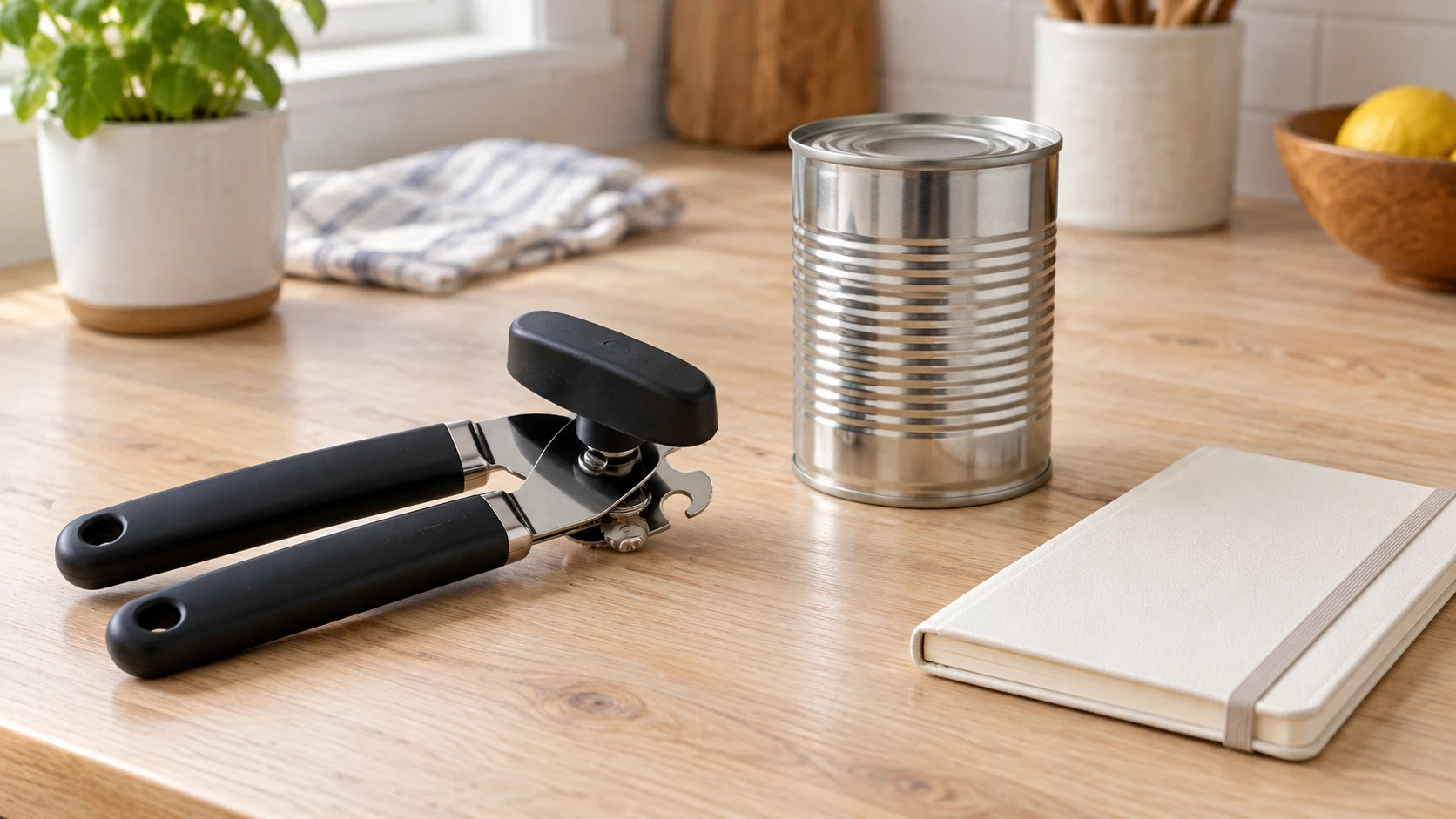
When an OXO Smooth Edge lid will not lift, separate the cutting stage from releasing the opener and lifting the lid. The manufacturer's instructions for its 1049953 Smooth Edge design include each of those actions. A lid remaining in place after turning the knob does not, by itself, identify a broken cutting wheel.
First establish that your actual opener matches that design and its instructions. This guide explains the documented sequence for that particular mechanism. It does not supply a universal method for every OXO opener, diagnose an unexamined tool or promise that following a sequence will resolve a damaged component.
Identify the Smooth Edge mechanism before applying its instructions
The actual OXO Good Grips Smooth Edge offer identifies a Black Tools & Gadgets opener, SKU 18697774950. Its description names a side-wind mechanism, soft-grip knob and non-slip handles. It also attributes an opening without sharp edges on the can or lid to the product.
That description does not print the manufacturer's 1049953 identifier or a complete operating method. Keep the supplied unit's own identification and instructions with it. A familiar brand and a similar outline do not independently establish that every instruction from another version applies.
OXO's actual 1049953 instruction document explains a side cut below the can edge, through the outside seal. Its diagram places that cut below the rim instead of on the upper face. The lid can therefore remain seated while the documented release and lifting steps still need attention. The manufacturer describes that arrangement; this article reports no personal opening test.
The relevant question is whether the correct sequence has reached its release and lid-removal stages on the applicable tool. Avoid treating the absence of a loose top-cut disc as sufficient evidence of failure. Establish the mechanism and its actual instructions before deciding what the remaining symptom means.
Read the smooth edge can opener release in sequence
For the smooth edge can opener release, OXO's 1049953 document starts with opening the handle and moving the tool against the can. Align the can's top with the curve on the opener's top, then close the handle to begin the cut. Turn the knob clockwise until resistance decreases. Its next instruction is one counterclockwise turn to release the lid, followed by opening the handle to release the can. The document then uses the lid pliers to lift the lid. Read the complete illustrated reference with the actual matching tool; those are separate cutting, release and removal stages.
Keep the turning directions and the one-turn release instruction attached to that reference. The article supplies no additional number of cutting rotations, force limit or workaround for a tool that will not behave as described. If the actual mechanism does not match the document, obtain its own instructions before applying this account.
A person stopping immediately after the cutting stage may still have release and removal to complete. Compare that possibility with what actually happened. It does not establish that every seated lid has been successfully cut, nor does it authorize pulling harder when the outcome remains uncertain.
Use the can opener lid pliers for their documented role
The can opener lid pliers have a separate job in the 1049953 illustration. Its final diagram shows the small gripping part at the lid edge and the lid being lifted. The document does not replace that part with a household knife, screwdriver or an improvised prying action.
Identify the depicted component on the matching actual unit before interpreting the last step. The large turning knob, the handle and the lid-gripping part serve different stages in this explanation. Use the component names when asking about a particular action.
Keep any difficulty precise. A tool that has not released from the can presents a different immediate question from one that is released while the lid remains seated. Explain which stage you reached when seeking help. That distinction lets the applicable instructions address the right action without guessing a mechanical fault from a broad statement that nothing works.
Repair requires its own applicable instructions. There is no blade removal, tightening, sharpening or replacement sequence here. The diagram supports understanding the documented lid-gripping stage. It does not certify the condition of the actual tool or establish that an improvised substitute is suitable.
Keep the Lock & Go offer with its own mechanism
The actual OXO Good Grips Lock & Go offer names locking arms and an easy-release button in its title. Its description attributes holding the can steady to those arms and describes a large knob, soft non-slip grip and stainless-steel cutting wheel. Some of that description repeats the same arms and grip statements.
Count the repeated arms and grip statements once. The easy-release title also leaves the complete button sequence for the actual supplied unit unanswered. Obtain the applicable Lock & Go instructions if that is the tool with the problem. The Smooth Edge document's counterclockwise release instruction is not transferred to this other offer.
Both descriptions concern manual can openers, but a shared kitchen task does not make their controls interchangeable. A buyer deciding between them should establish the opening and release arrangement they actually want, then read the matching instructions. A person troubleshooting an owned tool needs the identity of that tool, regardless of which retail page first appeared in a search.
Describe an unfinished stage before naming a fault
Imagine an adult called Mina explaining that she turned a Smooth Edge knob and expected the lid to fall away. This is a fictional example, not an observed customer result. The first useful question is which documented stages her matching unit has completed. A description of turning alone leaves the subsequent release and lid-gripping actions unanswered.
Now imagine a different report: the person followed the applicable sequence but still cannot obtain the described result. That remains an unresolved problem. It would be inaccurate to announce that the tool is repaired simply because the instructions have been read, or to declare a cutting wheel worn without examining the relevant evidence.
When asking for support, identify the actual model, the applicable document and the stage that differed from its account. Include the specific observation you can establish. A person helping you should not need to guess whether the difficulty concerns positioning, release from the can or lifting the lid afterward.
Keep a partial outcome partial. If the opener releases but the lid still cannot be removed as documented, describe both facts. If the original uncertainty concerned whether the cut completed, a later assumption about the lid cannot settle it. This guide supplies no alternative trial-opening routine or permission to use increased force as a diagnostic test.
Ask a question the actual model information can answer
If the supplied instructions are missing, ask which document belongs to the specific opener you received. Name the offer and any identifier on the actual unit or packaging. An answer confirming the right document settles an identification question; it does not report that someone has inspected your tool.
If the document is established but a stage remains unclear, ask about that stage using its own component names. For example, distinguish the turning knob from the part intended to grip the lid. Avoid combining a question about a release control with a request about a replacement part unless both are actually unresolved.
A support response about another model should remain separate. Ask for the applicable clarification before extending a sequence to differently arranged controls. This article offers no substitute force recommendation when that model-specific answer is still missing.
Keep wear and component inventory as separate questions
The actual Edlund No.1 wear and knife-limits guide concerns a different manual opener and its manufacturer-specific maintenance account. It distinguishes named residue removal from inspection and worn-part decisions. Its No.1 knife notice and the Hamilton Beach offer's sparse identity remain with those products.
That is relevant when a release difficulty has prompted an immediate claim that a blade must be sharpened. The Edlund discussion shows why a service decision needs its own applicable instructions. Its reversible knife, replacement count and parts identifiers do not describe OXO's Smooth Edge mechanism. No Edlund maintenance step is offered here as a remedy for the seated lid.
The actual Cuisinart and KitchenAid cutting-component guide separates the FP-9CF universal blade and storage hub from the KFP0920QWH's individually named blades and discs. Its practical connection is identifying which actual component performs the task under discussion. A bowl-size label cannot supply a cutting-tool inventory.
The same care with component names helps distinguish an opener's knob from its lid-gripping part. The processors' blades, bowl assemblies and storage arrangements provide no opener procedure. Their dishwasher statements likewise cannot establish a cleaning permission for either selected OXO offer.
Keep a possible purchase separate from the unresolved tool problem
If an equipment question leads to a purchase on republeq.com, check the actual order's payment options before planning to use USDT. A general cryptocurrency reference cannot establish which asset is offered for a particular transaction. Confirm the selected offer and the information still needed about its opening and release mechanism before treating payment as the next step. An available checkout method cannot identify the unit already in your kitchen or confirm which instruction sheet applies to it. If you are purchasing a replacement, keep the proposed product separate from the tool with the unresolved difficulty. The Smooth Edge description and the Lock & Go title disclose different controls; a payment preference cannot turn those into one mechanism. Ask the seller about the particular supplied item when a model or instructions question remains. Read the current delivery, return and warranty information for that transaction before paying. This guide provides no promised arrival date, refund decision or permission to try a cutting tool and return it afterward. An order confirmation also does not establish that an existing opener has been repaired. Keep any supplier response with the exact product and transaction it concerns. If another person is arranging the purchase, share the unresolved model question as well as the preferred payment option. A remembered crypto purchase supplies no current checkout confirmation. This discussion gives no wallet setup, token-transfer steps, network selection or assurance about transaction security. If the selected offer changes, check its own current checkout information. The purchase can remain undecided while you obtain the product-specific answer needed to choose a suitable mechanism. Resolve the product question before proceeding to payment.
Finish with the actual release outcome
If an OXO Smooth Edge lid will not lift, establish the actual unit and use its applicable illustrated sequence to distinguish cutting, release and lifting. The documented 1049953 arrangement gives those stages separate actions. Keep a remaining problem open when the actual result still differs.
Describe the point reached and obtain model-specific help for the unresolved step. A release explanation can correct an incomplete account without proving a damaged component repaired. Keep the other opener's controls and the unrelated maintenance instructions attached to their own equipment.
Conceptual OXO Smooth Edge lid will not lift cover with a complete generic inactive manual opener and a separate unopened can; no exact retail mechanism, cutting sequence or repair result is demonstrated.