Office Supplies & Stationery
Open-side vs open-end envelopes: read the flap position
Compare two declared six-by-nine envelope layouts without turning an opening label into a fit or seal guarantee.
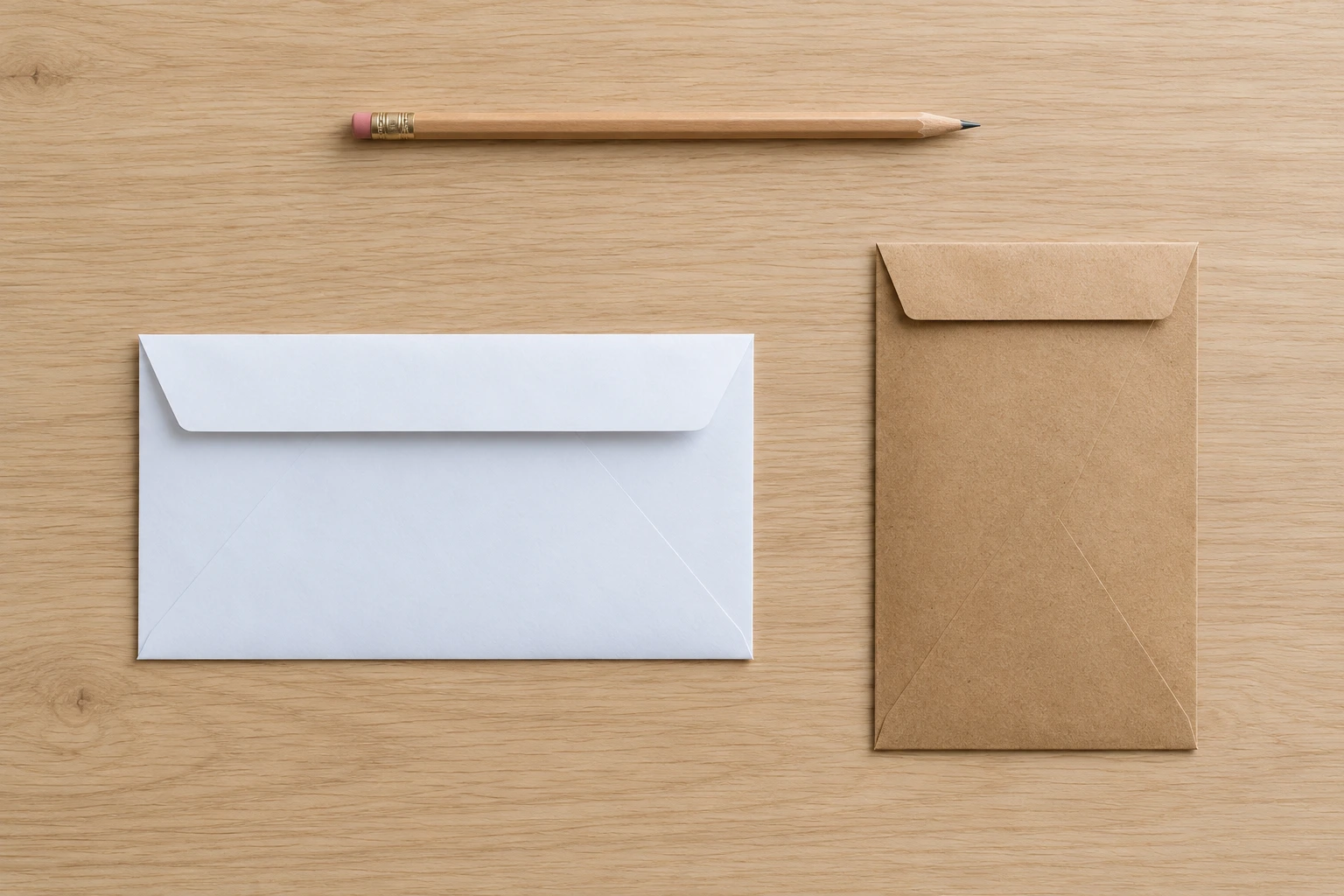
Open-side vs open-end envelopes raises an opening-layout question alongside a size question. Keep those questions separate when reading a product account. The opening edge is a relationship between the flap and the envelope body, rather than a direction fixed by the way a picture happens to sit on a screen.
This comparison concerns what the exact product accounts and their whole images establish. It does not turn every use of “booklet” or “catalog” into a universal naming rule. Nor does it establish the usable space inside either envelope, how a particular document enters it, or how securely its flap closes. Those are separate questions.
Separate the rectangle from its opening edge
A pair of stated dimensions describes the rectangular size presented in the listing. An opening-layout description concerns which edge carries the closure flap. Keep both facts in view when comparing offers. Two entries can repeat the same pair of numbers without supplying the same information about access to the enclosure.
Look at the whole depicted envelope, rather than just its cropped flap. Identify the longer pair of edges and the shorter pair. Then locate the flap in relation to that body. This gives you a relative description you can retain even when one gallery image is upright and another is turned sideways on the screen.
Avoid calling an edge “the top” as your only comparison note. The top of the screen changes when an image is rotated. “Flap along the longer edge of the body” describes a relationship between two parts of the depicted envelope. That is the useful relationship for this explanation, without making a measured opening-width claim.
Read the open-side example as a limited account
The open-side booklet envelope offer names 6-by-9-inch white envelopes, 24#, side seams and a box of 500. Its description repeats the title. The sole gallery image is a line illustration of a complete envelope with a flap along its visually longer edge. It is not a photograph of a measured sample.
The illustration helps locate the depicted flap. It does not establish the exact width of the usable mouth, the amount of flap overlap, or the clearance available to a thick insert. Treat its drawn proportions as layout evidence. Do not measure a distance on the screen and convert it into a specification the listing never supplied.
An opening-layout label should not fill an unanswered closure field. A flap outline cannot tell you whether an adhesive must be moistened, whether a release strip is present, or which closing directions apply. Keep an unstated method unanswered until applicable package information or the seller supplies it. A useful layout description is not an adhesive instruction.
Read the open-end example beside its photograph
The Minas 6-by-9 catalog/open-end envelope offer identifies brown kraft paper, 24lb, a gum flap and 500 per box. Its description also claims USA origin. The gallery shows whole envelope fronts and backs, with a flap along the visually shorter edge. The printed quantity overlay is a claim about the offer, not a counted delivery.
When an account supplies a closure label, keep it attached to that item. It does not fill a blank field in another offer. Likewise, paper color and a visible arrangement do not supply a test of seal strength or an observed result with your documents. Separate what the text names from what a photograph can actually show.
This comparison performs no paper-weight conversion and treats no weight label as a measurement of thickness, rigidity or load capacity. Even similar-looking labels would not establish that two physical envelopes behave identically when filled. Preserve the exact wording in your notes instead of using a familiar number to close an unrelated question about the paper.
Rotation does not change which edge carries the flap
Imagine turning a drawing of the first envelope a quarter turn on the page. Its flap would move from the top of your view to a side of your view, but it would still belong to the same longer edge of the envelope body. The drawing's orientation has changed; the depicted relationship has not.
The same point applies to the shorter-edge flap in the Minas photograph. Turning your phone sideways does not turn that layout into the other one. Compare each flap with its own body's edges before comparing the two images with each other. A consistent relative description avoids a disagreement caused only by screen orientation.
This is a way to read the pictures, rather than a procedure for inserting a document. It establishes no advantage in handling speed, comfort or capacity. Someone may prefer a particular opening arrangement for a task, but the relevant task and actual sample still need their own consideration.
Keep the flap edge separate from seam wording
Opening layout and seam construction are separate fields in a comparison. Do not collapse them merely because their descriptions might share a word. Locate the closure flap in the whole depiction before treating another construction label as an answer about the opening. Record the wording you can see without adding an unshown manufacturing process.
A short comparison note can separate three entries: the declared opening label, the edge carrying the depicted flap, and any named seam construction. Keep the entries beside their exact offer reference. This note describes the account you read; it is not a set of instructions for making, separating or repairing envelope seams.
If a future offer's name and whole image appear to disagree, keep that conflict visible. Ask for clarification about the exact version instead of choosing whichever detail best matches your plan. A familiar category name cannot settle a contradiction within an individual offer, and an image from a similar item cannot replace the missing answer.
Use separate fields for separate decisions
Consider an invented shopper, Imani, preparing a small paper project. Two hypothetical entries repeat one pair of dimensions, so she initially writes “same stated size.” She then checks which edge carries each depicted flap. If those layouts differ, she records that distinction rather than letting the size note stand in for the entire construction.
Imani makes two more fields, closure information and actual document fit. In this fictional example, she has not obtained a sample or tested the finished project. She can record any explicit closure description while leaving unstated details open. Her completed comparison note is therefore allowed to contain blanks; it should not manufacture answers merely to look finished.
The note is useful because a later reply can answer one field without appearing to answer all of them. Confirmation of a closure method would not establish usable interior clearance. A clearer rear photograph might confirm the layout without supplying a printer-feed specification. Keep the reply beside the particular question it actually addresses.
Imani does not need to declare a winner to finish reading the two offers. She has learned which opening arrangements are presented and where the evidence stops. The next purchasing decision can use that information without pretending that a catalog comparison has already performed a physical trial.
Leave fit and condition questions with their own evidence
The A10 invitation envelope fit guide uses a finished invitation and its inserts to assess a sample envelope. That is a different decision from reading the opening layout here. A declared size and a visible flap do not reproduce the guide's actual sample evidence for another document.
The clasp-envelope damage check concerns an observed defect and the responsible office owner's packaging decision. A product image showing a new envelope does not establish the condition of an envelope already being handled. Nothing in this comparison supplies a repair or a document-handoff instruction.
Keep other requirements separate as well. An opening label does not establish printer compatibility, confidentiality protection or qualification for a postal service. Those questions need the identified material, equipment or current service requirements relevant to the proposed use. Do not let a useful answer about flap position become a general approval for every later step.
Ask a question that names the remaining gap
If the opening arrangement is the missing detail, ask which edge carries the flap on the exact version being sold. If the closure method is missing, ask for that method and its applicable package directions. If the concern is usable space, ask for information that addresses that concern rather than repeating the outside size as though it were a fresh answer.
Keep any reply with the offer reference. A seller may supply several sizes or versions under similar wording. An answer about a different envelope remains an answer about that different item, even if its photograph looks familiar. Before making a choice, check that the identification in the reply matches the entry you intend to order.
There is no need to infer a delivered count from the number of objects pictured. A photograph or illustration may show one envelope or several views of an envelope while the title describes a box. Retain the stated quantity as a listing claim until the actual order and delivery can be reconciled. Layout evidence and inventory evidence have different jobs.
Keep payment attached to the identified envelope order
If you consider buying envelopes on republeq.com and prefer a cryptocurrency payment route, settle the actual item questions before choosing how to pay. A shared size label does not identify an unchanged opening arrangement, and a payment option cannot supply a missing closure description. Keep the exact offer reference, version and quantity with your shopping notes. If the seller currently offers USDT for the intended transaction, read that transaction's instructions directly. Confirm the requested asset, network, recipient and amount before authorizing a transfer; a familiar token name is not a substitute for the complete current instruction. This paragraph does not establish USDT availability for either linked offer, provide a payment address, or report an order. A reply about one envelope should not be carried across to another basket merely because both entries are described as six by nine. If a seller proposes a substitution, review the changed item before paying rather than assuming the earlier opening-layout answer follows it. Read the actual delivery, cancellation, return and refund terms for the chosen route, and resolve any important unclear condition before proceeding. Do not infer reversibility, refund denomination or dispatch timing from the word cryptocurrency. Keep the confirmation the real transaction produces, describing only what it actually confirms. An order record concerns the purchase; a gallery comparison concerns the information shown about the product. Neither establishes that a particular insert fits or that a delivered flap has been tested. If the item's identity or necessary specification remains uncertain, leave the purchase pending while asking for the missing information.
Finish with the opening layout still attached to the offer
Retain the exact opening-layout evidence beside each offer. Keep stated size, depicted flap arrangement and any unresolved closure or fit questions as separate information. A useful comparison explains what the account establishes while leaving the next physical or purchasing decision attached to its own evidence.