Crypto Commerce
nutribullet NBF50500AW blender combo vs Cuisinart blender combos for pitchers and travel cups
Compare nutribullet NBF50500AW blender combo by pitcher size, travel cups, food-processing use, controls, cleaning, and storage needs.
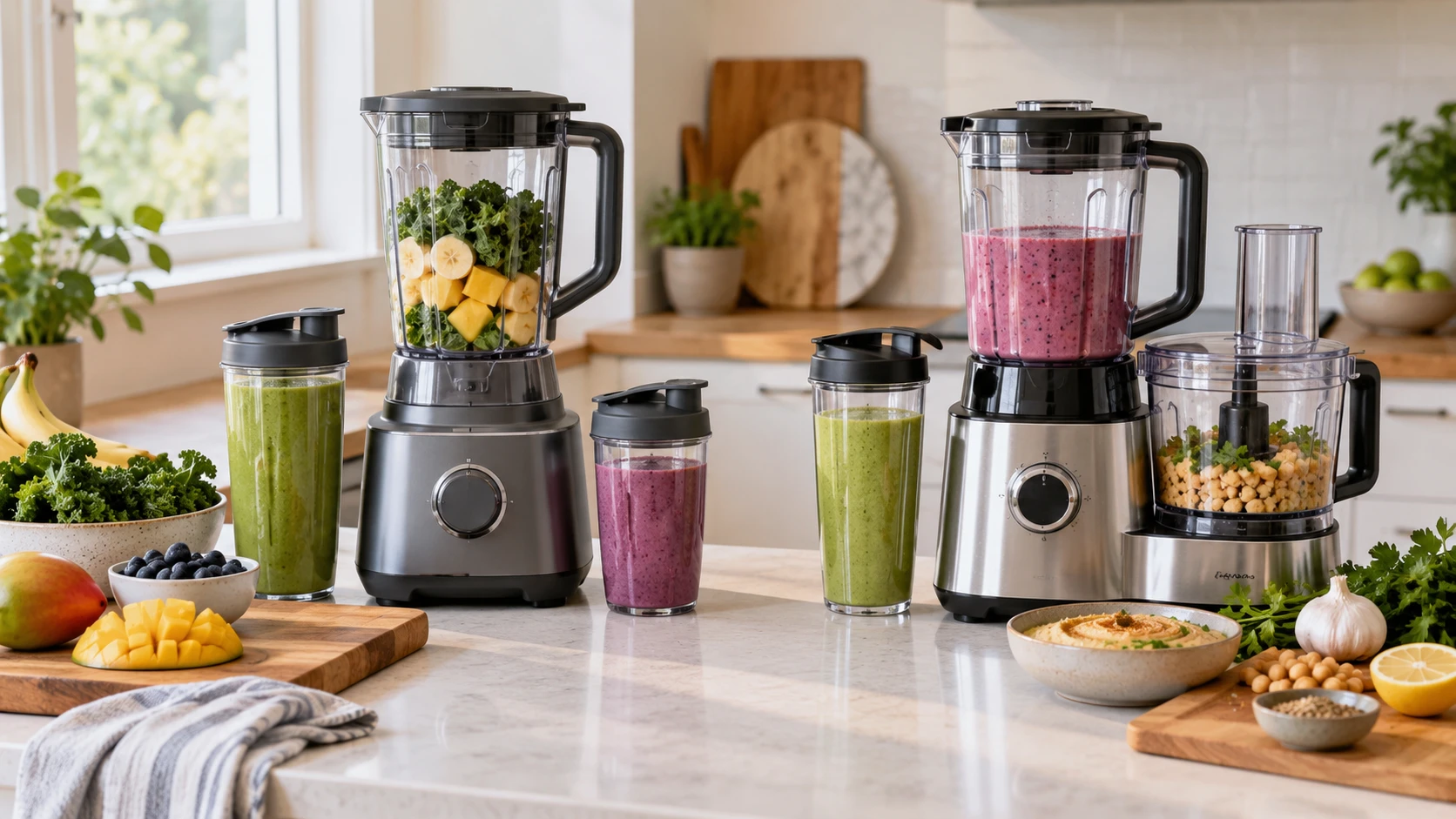
A blender that takes both a pitcher and a travel cup can serve two different mornings: a shared batch at home and one drink to carry away. The nutribullet NBF50500AW and Cuisinart BFP-650P1 both promise that flexibility. nutribullet's saved listing spells out its 64-ounce pitcher and two cup sizes. Cuisinart lists a 56-ounce blender and two travel cups, with a food-processing function as the other part of its three-in-one design. The practical question is which containers you will actually use and where you will keep the rest.
These details come from a September 30 catalog snapshot. Both exact product pages and the related guide were reachable when checked on October 3. The saved descriptions are not controlled blending tests and do not list every instruction or accessory for either model. Check the current manual and box contents before counting on a particular cup, blade, or processing task.
Begin with the container you reach for — blender pitcher and single-serve cup choices
The nutribullet NBF50500AW blender combo is listed with a 64-ounce pitcher, a 32-ounce cup, a 24-ounce handled cup, and two to-go lids. Cuisinart's BFP-650P1 entry names a 56-ounce blender capacity and two travel cups, but does not give their volumes. If one drink leaves the house each morning, the travel cup may matter more than the eight-ounce difference between the pitchers. Check whether the cup fits your bag, cup holder, and preferred shelf in the refrigerator.
For a shared drink, think about what you pour at once. A large pitcher can make several portions, but the printed capacity does not always describe the safe working level for a thick or frothy recipe. Check fill marks and the current manual for the ingredients you use. If everyone wants a different smoothie, repeatedly blending and washing separate cups may be easier than making one large batch that pleases nobody. If the household prefers one recipe, a pitcher may save time.
The related guide on blender pitcher and single-serve cup choices asks how often a household makes one drink versus a shared batch. It discusses a different product and does not test these machines. Apply the question to your own week. Count how often you use a travel cup, a pitcher, and any food processor you already own. A component used only twice a year should not dominate the choice or the space plan.
Lids deserve attention. nutribullet lists a vented pitcher lid with a cap and separate to-go lids. The short Cuisinart description does not explain how its pitcher or travel lids close. Inspect the exact parts and current instructions before assuming a cup can go safely into a bag or that any container may hold hot food. A vented pitcher lid and a sealed travel lid serve different jobs. Follow the maker's temperature and filling limits for each one.
Decide what food processing means here — Cuisinart BFP-650P1 blender and food processor
Cuisinart calls the BFP-650P1 a three-in-one blender, food processor, and travel-cup system. That might help someone who blends drinks and also prepares ingredients for cooking. Its saved listing does not specify a processor bowl volume, blade set, or attachment list. Ask for the current package contents and manual before assuming it can chop, slice, shred, or knead a particular food. A general food-processor label does not establish every task a separate processor might perform.
Write down the jobs you would give the processor. Chopping an onion, making pesto, and shredding cheese call for different attachments and working space. If you already own a processor, compare its actual tools with the Cuisinart package before deciding to replace it. Sharing a motor base might free part of the counter, while an extra bowl and blades still need storage. If you have no processor, check the bundle carefully so a missing attachment does not derail the recipes you planned.
nutribullet's saved package focuses on blending. It includes an Easy-Twist Extractor Blade, a pitcher tamper, two cups, and a recipe book, but does not claim a separate processing bowl. A tamper can help with a thick mixture when the instructions permit it; it is not a substitute for every chopping attachment. Compare the texture you need in a sauce or salsa with what a blender is designed to make. More motor power by itself does not turn a blender into a dedicated food processor.
Consider the order of work on a busy morning. If one person wants a fruit drink in a cup and someone else wants a pitcher batch, you may need to move a blade, rinse a container, or wait for the base. If ingredients must stay separate because of an allergy, follow the cleaning practices your household requires and the makers' instructions. Neither saved listing supplies a validated shared-allergen procedure. The convenience of one motor base depends partly on how often recipes have to be kept apart.
Compare controls without guessing at performance — Cuisinart BFP-650P1 blender and food processor
nutribullet lists a 1,200-watt motor, three speeds, pulse, and an extract program. Cuisinart lists 735 watts, describes that motor as one horsepower, and has electronic touchpad controls with LED indicators. Those specifications do not show which machine will produce a smoother drink from the same ingredients. Jar shape, blade design, batch size, liquid amount, and blending time all affect the result. The saved records contain no shared test under controlled conditions.
Look up what the extract program actually does and whether it allows a pause or adjustment. Cuisinart's short entry does not enumerate every touchpad setting. If you often stop to check the texture of a thick mixture, the control you can use confidently may be more important than the number of preset names. Ask for a model-specific demonstration with food similar to what you make, rather than a generic video of a different blender.
For frozen fruit or nut butter, read the current loading guidance. Check the allowed amount of liquid, the order of ingredients, the maximum run time, and whether the travel cups have different limits from the pitcher. Do not put a solid frozen block into a jar or run a blade dry just to test a wattage claim. A machine that handles your recipe reliably matters more than a motor number in isolation.
Sound and stability are also practical concerns in a shared kitchen. Cuisinart says its base is stable during operation, but the saved description provides no measured vibration or noise figure. nutribullet's excerpt gives no comparable figure. If blending before others wake is part of your routine, look for a model-specific demonstration or try the machine where you can. Give the base a level, dry counter spot with enough room to place a full container safely after blending.
Count the parts you will wash and store — Cuisinart BFP-650P1 blender and food processor
nutribullet says its cups, pitcher, and lids are top-rack dishwasher-safe and that the blade should be washed by hand. Read its full manual for safe blade removal, gasket cleaning, and any temperature limits. Cuisinart's saved description does not provide equivalent cleaning guidance for its pitcher, travel cups, or processor parts. Do not infer dishwasher safety from the material or from another Cuisinart model. Check the care table for the exact package.
Lay out every included component before assigning cabinet space. nutribullet lists a pitcher, vented lid and cap, tamper, extractor blade, two cups, two to-go lids, and a recipe book. Cuisinart confirms two travel cups and its blending and processing roles but does not fully enumerate the attachment set. Find the current box list and measure the pieces you will keep. A system can share a base and still occupy a surprising amount of drawer and shelf space.
Replacement parts deserve a quick search. A lost travel lid can keep a useful cup at home; a worn gasket or blade can affect operation. Verify that cups, lids, and other parts are sold for the exact model number and follow the maker's replacement instructions. The saved product descriptions do not give prices or availability for spares. Similar-looking parts from another model should not be assumed to fit.
Also consider how often you will switch configurations. A person who uses only one travel cup may prefer leaving that setup ready, while a household making soups and sauces may move between pitcher and processor parts. If cleaning and reassembly take longer than making the drink, the promised versatility will feel less valuable. Walk through one ordinary breakfast and one cooking session using the exact parts listed in the offer.
Compare the offer as a whole — Cuisinart BFP-650P1 blender and food processor
At the September 30 capture, both products were marked available. nutribullet's minimum listed price was $300 and Cuisinart's was $237.44. These are dated catalog figures, not current checkout prices. Confirm the SKU, Republeq's catalog, shipping, return terms, warranty, and every included accessory. A processor function adds value only when its supplied bowl and blades match your cooking tasks. A travel cup adds value only if you will carry it and can replace its lid later.
nutribullet deserves a closer look if you want the stated 64-ounce pitcher, known 32- and 24-ounce cups, and the saved care guidance for those parts. Check ingredient and temperature limits in the current manual. The Cuisinart BFP-650P1 blender and food processor may suit someone who wants blending and food preparation on one base. Confirm the processor contents and travel-cup sizes before relying on that promise. Let the recipes you make each week, and the space you have to wash and store the pieces, settle the choice.