Cooking & Food Prep
Ninja KT200WMBL vs Cuisinart CPK-17P1R: kettle controls
Compare Ninja KT200WMBL and Cuisinart CPK-17P1R kettle presets, display, holding and memory evidence for an actual tea and manual-coffee routine.
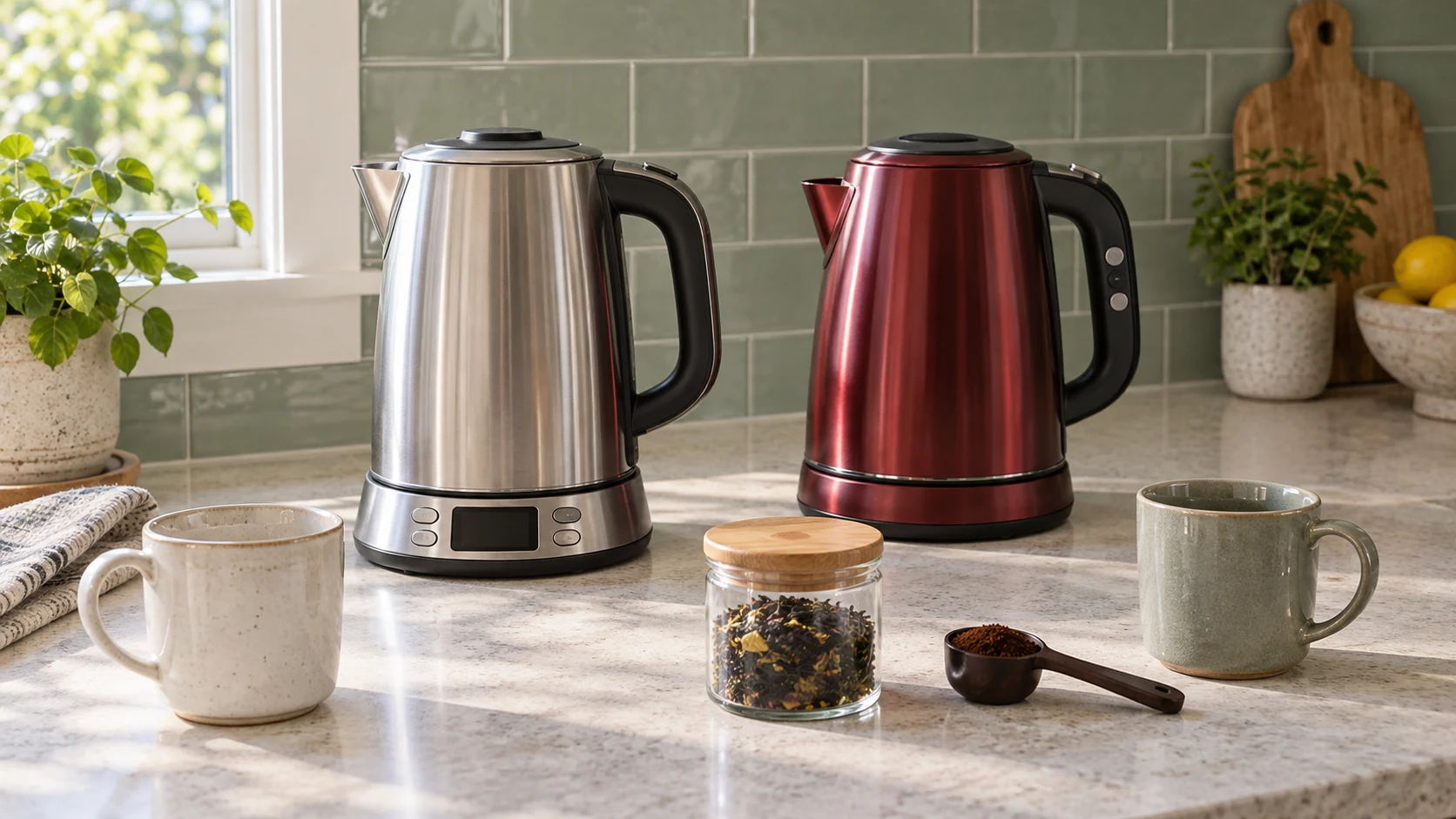
A household using separate water for tea and manual coffee needs to match the kettle's chosen setting to each recipe. Ninja KT200WMBL vs Cuisinart CPK-17P1R compares two electric kettles whose descriptions provide different kinds of control information. Ninja names seven drink and boiling presets, a live-temperature display and holding at the selected temperature for up to 30 minutes. Cuisinart names six settings with specific temperature and drink labels, a 30-minute Keep Warm option and a separate two-minute memory feature. Start by identifying the recipe you follow and the information you want visible on the kettle. Compare the presets you would use, rather than choosing by the menu count.
The Ninja KT200WMBL kettle is the lower checked offer at $118.11. Its documented live-temperature display, lit water window and seven named presets give it a reason to be considered by someone who wants to see the heating readout and fill level while choosing among drinks. A removable scale filter and a base with cord storage are included. The description identifies the finish as Silver while noting Blue Stainless in its source title; confirm the exact offered finish if appearance affects the purchase.
The Cuisinart CPK-17P1R kettle is identified as Red and was listed at $174.94, or $56.83 more than Ninja. Its six explicit temperature-and-drink settings give a numerical-recipe shopper information to compare directly with a chosen preparation. It also lists blue LED indicators, a 30-minute Keep Warm option, a two-minute memory feature and a 360° swivel base. Both offers are in Kitchen Appliances. Decide whether those actual control distinctions are useful enough to justify the difference, rather than assigning value to the price alone.
Conceptual illustration of Ninja KT200WMBL vs Cuisinart CPK-17P1R; generic kettles and drink supplies do not depict the exact retail models, supplied accessories or measured temperatures.
Electric kettle temperature presets need a recipe beside them
Cuisinart's description gives a concrete setting list: 160°F for delicate teas, 175°F for green tea, 185°F for white tea, 190°F for oolong tea, 200°F for French press coffee, and Boil for black tea or instant foods. These are the selected product's stated labels. They make its advertised menu more explicit than a list of drink names alone. They do not establish that every tea in one category should use the same temperature. Keep the particular tea or coffee recipe with the setting question, especially when its instructions differ from the general label on an appliance.
Ninja's description names presets for green, white, oolong, black and herbal teas, coffee and boiling, but does not give their numerical temperature assignments. That is a difference in the information available here, not evidence that Ninja cannot show a chosen temperature. Its offer explicitly names an illuminated display with live temperature readings. Before treating a named preset as a match for a recipe, establish the temperature it represents on the exact KT200WMBL. A shopper can compare the documented menu and display without assuming that the same tea name means the same target on both kettles.
For electric kettle temperature presets, count useful choices rather than collecting labels. If one person makes a particular green tea and another prepares a manual coffee, those are two actual preparations to check against the controls. Ninja's separate herbal-tea label may be relevant to someone who buys such a drink regularly. Cuisinart's listed temperatures may be more informative to someone who already follows numerical instructions. Put the recipes used most often beside the actual menu and identify which choices you would use. An infrequently used drink need not determine the purchase simply because it has its own button.
The Hamilton Beach and KitchenAid kettle guide keeps a recipe's water requirement separate from the appliance's mode names and heating claims. That connection is useful here. Its Hamilton Beach modes, cool-touch claim and shutoff account belong to those products, however; they are not instructions for Ninja or Cuisinart. With this pair, retain the six explicit Cuisinart temperature labels and the seven named Ninja presets as their own evidence. A related guide can help frame the purchase without supplying missing model-specific controls.
Choose what you want to see during heating
Ninja names a live-temperature display and a lit water window. Those features answer different questions: one shows a temperature reading, while the other makes the water level visible. A person who wants to see the reported temperature as heating proceeds has a documented reason to investigate Ninja. Consider whether you would actually look at that readout during your normal preparation, or simply return when the selected routine is finished. The display can be a useful purchase feature without being a calibration test; no measured accuracy or temperature trace is provided here.
Cuisinart names one-touch controls with blue LED indicators. Its stated menu already pairs drink choices with temperatures, so a buyer can consider that labeled arrangement alongside Ninja's live-readout description. Look at how clearly the actual CPK-17P1R panel identifies the chosen setting. Someone who usually follows the same numerical recipe may value a familiar labeled choice more than watching progress. Someone who wants to see the reported temperature during heating has a more specific reason to consider Ninja's display. Choose between those actual preferences rather than assuming that every user benefits equally from more visible information.
Shared use makes the display question practical. Someone returning to the counter should be able to understand the kettle's current selection through the applicable controls and instructions, rather than relying on another person's memory of what they chose earlier. A visible reading could be valuable to one household, while familiar labeled choices could be enough for another. Consider the viewing position, the room's light and who normally uses the appliance. These are purchase observations to make on the delivered configuration, not an accessibility rating or a guarantee about the visibility of every indicator.
Keep warm and kettle memory have different jobs
Ninja describes holding a selected temperature for up to 30 minutes. Cuisinart describes a 30-minute Keep Warm option. Both offers therefore give a reason to investigate holding when drinks are prepared at different times within a short period. Keep that period separate from the size of the initial batch. A person making one drink immediately may rarely use the feature, while two people returning to the same counter at different times have a concrete use to consider. Follow the holding instructions for the selected drink and permitted fill; the advertised duration is not a matched temperature-stability result.
Cuisinart's two-minute memory feature is a separate item in its description. The listing does not explain exactly which state is remembered, when the interval begins or how the controls respond afterward. It would be misleading to turn that short label into a two-minute heat-retention promise or an automatic restarting instruction. If memory is the reason to prefer Cuisinart, obtain the applicable explanation for this model. Its presence also cannot establish that Ninja lacks all retained settings. The saved Ninja offer simply does not describe an equivalent memory function.
For keep warm and kettle memory, separate heating the water initially, maintaining the selected state through an allowed holding arrangement, and preserving information through whatever interruption the memory feature supports. Write down when the household's drinks are actually prepared. If everyone drinks together, capacity and the first selected target may matter more than a holding period. If people return later, the holding feature becomes more relevant to inspect. Choose it for that scheduling purpose; these offers do not provide an electricity-use comparison from which to claim a saving.
Imagine two people using the same counter before work, with one preparing tea first and the other arriving later for coffee. The later drink may need a different recipe and selection, even when water remains in the kettle. That makes identifying the current choice at least as important as the duration printed in the listing. Keeping a chosen temperature available does not make it the correct temperature for the next person's drink. Agree on how each person will identify the intended preparation through the actual kettle instructions, and keep their recipe requirements separate from the holding feature.
A French press preset does not settle the brewer's instructions
Cuisinart's 200°F label specifically names French press coffee, while Ninja includes a coffee preset without a numerical value in this offer. These details are relevant when a kettle supplies water to a separate manual brewer. Keep the brewer, recipe and water requirement together in the comparison. A person using the same manual brewer most days can focus on its supported preparation instead of treating the entire kettle menu as equally important. If another household member uses a different brewer, record that task separately. One shared kettle does not require every drink to use the same preparation.
The Buyfun glass and steel French press guide examines actual vessel-capacity and material claims, including a glass offer whose stated sizes conflict. It also explains that the glass and steel descriptions do not supply complete temperature and use permissions. This is a real connection to the kettle decision: water preparation belongs with the actual vessel and recipe. It does not certify that either Buyfun press permits Cuisinart's 200°F setting or that either kettle supplies a particular coffee yield. Resolve the brewer's requirements independently of the menu name.
If the kettle is intended mainly for tea, the coffee label may be an occasional extra rather than the deciding feature. If manual coffee is the daily task, knowing the selected temperature and permitted water quantity becomes more important. Think about where the brewer and mugs sit while the kettle supplies their water. A setup used every morning deserves attention to the actual equipment on that counter, even if an occasional tea uses another setting. Choose the controls for the water job they support; keep coffee dose, brewing time and taste preferences with the recipe and brewer.
Read the capacity and heating claim without a serving promise
Ninja lists a seven-cup capacity; Cuisinart lists 1.7 liters. Those are different ways of labeling total capacity in the offers. The Ninja description does not define its cup unit here, so this comparison does not convert seven cups into liters or declare the quantities equivalent. Neither capacity label provides all minimum and maximum operating-fill instructions. The number of mugs a household can serve depends on its actual water need and permitted working amount. Keep the quantity needed for a recipe separate from an advertised capacity figure before using either kettle for a small preparation.
Ninja's offer claims it can boil one cup in as little as 90 seconds and identifies a 1,500-watt kettle. The claim does not include a matched test against Cuisinart or establish the time for every quantity, starting temperature and selected target. Cuisinart's description supplies no comparable heating-time result. It would therefore be wrong to declare Ninja the faster kettle for the household's usual preparation. If a specific deadline matters, seek a test of the relevant task or assess an ordinary permitted preparation on the delivered appliance. Keep the observed conditions with any timing result.
Different drinks prepared at different times may not benefit from one large batch. If the household prepares different drinks at different times, the chosen temperature and holding arrangement may deserve more attention than total capacity. If several people need the same recipe together, the permitted working amount becomes a more useful question. Base that decision on the mugs and water quantities people actually use, including whether they normally return for another drink. For Ninja KT200WMBL vs Cuisinart CPK-17P1R, keep that ordinary workload with the confirmed fill instructions so the capacity choice serves the household's routine.
Check the equipment you will handle and clean
Ninja explicitly names a removable scale filter and says the package contains the kettle, filter and power base with cord storage. It also describes a wide lid opening. Keep the removable filter and power base on the contents list used to check delivery. A buyer who values removable parts can examine the exact filter and its care instructions, then consider where it will be kept during cleaning. Include the lid opening and filling access when inspecting the actual kettle. If it will be stored between preparations, the named cord-storage arrangement is another detail to examine alongside the base. Follow the actual care permissions for each component.
Cuisinart describes a cordless kettle with a 360° swivel power base and a concealed heating element. Cordless should not be read as battery-powered heating or a travel-power claim; retain the documented supply and base requirements. Consider the swivel base as part of the arrangement on the counter, including the position from which people usually lift and return the kettle under its instructions. A shared kitchen may use that spot from more than one direction. Inspect the actual base, handle and lid together, and account for the cups and other drink equipment that remain beside it.
Cuisinart also lists boil-dry protection with automatic shutoff. Treat these as advertised safeguards and follow the supported fill and use conditions; do not test them by deliberately operating outside those conditions. Keep each delivered kettle's actual handling and protection instructions with its own parts. If several people prepare drinks, everyone should be able to identify the proper fill guidance, selected controls and supplied base. A familiar-looking kettle is easier to share when that information belongs to the actual unit instead of being remembered from an older appliance.
Make the price difference answer a specific need
The lower checked Ninja offer is worth investigating when seeing the live temperature and water level are priorities, and its filter and cord-storage inventory fit the way the kettle will be kept. The higher checked Cuisinart offer is worth investigating when the explicitly labeled temperature menu suits the recipes you follow and its LED and swivel-base arrangement are appealing. Both list a holding feature for staggered preparations. Select the features that would change an ordinary morning, then compare the current delivered totals; the $56.83 checked difference is a budget fact, not a heating-quality score.
Before ordering, keep the identified kettle and confirmed controls with the actual recipe requirements and planned counter arrangement. Recheck contents, the selected finish, delivered price and applicable return terms for that order. A household choosing Ninja mainly for its readout should examine that display in the intended position. A household choosing Cuisinart mainly for its labeled menu should compare the selections with its recurring drinks. Use the confirmed preset information, display and holding instructions to choose the kettle for your repeated routine.