Cooking & Food Prep
French press capacity and filters: Buyfun glass and steel presses
Understand Buyfun glass and steel French press capacity, filter parts and serving routines, including the glass size conflict and untested material claims.
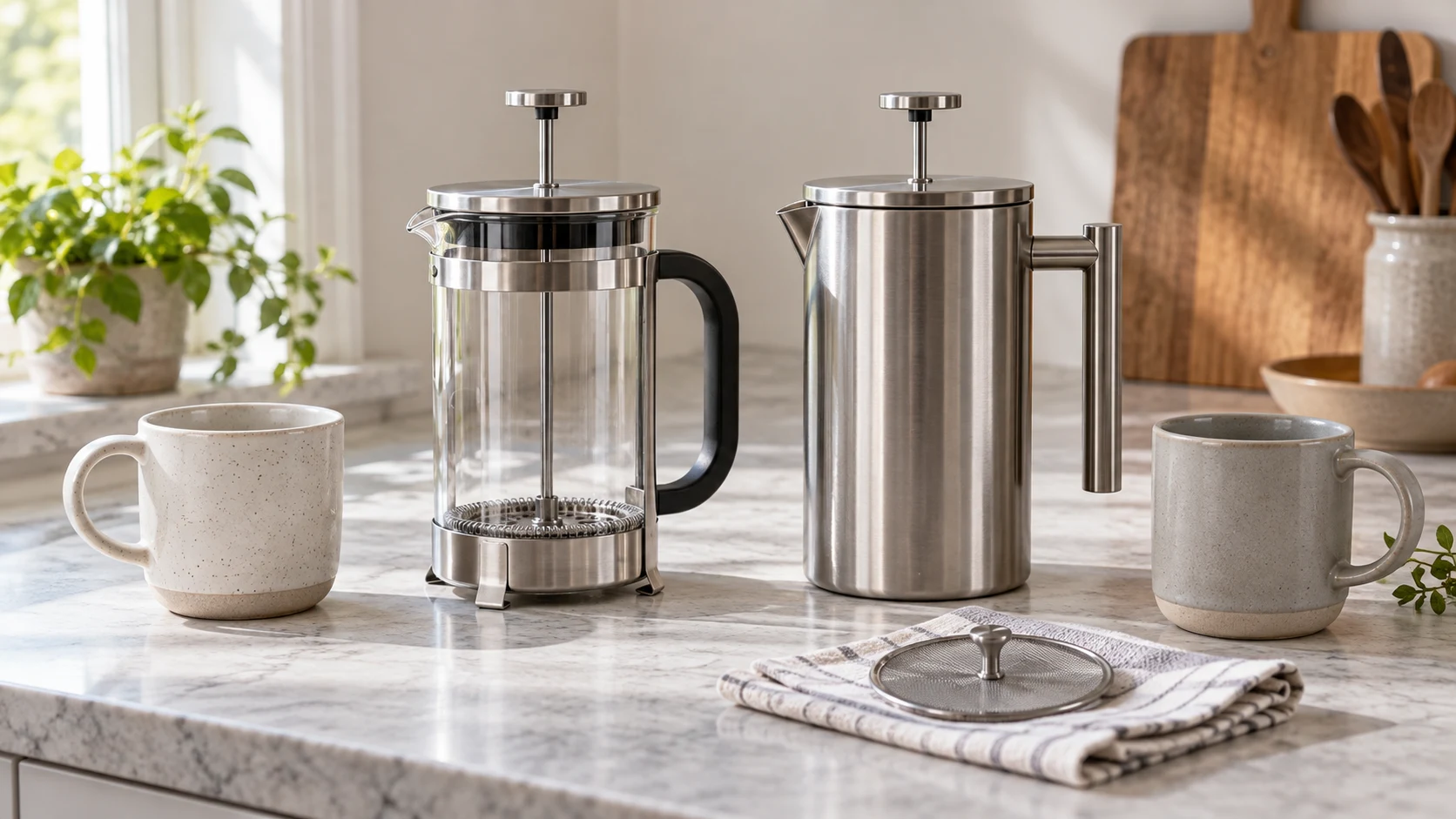
French press capacity and filters need a closer reading when the product page gives two different vessel sizes. Buyfun's glass press description names both 1,000 ml and 600 ml, while its steel press title gives 800 ml. A household choosing a manual brewer needs the exact selected size confirmed before planning its morning batch. The filter arrangement then needs to suit the way the press will be used and cleaned.
The two Buyfun offers describe different vessel materials and filter details. The glass model is described with borosilicate glass, 304 stainless steel and a printed scale. The steel offer describes a double-wall vessel, a steel plunger and a removable triple fine filter. Neither description contains a shared brewing test, a measured heat-retention trial or a complete care manual. The details below explain what their stated features let you investigate.
Resolve the glass French press capacity first
The Buyfun-239 glass French press is identified by that model name and a retail SKU. Its description says the title lists 1,000 ml and also gives a 600 ml size. Those figures cannot both establish the size of one selected vessel. They might describe selectable variants, inconsistent text or another listing problem; the page does not settle which explanation is correct.
Ask the seller to identify the size attached to the exact offer you will receive. Include the product link and the selected option in the question. Request a photograph or documented dimension that belongs to that option, together with its stated vessel capacity. A general response about the range of available French presses leaves the original ambiguity open. Keep the answer with the order details so that a different size is easier to recognize on arrival.
The printed scale is a separate feature. It could help you see a repeatable level in the vessel, but the description does not specify its units, graduation spacing or accuracy. It also does not establish that the highest mark is an approved brewing fill line. For glass French press capacity, distinguish the advertised total size, the scale you can read and the working quantity permitted by the instructions.
Someone making coffee for one person may be willing to consider either stated size once it is confirmed. A household planning a shared breakfast batch has a stronger reason to resolve the difference before ordering. Avoid turning the larger number into a promise about how many mugs the press will fill. The mugs may differ in volume, and the supplied description does not give an approved working fill quantity or finished beverage yield.
Read the steel vessel and steel French press filter separately
The Buyfun 800 ml steel French press has a title that states its size and describes double-wall metal insulation. Its description names a steel plunger, mesh filtration and a triple fine filter that can be removed and cleaned. These are actual features to check on the selected press. They do not provide a measured brewed volume or establish how every filter component is assembled.
The 800 ml label gives a starting size for the vessel inquiry. Ask whether it denotes total container capacity and where the manufacturer permits the brewing fill level. Grounds and the plunger assembly are part of the intended setup, so a bare-vessel capacity label does not resolve that question. An answer should identify this particular steel offer rather than borrowing a fill instruction from another press of a similar appearance.
For the steel French press filter, request the actual supplied pieces and the removal sequence in the care instructions. The words “triple fine filter” do not identify a pore size, replacement part number or how many separate pieces you must handle at the sink. Knowing those details matters if several people will wash the press, or if small parts tend to disappear between use and reassembly.
The seller describes the filter as fully filtering the grounds. That is a product claim without a recorded particle test in this offer. You can investigate the mesh construction and replacement supply, but the description does not justify promising a sediment-free cup. Before buying, identify the filter parts and their removal instructions. Check whether the correct replacement is available if the mesh is damaged.
Plan the batch around the people drinking it
Plan a morning batch around the people who will pour it. Measure the mugs you normally use and note whether everyone drinks together. Someone taking one cup before leaving has a different routine from two people returning for another cup later. This record will help you judge the confirmed press size without relying on a cup count that the two current offers never define.
The actual product guide on OXO and KitchenAid brewers for one mug or a shared pot examines that household batch question. Its electric brewers have their own accessories and warming arrangements. Here, its useful connection is the distinction between maximum advertised capacity and the amount people finish. None of those brewers' warming controls or small-batch instructions applies to these manual Buyfun presses.
Staggered drinking deserves its own plan. If the second person pours much later, ask where the coffee will wait and whether you intend to prepare another batch. The steel description claims better warmth retention than glass presses, but gives no duration, temperature curve or test conditions. That claim cannot establish that either selected vessel keeps a later cup at the temperature a particular person prefers.
Guests can change the required quantity without changing every ordinary morning. Decide whether occasional larger servings justify a different vessel size or whether your normal routine should determine the purchase. With the glass offer, resolve its size before weighing that tradeoff. With the steel offer, confirm the working fill guidance before treating the 800 ml label as the usable amount for one brewing session.
Match the grounds to the manual brewing method
The glass press description refers to coarse grounds and a four-minute steep before pressing its rod. This is a short account of a method in the listing, rather than a complete model-specific brewing instruction. It gives no coffee dose, working water quantity or explanation of how the selected size affects the recipe. Obtain the proper use instructions before turning that sentence into a routine for this press.
If you grind beans at home, identify whether your grinder explicitly supports the intended brew method. The real guide to KitchenAid and Eureka grinders for different brew methods evaluates French press support and who controls the dose. It helps frame that separate equipment choice. It supplies no numeric grind setting or dose for either Buyfun vessel, and a grinder's setting count does not resolve the press's uncertain capacity.
If you buy ground coffee, keep the intended method with the purchase question. A coffee package or grinder setting chosen for a different brewer should not become a claimed fit simply because the grounds can be placed in the press. The current descriptions do not test particular coffees or give a sediment threshold. Record the actual coffee and recipe used when you later assess your own cup.
Pressing moves the plunger and restrains grounds in the vessel according to the glass listing's method summary. Its wording also says pressing stops steeping, but there is no test or fuller explanation establishing that extraction has stopped. Do not use that phrase as a guarantee about coffee left in the press. Ask how the manufacturer intends the brewed coffee to be served and whether another vessel is needed for your routine.
Understand what the material claims establish
The glass offer names borosilicate glass and 304 stainless steel and describes the glass as heat-resistant and thickened. Those are statements about the offered construction. The supplied description does not give a permitted water-temperature range, a thermal-shock test or instructions for moving the vessel between hot and cold conditions. The material name alone cannot fill those gaps in the use guidance.
The steel offer describes double-wall insulation and says it keeps coffee warmer for much longer than glass presses. There is no common test of these two selected offers behind that comparison. Room conditions, quantity and elapsed time are not documented. If warmth retention is central to the purchase, ask for model-specific evidence and compare it with the waiting period in your household, rather than relying on an unspecified “much longer.”
Construction also leaves practical questions about handling. The steel description calls its hollow handle anti-scalding and comfortable. That wording does not establish a touch-safe temperature during every use. Ask for the actual handling guidance and examine how the lid, handle and vessel are intended to be held. Both presses need instructions appropriate to the liquid and the particular assembly you receive.
For French press capacity and filters, materials are one part of the purchase record alongside size and removable parts. A buyer who wants to see the contents may value a glass vessel; a buyer interested in the steel construction can investigate the double-wall claim. Neither preference proves superior coffee, a safer grip or a longer service life. Those conclusions would require evidence beyond these descriptions.
Check pouring and the place the press will occupy
The steel offer describes a U-shaped spout with smoother pouring and overflow-proof behavior. These are advertised claims without a recorded pouring test. Ask how the lid and spout should be positioned when serving, and examine the actual vessel on arrival. A claim about the spout does not establish that every pour will avoid a drip, especially when the instructions and selected fill level remain unknown.
Choose the place where you intend to prepare and serve coffee. Consider the route between that surface, the mugs and the sink. If the press will live beneath a shelf, request its dimensions with the plunger in the relevant positions. Neither current description supplies a complete dimension record. A vessel that fits when stored may need additional room while it is being assembled or handled.
The glass description promotes camping and travel and says the press can be used where boiling water is available. That phrase does not specify packed dimensions, impact resistance or how the glass should be protected in transit. If travel is your reason for choosing it, ask about the exact packing and handling guidance before treating the promotional use case as evidence that it suits your bag or campsite.
Make filter care part of the purchase
The steel filter's removability is useful information only when you know how the supplied assembly comes apart and goes back together. Ask whether the manual identifies the mesh and associated pieces clearly. For the glass offer, the brief description does not provide a comparable removable-filter inventory. Request that separately; silence in a short listing cannot establish either that a part is absent or that its cleaning is simple.
Neither source gives a complete dishwasher-permission list. Confirm care for the vessel, lid, plunger and filter individually before choosing a cleaning routine. Removability describes access to a piece, while dishwasher permission depends on that piece's instructions. Also ask what the manufacturer recommends when grounds are caught around the mesh or plunger assembly, so that an improvised cleaning method does not become part of the purchase plan.
Replacement availability matters for a press used daily. A generic-looking mesh may have the wrong dimensions or attachment for the actual rod and lid. Request the correct replacement identity and check whether it is available for the selected offer. The two descriptions do not document spare parts or promise compatibility between the glass and steel assemblies. Keep the original components with their own vessel while those questions are being resolved.
Confirm the exact offer before ordering
The checked glass offer listed $369 and the steel offer $374. Those prices belong to the specific pages at the source check and may change. Recheck the current offer together with delivery and return terms. The small listed difference does not resolve the glass capacity conflict, establish a complete filter kit or substantiate the steel insulation claims. Confirm those product details independently of the price.
Ask for a clear contents list that identifies the vessel, lid, rod and filter pieces supplied. Keep promotional photographs separate from that confirmation, because the current text does not enumerate every accessory. If the glass listing has selectable sizes, confirm that the photographs and contents answer refer to the chosen size. A response about another option would leave both the capacity and the package unresolved.
Choose the glass offer for further consideration if its visible vessel and printed scale fit your preferences, once the exact size and use instructions are confirmed. Keep the steel offer under consideration if its stated 800 ml format and removable filter suit the routine you are planning. Before ordering either one, match the confirmed working quantity to your mugs and obtain the care and parts information needed for the first use.
Conceptual editorial cover for French press capacity and filters: generic glass and steel coffee presses beside empty mugs, not exact retail models or evidence of their supplied parts, temperatures, filtration or brewed yield.