Crypto Commerce
KitchenAid KCG8433 burr coffee grinder — One grinder for several brew methods or a dedicated brew grinder?
Compare KitchenAid KCG8433 burr coffee grinder by daily routine, cup handling, cleaning, and saved price.
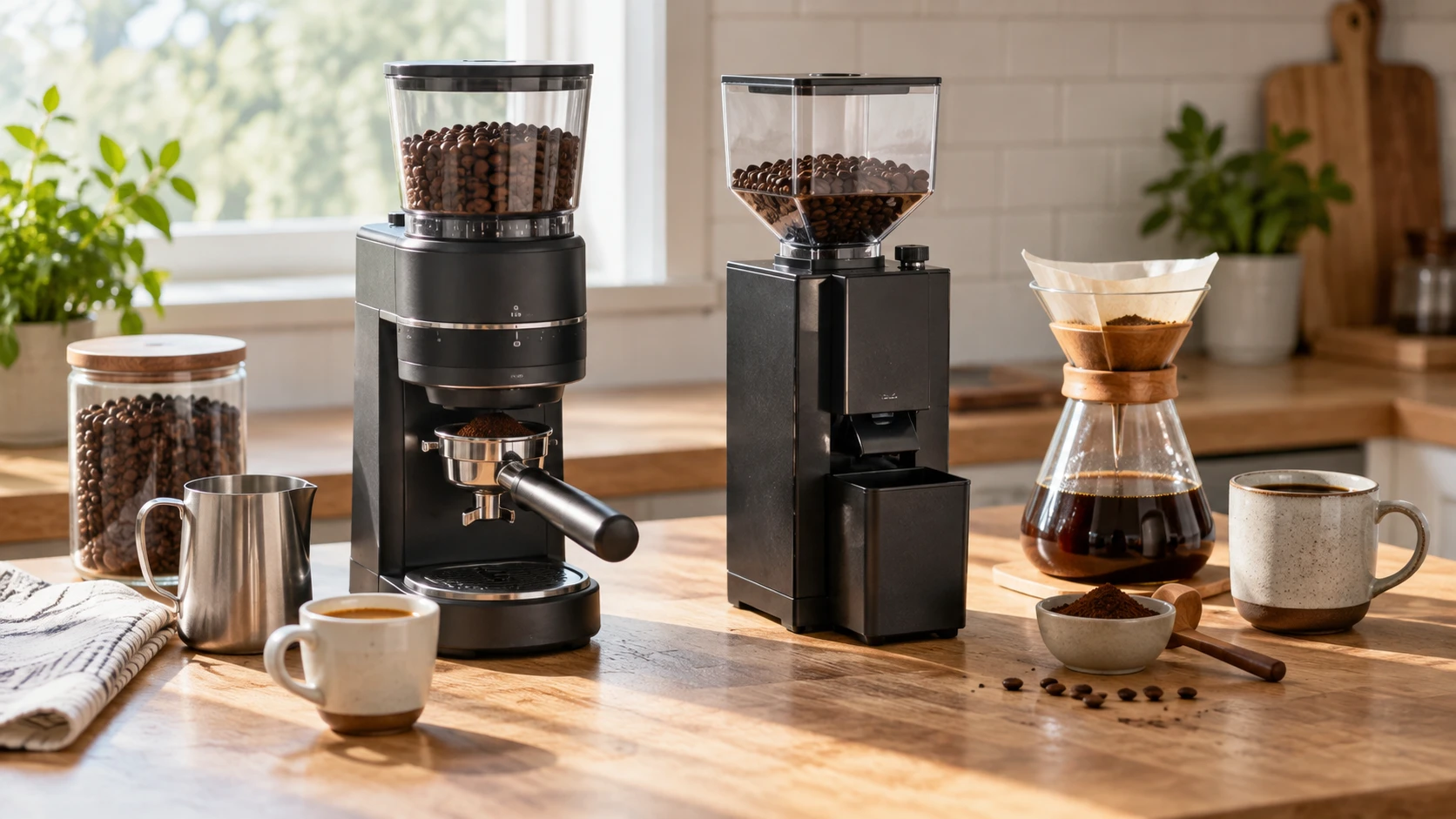
The KitchenAid KCG8433 burr coffee grinder lists 70 settings from coarse cold brew through fine espresso, automatic dosing by drink selection, and a portafilter holder. A related guide to grinder settings for different brews compares other machines and is useful for thinking about how much adjustment a daily routine needs. The Eureka Mignon Filtro Silent coffee grinder is described as brew-specific for drip and pour-over, with stepless adjustment and a press-and-hold dosing button. The two products are close in saved price but ask for different hands-on habits.
The catalog recorded $324.99 for KitchenAid and $336.25 for Eureka, a $11.26 difference. That small saved gap should not decide the purchase by itself. One description supports switching among several named brew methods, while the other concentrates on adjusting a brew grind and controlling the dose by hand. Neither excerpt contains an equal-condition grind distribution test, a measured noise result, or a durability comparison. The live listings should be checked again for price, availability, and the exact included accessories before ordering.
List the drinks you actually make — Eureka Mignon Filtro Silent coffee grinder
KitchenAid explicitly names French press, cold brew, and espresso across its range of 70 settings. The saved listing says its stainless steel conical burrs are intended to produce a consistent grind and that Smart Dosing Technology selects an amount for the chosen drink. A household that changes between an espresso machine on weekdays and a large French press on weekends has a reason to value that stated range. The product description does not say every setting will be ideal for every bean or espresso machine. Treat the settings as starting positions and adjust by taste and brew behavior.
Eureka's Filtro Silent listing takes a narrower approach. It says the burrs, brew path, and motor combination are suited to drip coffee or pour-over. Its micrometric control is stepless, so the user can make small adjustments without jumping between numbered stops. The saved description does not claim espresso suitability. A buyer who needs fine espresso grinding should not infer it merely from the Mignon family name or the ability to turn the adjustment dial. Check the exact model specification and intended brew range if espresso is a requirement.
Write down the last ten drinks made at home. If nearly all were pour-over or a drip brewer, the Eureka's focused design might fit that routine. If the grinder must serve an espresso portafilter and a coarse brew, KitchenAid's broader stated range and included holder are more directly relevant. A second grinder can be useful in some kitchens, but nothing in these listings says one is required. Start with the brew methods you already use, then decide whether a future machine purchase is worth planning around.
Decide who controls the dose — Eureka Mignon Filtro Silent coffee grinder
KitchenAid's Smart Dosing Technology is presented as automatically producing an amount of grounds for the selected drink. That may reduce repeated weighing or timing for a familiar recipe, particularly when several people use the same grinder. The listing does not give a measured dose accuracy, a full menu of drinks, or a way to calibrate every recipe. Someone who tracks a precise coffee-to-water ratio should still weigh a few outputs during setup. A preset is convenient only when its delivered dose suits the brewer and serving size.
The Eureka listing describes manual dosing through a press-and-hold grind button. The user stops grinding when the desired amount has been collected. This makes the routine hands-on, and a scale can provide a simple check when repeatability matters. The description includes an 80-gram Hand Brew dosing cup; it does not say the grinder weighs beans or stops automatically at a target mass. Do not read “stepless” as an automatic dose feature. Stepless describes the grind-size adjustment, while the button controls how long grinding continues.
A person making one measured pour-over may like control over each dose. A busy household filling a drip machine every morning may prefer a repeatable preset after it has been tested. Ask who will actually use the grinder, where the scale will sit, and whether a different person changes settings between drinks. Those details affect convenience more than the saved $11.26 price gap. The catalog gives feature descriptions, not a timed comparison of two people making the same cup.
Consider how the grounds reach the brewer — Eureka Mignon Filtro Silent coffee grinder
KitchenAid lists a grounds tray and a portafilter holder among its included parts. The holder matters if an espresso setup uses a compatible portafilter and the user wants grounds directed toward it. The description does not state every portafilter size it accepts, so check fit with the actual basket or use a separate vessel if needed. KitchenAid also lists a top and bottom hopper, a removable bean hopper, and a cleaning brush. The hopper twists off for emptying, exchanging, or refilling beans according to the Republeq's catalog. That feature may make bean changes less awkward for a household that alternates roasts.
Eureka includes an 80-gram Hand Brew cup. This places its workflow near a pour-over cone or drip filter: grind into the cup, then transfer the grounds to the brewer. The excerpt does not list a portafilter fork, bean-hopper removal method, or grounds tray. Absence from a short description is not proof that every accessory is unavailable, but it is a reason to check the exact box contents. If counter space is tight, lay out the grinder, dosing cup, scale, brewer, and any filter stand before buying.
Both approaches can leave loose grounds on a counter. KitchenAid advertises Anti-Static Technology to reduce scatter. Eureka's listing does not give a comparable static-control claim, and neither excerpt provides a measured amount of retained grounds or mess. A person who changes beans frequently should ask how to clear the old grounds from the chute and how much stays inside after a dose. Use the included cleaning guidance and avoid assuming a feature name eliminates routine cleaning.
Adjust by the brewed cup, not a marketing count — Eureka Mignon Filtro Silent coffee grinder
Seventy named steps and stepless micrometric adjustment describe different interfaces. KitchenAid's finite settings can help someone return to a remembered position when moving between methods. Write down the setting that works for a particular bean and brewer, then recheck when the beans or dose change. The listing does not state how far each step moves the burrs or whether a favorite recipe lands exactly on one step. Seventy is a count of positions, not a taste score.
Eureka's stepless control can make smaller adjustments to pour-over or drip extraction, according to its product description. It may take more care to return to an old position if the dial offers no fixed stop for each recipe; the saved excerpt does not explain its marking system. Keep a note of the knob position and the brewed result if you change beans often. A slow drawdown, a bitter cup, or a thin cup can motivate a grind change, but water, filter, dose, and beans also influence the result. Change one variable at a time when testing.
The related guide compares grinder settings on other products. Use its method-level discussion as context, then rely on these two listings for their own features. It does not certify that a setting on KitchenAid equals a particular turn of Eureka's dial. A useful home trial would grind the same beans for the same brewer, record the dose, and compare the cup after small changes. The catalog does not contain that controlled test, so it cannot establish which grinder tastes better.
Account for sound and upkeep — guide to grinder settings for different brews
Eureka calls this version Filtro Silent and says it uses motor and case insulation borrowed from more expensive espresso models for a quieter grind. That is a claim in Republeq's catalog without a decibel reading or a matched comparison with KitchenAid in the saved snapshot. Someone who grinds before others wake up should ask for an independent recording or test under a return policy. A lower noise level would be welcome, but a product name alone cannot tell how it sounds in a particular kitchen.
KitchenAid's description centers on easier hopper changes and less static scatter. It includes a cleaning brush. Eureka's excerpt centers on the brew path and dosing cup. Neither source gives a cleaning interval, burr replacement schedule, repair cost, or measured retention. If the grinder will handle oily beans or frequent roast changes, read the exact manuals for access to the burrs and recommended cleaning method. Do not wash a grinder part merely because it looks removable; follow the manufacturer instructions for each component.
At the saved prices, KitchenAid costs slightly less while naming broader brew support and automatic dosing. Eureka costs slightly more and focuses on drip or pour-over with stepless control and manual dosing. Choose KitchenAid if the stated multi-method range and preset routine match what you make. Choose Eureka if careful brew adjustments and a hand-controlled dose fit a pour-over or drip habit. Confirm current prices, box contents, service terms, and the espresso requirement against the exact model pages before committing to either one.