Crypto Commerce
NEILA grinder espresso machine vs Mcilpoog WS-203: choose the espresso routine you want to repeat
Compare NEILA grinder espresso machine by workflow, milk care, capacity, and saved price.
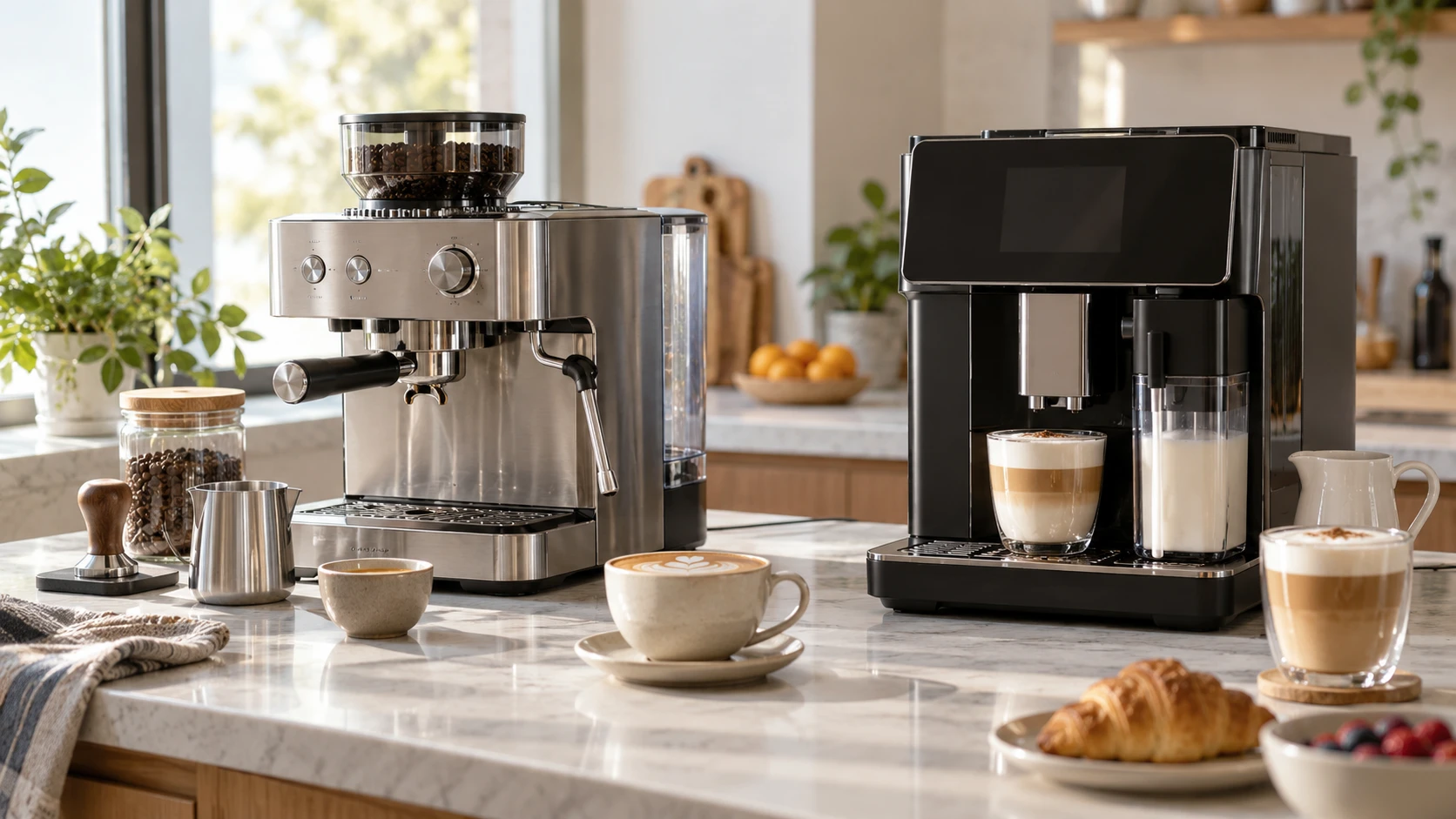
These machines both include a grinder and a way to prepare milk drinks, but they ask different things of the person at the counter. NEILA describes a semi-automatic espresso machine with 30 grind settings, a detachable steam wand, and a removable 2.8-liter tank. Mcilpoog WS-203 is described as super-automatic, with a touch screen, drink selections, and automatic milk preparation. The meaningful choice is between hands-on control and a more guided workflow, followed by the cleaning each design requires. A pressure rating alone cannot settle that choice.
The saved September 30, 2026 catalog snapshot listed the NEILA grinder espresso machine at $458.74 and Mcilpoog at $900, a $441.26 difference at that time. Live prices and bundles can change. Before paying more for convenience, ask how many drinks are made in an ordinary day, who will make them, and who will clean the grinder and milk path afterward. The answer may matter more than the number of recipes on a screen.
The morning workflow is the core difference — Mcilpoog WS-203 espresso machine
NEILA's listing names a built-in stainless-steel conical burr grinder with settings from 1 to 30, a semi-automatic brewing process, and a steam wand for milk. The user can adjust a grind setting and learn how the beans, dose, and preparation affect the cup. The saved text does not specify the portafilter size, basket options, dose range, or whether the grinder dispenses directly into a basket. Get those details if an existing set of accessories must work with it. A hands-on machine can be enjoyable when someone wants to practice, and slow when several people need coffee before leaving.
Mcilpoog's touch screen is said to guide grinding, brewing, and milk preparation in three steps. It offers eight selections, with lattes, cappuccinos, Americanos, espressos, flat whites, and macchiatos among those named. The listing also says water, milk, and coffee concentration can be adjusted. That is more menu guidance, but it does not guarantee that one tap produces exactly the drink a person expects. Ask what still needs manual setup, whether a milk container is included, and how profiles or settings are saved. Watch one complete drink from filling the machine to emptying its grounds before treating “automatic” as a time estimate.
For an office, shared household, or rental space, repeatability may matter more than fine control. A menu can help several people make similar drinks, while a semi-automatic machine may depend on one experienced user. On the other hand, a shared machine with many drink choices can develop a cleaning problem if no one owns the daily maintenance. Assign the cleaning routine before deciding that the automatic workflow is simpler in practice.
Pressure numbers do not rank the cup — guide comparing a portable Miathu espresso maker with the K-fee Grande
NEILA advertises a 20-bar pump and a 1,450 W motor. Mcilpoog lists a 19-bar rating. The numbers refer to the machines' stated hardware or pressure capabilities, not a measured extraction at the coffee bed under identical conditions. Neither saved description gives a common test of brew temperature, flow, or taste. The 20-to-19 difference is therefore not a reason to declare one cup better. Bean freshness, grind, dose, water, cleaning, and the machine's actual behavior are all relevant.
NEILA says it uses digital temperature control described as PID. That may help regulate brewing, but the source does not provide a temperature stability measurement or an adjustable range. Mcilpoog's short listing does not identify its temperature control method. A buyer who cares about precise repeatability should request the exact manual and, if possible, try the same coffee on both machines. Observe consistency over several shots rather than judging only the first one after warm-up.
Bean changes are another useful trial. Put the same beans through each built-in grinder and see how many adjustments are needed before the drink suits the household. NEILA states a 30-step grind range, while Mcilpoog lists a conical burr grinder and dose control without a step count in the saved source. That difference in documentation does not prove that one grinder is easier to tune. Ask whether a change of beans leaves old grounds in the path and how each maker recommends cleaning the grinder. The ease of switching between regular and decaf can matter more than a maximum pressure figure for a home with several coffee drinkers.
The guide comparing a portable Miathu espresso maker with the K-fee Grande concerns two other ways to prepare a small coffee. It is useful background for thinking about setup steps and how much intervention a buyer wants. It does not test NEILA or Mcilpoog. These countertop machines add integrated grinders and milk systems, so their day-to-day cleaning and counter footprint deserve a separate comparison.
Milk drinks put cleaning on the calendar — Mcilpoog WS-203 espresso machine
NEILA lists a detachable steam wand. That gives the user direct involvement in preparing milk and calls for prompt cleaning according to the maker's instructions. Check how the wand detaches, what parts can be washed, and how much clearance a pitcher needs under it. The saved description does not itemize a milk pitcher or any frothing accessory. If latte art is the goal, test the wand with the milk and pitcher the buyer actually plans to use; marketing language about creamy froth is not a measured result.
Mcilpoog lists an automatic steam wand with adjustable milk temperature and texture. It also says the machine has cleaning functions for the milk-foam system, brewing system, and machine as a whole. A cleaning program can help, yet someone must still follow it, empty waste, refill water, and maintain any removable milk-contact parts. Confirm which cleaning product is required, how often the cycle runs, whether a milk container is included, and whether the machine can be used for plain espresso while the milk circuit is being cleaned.
Milk residue is particularly unforgiving when routines are skipped. For either machine, read the maker's food-contact cleaning instructions and keep perishable milk stored appropriately. An automatic frother does not make milk care automatic; it changes where the work occurs. A household that drinks only espresso may get little value from a more complex milk path, while a household making several milk drinks daily may welcome a guided process if the cleanup is manageable.
Capacity claims need a closer look — Mcilpoog WS-203 espresso machine
NEILA describes a removable 2.8-liter water tank and drip tray. Those are useful details for a buyer who will refill the machine from a sink across the room. Mcilpoog lists a 250-gram bean container and a “17L water tank” in the saved description. The 17-liter figure is unusually large for a residential countertop espresso machine and the listing provides no dimensions that would explain it. Treat that number as unresolved until Republeq's catalog confirms the tank size in writing or a model manual. Do not plan the counter or refill frequency from that figure alone.
Neither saved listing gives a complete external footprint, operating height under an upper cabinet, or waste-container capacity. Measure the intended spot with room to remove the water tank, access beans, empty grounds, and handle a milk pitcher. A grinder can be noisy when several people share a kitchen; neither source supplies a comparable noise measurement. The same applies to warm-up time and drink throughput. If the machine will serve a queue, ask how many consecutive drinks it can make before requiring a refill, tray emptying, or pause.
Mcilpoog says its alerts notify users of low beans or water. That may help a shared office avoid an empty machine at the next cup, but it does not tell us whether a partially empty tank interrupts a brew. NEILA gives the buyer more direct visibility through the removable tank and manual preparation. Check where each tank and bean hopper opens before ordering for a tight corner. The ergonomics of refilling can determine whether a machine remains pleasant to use.
Service terms and the full cost — Mcilpoog WS-203 espresso machine
Mcilpoog's saved text mentions 24-hour online customer service, returns or exchanges within 30 days, and a 12-month after-sales guarantee. Those are claims in Republeq's catalog whose actual coverage and start date must be read in the current written terms. NEILA's short description does not provide a comparable service statement. Confirm warranty, replacement parts, cleaning supplies, and return terms for both exact offers. A cheaper purchase can cost more time if its grinder or wand needs a part that is difficult to obtain; a higher purchase price does not automatically ensure better service.
The saved price gap is substantial enough to compare the entire routine. For NEILA, count the accessories needed to make and clean a semi-automatic shot. For Mcilpoog, count any milk container, filter, cleaning tablet, or descaling supply required by its program. Ask whether the included grinder can be serviced, what happens when it clogs, and how a user reaches the brewing system for maintenance. These questions are more concrete than the number of bar in a headline.
Review the Mcilpoog WS-203 espresso machine listing with the tank-size discrepancy marked for clarification. A buyer who enjoys dialing in a shot and steaming milk by hand may find the NEILA workflow the better fit at the lower saved price. A buyer who values guided choices should watch Mcilpoog complete and clean a drink before paying the premium. The machine worth keeping is the one whose full brew-and-clean cycle the household will repeat willingly.