Musical Instruments & Listening
Keep a music stand deposit budget separate from hire charges
An original hypothetical hire enquiry and revised budget note keep the proposed fee, security and unanswered release terms separate.
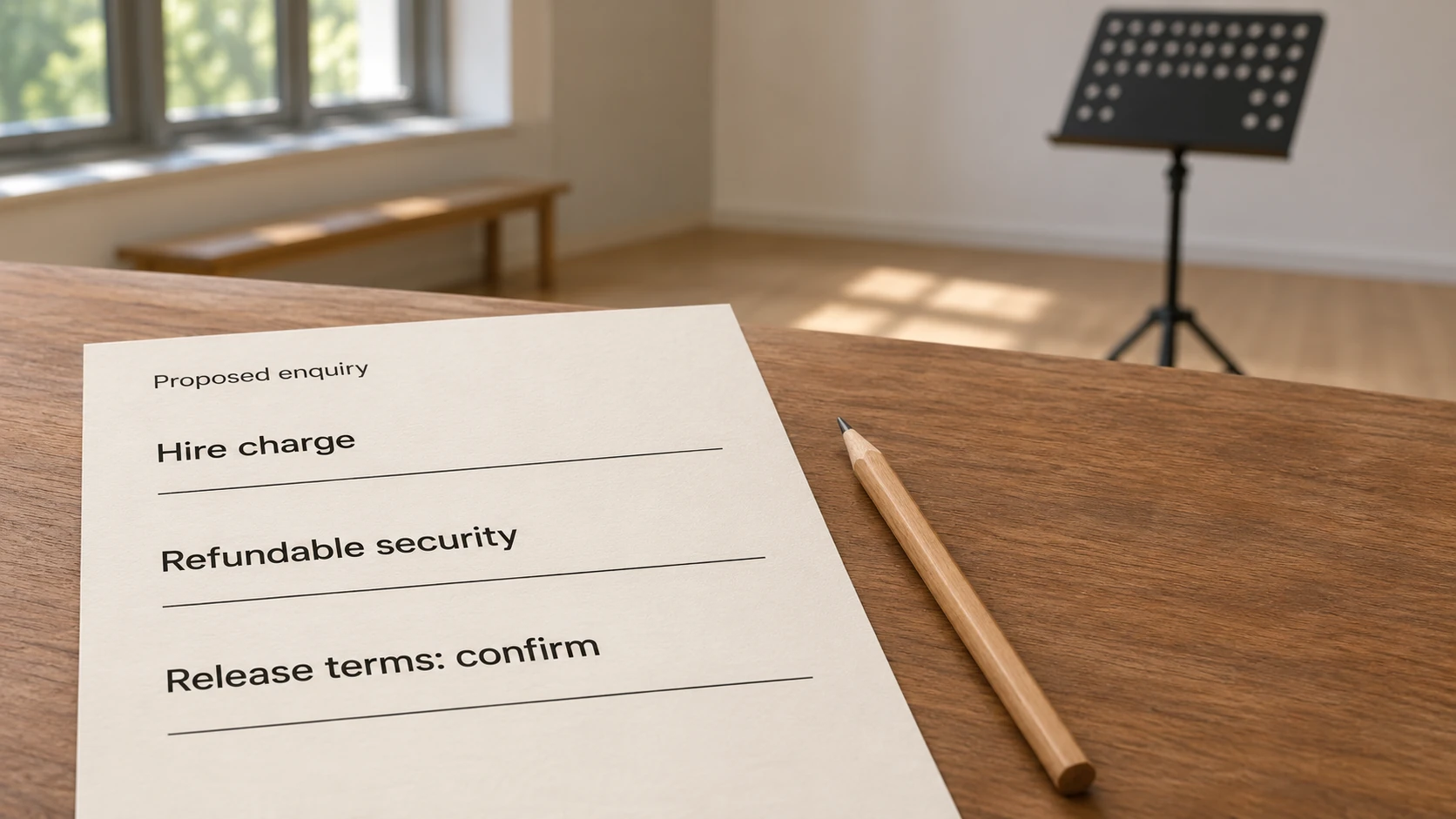
A music stand deposit budget needs to distinguish the charge for a proposed hire from any security requested alongside it. A note that says only “stand hire” can hide that difference. Start with the terms you actually have, including anything still unanswered. This article works through an original fictional enquiry about a generic stand. Neither linked retail listing establishes a hire service, deposit arrangement or booking, and no actual payment or refund is reported.
In the example, Leah is considering hiring a stand for a rehearsal. She has not selected a provider or accepted an offer. Her planning page has three headings: the fee for the proposed hire, any security requested and the terms for releasing that security. The page is a place to keep answers. It cannot supply an answer that the prospective provider has not given, or turn a familiar word such as deposit into a complete agreement.
Name the hire charge before treating it as settled
The first entry is the hire charge. Leah writes, “Ask for the charge covering the proposed stand and hire period.” That identifies the question without inserting a price. She also leaves space for what the quoted charge includes. Collection, delivery, a changed period or an added item could raise separate questions in a real enquiry. None is assumed to be included or available in this fictional one. The eventual answer needs to concern the actual proposal.
Keep the quoted basis beside the charge. A short message that gives a figure without identifying the equipment or period leaves part of the enquiry open. Leah can ask for those missing details before comparing the proposal with her available funds. She does not need to guess a likely amount from a retail photograph. The photograph concerns an offered physical item; it does not establish a provider’s terms for lending or hiring another item.
Ask what refundable security means in this proposal
The second heading is refundable security. Leah’s question reads, “Would this proposal require a paid security deposit, a payment hold or another arrangement? Please describe which one applies.” These alternatives belong to the original enquiry. They are not findings about an actual provider. If the reply uses only the word deposit, the note can preserve that wording and mark the mechanism unanswered. Do not replace the provider’s incomplete answer with the arrangement you expected to hear.
A note about a payment hold should remain distinguishable from a note recording money actually paid. Leah leaves both unconfirmed until the enquiry receives an answer. This article supplies no banking rule, card-processing timetable or accounting treatment for either arrangement. Its practical task is narrower: retain the proposed mechanism rather than combining unlike descriptions into one entry that merely says “paid.” The actual transaction record, if there is one later, will need to describe what occurred.
Separate money needed beforehand from the eventual expense
Leah’s music stand deposit budget has a planning question at the top: “What would I need available before collection?” Beneath it, she keeps the proposed fee and the security question on separate lines. She does not remove the security line because a reply might describe it as refundable. Equally, she does not label every proposed security amount as a final hire expense. The two descriptions answer different questions, and the unfinished page can show that distinction without calculating a total.
A separate line asks, “What would remain paid after the arrangement is closed?” Leah leaves it blank. No return, release or deduction has occurred in the example. The blank preserves that missing event. It is not a promise that the security will be returned in full, nor a prediction that it will be kept. A proposed arrangement can be considered while its eventual result remains unknown. Write an actual later outcome only when the relevant record exists.
Repair an early note that invents the ending
Here is Leah’s first fictional draft: “Stand hire paid. Deposit back after rehearsal. Only the hire fee counts.” Every sentence gets ahead of the premises. Nothing has been paid, no return terms have been obtained and no release date has been established. Crossing out just “after rehearsal” would leave the invented payment and completed-looking budget in place. The revision needs to change the status of the whole note, not simply soften its final phrase.
The revised note reads: “Proposed stand hire: quote requested. Hire charge: amount and included period to confirm. Refundable security: mechanism and terms to confirm. Money required before collection: pending those answers. Eventual expense and any released security: no outcome recorded.” This is an original template for the example. It names the missing information without making the planning page look like a receipt. Leah can retain the crossed-out draft to show why the wording changed.
The revision also removes “only the hire fee counts.” That phrase did not say what was being counted. It could refer to the expected expense, the money needed before collection or a later settled result. Instead of choosing one meaning silently, the new note gives those questions separate places. No arithmetic exercise or universal budgeting formula is needed. The revised wording now describes the proposed arrangement and leaves the later events unwritten.
Keep release conditions beside the security entry
For the enquiry’s next line, Leah writes, “Please state the conditions and process for releasing any security, including information about possible deductions and how an unresolved question would be handled.” This asks for terms; it does not create them. The article supplies no right to a refund, standard deduction, inspection rule or dispute outcome. A real answer would need to come from the responsible provider for the actual proposed arrangement and remain attached to that proposal.
Timing needs its own answer too. “Refundable” alone does not tell Leah which date she should write on the planning page. She can ask when a release would be initiated under the stated terms and what record would confirm it. If the response leaves timing open, her note should leave it open. A date copied from another hire, an earlier shopping session or an unrelated purchase would not answer this enquiry.
Use retail stand references without inventing hire offers
The Musician’s Gear stand account describes a two-pack and uses both MST50 and MTS50 in its description. Its sole gallery image depicts two complete tripod stands with solid desks and page-holding arms. The spelling difference remains visible rather than identifying two models. The image establishes no delivered inventory, hire availability, deposit terms or independently tested performance. It is a bounded equipment reference, not Leah’s proposed rental offer.
The Gator GFW-MUS-0500 account describes a tripod music stand. Its galleries show a perforated tray, red foot rings and Frameworks lettering; some views stage an open music book. The description gives an 18-to-75-inch adjustment alongside a maximum height of 45 inches. This article resolves neither statement from the photographs. No height, safety result, delivered book, factory-model authentication or rental terms are certified here.
Leah can describe the equipment she is enquiring about without claiming that either retail item is offered for hire. If an actual provider later identifies a different stand, that becomes a different equipment reference to keep with the enquiry. A familiar-looking desk or tripod cannot establish that it is the same model. Likewise, the number of stands in a retail photograph does not decide how many a real provider would supply or which items a proposed charge would cover.
Keep neighbouring budget questions separate
The shared scissors budget guide separates contribution promises, the exact basket and the person paying first. Leah’s example contains no group contributions or shared ownership agreement. Its unanswered question concerns a prospective provider’s charge and security terms, rather than how participants would divide a purchase.
The wiper lifespan savings estimate guide keeps a forecast and possible warranty remedy conditional. This example supplies no service-life assumption, future replacement estimate or numerical savings model. An eventual release of security is also left unrecorded until there is an actual outcome to record.
Retain a changed proposal as a changed proposal
Suppose the fictional enquiry changes from a rehearsal to a later event, or from one generic stand request to another equipment arrangement. Leah keeps the earlier note and marks the new proposal separately. She asks which earlier terms, if any, still apply. This avoids presenting an old response as confirmation of a changed request. It also keeps the record readable without inventing a cancellation, a new charge or a provider’s agreement to carry terms forward.
If an actual hire is eventually agreed, preserve its records separately from the planning draft. An enquiry, an accepted proposal, a payment record and a later release record describe different stages. One does not have to stand in for all the others. The example does not prescribe a document-retention policy; it illustrates why Leah should avoid writing “closed” beside a question merely because she has finished composing the enquiry.
Keep a separate purchase and its payment terms distinct
A retail purchase would need its own decision if you eventually consider buying equipment instead of pursuing a hire enquiry. On republeq.com, identify the exact offer and intended order unit before reviewing the actual checkout. The generic enquiry and blank planning lines in this article establish no current price, rental service, deposit requirement or payment support. If a cryptocurrency option is presented for the intended purchase, read the instructions shown for that transaction. Do not assume USDT is available from a general reference to crypto, or reuse a destination or network from another order. Confirm the specified asset, supported network, amount, destination and any displayed fees or validity period before deciding whether to proceed. If an essential detail is unclear, keep the payment unmade while seeking clarification through the responsible official interface or support route. Neither a proposed hire charge nor a line labelled refundable security is a transfer instruction. The availability of a purchase checkout would not answer a prospective hire provider’s separate terms, establish a completed booking or promise release of security. Retain any genuine order acknowledgement and payment record with the actual retail transaction, if one occurs. Keep them distinct from the hypothetical hire note and from any later records concerning a different arrangement. A payment method cannot resolve the conflicting height wording in a product account, authenticate an unshown model number or establish which equipment a provider supplies. The proposed budget can remain unfinished while you obtain those answers. This article reports no purchase, payment, hire or refund and supplies no wallet setup, exchange calculation or transfer procedure.
Leave the proposed note open where its answers are open
Read the revised music stand deposit budget against the actual replies, if any arrive. A line can move from “to confirm” to an attributed proposed term when that answer is available. It should not jump from an enquiry to “paid,” or from a refund condition to “returned.” Leah’s finished writing example remains a proposed enquiry with blank amounts and unconfirmed release terms. No completed arrangement or returned security has been added to its ending.