Furniture & Home Organization
Check multi-tier hanger clearance before choosing a closet spot
A practical check of the space below a closet rail before choosing a multi-tier clothing hanger, with an original hypothetical wardrobe example.
Start with the space below the rail
Multi-tier hanger clearance starts with the space beneath the rail where you actually plan to hang clothes. A hook can sit on that rail while the rest of the arrangement reaches a shelf, a storage box or another row of clothing. Before choosing a spot, look at the complete hanging arrangement you intend to use. Keep the rail connection, the downward space and the clothing requirements as separate questions.
This is a placement check for an ordinary wardrobe, not a claim that any particular hanger will fit. You need information about the actual hanger and the clothes you intend to put on it. If the necessary overall measurements or instructions are unavailable, leave the proposed fit unresolved. A clear product picture can help you identify a shape, but it cannot supply a reliable measurement of your closet or the finished hanging drop.
Begin with one intended position rather than a plan to reorganize the whole wardrobe. Open the door as you normally would and identify the rail section you want to use. Notice what sits directly below that section today. A shelf that looks distant from an empty hook may matter once the whole hanger and hanging clothes occupy the space. Record the obstruction as it is instead of assuming you will remove it later.
Identify which form you are considering
The image for the SSWBasics hanger shows a broad triangular wire frame with a straight sleeved lower crossbar. That visible form identifies this example. It does not verify its dimensions, material, load limit, pack quantity or suitability for your garments; those claims need appropriate product information.
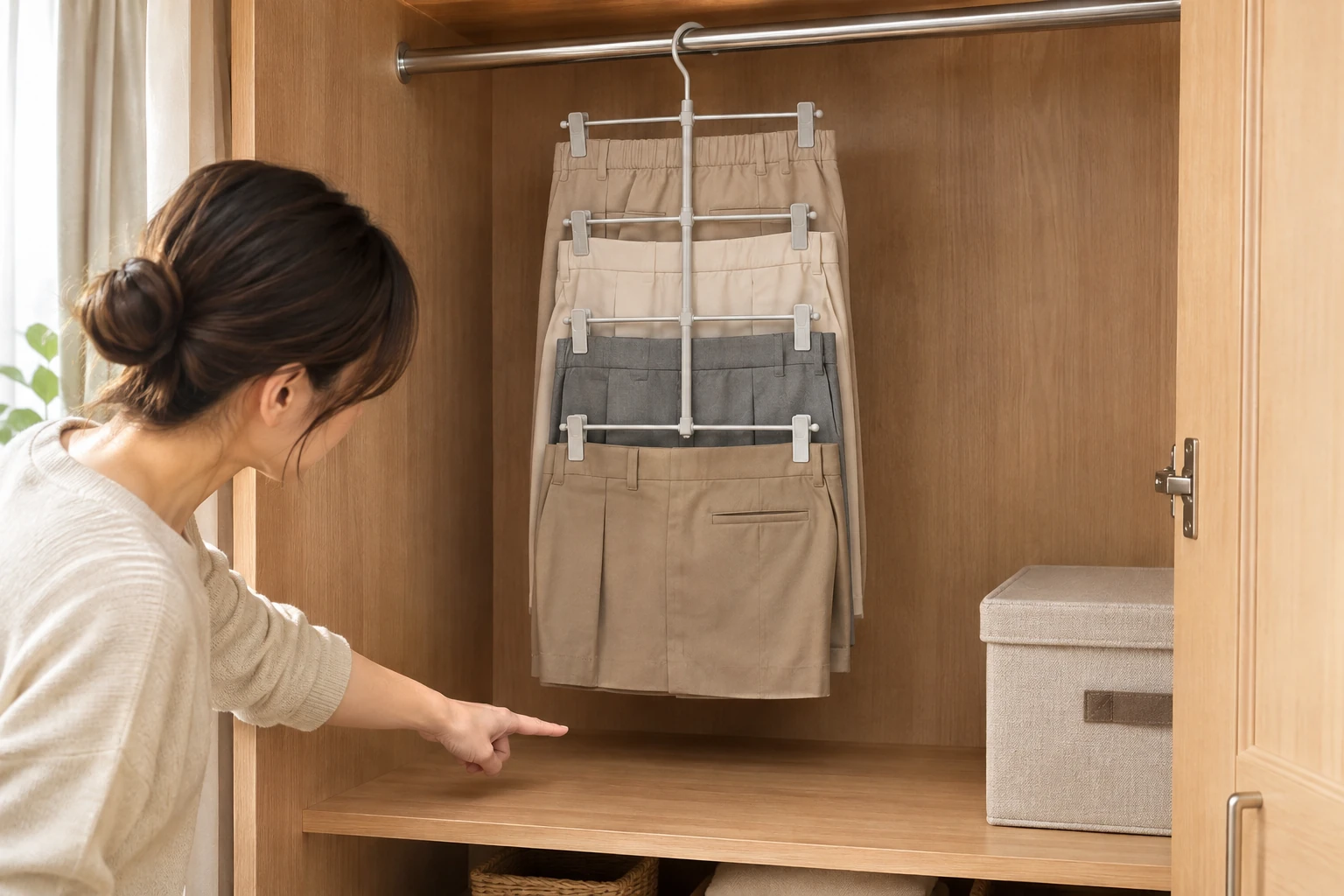
The Simply Essential hanger image shows a vertical spine joining four horizontal rails with paired clips. Its downward arrangement makes the below-rail question easy to recognize. The image does not establish overall height, clip performance, load limits, material or clothing suitability. Obtain the relevant instructions and measurements before deciding it fits.
Do not treat these two forms as interchangeable just because each has a hook. Describe the form on your note so that a measurement or instruction you later find stays attached to the right item. If a listing changes or you open another version, check its identity again. Carrying an overall measurement from a different hanger into this decision would leave the fit question unanswered.
Describe the full intended hanging arrangement
Write down what you intend to hang before judging the available space. The question is about the proposed arrangement, including where the clothes would extend below their support. An empty hanger alone does not represent that arrangement. Follow the hanger instructions and the clothing care guidance rather than inventing a way to fold, clip or drape an item simply to make the picture look tidier.
Keep any unknowns visible. You may know where the rail is and what shelf sits below it while still lacking the total hanging drop for the selected item. That is useful partial information. Mark the proposed position as unconfirmed and identify the missing information. There is no need to turn a rough guess into a buying decision because the rest of the note is complete.
If you already own the exact hanger, inspect its instructions and condition before considering an ordinary placement check with suitable clothes. If you do not own it, use reliable product information and ask for clarification where necessary. Neither route calls for testing weight limits, forcing a hook onto a rail or attaching improvised extensions. This exercise does not establish the strength of the hanger, rail or wardrobe.
Check what interrupts the downward space
Look below the chosen rail section and name the first relevant obstruction. It might be a fixed shelf, a box on that shelf or clothes on a lower rail. Describe the part that actually occupies the intended hanging area. A wardrobe can have an open section beside a shelf and a restricted section above it, so one general description of the closet may hide the choice you need to make.
Include movable objects only in the arrangement you can realistically maintain. If the proposed spot works only after a storage box moves, decide where the box will go before counting that space as available. Do not assume an object will stay absent if it returns there every laundry day. You are choosing a useful position for regular use, so base the note on the arrangement you expect to keep.
Keep the door and normal access in view too. A position that appears clear when viewed straight on may still be awkward to reach in your own wardrobe. Consider how you would access the intended clothes while respecting the item instructions. Do not bend hardware, alter the rail or push clothes against an obstruction to declare the position successful. Leave a doubtful arrangement unresolved and consider a different position.
Keep changing arrangements honest
If you move the intended position from one end of the rail to the other, check the lower area at the new position. Do not carry forward a conclusion that depended on a shelf ending somewhere else. The hanger identity may stay the same while the surroundings change. Update the note with the new location so you can see which arrangement the decision actually describes.
A change in the intended clothes also deserves another look at the placement question. You are planning for the garments you named, used in a way their guidance permits. Replacing them with different items changes what you are considering below the rail. Keep the earlier note as a record of that earlier proposal instead of silently treating it as confirmation of every later arrangement.
For shared wardrobes, describe the proposed location clearly enough that another person can recognize it without guessing. A photograph of the actual empty position may help you remember the shelf and box locations, but it does not prove dimensions or product compatibility. Use it as a reminder alongside the relevant information. If someone normally places a laundry basket or other object beneath the rail, include that ordinary use when deciding whether the proposed position is practical.
An original wardrobe example
Imagine a wardrobe owner considering a tiered hanger above a fixed shoe shelf. The owner has chosen a rail section beside the door and intends to hang several suitable items according to their care guidance. The shelf currently holds a lidded storage box. This is an invented planning example, not a product trial or a recommendation for any of the linked hangers.
The owner first writes down the exact hanger under consideration and the intended garments. For closet rail clearance, the note describes the proposed rail section and the shelf below it. The tiered hanger space plan keeps the box on the shelf because it normally lives there. The owner has no confirmed overall hanging drop yet, so the plan is marked unresolved rather than approved from a photograph.
After obtaining appropriate measurements and instructions for the exact item, the owner can compare the intended arrangement with the actual available space. If the box interrupts that arrangement, the owner can consider another rail section or an ordinary storage change with a real place for the box. If the information still does not settle the question, postponing the purchase remains a valid outcome. No universal clearance figure is needed to describe that choice.
The useful result is a decision tied to an actual wardrobe position. The owner has not proved that a hanger is strong, that its clips will hold a particular fabric or that stacking garments saves a promised amount of space. Those remain separate matters. The placement note says which proposed arrangement was considered, what was known and what still needed confirmation.
Keep neighboring household checks separate
If a wardrobe light also fails to respond, the closet motion-light troubleshooting guide addresses its own power, mode and sensor-placement questions. A lighting issue does not settle hanger clearance. Complete the light diagnosis on its own terms, and keep the below-rail placement note tied to the hanger and intended clothes.
The quiet wind-chime movement guide concerns a windcatcher, striker and tubes. It is a separate household check. Its movement questions do not provide hanger measurements or garment instructions. Keep each object’s requirements attached to that object instead of transferring a successful check from one arrangement to another.
The same discipline helps within the wardrobe. Choosing a hanger for a garment and choosing a place for the resulting arrangement can involve different information. A promising rail position does not authorize a clipping method that the garment guidance rejects. Conversely, an appropriate support method does not establish that there is enough room beneath your chosen rail. Finish the outstanding check before treating the whole proposal as ready.
Before using a cryptocurrency payment option
If Republeq.com offers cryptocurrency such as USDT at checkout, review the payment terms only after you have settled the item identity and the information needed for your placement decision. Paying cannot resolve an unknown overall hanging drop or establish that a garment is suitable for a particular support method. Keep the fit question open if the necessary information is missing, even when a payment option appears convenient. This paragraph is conditional guidance, not a statement that either linked listing currently offers a particular coin, network or checkout service. Read the exact order details and confirm the item, quantity, delivery address and total before authorizing anything. If cryptocurrency is available, check the requested asset and network against the instructions shown for that transaction. Do not assume that similarly named assets or networks are interchangeable. Review any stated fees, timing requirements, exchange-rate terms and refund arrangements. If a payment address or instruction changes unexpectedly, stop and resolve the discrepancy through the seller’s established contact route before sending funds. Keep your wallet recovery phrase and private keys private; a merchant does not need them to receive an ordinary payment. Consider whether you understand the practical consequences of the proposed payment method and whether another offered method is more suitable for you. Save the order confirmation and transaction record in a way you can find later, along with the exact item information used for your decision. A transaction identifier records a transfer; it does not independently prove that an order was accepted, shipped or delivered. Check the seller’s order status separately. If the purchase terms or return process remain unclear, obtain clarification before proceeding. None of these payment checks replaces the product instructions, clothing care guidance or the actual below-rail space assessment.
Keep a short placement note
Your final note can be brief: exact hanger identity, intended clothes, chosen rail position, lower obstruction and any unresolved information. Add the instruction or measurement source you relied on so that you can check it again if the proposed item changes. Describe the wardrobe as you intend to use it, including the storage objects that normally occupy the lower area.
Choose the position only when the actual information supports the whole proposed arrangement and its ordinary access. Otherwise, identify what is missing, consider a different suitable position or leave the purchase for later. Multi-tier hanger clearance is a question about your intended hanging arrangement in a real wardrobe. Keep that decision attached to the complete drop below the rail, rather than ending the check when the hook appears to fit.
Include the space below the rail in the hanger decision.