Crypto Commerce
MOKOSE HD-SDI 1080P camera vs SPT 700TVL: choose the camera around the recorder
Compare MOKOSE HD-SDI 1080P camera by recorder compatibility, lens coverage, night use, and installation evidence.
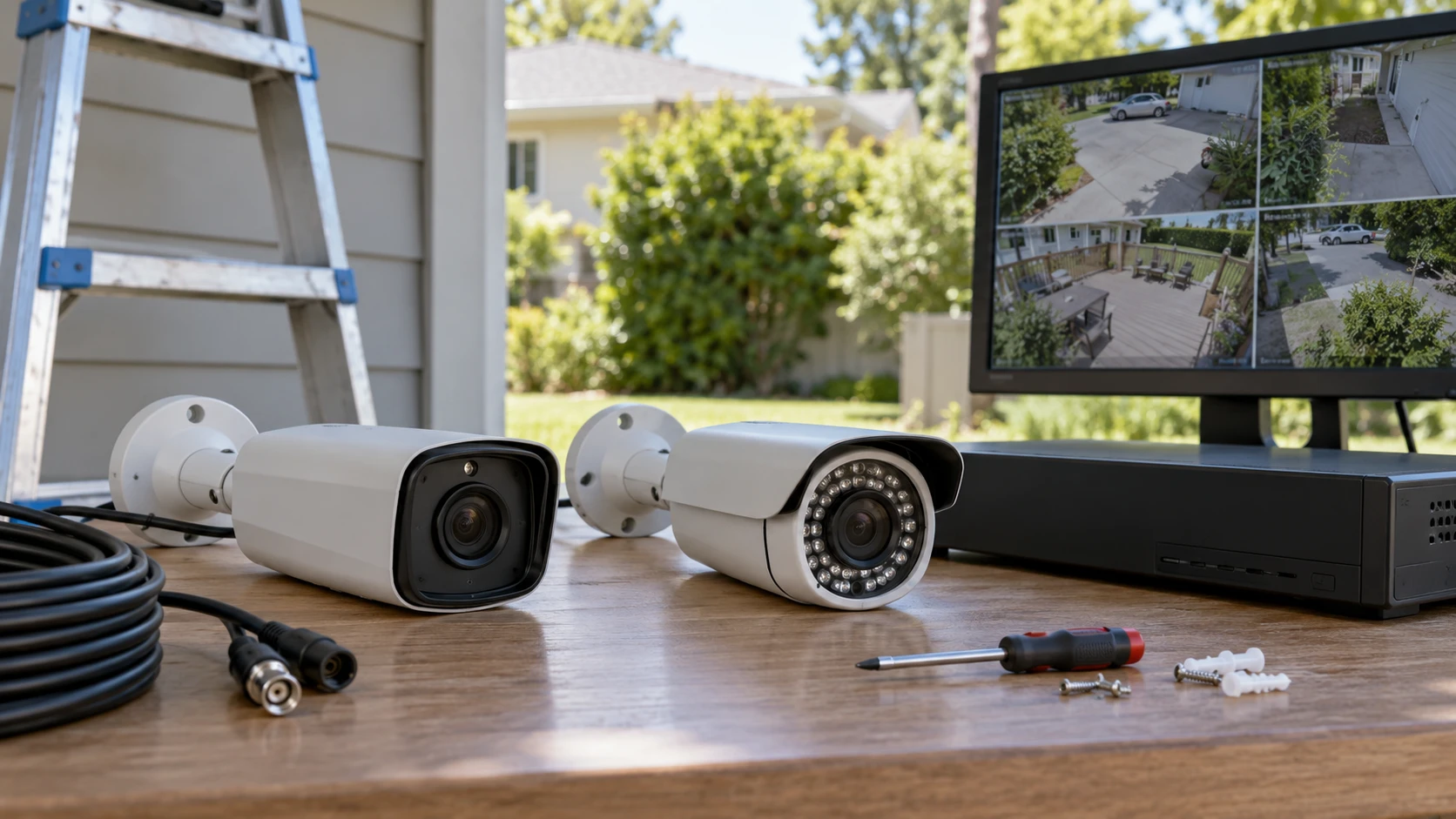
The MOKOSE and SPT cameras are both listed for surveillance, and both let you adjust framing with a varifocal lens. Their strongest documented differences sit elsewhere. MOKOSE specifies a 2-megapixel 1080P HD-SDI signal, a 5-50 mm manual lens, and a camera body measuring 126 by 44 by 44 millimeters. SPT specifies a 700TVL image class, infrared capability, and a weatherproof housing, but its saved description does not name the video-output connector or a formal weather rating. Before choosing one, identify the recorder and cable path already in use. A camera that cannot deliver a signal your recorder accepts will not solve the coverage problem.
The MOKOSE HD-SDI 1080P camera listing states 1920 by 1080 effective pixels from a 1/2.8-inch CMOS sensor. It also states 25 frames per second in PAL mode or 30 in NTSC mode. These are concrete video specifications to take to the recorder manual. Confirm the recorder supports this exact HD-SDI format and frame rate, and check the cable type and supported run length for the installation. The product row does not give a power-supply specification or list an included recorder, so neither can be assumed from the camera alone.
Video format is the first compatibility gate — SPT 700TVL vari-focal IR camera
The SPT listing uses 700TVL to describe image detail. That is a different kind of specification from MOKOSE's 1920 by 1080 digital pixel count. The saved SPT row does not state its output standard, connector, frame rate, or recorder compatibility. Ask for the current model manual before placing it on an existing cable system. It would be risky to infer an exact coaxial format solely from the TVL label. A recorder may have ports that look compatible while accepting a different signal. Verify the complete chain from camera output through cable and recorder input to the live view.
A useful check starts at the recorder model. List which camera standards each channel accepts, the resolution and frame rate limits, power arrangement, and storage settings. Then compare those requirements with each camera's current documentation. MOKOSE's HD-SDI label supplies a starting point; SPT needs a specific output-format answer. If the recorder is being bought with the camera, select and test the pair as a system. A camera listing alone is not a complete surveillance kit, and a resolution number does not establish how recordings will be stored or retrieved.
Storage planning follows signal compatibility. For MOKOSE, the stated 25 or 30 frames per second tells you how often a frame can be captured in its named modes, but it does not tell you the file size of a day's recording. Compression, scene movement, recorder settings, and retention rules determine storage use. SPT lacks a frame-rate figure in its saved description, so ask for that specification as well. Make a short test recording on the actual recorder, check the resulting size and image, then calculate how many days the selected storage can retain. Include the extra space needed before old footage is overwritten.
The published wired camera installation planning guide compares other security setups, including a wired kit and a solar option. Its planning questions are useful here for cable routes, power, recorder position, and where coverage is needed. The guide's hardware is separate from these MOKOSE and SPT units. Use it to frame the installation, then rely on model-specific manuals for signal format, power, connectors, and environmental limits.
What the lens can show — SPT 700TVL vari-focal IR camera
MOKOSE specifies a 5-50 mm manual varifocal HD lens with a CS mount and a stated angle-of-view range of about 8 to 68 degrees. That lets the installer adjust between a wider scene and a narrower view, within the lens's actual range. Decide what must be recognizable in recorded footage: an entire doorway, a parking space, or a more distant gate. A wide view may capture context while making a person or object smaller in the frame. A narrow view can put more pixels on a selected area but may miss activity to either side. Plan the subject distance and test both ends of the adjustment before fixing the camera permanently.
SPT also describes a vari-focal lens, yet its saved row does not give focal length or angle of view. Request those details for the exact version you intend to purchase. "Vari-focal" establishes adjustability, not the range of scenes it can cover. A small adjustment range and a broad zoom range lead to very different mounting choices. The SPT housing may suit a sheltered or exposed position according to its listing, but lens coverage still needs to be checked from that mounting point. IR capability does not enlarge the scene or overcome an obstructed line of sight.
Mounting height changes the result as much as lens setting. A high camera may show a large area but less facial detail; a low one may be easier to block or reach. Mark the field of view on a site sketch and test it at the times that matter. If a gate opens into the frame, make sure the moving panel does not hide the subject. If a light shines directly at the camera at night, test how the scene appears. Neither saved description provides enough dynamic-range or exposure measurements to predict every lighting condition.
Night and outdoor use — SPT 700TVL vari-focal IR camera
SPT's listing names infrared capability for low-light or night monitoring and a weatherproof enclosure. Those claims make it the candidate to investigate when the camera will face an outdoor scene after dark. Check the current specification for IR range, power, housing seals, operating temperature, and any ingress-protection code. The saved row does not provide these numbers. "Weatherproof" should not be treated as an unlimited permission to mount it in standing water or leave connectors exposed. Cable joins and the power supply need their own protection.
MOKOSE's description calls its CMOS sensor high sensitivity, but it does not claim integrated IR illumination or a weatherproof housing. That makes an indoor or protected installation easier to discuss from the available evidence. For an outdoor position, ask the manufacturer about enclosure and temperature limits, and plan any lighting separately. A sensitive image sensor may still produce a poor picture in a scene with no useful light. No product row here supplies a controlled nighttime comparison, so avoid concluding that either camera will read a plate or identify a face at a particular distance.
Night tests should include the scene in its usual state. Turn on the nearby porch or security lights, let any vehicle headlights pass, and watch for reflections from glass or a white wall. An IR camera can have its own light source reflected back into the lens if it is installed behind a window. The SPT description does not document how its IR system responds in every position, so a real test is valuable. For MOKOSE, verify the intended lighting arrangement before treating "high sensitivity" as a complete night-vision plan.
Physical installation and service — wired camera installation planning
MOKOSE gives a 126 by 44 by 44 millimeter body size. That can help with a tight indoor mount or an existing enclosure, but the saved row does not itemize a mounting bracket or hardware. Confirm how the CS-mount lens, body, cable, and any protective case will fit. A 50 mm telephoto setting may be useful for a distant target only if the body remains stable after adjustment. Slight vibration can shift a narrow field of view appreciably. Ask how focus and focal length are locked after installation.
SPT's row emphasizes its black weatherproof housing but omits dimensions and mounting details. Obtain a drawing if it must replace an existing camera on a fixed bracket. Check whether the cable exits through the wall, a junction box, or the housing, and leave room to open the enclosure for maintenance if the design requires it. The saved description does not say what cable, adapter, or power supply ships with either unit. Confirm package contents before scheduling installation, especially if the job site is difficult to revisit.
Routine service includes cleaning the lens cover, checking seals and cable strain, confirming the recorder still captures the expected view, and reviewing stored footage. A live image in the setup screen is only the beginning. Test a recording, find it later, and export a short sample through the actual system. These steps verify the whole chain that an isolated camera specification cannot. Set privacy boundaries and retention according to the location's requirements; the product listings do not define a recording policy.
A choice tied to the existing system — SPT 700TVL vari-focal IR camera
The SPT 700TVL vari-focal IR camera is worth investigating for a weather-exposed or low-light location, provided its exact output format and environmental specifications match the recorder and site. MOKOSE is the more specifically documented choice for a 1080P HD-SDI installation where its 5-50 mm lens range and frame-rate modes suit the coverage plan. Neither camera should be ordered solely because its image label sounds familiar.
Write down the recorder's supported inputs, the target distance, lens coverage, power supply, cable run, and day/night conditions. Verify each answer in the current model documentation, then test a live and recorded image at the actual site. The better camera is the one that fits that chain and shows the subject you need, in the light you actually have.