Crypto Commerce
Maytag MGD7230HW natural-gas dryer vs MED7230HC: settle the dryer hookup first
Compare Maytag MGD7230HW natural-gas dryer by utility hookup, laundry cycles, door access, moisture sensing, and listing identity.
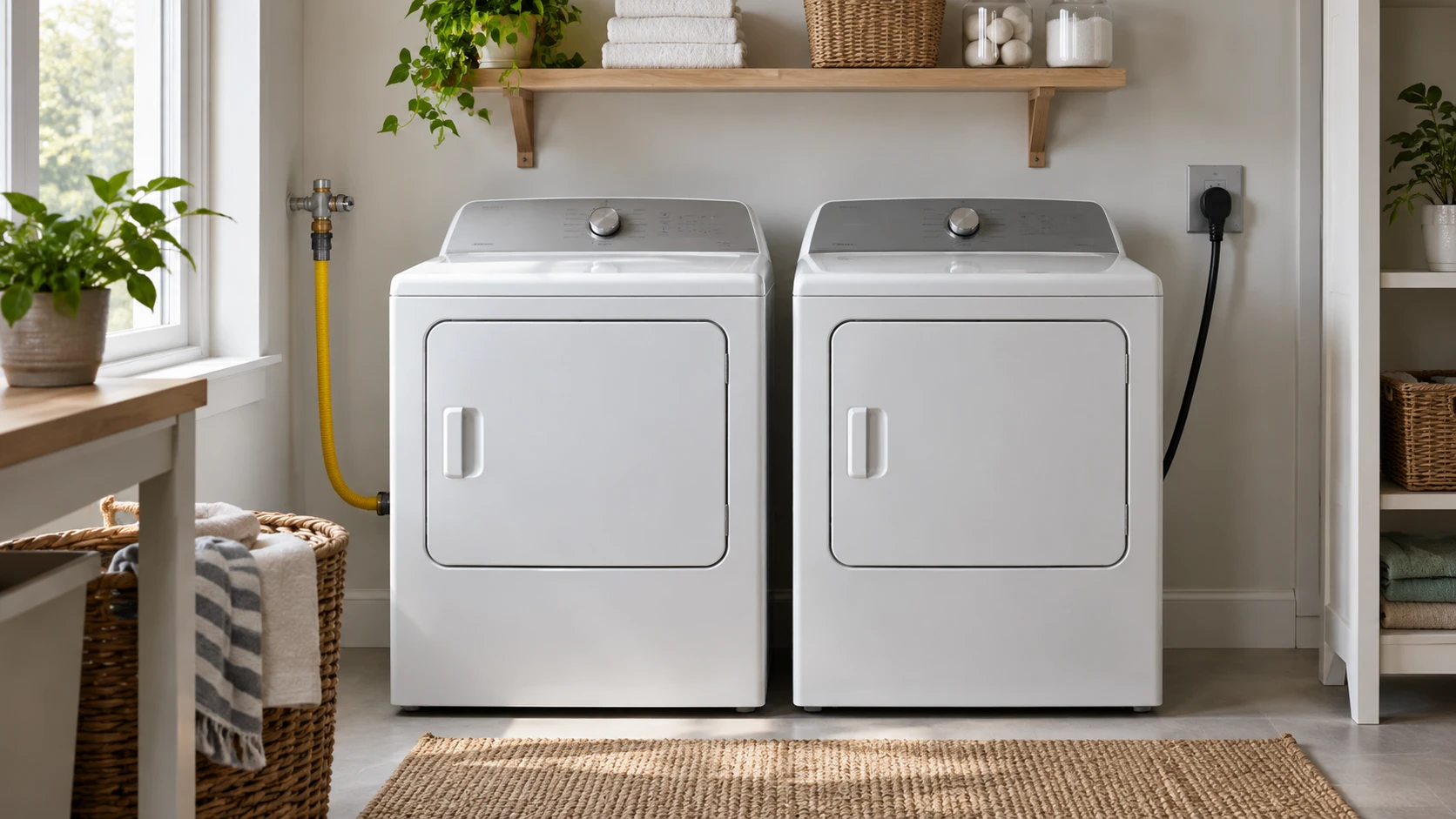
The Maytag MGD7230HW natural-gas dryer and the MED7230HC electric dryer both list a 7.4-cubic-foot drum and an Extra Power option. Their similar model numbers make it easy to focus on cycles and finish before confirming the utility connection. Start with the laundry room: the gas model is described for natural gas, and the other is described as electric. The correct fuel and electrical setup determine which unit can be installed there safely.
These are saved Republeq's product descriptions, not a matched drying-time or energy-cost test. They omit full exterior measurements and model-specific installation details. The gas listing is also internally inconsistent about color: its metadata says Gray, while the description and URL refer to White. Verify the exact model, color suffix, and retailer SKU before ordering. A photograph is not enough to resolve a variant mismatch.
Map the existing utilities — published guide to a 240-volt dryer and drum size
The MGD7230HW row identifies a natural-gas dryer. Ask a qualified installer to verify the gas supply, shutoff, connection, ventilation path, and electrical requirements for that exact unit. The saved row does not state that an LP conversion is available or included. A household with propane should not treat the word “gas” as sufficient evidence of compatibility. Get the current Maytag installation document and any required kit information before making a delivery appointment.
The published guide to a 240-volt dryer and drum size covers a different electric model. Its habit of checking the electrical circuit and physical drum against the exact appliance is useful here. Its voltage specification belongs to that Speed Queen, not automatically to the Maytag MED7230HC. Have an installer check the Maytag manual and the laundry room's outlet, breaker, and wiring rather than inferring a match from another dryer's guide.
The electric model's saved row does not supply a circuit rating or plug configuration. A dryer can be called electric while still requiring a particular supply and cord arrangement. Verify these before the old appliance is removed. For either model, confirm the exhaust route, permitted duct material, total run, and where the vent terminates. The saved rows do not establish that one existing duct will suit both without inspection.
Include installation in the comparison price. A needed electrical change, gas connection, vent repair, or haul-away service may outweigh a small difference in appliance price. Ask for a written installation scope naming the exact model and work to be done. A delivery slot is not proof that the home is ready for connection. If the laundry closet has limited access, the installer also needs enough working room to inspect the rear of the dryer.
Compare drum space with the loads you actually dry — Maytag MED7230HC electric dryer
Both rows give a 7.4-cubic-foot capacity. That common number is useful when screening out a much smaller model, but it does not prove that every comforter or bulky item will tumble properly. Read the care label and Maytag loading guidance for the specific item. A load should have room to move; filling the drum because the volume sounds generous can lengthen drying or leave heavy seams damp.
The electric MED7230HC row states a 27-inch width. The saved gas row does not provide a complete width-and-depth drawing, despite the close model naming. Obtain both official dimension sheets. Measure the delivery path, the final opening, the door-open space, and the position of the vent and utility connections. A dryer can fit between two walls yet leave too little space behind for the approved exhaust route.
The gas row describes a drop-down door with heavy-duty hinges. The electric row describes a latch-free hamper door that folds down for loading, unloading, and folding. These descriptions suggest similar working positions, but they do not provide a matched door-depth measurement. Stand in front of the intended spot and consider how a full laundry basket would be held while the door is open. A front-loading design is less convenient if the opposite wall leaves no room to move.
If the dryer will sit beside a washer, check which side each door opens and whether the doors interfere. The saved rows do not state a reversible-door feature. Ask for model-specific hinge instructions rather than assuming the matched family name permits a change. Include a nearby shelf or counter in the loading plan; clothes often need somewhere to land as they come out.
Read the cycle claims separately — Maytag MED7230HC electric dryer
Both rows describe Extra Power as extending drying time, heat, and tumbling to address thick fabrics or damp areas such as pockets and seams. That could be helpful for jeans, towels, or heavier workwear. It is still a cycle choice, not a reason to ignore garment care labels. Ask how it changes the selected program and whether it can be added to every cycle. The saved descriptions do not provide a matched before-and-after drying test.
The gas MGD7230HW row says moisture sensors monitor moisture and temperature. It lists Quick Dry, Wrinkle Control, Reduce Static, Steam Refresh, and a Wrinkle Prevent Steam option described as lasting up to 150 minutes. It also lists a Sanitize cycle with a claim in Republeq's catalog about removing common household bacteria. Those names should be checked against the exact control panel and current manual; a label does not tell us how each option treats every fabric.
The Maytag MED7230HC electric dryer row calls out Advanced Moisture Sensing, which monitors moisture and air temperature. It lists steam cycles to address wrinkles and static, Steam Refresh, Quick Dry for small loads, and Wrinkle Control with a lower-temperature approach and a default Wrinkle Prevent option. The descriptions overlap with the gas model, but they are not identical. Do not assume a cycle setting or steam duration transfers between the two control panels.
Steam features also need an installation check. The saved rows mention steam-related options but do not explain the water connection or supplies for either exact model. Ask the installer and read the current manual before counting those programs as ready to use. If the household rarely steams clothing, utility and fit considerations should carry more weight than a long list of steam names.
Quick Dry is intended for small loads in the electric row; its description says it pairs with Quick Wash on select Maytag washers. That is a scheduling idea, not proof of compatibility with the washer already in the home. Check the actual load size and cycle instructions. A large wet load does not become a quick load simply because the control offers a short setting.
Decide which connected features matter — Maytag MED7230HC electric dryer
The gas row describes a Maytag app for remote start and stop, end-of-cycle notifications, and troubleshooting. The electric row saved here does not mention an app. That absence from the listing is not proof that the MED7230HC lacks connected features. Verify current specifications for the exact suffix and decide whether a notification would change the laundry routine. A dryer that finishes in a distant basement may benefit from an alert; one beside the kitchen may not.
Ask whether core cycles remain easy to select without an app or network connection. The saved rows do not explain account requirements or software support. Controls on the appliance should be evaluated while someone wearing everyday laundry-room clothing can reach them. An option hidden several menus deep may be used less often than a clearly labeled cycle.
Both rows mention an ENERGY STAR rating or certification. They do not give matched annual electricity and gas costs, usage assumptions, or a common energy guide in the saved text. Fuel prices vary by home, and installation work changes the total cost. Request current EnergyGuide information for the exact models and compare it with the household's expected loads and utility rates rather than treating a shared badge as equal operating cost.
Routine lint care also belongs in that cost and safety picture. Check how each model's lint screen is removed and cleaned, and arrange for the exhaust path to be inspected as the manual recommends. The saved rows give no comparable maintenance interval. A new dryer's cycle controls will not compensate for a blocked or poorly routed vent, so include the existing vent in the installer's assessment.
Check warranty and identity before checkout — Maytag MED7230HC electric dryer
The gas listing says its Maytag Commercial Technology motor has a ten-year limited parts warranty. The electric listing does not give a comparable warranty statement. Ask for both current warranty documents, including labor terms and coverage of the whole appliance versus one motor part. A prominent ten-year phrase should not be read as ten years of complete dryer service.
The color discrepancy on the MGD7230HW row deserves a written answer from the Republeq's catalog. The MED7230HC row describes a silver finish. If the appliances must match an existing washer, confirm the manufacturer color code, model suffix, and product photograph on the purchase order. A correctly installed but wrong-color dryer is still the wrong variant for a carefully planned laundry pair.
The gas MGD7230HW is the candidate when verified natural-gas service and its listed cycles suit the room. The electric MED7230HC is the candidate when its required electrical supply can be installed and its cycle set meets the same load routine. Confirm utility connections, exhaust, full dimensions, steam setup, warranty terms, and exact finish before comparing two similar 7.4-cubic-foot drums.