Crypto Commerce
LG LF25S6560S French-door refrigerator or Frigidaire GRSN2620AF for family food storage
Compare LG LF25S6560S French-door refrigerator by compartment layout, ice and water access, produce drawers, and kitchen clearance.
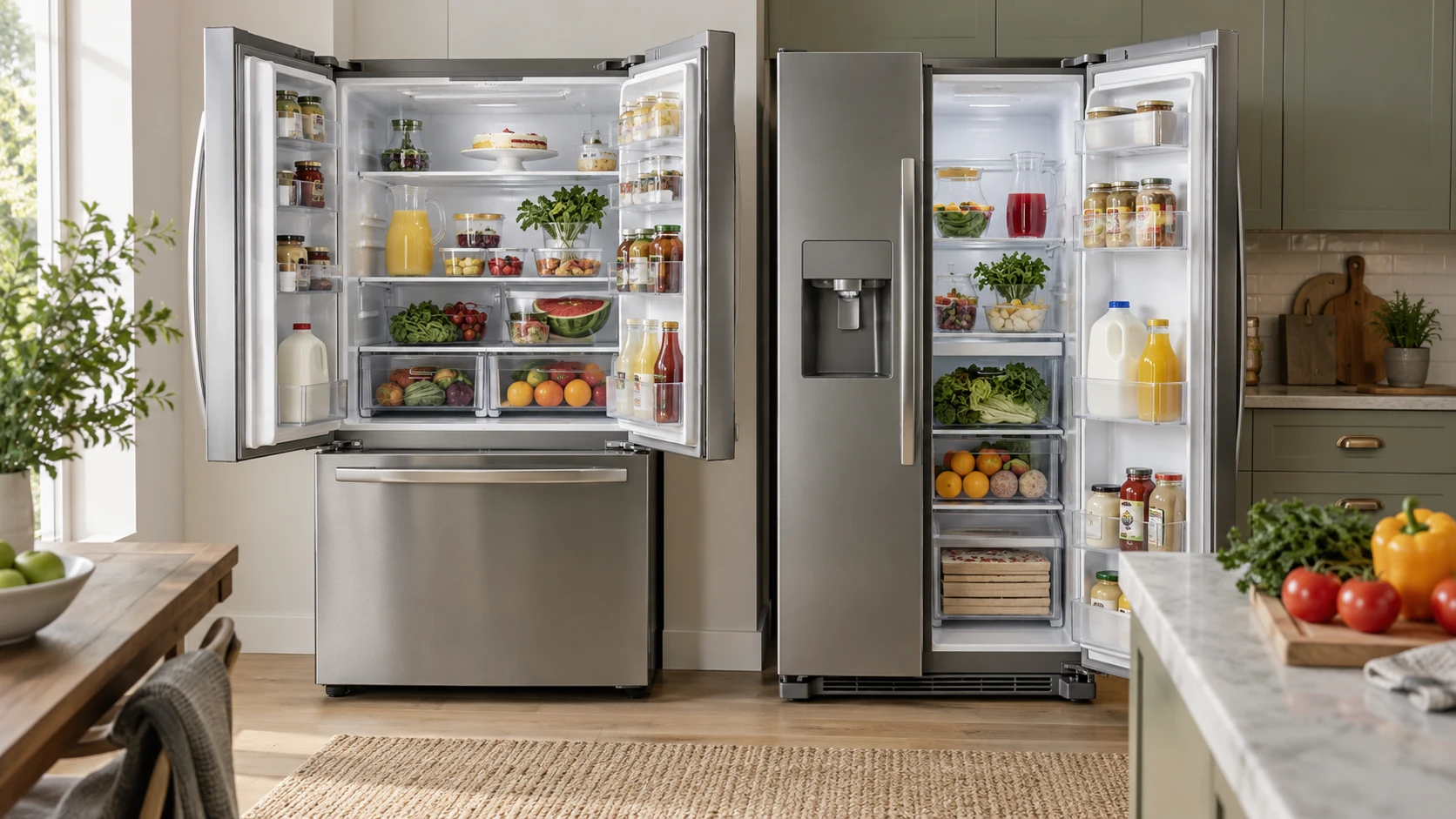
The LG LF25S6560S French-door refrigerator is a 33-inch freestanding model with a headline capacity of 25 cubic feet. Its saved row lists 16.3 cubic feet for fresh food and 8.2 for the freezer, plus dual ice makers and an external water-and-ice dispenser. The Frigidaire Gallery GRSN2620AF is a 36-inch standard-depth side-by-side model with a stated total of 26 cubic feet, an internal filtered-water dispenser, and a freezer ice maker. Their total capacities are close, but the door layout and compartment shapes may decide which one actually holds a household's groceries.
The published guide to refrigerator compartment capacity beyond total offers a way to think through shelf width, freezer access, and usable space after the headline number. Before shopping, list the bulky items that must fit: a wide tray, tall pitcher, frozen pizza box, or several produce bins. Compare those objects with current interior measurements rather than dividing a single cubic-foot figure by the number of people in the home.
The Frigidaire Gallery GRSN2620AF side-by-side refrigerator includes adjustable storage, a dedicated deli drawer, CrispSeal Plus crisper, multi-level LED lighting, and an EvenTemp cooling system in its saved description. The row does not divide its 26 cubic feet into separate fresh-food and freezer volumes. Ask for the current specification sheet and measure shelf openings before concluding that its extra headline cubic foot translates into more room for the items a family buys most.
Read the capacity labels carefully — refrigerator compartment capacity beyond total
LG's listing contains a numerical mismatch: 16.3 cubic feet for the refrigerator plus 8.2 for the freezer equals 24.5 cubic feet, while its headline says 25. This may involve rounding or a different reporting convention, but the saved row does not explain it. Verify the exact compartment figures on the current model specification. Do not use the 25-cubic-foot label to invent an additional half cubic foot of usable shelf space.
Frigidaire's 26-cubic-foot figure likewise needs compartment context. Side-by-side designs often divide food and freezer into vertical columns, but the useful width and shelf clearances depend on the actual interior. The saved description names flexible storage without providing shelf dimensions. Bring the width of a large platter or frozen package to the showroom or obtain the maker's interior drawings. A narrow shelf can be inconvenient even when the machine's total volume sounds generous.
The LG source names humidity-controlled crispers and a Glide N' Serve drawer. Those compartments may help separate produce from ready-to-eat foods or wide trays, but their actual dimensions are not in the excerpt. The Frigidaire row names a CrispSeal Plus crisper and a deli drawer. Its claims about limiting dry air and ripening gas are manufacturer descriptions, not a promise that a particular bag of vegetables will last a set number of days. Compare drawer depth, ease of removal, and what fits when each is full.
Use a normal shopping trip as the test load. Count beverage containers, cartons, leftovers, and produce that need refrigeration, then identify which shelves or bins would hold them. Repeat for frozen food. LG's separate fresh-food and freezer numbers give a starting split; Frigidaire needs a published split or direct inspection. A household that buys tall drinks may value a flexible door arrangement, while one storing large frozen trays may need to check the freezer's narrowest point first.
Draw a quick shelf map before comparing the models. Mark the items that cannot be turned on their side, such as a tall container of soup or a tray that must stay level. Then mark the items used every day and those that can live deeper in a drawer. This exposes a common problem with total-volume comparisons: space may exist on paper while the shelf that can hold a particular object is already occupied. If the household batch-cooks, include the largest cooled container it stores after a weekend meal.
Fit the doors and dispenser to the kitchen — Frigidaire Gallery GRSN2620AF side-by-side refrigerator
LG's listing calls it a 33-inch French-door refrigerator. Frigidaire describes a 36-inch standard-depth side-by-side. The three-inch nominal width difference can matter in a tight opening, but the actual installation width must include the maker's ventilation and door-swing clearances. Measure the opening at the top, middle, and bottom. Check the path from the delivery door through hallways and corners, then measure how far each refrigerator projects beyond the cabinets once installed.
French doors can give a broad fresh-food view when both are open, while the freezer is accessed separately below. A side-by-side gives vertical access to both food and frozen items, though its individual shelves may be narrower. Try opening the doors in the intended kitchen position. A wall, island, or adjacent cabinet may prevent a drawer from pulling out fully. Check whether the handles and hinges add width beyond the cabinet body; neither saved excerpt provides an installation drawing.
The LG row lists an external filtered-water and ice dispenser sized for tall bottles, a Slim SpacePlus ice system, and dual ice makers with an IcePlus mode. Those features may suit a family that regularly fills bottles or serves a lot of ice, but they also occupy places in or around doors and bins. See how much usable shelf space remains after the ice hardware. Frigidaire instead lists an internal filtered-water dispenser and freezer ice maker. Test the number of steps to fill a bottle and whether opening a door for water is acceptable in the household's routine.
Water lines and filters are part of the installation for both. Confirm the actual connection position, required pressure, filter part number, and access for replacement in the current manuals. A filtered-water label does not establish that the line can be attached safely in every kitchen. If the household has no water hookup at the refrigerator, decide whether that work is practical before making ice production a deciding feature.
Ice use deserves a separate estimate from water use. Count the pitchers, bottles, or party coolers filled on a typical busy day and ask for the current ice-bin and production specifications for each exact model. LG's dual makers and IcePlus mode are listed, but the saved row does not give a measured daily yield. Frigidaire names a freezer ice maker without a yield. During a showroom visit, open the ice access area and see which shelves or door bins remain available, then factor that lost storage into the compartment comparison.
Compare food organization with daily habits — Frigidaire Gallery GRSN2620AF side-by-side refrigerator
LG's InstaView Door-in-Door description says the user can knock twice to see contents without opening the full compartment. That is a specific interaction to try in person: locate the items likely to be kept there, check how they are accessed, and assess how much room the door section uses. A convenience door that holds frequently used drinks may be helpful; one that displaces a needed wide shelf may be less attractive. The saved row does not quantify energy savings from that feature.
Frigidaire's row emphasizes adjustable shelves, a dedicated deli drawer, and multi-level lighting. The EvenTemp system is described as responding to temperature changes and circulating air through the fresh-food and freezer compartments. Those are useful features to investigate, but the description does not give temperature recovery measurements. Place a thermometer in representative locations after installation and follow the manual's setup and food-storage instructions. Do not judge performance solely from an illuminated display or a marketing name.
Both listings use fingerprint-resistant language for their stainless finishes. Frigidaire calls its finish Smudge-Proof and LG calls its stainless steel fingerprint-resistant. Those are product claims rather than quantified cleaning tests. A family with children may care how often handles and door fronts need wiping; look at the finish in a showroom and ask what cleaners the manufacturer permits. Cleaning instructions also matter for the dispensers and removable drawers.
LG lists Wi-Fi control and monitoring through ThinQ, with Alexa or Google Assistant compatibility. Those conveniences require current software, network setup, and a supported account. The Frigidaire saved excerpt does not mention comparable app features. If remote alerts matter, verify the exact functions and supported devices before treating the absence of a saved claim as proof that the other model cannot offer them. A phone feature is secondary to whether shelves and freezer space suit daily food storage.
Make the final check at the exact model — Frigidaire Gallery GRSN2620AF side-by-side refrigerator
Both rows describe ENERGY STAR certification. LG also uses an ADA-compliance claim; Frigidaire lists a one-year manufacturer warranty. Confirm the current certification and warranty details for the exact model and Republeq's catalog. The saved LG excerpt does not state a warranty term. If accessibility is important, measure the reach to the most-used shelves, freezer, and water controls for the actual user rather than relying on a general label alone.
LG may be the better documented fit for someone who needs its 16.3-cubic-foot stated fresh-food compartment, dual ice-making setup, external dispenser, and 33-inch nominal width. Resolve the 25 versus 24.5 cubic-foot discrepancy and check delivery and door clearance before ordering. Frigidaire may appeal to a kitchen that has room for a 36-inch standard-depth side-by-side and values its internal water dispenser, deli drawer, and adjustable shelves. Obtain the missing compartment split and verify that bulky items fit the narrower shelf sections.
At the store or with a current dimension sheet, test the items that create the most storage trouble at home. Measure a wide tray, tall bottle, produce drawer load, and large freezer package against the actual shelf and door openings. Add the water-line, filter, and delivery requirements to that check. Those measurements reveal more about daily use than the one-cubic-foot difference between the two headline capacities.