Crypto Commerce
Koolmore KM-DW2445-PR dishwasher vs ZLINE DWV-24: plan the panel and the racks
Compare Koolmore KM-DW2445-PR dishwasher by rack layout, stated sound, panel planning, and the measurements to verify before ordering.
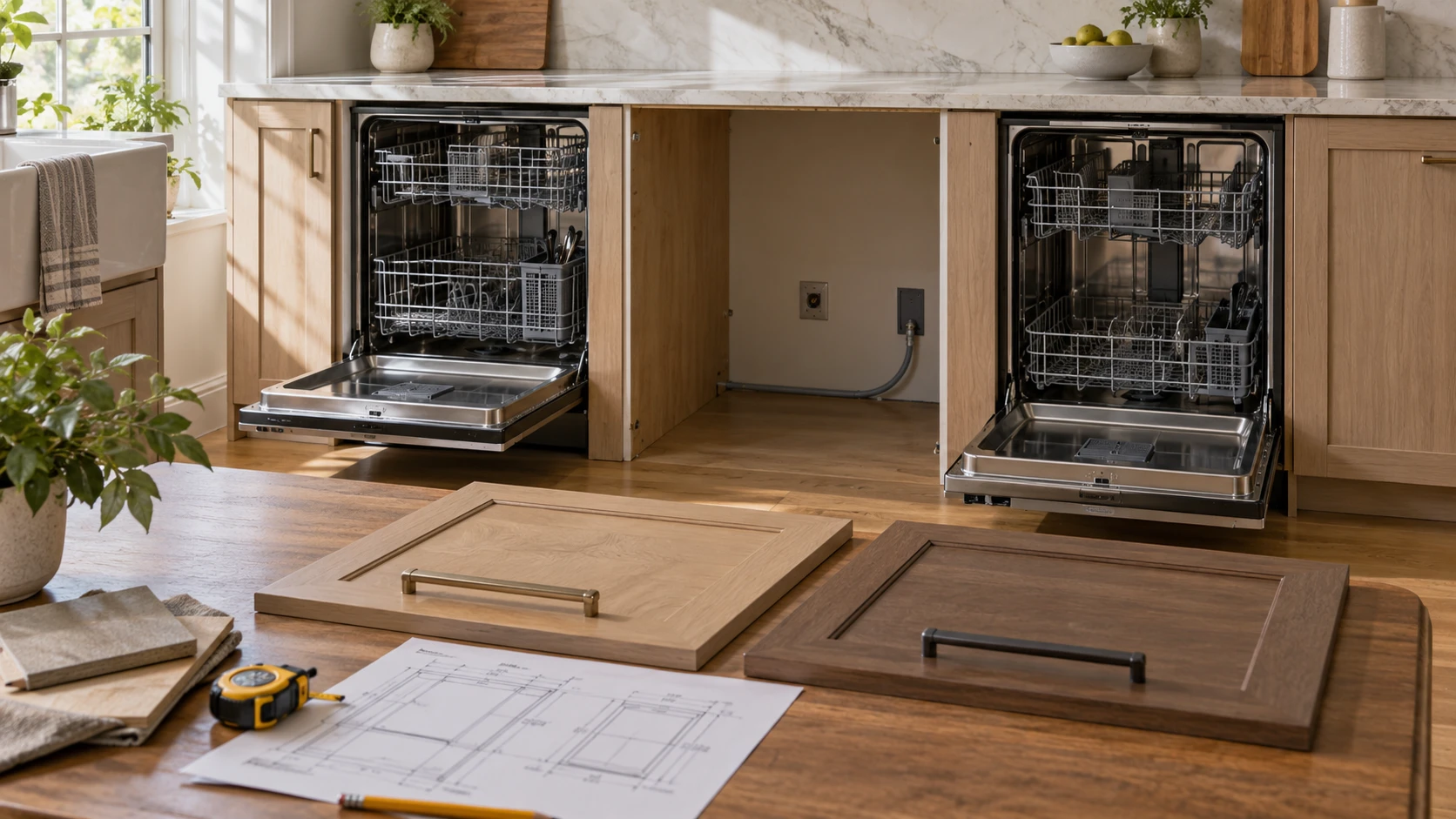
The Koolmore KM-DW2445-PR dishwasher and ZLINE DWV-24 both invite a custom cabinet front. Their saved listings describe different rack arrangements and stated sound ratings, but neither listing is a complete installation drawing. A cabinet maker needs the appliance dimensions before cutting the panel. Choose the unit and obtain its current installation sheet, panel specifications, and handle instructions before ordering the front.
Koolmore's listing calls the KM-DW2445-PR a 24-inch dishwasher in its title and size field, then describes it as 18 inches in the body. The opening width needs confirmation from the drawing for the exact model. Give the Republeq's catalog or manufacturer the model number when requesting it, and compare the drawing with your measured opening before anyone cuts the panel.
Start with the cabinet opening — planning a panel-ready dishwasher front
The Koolmore row says the appliance fits beneath most standard kitchen countertops and accepts a custom cabinet panel. “Most” leaves the buyer with measurements to check. Record the opening width at the front and back, height at several points along the floor, and usable depth after allowing for supply and drain lines. Check where the electrical connection can go without interfering with the machine. A kitchen with new cabinetry should use the final floor height and finished door thickness in these measurements. Old appliance dimensions are useful as a clue, but a replacement may need different clearances.
The ZLINE model is identified in its saved row as a 24-inch Tallac Series tall-tub model that is ready for a custom panel. It does not supply cutout tolerances, hinge clearance, panel weight, or mounting hardware in that row. Ask for the model-specific installation and panel documents. The panel has to clear the toe kick and nearby doors through the full opening arc. A unit that slides into the cavity can still bind after the decorative front and handle are attached.
The published guide to planning a panel-ready dishwasher front is a useful companion while you collect those measurements. Bring its planning questions to the installer or cabinet shop, then use the appliance's own drawings for the final cuts. For either dishwasher, confirm who supplies the panel, handle, screws, and brackets. Koolmore explicitly says the custom panel is not included. The ZLINE row establishes panel readiness without spelling out that parts list. Do not assume a panel is in the box simply because the machine is sold for custom fronts.
Cabinet alignment needs attention beyond the nominal width. Compare the finished panel with the adjacent door faces, especially if their edges are inset or use unusually thick handles. Open nearby drawers and doors with the proposed handle position marked. Check whether the dishwasher door clears the floor or kickplate when fully lowered. An installer can adjust legs and level the unit within its allowed range, but those adjustments should come from the product instructions rather than an improvised clearance estimate.
What the rack descriptions actually tell you — ZLINE DWV-24 Tallac dishwasher
Koolmore lists 14 place settings, two slide-out racks, and a pull-out top utensil rack for longer spatulas, spoons, and turners. It says holders can move up or down to adjust a load. That gives you several concrete questions to test at a showroom or after delivery: whether your tall glasses fit under the upper rack, whether a favorite skillet blocks a spray arm, and how the utensil rack handles the tools you use every day. A place-setting count is a standardized capacity claim, not a count of your own mixed cookware.
The ZLINE DWV-24 Tallac dishwasher row lists capacity up to 15 place settings and a third rack for utensils and cutlery. Its description does not detail the rack adjustment positions or specify what shapes fit in the third rack. The extra stated place setting tells you little about whether your largest dishes will fit. Take the height and diameter of the awkward pieces you wash often. Compare those measurements against the rack drawings or a physical unit, including how far each rack pulls out when the door is open.
Both listings describe a utensil space above the main racks, but they use different wording. Koolmore calls its upper space a pull-out top utensil rack; ZLINE calls its a third rack. That language alone does not show identical dimensions or loading behavior. If long cooking tools are the reason you want that space, ask about its usable length and whether utensils must lie flat. If you wash wide pans or tall bottles more often, look closely at the clearance left in the lower racks after the upper spaces are set for your load.
Rack testing belongs in the actual kitchen plan. A fully extended lower rack may cross a narrow aisle. A cabinet handle next to the appliance can limit access even if it does not stop the dishwasher door from opening. Try the door and racks with a person standing where dishes will be loaded. The catalog capacity number cannot answer that practical question. It also cannot establish how securely your particular glasses, bowls, or plastic containers will sit while the machine runs.
Read the sound claims in context — ZLINE DWV-24 Tallac dishwasher
Koolmore's listing states a 45 dB motor and describes quieter operation. ZLINE's row states a 51 dBa rating. The figures are useful starting points for a buyer whose kitchen opens into a living room, though the rows do not provide matched test conditions or a controlled head-to-head listening result. Check Republeq's product page for the current model specification if sound is a deciding factor. The phrasing of the Koolmore row is also specific to a “motor,” while the ZLINE figure is a dishwasher rating, so avoid treating the difference as a measured six-decibel gap between completed installations.
Flooring, cabinet panels, mounting, and a partially loaded machine can all affect what you notice in your own room. During commissioning, run a normal load and listen from the seat or work area where sound matters. Check for a loose panel or contact with cabinetry if a new appliance rattles. A catalog number helps narrow a search; it cannot guarantee the sound of a machine installed in a particular kitchen.
The rows also leave different gaps about wash programs. ZLINE lists eight cycles and describes an Auto cycle that detects the water temperature and pressure needed for a load. It names Intensive Plus as a longer wash for heavily soiled items. Koolmore's saved description does not enumerate its programs. If you need a specific quick wash, drying option, or sanitation setting, request the current operating manual for the exact KM-DW2445-PR. Do the same for ZLINE if one of its named cycles is central to your choice. A cycle name gives its intended use, not a verified cleaning result for your dishes.
What to confirm before ordering — ZLINE DWV-24 Tallac dishwasher
Confirm the appliance identity first. Confirm with Republeq the model number on the actual appliance, the installation document revision, and the required opening. This is especially important for Koolmore because its own saved listing conflicts on width. Check the official dimensioned drawing against the measured cavity. If an installer or cabinet maker cannot reconcile the two width statements with that drawing, delay cutting the front until they can.
Next, settle the panel contract in writing. Identify the material and thickness of the door front, its finished height and width, allowed weight, mounting position, and handle placement. Ask which party is responsible for hardware and drilling. Then look at the door swing with the intended toe kick and adjacent fronts. This prevents a common late-stage problem: an appliance fits the opening but the custom front catches on a neighboring surface. The saved catalog rows do not state those limits for either model, so a claim that one is easier to install would outrun the evidence.
Finally, map daily loading. The Koolmore row supports a two-rack layout plus a pull-out utensil space and a 14-place-setting claim. ZLINE supports a third rack and up to 15 place settings. Measure the dishes that make your current machine difficult to use and compare them with model-specific rack information. If a showroom has the exact model, bring the measurements. If it does not, request rack dimensions and adjustment instructions instead of relying on a generic photograph of the series.
Price is another moving part. The pinned catalog snapshot lists Koolmore at $1,275 and ZLINE at $1,406.24, in US dollars. These saved minimum prices may differ from a checkout quote or total installed cost. Confirm the current Republeq's catalog price, delivery, panel fabrication, installation, and any required accessories. A lower appliance price may matter less if the project needs additional cabinet work or special hardware. Ask for a single estimate that names the exact model and includes the front and installation work you need.
Which one is the better fit? — ZLINE DWV-24 Tallac dishwasher
Koolmore is a candidate if its top utensil rack and stated 14-place-setting layout fit your dishes, and if its current model documents resolve the conflicting width descriptions. ZLINE is a candidate if you want to examine its third rack, stated 15-place-setting capacity, and named Auto and Intensive Plus cycles. The saved rows do not establish that either cleans better, dries more thoroughly, or installs more easily. Both need a confirmed cutout and panel specification before a cabinet front is made.
Put the cabinet opening, finished panel, and awkward daily dishes beside the model-specific drawings before choosing. Check the published product details again at purchase, since catalog price and availability can change. Once the appliance is installed, test the door and rack travel and run a load while the installer can still correct fit or vibration.