Lifestyle & Inspiration
Kite watching at the beach: leave space for the flyer
A fictional beach walk follows a spectator choosing where to pause without entering a kite flying area. Actual Prism and HQ offers retain their model and photo limits.
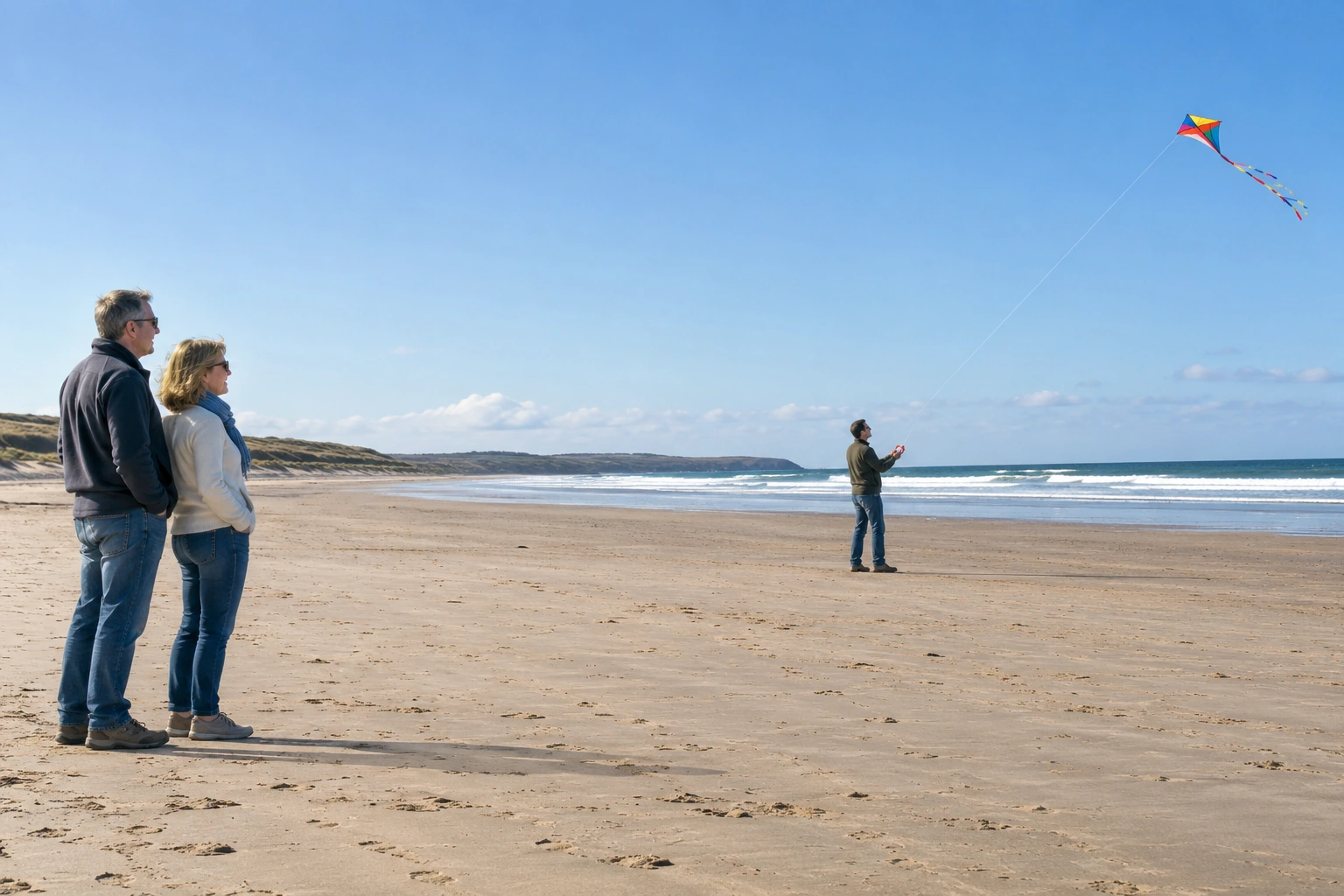
Kite watching at the beach can be the unexpected pleasure of a walk. You round a corner, notice a bright shape above the sand and want to stop. Before choosing the best-looking patch of beach, find out where the person flying it is standing. A good view of the sail does not, by itself, identify a suitable place for a spectator.
This is an outing for an adult who wants to watch, with no plan to launch, steer or retrieve somebody else's equipment. The question is how to enjoy the display while leaving the flyer and their lines the space they need. You can change your walking route, watch from another position or carry on with the walk. The kite need not become an activity you take over.
Watching a beach kite display begins on the ground
For watching a beach kite display, look for the pilot before moving toward the colour overhead. In an original fictional example, Ellis and Robin are walking along a beach when Robin spots a rainbow sail. Ellis initially follows Robin's gaze upward. Then they notice someone standing farther along the sand, holding the flying lines. That person belongs in their picture of the scene too.
Robin wants to stop where the kite looks large against the sky. Ellis points out that reaching that position would mean crossing the area in front of the pilot. They leave that idea aside. They can enjoy seeing the display without turning the shortest route to a photograph into a route through someone else's flying space. Neither person needs to judge the pilot's skill to make that choice.
Keep the imagined scene separate from an actual site assessment. It offers a walking decision, rather than a marked-out spectator zone for a real beach. If you cannot identify the pilot, understand the arrangement or find a suitable place to remain clear, continue elsewhere. Uncertainty about the ground below a kite is a reason to leave more of the scene alone.
The sail is only part of the occupied space
HQ's general stunt-foil guide says spectators are safest behind the pilot and warns against crowded flying sites. It also says to keep away from other flyers, power lines, busy roads and airports, and never fly during thunderstorms or approaching bad weather. Follow applicable site rules, restrictions and directions; a beach is not automatically an authorised flying area. These are general instructions from that work, rather than a clearance measurement for the listed Symphony size.
For a passing spectator, the useful change is to include the person and line area when deciding where to stop. A kite filling a small part of the sky can still belong to a ground arrangement you should not walk through. Stay outside the flying area and follow any marked spectator arrangements or directions at an organised event. Do not turn “behind the pilot” into permission to stand close behind someone.
Ellis and Robin keep their walking conversation away from the active arrangement. Robin decides that the first proposed photograph is no longer the photograph to take. They have other parts of the beach to visit and can continue their route without asking the flyer to accommodate them. The fictional outing stays pleasant because the view remains an opportunity, rather than a claim on a particular patch of sand.
Two real offers show why appearances need context
The Prism Zenith 7 single-line kite offer identifies model 7ZENG and describes a framed design with stabilising tails, flying line, a winder and a travel case. Its native photographs include several colourways and an outdoor scene with two kites. Those images do not establish multiple kites in one order. They also do not identify a stranger's equipment simply because its colours look familiar.
The HQ Symphony Beach III 2.2 offer describes a dual-line foil, with straps, line and a winder. Its title and model field say 2.2, while one supplied packaging photograph shows 2.5. Confirm the exact item before ordering; do not borrow the pictured package's dimensions for the titled model. The stated design gives a product question to investigate, without demonstrating a safe spectator position or anyone's control of it.
Both offers belong to the actual Sports Toys category. They are distinct brands and different named kite designs. For this walk, they supply examples of what you might investigate later if the display interests you. They do not turn the outing into a test of either product, and neither has been physically trialled for this article.
Leave space around kite lines when choosing your view
Prism's Zenith guide warns that a kite or its line can injure people in its path. It says to keep the flying space clear and never wrap the line around your hands. Those instructions apply to the Zenith account; this article does not supply a handling method for another kite. As a spectator, leave lines and equipment with their operator rather than reaching for something that appears to need help.
Think about space around kite lines before finding a place to settle. A conversation with a companion can pause while you decide whether your intended route stays clear. If it does not, choose another route. You do not have to determine a precise boundary from a photograph or estimate a universal safe distance from the size of the sail.
In the fictional scene, Robin puts the phone away while they work out where to walk. The camera had made the bright sail the only thing they were looking at. With the phone down, the pilot and the other beach users return to the foreground. Ellis suggests continuing to the next part of their walk instead of stopping there at all. Robin agrees.
A photograph can wait for a different view
You may discover that the picture you wanted would require standing somewhere you should not go. Leave that picture untaken. A more distant view can remain a personal reminder, even if it does not resemble the close-up that first attracted you. There is no need to move through a flying area to make the kite appear larger in the frame.
If you do photograph from a suitable spectator position, keep the actual people and their privacy in mind. Follow local requirements and any event photography rules. Do not ask a pilot to bring a kite closer, perform a manoeuvre or repeat a flight for your camera. Watching somebody else's activity does not make them responsible for producing the scene you had imagined.
Ellis later describes what they enjoyed without relying on a picture: the sudden appearance of the rainbow above a familiar walk. Robin had wanted a close view, but remembers the colour against the wider beach instead. That is their fictional recollection, without a claim that changing position will improve every spectator's experience. Another visitor might simply choose to continue walking.
Watch without turning the pause into a request
A person flying a kite may be concentrating. Leave conversation until they are ready for it, and accept that they may not want to talk. If an appropriate opportunity comes, a simple question about the kite's name can be enough. You do not need to ask for a turn, request an explanation of the controls or propose that someone else's equipment become part of your afternoon.
The guide to watching a yo-yo demonstration describes a different occasion: an experienced friend agrees to show a familiar sequence, with one viewing focused on shape and another on rhythm. It leaves handling with the performer. A public beach encounter has no such agreed invitation, so leave any request for a repeat out of this walk.
If you are visiting an organised display, use the arrangements provided for visitors. A designated audience area answers a different question from a random patch of beach that happens to have an attractive view. Follow the organisers' current directions rather than carrying an informal viewing arrangement from one place into another. This article does not identify a particular event, access entitlement or permitted flying location.
The beach walk can carry on without a launch
The display may finish before you have settled on a place to watch. Let it finish. Robin and Ellis do not need the pilot to send the sail up again so their pause feels complete. They can keep walking, talk about what they saw or choose an entirely different subject. Someone else's decision to stop remains part of the real outing.
Do the same if conditions change or the beach becomes busy. Follow current directions and leave the active area clear. A spectator does not have to diagnose a launch problem or decide whether a flyer should continue. Keep your own choice modest: whether there is a suitable place for you to remain, or whether it is time to go elsewhere.
If a conversation on the walk mentions a north wind, the wind-vane direction guide explains that the name describes where air comes from: north toward south in that example. It separates source direction, travel direction and speed. Use that distinction to understand the words; it supplies no local observation, kite safety assessment or permission to choose a spectator position.
Investigate a later purchase on its own terms
A kite seen during a walk may prompt interest in owning one. Begin that later decision with the actual item and its applicable guidance. A colour, a retail photograph or a stranger's successful flight cannot settle what an order contains or what you can operate. With the HQ offer, resolve the model discrepancy before treating the pictured package as the item you will receive.
For a later order at republeq.com, if checkout presents a cryptocurrency payment option, review the current instructions for that exact order before deciding whether to use it. You may be considering the Prism Zenith offer or the HQ Symphony listing after enjoying a beach display, but the purchase still needs its own product decision. Confirm the named model, supplied pieces and any unresolved listing detail first. Choosing crypto does not settle a disagreement between a product title and a packaging photograph. If USDT appears among the available options, read the live instructions as they stand at that time. This article does not establish which network, wallet route or receiving details a current checkout will accept, so do not reuse details from an earlier order or another merchant. Keep the intended order in view while reviewing the information provided for it. If you do not understand a payment step, seek clarification through the store's current support channel before sending funds. A familiar token name is not enough to show that a particular transfer will reach the intended order. Check the actual order information and retain whatever confirmation the store provides for your own records. Do not treat a wallet transfer alone as proof that a purchase has been accepted. Payment review also remains separate from the plan for using the kite. An accepted order would not establish local permission to fly, suitable conditions at a beach or a safe place for spectators. Those questions belong to the actual destination, applicable rules and equipment instructions. You can leave the purchase undecided while you resolve them; enjoying somebody else's display does not require ordering equipment during the walk.
For kite watching at the beach, carry one practical thought into the next outing: include the pilot and the ground arrangement when choosing your own route. Enjoy the view from a suitable spectator position, follow the site's directions and leave a photograph or a conversation for another time when either would bring you into the flying space.