Product Compatibility & Accessories
KitchenAid pasta attachment compatibility: check the maker
Compare KitchenAid KSMPRA and PQPO fit statements, supplied components and sheet-width disclosures before choosing a stand-mixer pasta attachment.
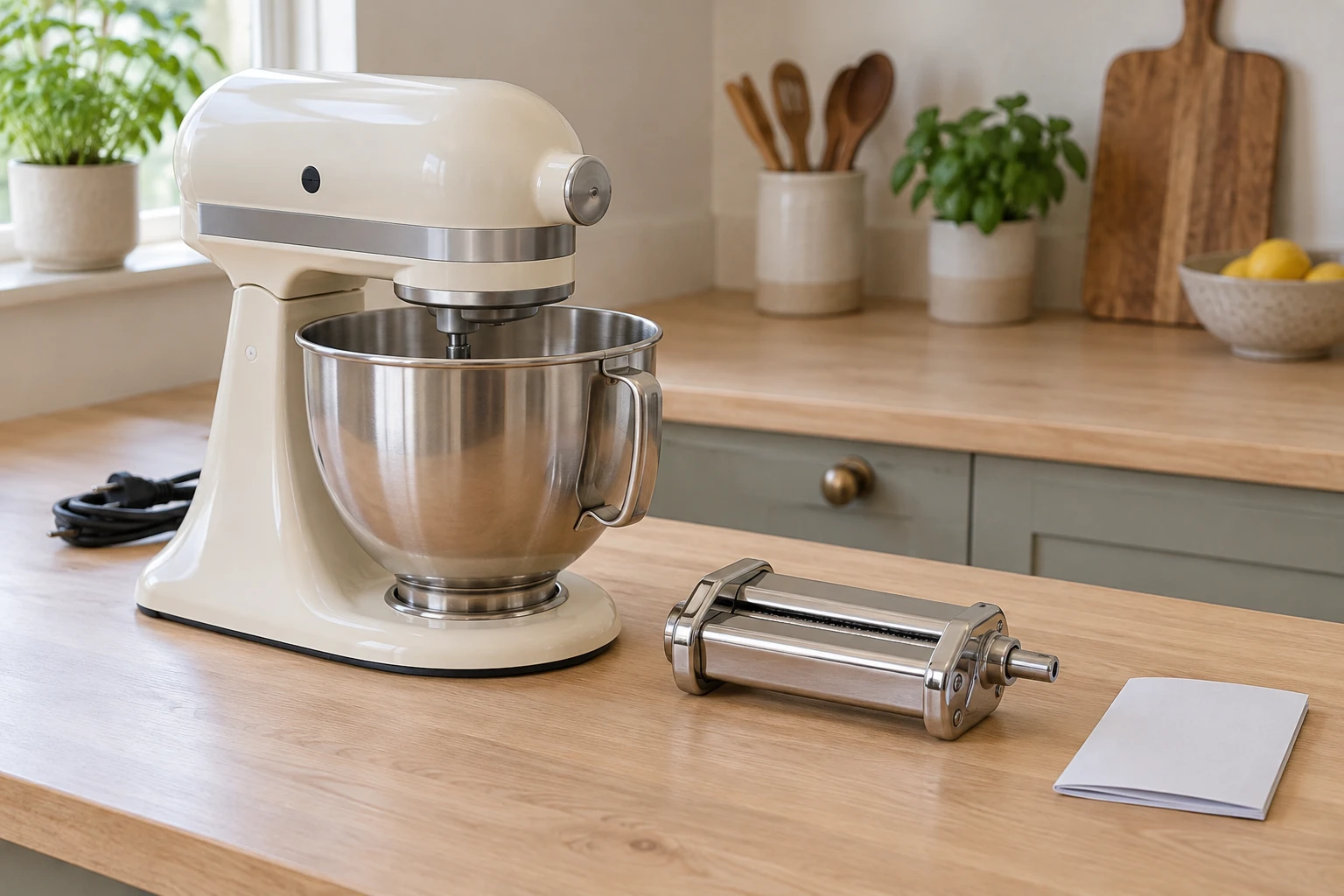
KitchenAid pasta attachment compatibility starts with the mixer and the maker of the proposed attachment. KitchenAid's KSMPRA set and the selected PQPO three-in-one offer both refer to KitchenAid stand mixers, but their statements come from different sources. Keep those claims separate while checking the equipment you own and the parts you intend to order.
The two offers also use different physical arrangements. KSMPRA supplies separate rolling and cutting components, while PQPO describes several functions in one attachment. A similar function name or a count of three does not establish an interchangeable component. Identify the actual product before asking about fit, supplied tools or replacement instructions.
Identify the mixer before choosing an attachment
Begin with the complete model identification on your stand mixer and its applicable documentation. Retain the manufacturer's name as well as the model. If you are buying for another household, ask for that information rather than relying on a photograph of the kitchen. An attachment chosen for a remembered mixer may answer the wrong equipment question.
Write down which goods the order is meant to add. A pasta roller forms a sheet; the named cutters produce particular widths of strands. An order for a replacement cutter differs from an order for a complete attachment set. Check the selected seller's actual contents before treating a photographed arrangement as the contents of your basket.
Keep the attachment question separate from choosing a replacement mixer. A stand mixer's bowl volume and mixing-tool inventory describe other parts of the appliance. They do not identify the power-hub accessory you need. Locate the manufacturer's applicable accessory information for the mixer already identified, then compare it with the exact attachment being offered.
Power hub pasta attachments and KitchenAid's stated scope
KitchenAid's Attachment Fit Guarantee page describes its universal power hub and says power-hub attachments fit its stand mixers regardless of age. The page refers to the fit wording printed on KitchenAid attachment boxes. Read that statement with its maker and the attachment system intact; it does not turn a third-party claim into a KitchenAid-issued approval.
The selected KitchenAid KSMPRA pasta roller and cutter set independently states that it fits all household KitchenAid stand mixers. It also says the mixer is sold separately. That is an important purchasing distinction: the attachment package does not supply the appliance that powers it.
For power hub pasta attachments, retain “household” when quoting this offer's scope. Do not quietly expand the statement to another manufacturer's mixer, an unidentified commercial unit or every appliance with a similar-looking opening. If the equipment identity falls outside the statement you have, obtain an applicable answer before ordering.
The manufacturer's fit page also distinguishes power-hub accessories from attachments that work elsewhere on a mixer. Its discussion of an ice-cream maker and a heated bowl therefore does not supply exceptions for the pasta roller. Read the system being discussed before borrowing an exception from another accessory. Here, the relevant question concerns the documented pasta attachment and hub.
KSMPRA names three separate supplied components
The KSMPRA offer identifies stainless-steel rollers and cutters. It lists a pasta roller, a spaghetti cutter, a fettuccine cutter and one cleaning brush. The native package field says Pack of 1. Read that order-unit statement alongside the three-piece set description: one offered set contains the named components, rather than one unspecified component selected from them.
KitchenAid's actual owner's manual includes KSMPRA in a model-to-component chart. Its row names the pasta roller, spaghetti cutter and fettuccine cutter. Other rows in the same manual describe other product codes with different supplied selections. A manual covering several codes therefore needs its matching row; a picture showing all of its possible accessories is not the KSMPRA inventory.
Keep that distinction if you later search for a single replacement. Ask for the component and the applicable part identification, with KSMPRA retained as the set you own. A product page for another cutter kit needs its own contents check. Similar metallic housings do not establish that the seller is supplying the same component or the complete original set.
PQPO's combined head is a separate compatibility claim
The PQPO pasta-maker attachment offer identifies SKU sku-14645371344 and UPC 635408554321. Its description states compatibility with KitchenAid stand mixers. It does not provide a supported-model table, a manufacturer-issued KitchenAid approval or an exact adapter identification. Ask the seller whether that statement covers the complete model name on your own mixer, and retain the answer with this exact item reference.
PQPO describes one three-in-one attachment combining a roller, a wide cutter and a fine cutter, with no need to change attachments between the functions. That is the product account's stated arrangement. It is different from KSMPRA's separately listed pieces. Do not reconstruct the PQPO package as three detachable KitchenAid components merely because both offers mention rolling and two kinds of cutting.
PQPO's wide and fine cutter names have no numerical strand widths in this description. KitchenAid's specifications cannot fill those missing values for the PQPO item.
The description names stainless-steel gears and also says plastic is used in the attachment. Preserve both materials rather than calling the whole item stainless steel. Its low-noise wording is a product claim, without a matched measurement here. Neither the material statement nor that claim adds evidence that the attachment fits a particular mixer model.
Three-piece and three-in-one pasta sets answer different questions
For three-piece and three-in-one pasta sets, compare what the words count. KSMPRA names three components that perform different tasks. PQPO describes three functions in one attachment. The first count can help identify supplied pieces; the second can describe the proposed workflow. Decide whether you need the whole offered set or a particular component before comparing the basket entries; fit still needs its own answer.
Consider where the equipment will be kept between uses. Obtain actual dimensions and storage instructions if the choice depends on drawer or cupboard space. Check the combined head against your actual shelf opening, rather than assuming one object will fit where three separate pieces would not. Three separate pieces also need their own dimensions. The descriptions here do not establish a measured storage comparison.
If a gift is intended, confirm whether the recipient already owns the identified mixer and wants this type of accessory. PQPO's suggested gift occasions do not answer either question. Keep the intended product reference with the recipient's mixer model so a well-meant order does not rely on the broad phrase “for a mixer.”
Width figures do not establish fit or an equivalent setting
The KSMPRA merchant account states six-inch sheets and eight thickness settings. The actual KitchenAid manual's roller speed chart lists a width of up to 140 mm. Preserve those different statements and ask for clarification if working width determines the purchase. This guide does not silently convert one into confirmation of the other.
PQPO states a 5.5-inch rolling width and eight thickness settings. That disclosure belongs to the PQPO item. An equal count of settings does not show that the rollers have identical gaps at corresponding numbers. No thickness conversion, shared knob scale or matched dough result is established by the descriptions.
Once you have suitable instructions, use the chart for the exact attachment. A number can refer to a roller setting or to a mixer speed, depending on the control being discussed. Keep the control name with the value when asking a question. This fit comparison supplies no speed selection or operating sequence for either offer.
Keep instructions and support with the actual maker
KitchenAid's manual explicitly identifies KSMPRA among the models it covers. Its instructions for attaching, using and caring for those KitchenAid products should remain with them. They do not become PQPO instructions because the latter's product page mentions the same stand-mixer brand. Obtain the applicable PQPO directions for its combined attachment before use.
The PQPO description mentions opening a lid for brush or dry-cloth cleaning and gives its own restrictions on soaking and dishwasher use. That is a care statement, not a complete installation guide. It does not identify an approved motor speed, fitting sequence or internal adjustment. Resolve the necessary instructions with the maker or seller instead of assembling them from the other product's manual.
Ask a specific question when fit remains unresolved: name the mixer, identify the proposed attachment by its SKU or UPC and request the applicable model information. Keep the response with the exact offer. If the answer concerns a different accessory or a similarly named set, ask for the connection to be explained before treating your question as answered.
Use related equipment guides for their actual distinctions
The Hamilton Beach and Betty Crocker stand-mixer comparison separates supplied mixing tools from optional powered accessories. Those other brands' bowl volumes and tool names provide no KitchenAid power-hub fit statement. Its questions can help someone shopping for a mixer keep a future pasta attachment requirement visible during that separate purchase.
The Oral-B replacement-head family guide shows why an accessory claim needs its actual target, even within one brand. The comparison here likewise retains the named mixer and attachment maker. Its brush-head families have no mechanical connection to pasta equipment; the useful question is which specific equipment the source actually covers.
Keep the confirmed attachment with the payment decision
A pasta attachment bought with USDT still needs a clearly identified stand mixer and an applicable fit answer. Keep the attachment maker visible on the order: PQPO's stated compatibility is not the same document as KitchenAid's description of its own set. Resolve the supported-model question before authorizing payment rather than expecting an order receipt to establish fit afterward. Review the checkout available for the selected basket at republeq.com, including whether it actually offers your preferred cryptocurrency. The asset and transfer network need to match the instructions presented for that particular transaction. A token name displayed in a wallet does not settle which network the merchant expects. Check the receiving details against the current order, without reusing an address copied from an earlier purchase. If the payment information leaves something essential unclear, obtain clarification through the merchant's published contact route before sending funds. Retain the selected offer, any compatibility response and the order confirmation with the transaction reference. These records should make it possible to identify both the promised goods and the transfer, while keeping payment separate from dispatch or delivery. Read the merchant's conditions while you can still reconsider the purchase. Its published cryptocurrency policy rules out refunds and allows exchanges only within the stated eligibility requirements and available stock. A broad expectation that an unsuitable accessory can simply be returned should not replace those conditions. Read any manufacturer warranty separately, with its actual product and geographic scope. It does not rewrite the merchant's cryptocurrency terms. When the parcel arrives, compare the maker, product code and supplied components with the confirmed order before using the attachment. Report a discrepancy using the applicable process and retained references; this guide makes no promise about a particular remedy or its outcome.