Home & Living
A key tag lettering budget when the maker matters
In an original private lettering arrangement, Finn chooses whether another maker’s hand fits the contribution he wants to pay Ada to make.
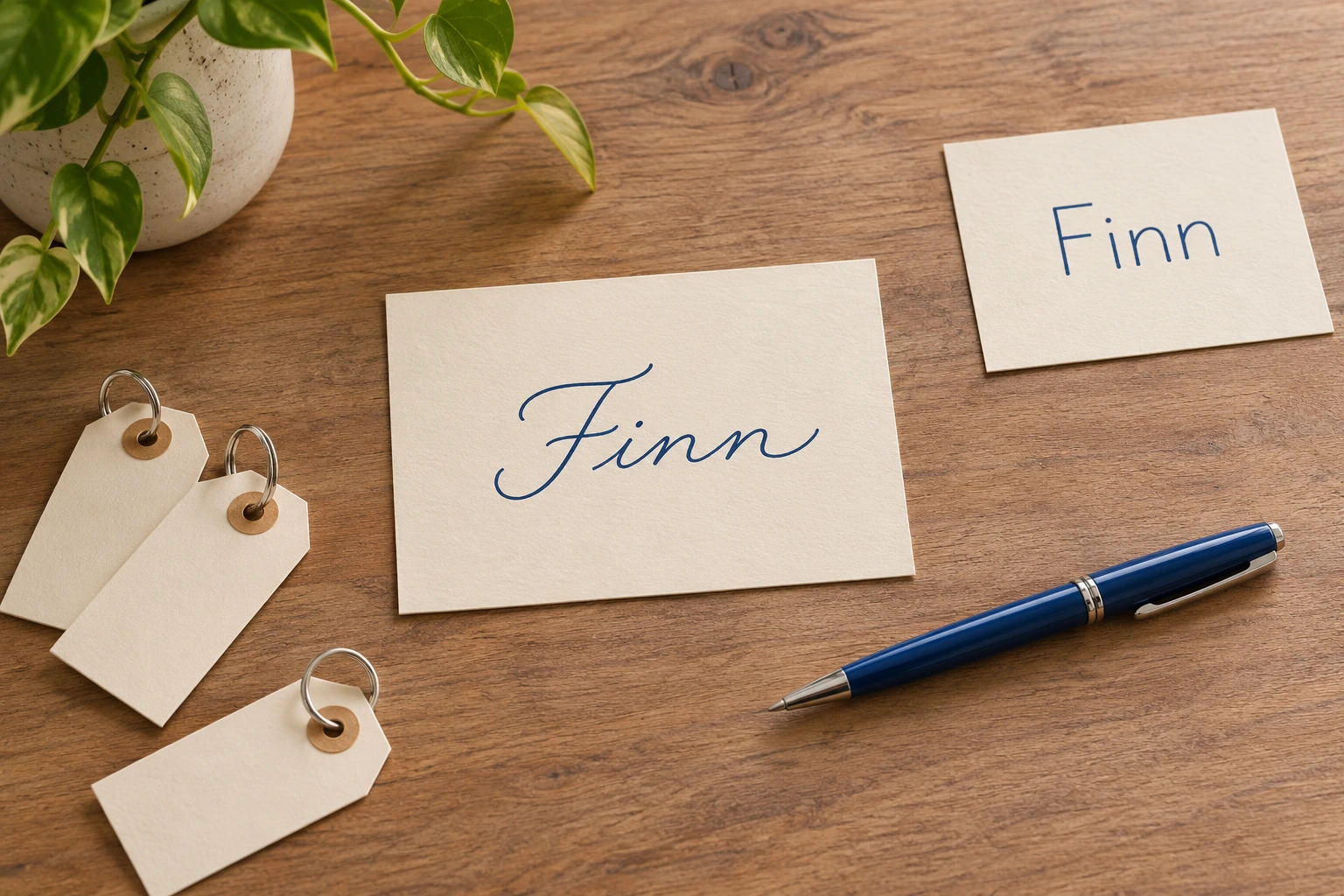
What Finn wants to pay for
The key tag lettering budget in this original scene has a particular person in it. Finn wants Ada to write the small labels for a gift he is putting together. He likes the handwriting in notes she has sent him over the years. The words on these labels are simple. What he wants to pay for is her own contribution to them. Ada, Finn, Bo, their conversation and the proposed private job are invented. Their generic materials have no assigned retail identity.
Finn arrives with an ordinary envelope containing his chosen words. Ada reads them at her kitchen table. She says she cannot do the lettering that week, then mentions Bo, who sometimes makes things with her. “He could write them,” she says. “Would that work for you?” She has offered another arrangement. She has not told Finn that the arrangement is already made, and Bo has not accepted a job on his behalf.
Keep the words and the hand separate
Finn first looks at the list, as though the answer might be there. The words would remain the same whichever person wrote them. That is why Ada thought of offering Bo. Finn can see that her suggestion addresses the practical task he brought to the table. It leaves something he had not explained. He had imagined seeing Ada’s handwriting when he gave the finished gift. He says this aloud instead of asking her to guess why he hesitated.
“I meant your writing,” he says. “The way you leave space after the first letter.” Ada smiles because she recognizes the description, though she has never named that habit herself. Finn has finally said the familiar part he wants. He asks Ada whether she would enjoy doing the labels when she returns. Bo is still only a name in the conversation. Finn has yet to see anything he might make for this occasion.
Ada takes an old note from the shelf beside the table. She had started it for Finn and never sent it. She turns it so he can see the first line. “Something like this?” she asks. He says yes. He remembers the notes she used to leave beside books she lent him, with the first word taking more room than he expected. The old sheet gives their present conversation a particular example they can both recognize.
An offered alternative can stay an alternative
Bo joins them with a mug and asks what they are looking at. Ada explains that she has suggested his lettering because she will be away. Finn tells him the reason for the original request. Bo says he understands. He does not offer to make his writing look exactly like hers. The three people now have the same account of what Finn is considering. There is no hidden competition in which Bo must demonstrate that he deserves to be chosen.
Finn says he would rather wait until Ada has time. He had brought the envelope over hoping to arrange the task for this week, but he can change the gift’s timing. Ada asks whether he means that he wants her to write the same words later. He says yes. She has understood the request he is now making. She opens her notebook and looks at the week after she returns, taking a moment before answering him.
She says she would like to do it then. Finn says that timing suits the gift he has in mind. He also repeats that he wants to pay her for the lettering. Ada agrees to that private arrangement. They leave its amount outside this scene, and no payment takes place at the table. The labels will still have to be made. For now, they can both name the particular contribution and the week they have chosen.
Bo can have his own part
Bo notices that the blank labels in Finn’s envelope are still mixed with some ordinary scraps. He asks whether Finn wants help gathering the pieces he actually intends to use. Finn says he would. Bo sets his mug on a clear part of the table and asks Finn to point out the loose pieces he brought for the gift. Ada moves her notebook aside so they have room. Finn opens the envelope fully, and a folded shopping list falls onto the table with the paper.
They put those pieces together and leave the scraps in the envelope. Finn has brought loose blanks, with the gift still at an early stage. Bo finds one with a small crease and asks whether it belongs with the pieces Finn wants. Finn sets it aside for his own rough notes. The two continue until the intended blanks are together. Bo then pushes that small group toward Ada’s place at the table and returns the other paper to Finn.
Bo asks Finn whether he has already chosen the wrapping for the gift. Finn says he has kept a sheet at home, folded between two larger pieces of card. He had almost brought it with the labels, then decided that it would make the envelope awkward to carry. Bo says he remembers the paper from another visit. They talk about the small pattern on it while Ada closes her notebook. Finn will leave the wrapping at home until he needs it.
Two actual tag accounts
The BAZIC key-tag offer lists label-window tags as eight per pack, case of forty-eight. Its whole image shows five complete tag-and-ring assemblies. Those displayed pieces do not independently verify the listed delivery quantity.
The Petoskey paper-tag offer lists tags with metal rings. Black wording conflicts with the white pictured tag and manila description. Warning fields also conflict. Its two views include a staged key and car, without establishing those as supplied contents or independently counting a thousand tags.
Finn folds the top of his envelope over the remaining scraps. He realizes that he had prepared the words much more carefully than he had prepared his request. The envelope had made the task look ready to hand over. Now Ada has the part she needs for the later week, while Finn can take his unused paper home. He writes the agreed week beside the list he is keeping, leaving himself a reminder of the actual plan they made.
Two neighboring decisions
The shared-card story follows two acknowledged makers receiving a compliment for one contribution. Its credit question differs from Finn choosing whose hand he wants for an unperformed paid task.
The bookcase assembly cost guide defines the completion stages a proposed quote covers. Finn’s particular choice keeps the text and task unchanged while he decides about the offered substitute maker.
Leave the choice at its actual size
When Bo goes to rinse his mug, Finn says he hopes the conversation did not sound like a judgment about him. Ada says that Bo heard what he actually asked for. Finn had named the personal reason for the chosen handwriting. He looks toward the kitchen, where Bo is asking whether the mugs belong on the open shelf. Ada answers him, and the ordinary work of the afternoon resumes around the envelope.
Ada puts the old note back on the shelf. Finn notices that the last line is unfinished. She says she cannot remember what she had intended to add. He likes seeing it anyway. An unfinished ordinary note has an association for him that he had left out when he first described the labels. He asks whether he may look at it once more before leaving. Ada passes it over, and he reads the few lines slowly.
He leaves the label words with her and takes the rest of the envelope home. Ada writes the agreed week in her own notebook. Bo’s gathering help is finished, and Ada has chosen the future lettering task. Before Finn leaves, Bo asks whether the gift needs an envelope of its own. Finn says he has one at home and will bring it later. They can leave that small detail for the next visit.
Keep an optional order separate
If this original scene leads you to consider a key-tag order on republeq.com, begin with the actual selected physical offer. A story about a private lettering choice establishes no customization service, named maker, supplied message or delivery outcome for that product. Review the particular item, selected option and quantity before deciding whether to proceed. If you prefer cryptocurrency, including USDT, check the payment methods actually presented for the intended transaction. This article has not verified that a particular asset or network is available for either linked offer or for every buyer. A familiar token name cannot supply the current receiving destination, requested amount or order reference. Obtain those details from the responsible checkout and follow the instructions for the method you actually choose. Read the applicable delivery, cancellation, return and refund terms for that same order. The fictional agreement between Finn and Ada supplies none of those terms. If another person will order on your behalf, make the actual selection and authority clear so they can distinguish an enquiry from an authorized purchase. Keep any real order confirmation and payment response together. If an attempted transaction has an uncertain result, establish what happened through the responsible service before considering another transfer. Do not treat missing confirmation as proof that no action occurred. This conditional paragraph gives no wallet address, fee estimate, exchange-rate forecast, token recommendation or promise of transaction protection. It reports no completed purchase or payment. A physical-product receipt also cannot prove that a separately wanted person has accepted a private lettering task. Keep the actual product, transaction status and any separate making arrangement attached to the information that establishes each of them.
The maker Finn actually chose
The key tag lettering budget ends with a contribution Finn can name. He wants Ada’s own lettering, has heard her offered alternative and has chosen to wait for the arrangement she says she can accept. The grouped blanks are still on her table. The intended words stayed the same while the maker choice became clear. The payment and the later making still lie ahead. At the table, the people have made a private plan they can describe.
On his way home, Finn remembers the note on Ada’s shelf more clearly than the loose labels he brought. It has given him a way to explain the request he thought was already obvious. He can look forward to what she may make. Bo had offered his own help and given it in the particular way they chose together. Finn puts his envelope beside the gift materials at home and leaves the agreed week written on the list.
Separate fictional handwriting samples illustrate choosing the maker for a private key-tag lettering task.