Crypto Commerce
KBICE 3.0 nugget ice dispenser or Tittla for a rush of nugget ice
Compare KBICE 3.0 nugget ice dispenser by ready storage, stated daily production, first-ice time, serving method, counter fit, and cleaning routine.
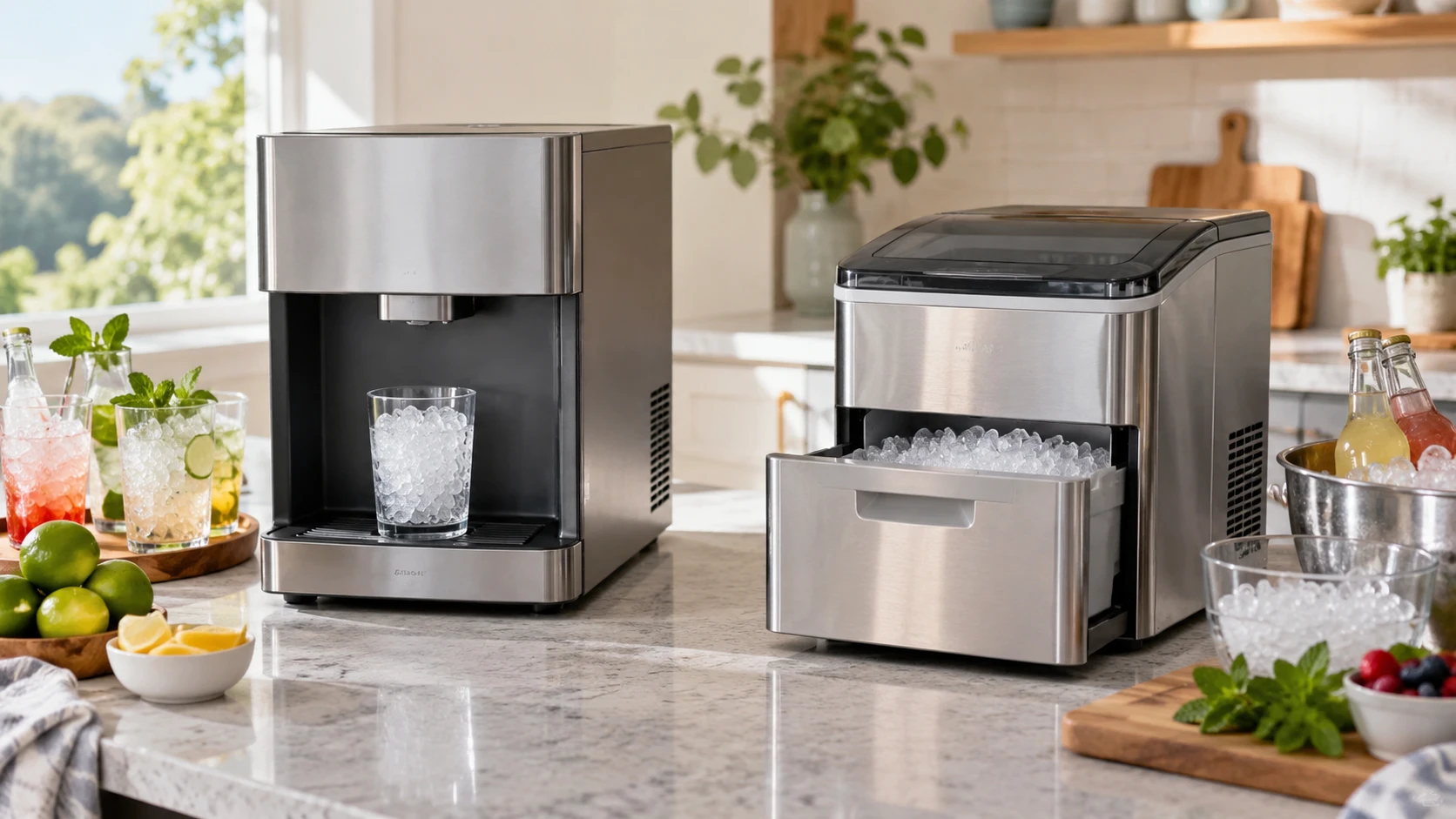
The KBICE 3.0 nugget ice dispenser is listed to make up to 32 pounds of ice in 24 hours, with internal storage of up to two pounds. Its push-button dispenser fills a glass without reaching into a basket. The Tittla countertop model has a much higher stated daily figure of up to 80 pounds and a five-pound removable drawer. These figures describe different parts of service: ice made over a whole day and ice ready to serve at one moment. A household planning a party should estimate both.
The published guide to ice maker capacity for a short serving window helps turn a headline pounds-per-day number into a practical plan. If guests all arrive within an hour, the ready bin may empty before the machine can replace what was taken. Count the glasses, coolers, and refills expected during the busy interval, then decide whether ice needs to be made and stored in advance. Neither listing supplies a measured hourly output curve for every room temperature and water condition.
The Tittla 80-lb nugget ice maker is described with a touchscreen, removable five-pound ice drawer, and a first-batch claim of eight to ten minutes. Its title mentions Wi-Fi and smart connection, but the saved description does not explain what wireless functions are available. Treat the touchscreen scheduling and monitoring claims as things to test on the machine itself; do not build an event plan around remote control until the current manual or a live demonstration confirms it.
Separate production from ready storage — Tittla 80-lb nugget ice maker
KBICE's 32-pound figure is spread over 24 hours. Dividing it by 24 produces an average, but an ice maker may not work at a constant rate during startup, harvest, and pauses when a bin is full. The saved description says it begins making ice in about 40 minutes. That first-ice claim has different meaning from Tittla's eight-to-ten-minute first batch, and neither tells us how many pounds are ready at that point. Start a real trial early enough to see how the bin fills through the first hour.
The two-pound KBICE storage limit matters when several people serve themselves in succession. Even if the machine can make plenty over a day, a full two-pound bin may not cover a short rush. Tittla's five-pound drawer provides a larger stated amount ready for immediate use, but it can still be emptied by a cooler or multiple pitchers. Record how much the household actually takes in a typical 15-minute period. That figure is more useful for event planning than comparing 32 and 80 in isolation.
Write a serving schedule for the first hour of an event. Note when the machine will be started, when the first guests arrive, and whether ice will be taken for individual drinks or transferred all at once. A cooler filled at the start can remove most of a bin in one action. If the machine cannot rebuild the reserve before the next rush, make a separate storage plan using food-safe handling rather than assuming the daily production figure will cover the gap.
Ask what happens when storage is full. Tittla's row says production continues until the basket is full and stops to prevent overflow. KBICE's excerpt does not describe its stop-and-restart behavior in detail. Check the current manuals for full-bin sensing and how production resumes after ice is removed. A machine that shuts off correctly can still need time to rebuild the ready supply. Plan that delay if someone empties the drawer just before guests arrive.
Ice in a countertop bin may soften or melt if it waits. Tittla describes an insulated bin that keeps ice solid longer, but it does not claim freezer storage. KBICE's source names internal storage without an insulation test. Check whether meltwater drains or recirculates according to the current manual, and use a separate food-safe freezer container if the maker permits advance storage. Keep scoops and hands out of the water path, and follow the maker's food-contact cleaning directions.
Choose how people will take the ice — ice maker capacity for a short serving window
KBICE's distinctive feature is automatic dispensing at the push of a button. That can be convenient for one glass at a time and avoids an open scoop sitting near drinks. Test the height beneath the outlet with the family's usual cups and how much ice one button press releases. The saved row does not give a cup-clearance dimension. A tall travel mug or pitcher may not fit even though a standard glass does.
Tittla uses a removable five-pound drawer. That may make it easier to transfer a larger amount to a serving bowl or cooler, provided the drawer is comfortable to carry when full. The saved source does not give its loaded weight beyond the ice amount, handle design, or a scoop inventory. See how the drawer opens under cabinets and whether the operator can lift it without spilling. A self-serve station also needs a clean scoop or other method allowed by the manual.
The Tittla row describes a touchscreen used to monitor production, adjust ice texture, and schedule batches. Those functions may help a host plan a serving window, but exact adjustment ranges and timer behavior are absent from the saved excerpt. Run a timed trial using the setting intended for an event. Nugget texture can also change how quickly a drink chills and how fast the ice melts; judge the actual ice in a glass rather than relying on descriptions such as "soft" or "chewable."
KBICE's source calls its pellet ice chewable and suitable for drinks and cocktails. That is a product description, not dental advice or a guarantee about every person's preference. Serve a small amount to see whether the size works for the household's cups and straws. If ice must be blended, packed into a cooler, or used for food display, confirm that the texture and maker's handling guidance fit that use. A dispenser designed for a glass may be slow when filling a large container.
Make room for water, heat, and cleaning — Tittla 80-lb nugget ice maker
KBICE lists exterior dimensions of about 16 by 16 by 17.5 inches. Tittla's saved excerpt does not give a complete footprint. Measure the counter and overhead clearance for its drawer before ordering. Both machines need access to power, water, and cleaning space; the source rows do not establish a direct-plumbed installation. Confirm the exact water reservoir and fill method for each model, along with any drain requirement. Do not assume a countertop label means the unit can operate safely in a corner with no ventilation.
The Tittla description claims operation below 45 decibels. It does not identify a measurement distance, room, or phase of the cycle. KBICE provides no comparable noise figure in its saved excerpt. A working compressor and dropping ice may sound different from a quiet standby unit. If the machine will sit near a conversation area, listen through production and harvest at the intended location before treating any single number as representative.
Tittla says holding a touchscreen cleaning control for three seconds starts an automatic rinse of its water-circulation system, and the rinse is described as taking three minutes. The screen reportedly prompts for white vinegar for a deeper cleaning. An automatic rinse does not replace the full sanitation and descaling procedure in the current manual. Verify which surfaces, drawer parts, and water paths still need hand cleaning and the permitted cleaner concentration. Keep a dated maintenance record if the machine serves guests regularly.
The KBICE saved row does not describe a cleaning cycle or maintenance parts. Ask for the manual before purchase and find out how the dispensing outlet, reservoir, and ice path are cleaned. A dispenser can reduce scooping but still needs careful attention where ice exits into a cup. Use potable water, follow the filter or descale schedule if the exact model specifies one, and empty standing water according to the maker's instructions when the unit will sit unused.
For either machine, plan an outlet and counter that can bear the appliance, its water, and ice. Avoid an extension cord unless the manufacturer's instructions permit it, and keep the area dry while refilling. The saved sources do not state full electrical ratings or required side clearances for a side-by-side comparison. Check those details before placing an ice maker beside another heat-producing appliance or directly under a low cabinet.
Rehearse the busiest hour — Tittla 80-lb nugget ice maker
KBICE may suit a household that serves glasses throughout the day and likes a push-button outlet, if its two-pound ready reserve matches normal use. Its 40-minute first-ice and 32-pound daily claims should be tested under the household's conditions. Tittla may suit a short, heavier serving period because its five-pound drawer and 80-pound daily listing are larger, but the actual first-batch amount and replenishment rate still need measuring. The touchscreen and claimed rapid startup should be verified in the chosen setting.
Before a party, make a measured trial: start from an empty machine, note when the first usable ice appears, weigh or estimate the ready amount at one hour, then remove the quantity guests are likely to take. Record how long the bin takes to refill. Repeat the test with the serving method people will actually use. The result will show whether a backup bag of ice or a freezer reserve is needed, regardless of which daily output number looks more impressive on the listing.