Kitchen & Appliances
Check ice shape compatibility with a reusable bottle
A bottle-specific selection example separates the refill opening, drinking port, finished ice profile and cap clearance before choosing a mold.
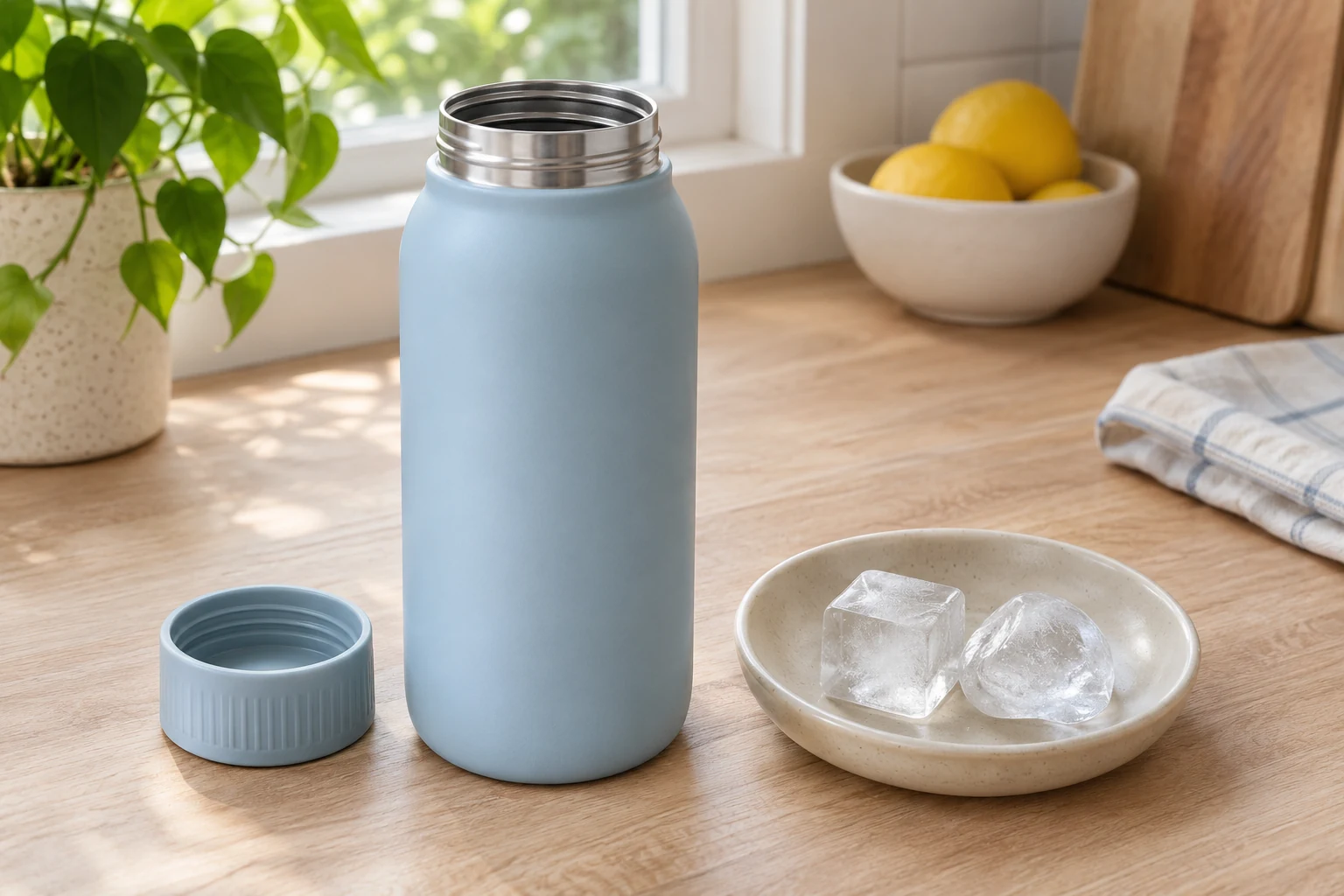
Start an ice shape compatibility check with the bottle you intend to keep. The useful question is whether the finished piece can enter through that bottle's permitted refill opening and leave room for its normal closure. A tray photograph beside a glass answers neither question. Choose the opening first, then investigate the ice.
Find the opening used for filling
Put the empty bottle and its own instructions together before comparing molds. Identify the part the maker allows you to open for filling. Keep that part separate from a small drinking spout, straw opening or other port. This article supplies no procedure for dismantling a bottle or removing a fixed assembly.
Use bottle refill opening as a specific description in your enquiry. A request that merely says “fits my bottle” could concern the cap thread, an ice piece, a brush or a carrying accessory. Name the bottle and explain that you want to add already released ice through its approved filling route.
If you cannot identify that route, pause the mold choice and obtain the bottle's guidance. Do not assume an apparently removable section should be taken apart. Keeping the present bottle is a reasonable starting preference; it does not oblige you to find a way of putting every attractive ice shape inside it.
Keep mold size apart from ice size
The cube and sphere mold offer names two molds and gives overall sizes. Its six gallery frames show a square-cavity tray and a sphere assembly. Those dimensions do not establish a released piece's size or bottle fit. Quest remains a catalog label, without authenticated pictured maker identity.
The bear-shaped mold offer is listed as Unbranded and one count. Nine gallery frames show four-bear assemblies in several colors. Their overall size graphics do not measure an individual bear. No delivered color or bottle compatibility is established here.
When reading mold dimensions, ask what object the numbers describe. The complete tray, its lid, a cavity and a released piece are different objects. Write the description beside the number you receive. If the answer concerns the outside of the tray, leave the finished-piece question open rather than silently changing its meaning.
A drawing of a mold in a hand can help identify its general form. It cannot give your bottle a matching opening. Likewise, a drink photograph may illustrate the intended appearance without showing how the piece entered the vessel. Use those pictures to formulate a precise question, then seek the missing dimensions.
Describe the passage, not just the destination
The space inside a bottle and the route into it belong in separate parts of your plan. Wanting ice in the main body does not establish that a piece can pass the opening or any narrower section on its way there. Ask about the whole permitted route for the actual bottle.
Keep the piece's shape in that question. A rounded piece and an irregular figure need different descriptions; a name such as “large ice” loses that distinction. Ask for the complete released outline and relevant dimensions. Do not obtain a single convenient width and treat it as a description of the entire object.
For a figure, identify the projecting parts in the supplier's illustration so the response concerns the complete piece. For a cube or rounded mold, ask which finished dimensions the response covers. This is a request for applicable information, not a claim that either selected offer produces a piece suitable for your bottle.
If the seller cannot provide that information, record the fit as unknown. You can choose a different mold with clearer information or keep using an existing arrangement you already understand. A missing dimension is a reason to keep a purchase undecided, rather than an invitation to force a demonstration.
Leave the cap question open until it has an answer
Passing through an opening would answer only the entry question. Your plan also needs the bottle to close in its normal permitted configuration. Keep the intended contents and the space beneath the closure in view. A piece that you have merely placed beside an open bottle has not answered that question.
Ask the bottle maker about any filling limits or closure restrictions relevant to adding ice. Use the actual bottle instructions, rather than importing a fill rule from a photograph of a different vessel. This guide gives no new maximum fill level and no permission to alter a straw, cap or internal fitting.
Do not choose a mold on a plan that requires pressing the cap against ice to finish closing. Reconsider the shape or the intended arrangement instead. An ordinary closure should remain an ordinary closure, rather than becoming the tool used to settle an unanswered compatibility question.
A fictional two-bottle decision
Imagine Mina and Jules choosing a mold for bottles they already own. Mina brings the instructions for her bottle and points to its permitted filling opening. Jules has a different bottle and has only identified its drinking port. They initially liked the same bear-shaped picture, but their first unanswered questions differ.
Mina asks the mold seller for the complete finished bear dimensions and asks the bottle maker which ice guidance applies to her model. She keeps the picture with that question so the response cannot be mistaken for a measurement of the whole tray. Until both answers are clear, she describes the proposed fit as unconfirmed.
Jules first obtains the instructions for his bottle. He does not borrow Mina's opening information or assume that a part with a similar appearance opens in the same way. The household can share a shopping conversation while keeping the two physical compatibility questions separate.
Suppose the seller replies only with the tray's overall length. Mina can thank them and repeat the narrower request: she needs the dimensions of one complete released piece. The original enquiry remains useful because it shows what was asked. The reply supplies information about storage of the tray, but does not finish the bottle decision.
Now suppose Jules decides he would rather keep his existing ice arrangement and buy no mold. That is a complete personal choice, even though the shared shopping list once included a new purchase. Neither person needs to change bottles merely to preserve the first idea. No real product test or successful fit is claimed in this example.
Keep two neighboring tasks separate
The lid and stacking guide explains complete tray parts and freezer arrangements. The stuck ice guide addresses release resistance. This selection question concerns already released ice and a bottle's filling route; neither guide establishes that pairing.
If ice has not been released from its mold, follow that product's instructions before treating it as a piece available for your bottle. Do not make release force part of a bottle-fit experiment. Equally, a tray that suits your freezer still needs a separate finished-piece answer for the bottle you want to use.
Keeping these tasks apart also improves a replacement decision. You may like a mold's complete parts and still lack the ice dimensions you need. You may already have usable ice and only need the bottle guidance. Identify the unresolved connection before deciding which object, if any, should be replaced.
Ask a question someone can answer
Send the exact bottle reference, the selected mold reference and the specific opening you mean. State which information you already have and which information is missing. If you include a photograph, label it as your own bottle or the seller's illustration so the two are not confused.
Keep each answer attached to the model and configuration it describes. A reply about one bottle does not settle a second bottle merely because both belong to the same household. If the seller changes the selected mold or variant, revisit the affected question before carrying an earlier answer forward.
When a reply stays general, ask for the product detail behind it. “Suitable for drinks” does not identify your bottle's refill route. “Compact tray” does not describe a finished piece. You need enough specific information to make your own selection without turning broad wording into a promise the supplier never made.
Keep the original bottle decision visible if a suggestion changes the product. A seller might recommend a wider-opening bottle instead of answering the question about your present one. Consider that as a new proposal, with its own cost and use preferences, rather than evidence that the selected mold suits the bottle already on your counter. You can decline that proposal without resolving the original fit.
For a household purchase, ask who actually intends to use each bottle. A mold chosen for one person's arrangement need not become a shared standard. Keep a second person's preference for existing ice, a different shape or no new purchase independent. In the fictional example, Mina can continue her enquiry while Jules leaves the shopping plan. Their different answers do not require either bottle to be treated as defective.
Keep payment with the selected offer
If you consider a republeq order and prefer crypto or USDT, finish the physical selection before authorizing payment. The two mold links identify different offers. One shows square and sphere mold forms; the other shows a bear form. Neither purchase would establish compatibility with an unidentified bottle. Keep any unanswered fit question visible while deciding whether to order. A payment preference is a separate part of the purchase and cannot supply the missing dimensions. Check the methods actually presented for the selected order at checkout, and obtain clarification if the method you want is unclear. This paragraph provides no wallet address, token instruction or network recommendation. It does not claim that a particular token or transaction arrangement will be available for your later order. Read the current delivery and return information for that exact offer before committing. No arrival date, replacement outcome or refund result is promised here. Retain the product reference with any seller response about the mold, and retain the bottle maker's response with the bottle it concerns. An answer about a complete tray should not become a finished-piece measurement simply because an order has been paid. If you change the selected offer, review the affected questions again. An order confirmation can identify what you selected; it cannot prove that an untested ice piece passes through your bottle. You may leave the order undecided while requesting the necessary information. You may also keep using what you own. The useful result is a decision that still makes sense with the actual bottle and mold, regardless of which available payment method you eventually choose.
Choose the mold after the finished-piece question and the bottle's permitted filling route have answers. Keep normal closure in that same decision. If any part remains unknown, leave the pairing unconfirmed. A clear decision to wait is more useful than a fit claim inferred from a glass in a photograph.
Conceptual bottle and ice selection; no exact retail mold, measured dimension or demonstrated fit is depicted.