Home & Living
How to organize a shared coat rack for coats, hats, and bags
Assign everyday coats, hats, and bags to existing hooks by length and reach, then test whether each person can hang and retrieve an item without tangling others.
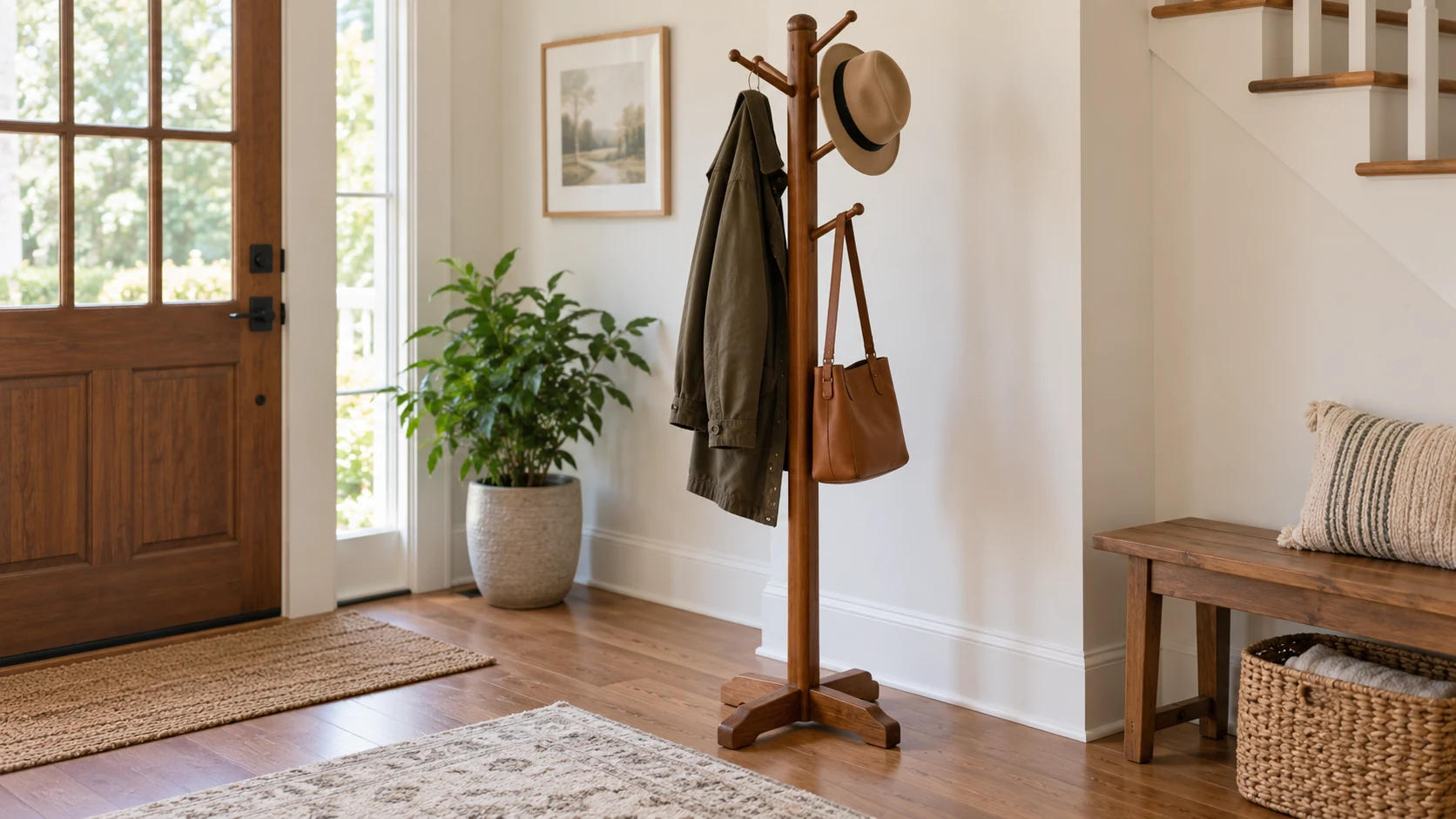
How to organize a shared coat rack starts with the things people actually hang up on an ordinary day. A rack may have several hooks and still feel crowded if one long coat covers a bag strap or if everyone reaches for the same position. Before changing the furniture, put the coats, hats and bags beside it and decide which items need their own clear route on and off.
The two current examples have different structures. The coat rack with bench and storage is a wider entryway unit with five double hooks and upper compartments in its listing. Its gallery shows a black unit with a row of hooks above lower storage. Check the maker's assembly and anti-tip instructions for that exact unit before using it.
The Fuliko freestanding coat tree is a narrow upright stand with several branching hooks in its listing and gallery. The photograph shows a hat and bag hanging from separate positions. It does not establish what your own coats weigh or how a full stand will behave in your room. Treat these as examples of hook layouts, not interchangeable installation or load instructions.
Count the everyday items and usable hooks
Start with one normal day's outerwear. Put each coat, jacket, hat and bag in a small group by person or by the time it is used. Separate an item that stays on the rack most days from something placed there only while a guest is visiting. A daily group gives you a realistic number of places to assign; a holiday pile can make a modest rack seem inadequate even when it serves ordinary use well.
Count physical hanging points on the rack you own. A double hook may offer two tips, but a bulky coat on one can cover the other. A branch high on a coat tree may be easy for one adult to reach and awkward for someone shorter. Count the positions that remain usable after the actual garments are hung, rather than multiplying a listing's hook number into a promise about how many full coats will fit.
Take note of bags with long handles, scarves that slide, and hats that lose shape when squeezed under heavy clothing. You need not decide their final places yet. Write a short list of the items that regularly compete for the same hook. Those collisions matter more than the rack's total number of decorative tips.
If the rack serves several people, make a temporary map before hanging anything. Put a small removable note near each proposed spot or write the hook positions on paper. Give a person a primary place and decide where an occasional second item will go. Remove any note that could leave adhesive on the finish. This short map is for testing the assignment, not a reason to force an item onto a hook that is too crowded or too high.
Separate long garments from small accessories
Hang one long coat alone and let it fall naturally. Look at the hooks beside and below it. If the hem covers a lower bag or touches shoes on the floor, try a different position before assigning the next garment. A short jacket may work near a shelf or bench where a longer garment would brush the surface. Use the actual length and shape of the things you own rather than a stock photograph's spacing.
Give a bag strap a hook where it can be lifted off without pulling a coat forward. If two straps settle over the same narrow tip, one bag may come away when the other is taken. Test them together, then move one if they snag. Keep keys or other small essentials in their separately chosen landing spot; the small entryway landing zone guide handles door swing, keys and the overall placement decision. Here the rack is already in place, and the task is arranging outerwear on its existing hooks.
Try a hat on a free upper or side position. Check whether a nearby coat sleeve rubs it or whether the hat blocks someone's view of another item. A shelf may be an option on a rack that actually has one, but do not assign shelf space on a plain coat tree. The wider example lists upper compartments; the freestanding example does not. Choose from the physical spaces on your own model.
Look at the lowest free space as well as the hooks. A bag may hang neatly when the rack is empty, then rest on a bench or cover a storage door once coats are added. Move it to a different hook if it blocks a compartment people use. On a freestanding tree, check from more than one side; a branch that looks open from the front may be hidden by a longer garment behind it. Keep the test tied to the real product layout.
Make the assignment easy for each person to use
Assign an ordinary place to each person's most-used item. It can be a hook on the left, a middle branch, or another position the person can identify without a label. If two people leave at the same time, they should be able to reach their things without removing the other's coat first. A simple trial during a normal morning will reveal whether the arrangement works better than a perfect-looking row of garments.
Reach matters. Let the person who uses a hook place and remove the actual item while the rack is otherwise occupied. Someone may be able to touch an empty upper hook but not lift a heavy winter coat from it. Move the assignment lower if the action requires stretching, leaning into another garment or tugging the rack. Keep a child's place within safe reach only if the product and room make that sensible; follow the manufacturer's placement and stability instructions.
Do not assume an unused hook can take another heavy item. Product descriptions and gallery photographs do not prove a safe combined load for a particular installation. Check the exact rack instructions and any stated limits. If you cannot confirm them, spread or reduce the items rather than testing a loaded rack to failure. Keep the floor and exit route clear, and avoid a garment that drapes across a door handle or light switch.
Test the ordinary arrival and exit
Once the first arrangement is in place, walk through a common arrival. One person comes in with a coat and a bag, takes off each item and hangs it without shifting other people's things. Then have another person retrieve their coat. Notice whether an item gets trapped behind a longer one, a bag swings into a walking route, or a hook becomes a bottleneck. Change one assignment and repeat the test.
Look at the furniture while those items are on it. The wider entryway unit and the freestanding tree have different support structures, so a result on one does not validate the other.
Follow the exact maker's instructions for assembly, placement and any anchoring. This article deals with what goes on existing hooks after safe setup; it does not specify wall fasteners or improvise a replacement part. The coat rack accessory compatibility guide covers the separate question of supplied and replacement parts.
Try the exit in reverse. The first item needed should not be hidden behind the last item hung. If a bag and coat must leave together, see whether each can be lifted without twisting a strap around a hook. It may be better to keep a daily bag on a neighboring hook even if a symmetrical layout places it elsewhere. The repeated action is a better test than a single tidy photograph.
Observe the rack during the trial instead of pushing past a problem. If a freestanding unit shifts or a bench-backed entryway unit feels loose, take the items off and consult the exact maker instructions before continuing. Moving coats among hooks is not a repair for an unstable stand or an insecure installation. Once the furniture is secure for its intended use, repeat the item assignment test with fewer things and keep the route around it clear.
Handle occasional items without losing the daily map
Leave some room for a coat that arrives unexpectedly, but do not turn a daily rack into a permanent storage place for everything the household owns. If all usable hooks are occupied on a normal day, decide which infrequently worn garment belongs in another approved storage area. This is a household sorting decision; it does not increase the rack's documented capacity.
A visitor's coat may need a temporary place. First check that the extra item can hang without crowding the exit or making the rack unstable under its own instructions. For a larger gathering, plan a separate temporary coat station rather than silently changing the daily assignments. Keep a guest arrangement reversible so people can find their usual things the next morning.
Wet or dirty garments may need a separate drying or cleaning routine before they return to the shared rack. Avoid trapping moisture against the furniture or another person's clothing. Follow the garment care label and the rack material instructions for cleaning. This guide does not diagnose damp floors or promise that a hook arrangement solves moisture problems.
When a temporary item goes on the rack, tell the person who usually uses that space where their daily item moved. Otherwise the first person to leave may search behind unfamiliar coats or take a bag from the wrong hook. Return the ordinary arrangement after the extra item leaves. If the temporary arrangement works better for everyone, update the map deliberately instead of letting one busy evening change the household routine by accident.
Revisit the layout when the items change
After a week of ordinary use, ask which hook people actually choose. If everyone ignores the planned spots, the assignment may be too high, too crowded or simply hard to remember. Move one regularly used item and test again. You do not need to relabel every hook when one coat changes; the goal is a repeatable route for the common items.
Repeat the check when heavier coats come out, a person starts carrying a larger bag, or the household changes. An arrangement that worked with light jackets may hide a smaller hat under winter sleeves. Count the current items again, make sure the manufacturer limits still fit the plan, and keep any excess in a suitable other place. Treat the rack as a daily-use station, not proof that every belonging must fit there.
Finish with one full arrival and departure using the assigned places. Each person should be able to hang and retrieve the items they use without untangling someone else's, shifting the furniture or blocking the route through the room. If that test fails, change the assignments while the rack is still in view. The useful arrangement is the one people can repeat.