Home & Living
Holiday wrapping paper direction: choose the display front
Choose how an actual printed figure or phrase should face the recipient, keeping visual preference separate from coverage and contents handling.
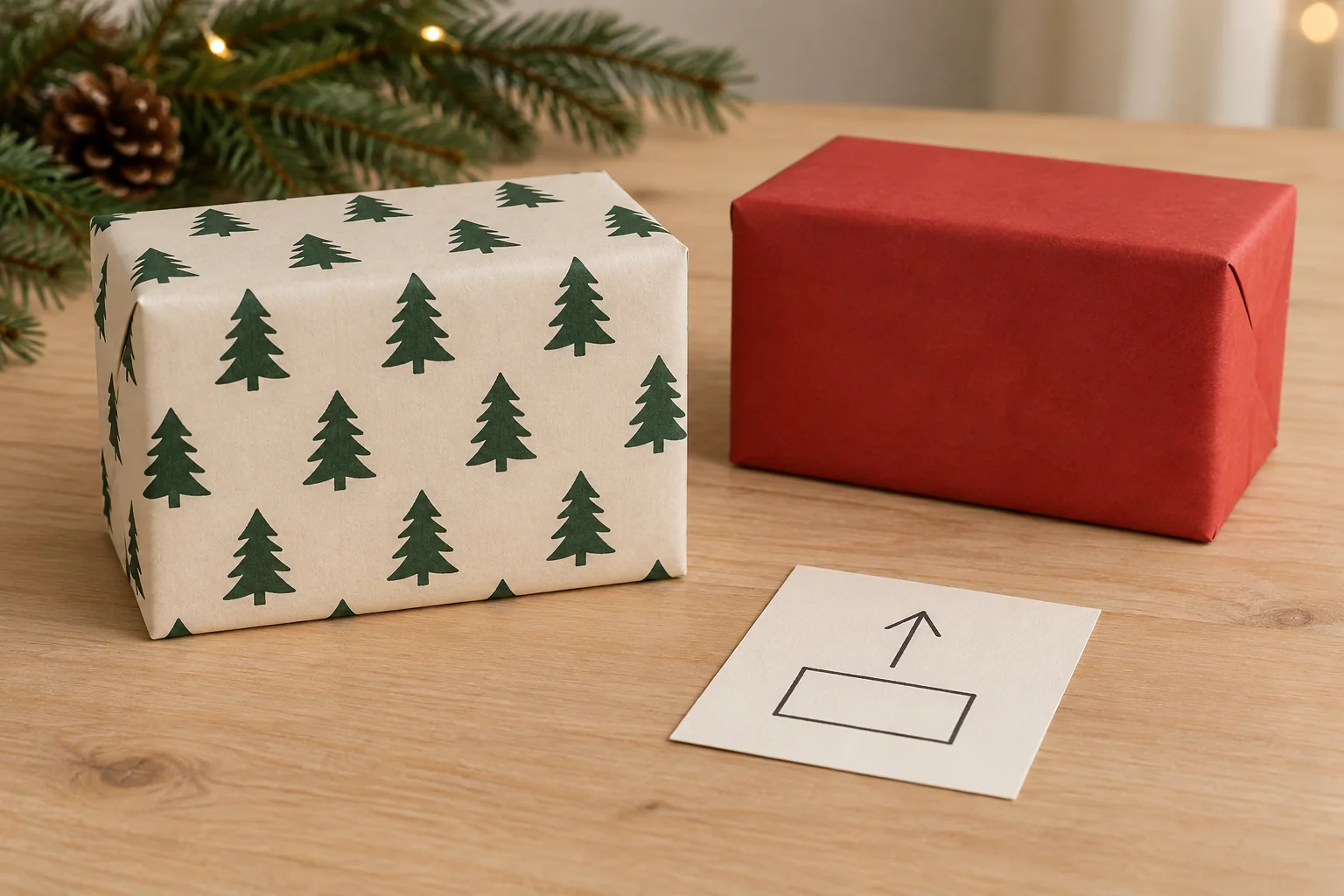
Choose the view before choosing the motif position
Holiday wrapping paper direction begins with a presentation choice: which face of the finished gift do you want the recipient to encounter first, and how should the printed image or words appear there? Decide that before committing the actual paper to the parcel. A figure can have an apparent top and bottom even when the sheet covers a box successfully. This guide concerns that visual choice. It supplies no cutting allowance, folding sequence, tape method, measured pattern repeat or guarantee of a particular finished result.
Keep the gift's own packaging requirements ahead of appearance. Calling a face the intended front does not authorize turning contents against their applicable storage or handling instructions. Choose a suitable packaged gift first, then consider the view you want to present within those requirements. If the object needs an upright position or another specified arrangement, retain that instruction. A decorative motif cannot decide which way an actual item may be carried, stored or handed to another person.
Bring the actual paper into the choice. A catalog picture can suggest a design without establishing where the next repeated figure will appear on the roll you receive. Look at the material in front of you and identify any words, faces or figures whose direction matters to you. Some designs may leave you indifferent to the orientation. That is a valid preference too. The task is to make an intentional choice for this gift, rather than invent a universal rule for every pattern.
What the printed and plain examples show
The Hallmark Kids paper assortment listing names designs including dinosaurs, unicorns, rainbows, cupcakes, video games and birthday wording. Its sole gallery shows complete printed rolls with recognizable figures and words. Those images can prompt an orientation question, without supplying a repeat measurement or the exact crop on your parcel. This is not presented as an all-Christmas assortment. A household choosing paper for a holiday gift should examine the actual design and wording it wants to use, rather than assigning the entire pack an unstated seasonal identity.
The JAM PAPER solid-color assortment listing identifies plain colored wrapping rolls. Its sole gallery shows purple, pink, lime, blue, red and orange rolls consistent with that description. This provides a contrasting visual option without a depicted character or word to place upright. It does not establish that every light reflection will look identical from every direction, or that a delivered color will match another object exactly. No measured quantity, yield, tape supply or finish-performance result is adopted here.
Keep each offer's actual identity when asking about a design. A different variant may carry different words even when a seller uses a similar general title. If the exact pattern matters, confirm it for the selected order. This guide does not transfer one roll's design to another roll or treat an assortment photograph as proof that every possible variation will be supplied. A visual plan can remain undecided while an actual variant or wording question is being resolved.
Give the intended front a reference point
For a hypothetical boxed present, name the face you hope to show first. Use a reference the person helping you can recognize without opening the gift or guessing its contents. You might describe the broad face intended to carry the visible motif, while keeping any contents-orientation requirement unchanged. This is a plan for the view, not a method for wrapping the box. The complete package still needs a suitable wrapping approach and an actual check against the object being covered.
Then describe what upright means for the chosen motif. A printed word has a reading direction; a pictured figure may have a head and feet. Those features can help you state the visual result you want. Do not assume that the roll's position on the worktable automatically gives the intended front that result. The sheet and the parcel can be moved during preparation. Retain the desired view in a simple sketch or note if another person will take over.
Avoid marking an actual product or finished surface merely to create a reference unless its applicable handling information permits it. The visual note can remain separate from the gift and the paper. A sketch identifying the intended front and the motif's top is enough for the fictional planning examples here. This guide provides no adhesive label, marking instrument or alteration method. Keep the presentation decision understandable without adding an unsupported treatment to the object you intend to give.
Read the actual words as well as their direction
A pattern's wording deserves its own attention before orientation is settled. If the selected roll says something specific to an occasion, decide whether those actual words are the message you want this gift to carry. A design chosen for its colors can also contain a phrase you did not intend. Read the visible wording rather than relying on the product's general color description. This is a personal presentation decision, without a claim that every recipient interprets a phrase in the same way.
For a holiday gift, a household may choose an illustrated design, a plain color or particular seasonal wording. None is required by this guide. If a mixed assortment contains a design intended for another occasion, keep that distinction visible while choosing. You do not need to use every roll in the same session. Nor should a pack count decide which message belongs on a particular gift. Select the actual design you want before treating the remaining material as a practical coverage question.
If a word crosses the place you hoped to make the display front, decide whether that fragment serves the intended appearance. The answer can be a different presentation choice rather than a demand for perfect symmetry. This guide supplies no guaranteed centered word or pattern spacing. The actual paper may not place a whole phrase exactly where you first imagined it. Keep the decision attached to the material you have instead of drawing a perfect layout and treating it as a measured property of a retail roll.
Distinguish an upright figure from a centered figure
Orientation asks which way the figure faces relative to the intended view. Centering asks where it sits within that view. They are different preferences. You can want a figure upright without requiring it in the middle of the front, or prefer an overall arrangement without selecting one figure as the focal point. Name the preference that actually matters. A simpler choice may be enough for the gift, while a particular centered design may require a different piece or remain unconfirmed.
Do not turn a gallery photograph into a repeat measurement to solve the centering question. Perspective, cropping and the amount of roll shown leave the actual arrangement uncertain. Obtain the relevant information or examine the paper in hand if a precise position matters. This article measures neither selected product. It also supplies no waste allowance for choosing a favored motif location. A visual preference is not proof that the remaining roll can supply a particular number of equally positioned parcels.
If more than one direction appears in the same pattern, choose which part you want to emphasize, if any. A repeated design can contain several figures or words, and your intended front may show more than one. There is no requirement here that all of them appear identical in direction. Describe the choice you actually want rather than treating the presence of another visible motif as an automatic error. A preference can remain flexible without being represented as a manufacturing or printing fault.
Use a fictional view to explain the choice
Imagine that Ellis has a suitable boxed holiday gift and a paper design showing small upright characters. Before wrapping, Ellis identifies the intended front and sketches one character with its head toward the top of that view. The sketch contains no dimensions and predicts no exact crop. It simply explains the desired direction. This invented example is not a physical trial of either selected paper or a claim that a particular character can be centered on an actual box.
A helper proposes turning the design because the paper lies conveniently on the table that way. Ellis compares the proposal with the desired view instead of arguing about which table edge is universally correct. They can choose the revised appearance, retain the original intention or use another suitable piece. None of those choices establishes a cutting or folding method. The example keeps the visual decision separate from the later work required to cover the actual package appropriately.
Now imagine a second present using a plain-color paper. Ellis has no printed head, feet or word to orient, so the visual question may be simpler. They can still consider the appearance of the actual material in the intended view without asserting that light or finish has no direction. The two examples ask different presentation questions. They do not establish that one paper is easier to use, wastes less or produces a more appreciated gift, because no such comparison was performed.
Keep the appearance plan separate from coverage
An intended front and upright motif do not establish that a particular piece covers the gift. Retain that separate practical question for the actual wrapping method. This guide supplies no box dimensions, overlap proportion or end allowance. Do not preserve a desired motif position by ignoring a coverage requirement that the applicable method identifies. A layout can be visually appealing while still requiring another piece or a changed plan before the gift can be wrapped appropriately.
Likewise, a reverse-side grid, where one is actually supplied, cannot decide which printed image you want the recipient to see. It would have its own stated purpose and limits. This article adopts no cutting accuracy or reverse-grid result for the selected offers and gives no tool instruction. Keep visual orientation as the decision about the finished view, while leaving any physical preparation to a suitable method and the actual materials. A product feature should not answer a preference the household has not yet made.
If the desired appearance and the available piece do not work together, record that specific limitation. You may prefer another motif, another piece or a different suitable wrapping choice. This guide recommends no particular purchase to resolve it. A larger roll would not automatically put the selected figure in the position you want, and a different color would not supply a missing coverage check. Clarify which question remains before deciding that more material is necessarily the answer.
Give a helper the visual choice without hiding the gift identity
Keep the intended recipient identifiable through the wrapping session using whatever suitable method you already apply. A paper pattern alone should not have to establish who receives the gift. If two parcels look alike, retain their actual identities separately. This article does not replace the recipient record with a color code or assign a design to a family member. The visual plan concerns the outward picture, while the gift's identity and intended recipient remain their own practical information.
A useful handover can say which face is intended as the first view and which way the selected words or figure should appear there. If the choice changes, tell the person helping before they rely on the earlier note. You do not need a detailed production chart for one present. A short, understandable instruction tied to the actual package can preserve the preference without requiring the helper to reconstruct it from a loose roll or a remembered conversation about colors.
When the parcel is finished under its actual wrapping method, look at the view you chose. Record only what you can see, without claiming a professional finish or a tested result for the paper. You may decide the appearance is satisfactory even if it differs from the first sketch. That is a completed preference decision for this gift, not a guarantee for every later parcel. The next gift begins with its own actual paper, contents requirements and desired view.
Keep the related gift decisions distinct
The wrapping-paper spending guide compares area-based unit cost with the complete order amount and the usability of actual pieces. Its calculations do not choose a motif's direction or establish a repeat measurement. Use that work when the question is how much an identified paper quantity costs. Here the question is the visible relationship between an actual design and the intended first view, without a price comparison, predicted yield or invented allowance for unused material.
The Christmas gift-bag sizing guide sorts actual gifts by opening, depth and closure before assigning handled bags or pouches. That is a different physical packing decision. A bag's printed front can suggest another presentation choice, but its dimensions and closure tests do not become a wrapping-paper layout method. Keep the current task with the sheet and the intended visible motif. If the packaging form changes, return to the requirements of that actual form rather than transplanting an unsupported procedure.
Keep the order and payment questions separate
If you decide to order paper and want to ask about USDT, retain the exact pattern, variant and unresolved design questions alongside the order. Neither native paper page reviewed here establishes that a particular checkout accepts the token or any crypto payment method. Ask the seller what payment methods are available for the actual order through the seller's confirmed channel. If a crypto option is offered, establish the named asset, network, recipient details, full amount, fees and order reference from the current checkout instructions before authorizing a transfer. A familiar token name does not identify those details on its own. Keep the instructions with the selected goods so a later enquiry concerns the paper that was actually ordered. Obtain the applicable delivery, cancellation, return and refund terms, including how the seller would handle a refund using the chosen payment method. This article has not inspected a live checkout, sent funds, verified settlement, compared exchange rates or established any tax treatment. Payment confirmation would not establish delivery, the exact printed pattern received, the usable position of a motif or a successful wrapping result. Those later questions need their own evidence. Do not treat the availability of a payment option as a reply to a missing variant question, or use a product clarification as authority to transfer funds to an address copied from an unrelated message. If a transaction detail remains uncertain, leave payment pending while resolving it through the confirmed seller channel. A holiday date cannot supply missing network information or turn a remembered address into current order instructions. The visual choice can remain open while the transaction question is resolved.
Choose the view for the actual holiday gift
Holiday wrapping paper direction is a deliberate choice about an actual design and an intended first view. Read the words, identify any figure direction that matters and keep that preference separate from coverage, recipient identity and the contents' handling requirements. Use the actual paper rather than a guessed repeat from a photograph. A plain design or a changed motif choice can serve the presentation you want, without a universal rule, measured crop or promised reaction from the recipient.