Outdoors & Mobility
Holiday travel bed bug checks before you unpack
Inspect lodging and luggage during a holiday stay, report possible signs and plan the return-home check without treating an unchecked room as pest-free.
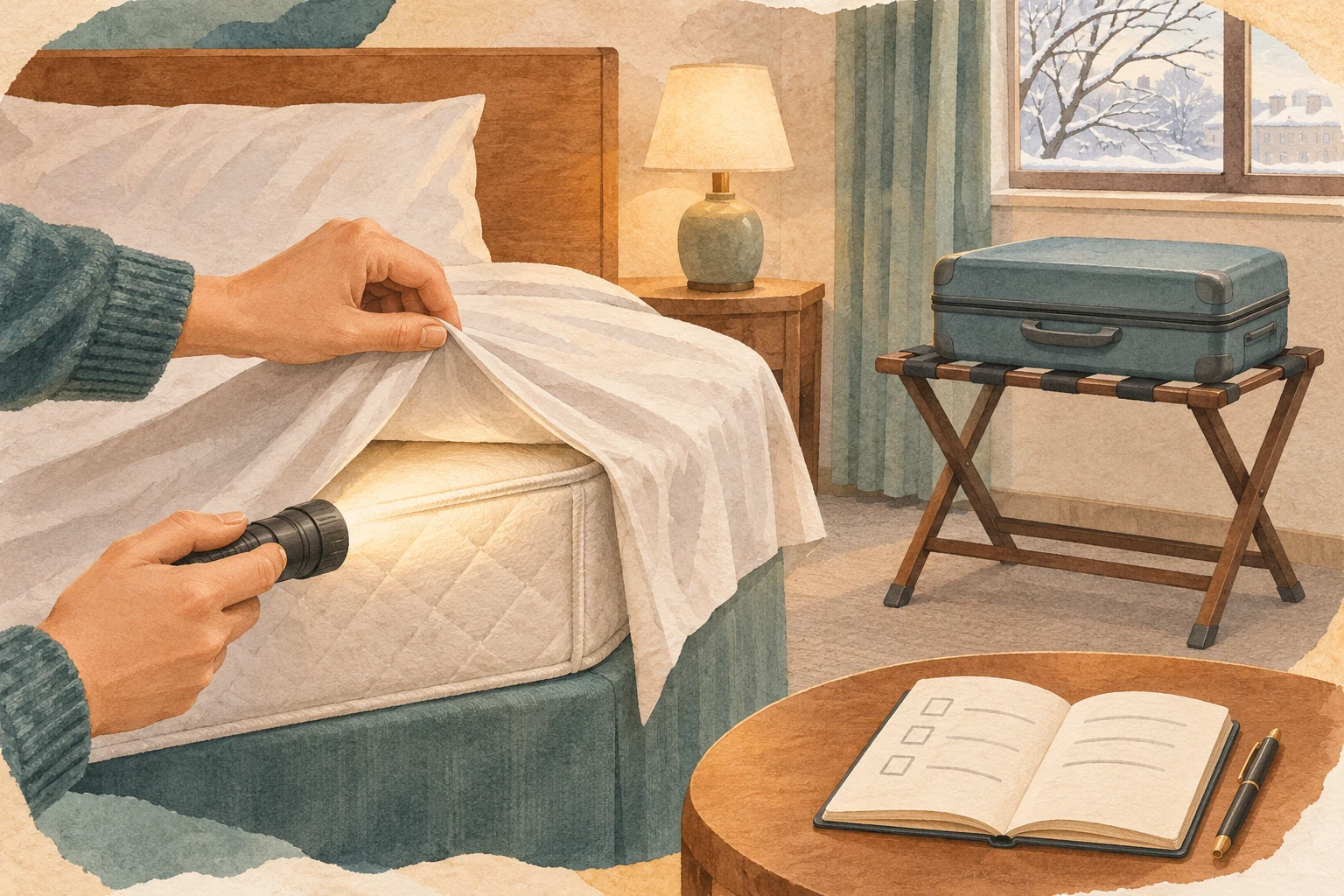
Holiday travel bed bug checks begin before you unpack. Inspect the sleeping area and the place you intend to put your luggage, keeping possible signs separate from a confirmed identification.
Start the lodging inspection before opening the case
The Environmental Protection Agency's travel advice asks travelers to inspect their room, including the mattress, headboard and luggage rack. A flashlight can help. Give that lodging inspection a place in your arrival routine before clothing and other belongings spread around the room.
EPA recommends using a luggage rack for packing and unpacking, keeping the case away from the bed. Inspect the rack before using it. A convenient surface still needs its own check; an unfamiliar rack is not automatically a pest-free resting place. Keep the bag closed while you decide where it can go.
At this stage, you are looking for evidence and choosing where to place belongings. The inspection does not certify that a room is clear of bed bugs. Keep a concern identifiable so you can explain what you saw.
Look at the seams and nearby hiding places
Cornell Integrated Pest Management describes bed bugs as stowaways that can move with luggage and other possessions. Its traveler advice points to mattress seams and the area around the headboard. Look at the accessible edges and folds near where someone will sleep, using the light available to see what is actually there.
The Cornell page also lists upholstered furniture, drawers and other possible hiding places. That list helps explain why a glance at the top sheet is a limited check. You can look at accessible furniture seams without taking the room apart. Leave fixed fittings and electrical plates alone; raise a concern with the people responsible for the accommodation rather than dismantling their property.
A mark deserves attention without becoming a conclusion you cannot support. Note its location and appearance, and distinguish a possible sign from an insect you have actually seen. Keep that distinction when you report the concern. A tidy room and an attractive suitcase photograph supply no inspection result. Your observations concern this room on this arrival, not every room in a building or every later stay.
Keep suspected signs separate from identification
University of Minnesota Extension explains that skin reactions alone cannot verify the presence of bed bugs. Other insects and irritants can produce similar-looking reactions. The university notes that bat bugs can closely resemble bed bugs. Keep a new skin concern separate from your room observations. This guide provides neither a diagnosis nor a treatment for a bite or rash.
The university advises getting expert help with suspected specimens. Describe what you found and where it was, keeping uncertainty visible while someone qualified considers identification. Finding a dark spot is different from identifying a live bed bug. Avoid turning a photograph of an unfamiliar insect into your own confident species determination.
Its inspection advice also draws attention to cracks, crevices, seams and folds in belongings. These are places to look carefully, including when you pack and unpack. If you find a suspected insect, stop scattering possessions around while deciding the next step. Keep the concern with the affected item and seek appropriate identification and handling advice rather than improvising a pesticide application.
Carry luggage precautions through the holiday stay
California's Department of Pesticide Regulation organizes its travel advice around before, during and after the trip. Its before-travel suggestions include taking only essential items and using clear plastic bags for belongings. These luggage precautions do not make a packed case immune to infestation.
During the stay, its flyer advises keeping luggage off the hotel bed. It suggests a rack that does not touch the wall, or an empty bathtub while you inspect the room. Check the actual setting before using either place. The aim is to avoid spreading belongings onto sleeping surfaces while the room check remains unfinished.
The flyer identifies live insects and possible droppings as signs to notice, and asks travelers who find bed bugs to contact the front desk about another room. Inspect the replacement room too. A room change is an accommodation response, not evidence that the next room has already been checked for you.
Keep your holiday plans flexible enough to report a concern before settling in. You do not need to unpack first merely because the rest of the arrival routine is underway. Retain the location of the concern when explaining it.
Report the concern before settling into another room
The American Academy of Dermatology's prevention page likewise asks travelers to inspect lodging before bringing luggage into the room. Its advice includes checking upholstered areas and keeping bags on a rack away from the wall after inspection. It recommends requesting a new room if you find signs of bed bugs. Include accessible upholstery seams in that check.
Tell the accommodation staff what you observed and which room or furnishing it concerned. Keep a possible sign described as possible while identification is unresolved. A request for another room does not require you to invent an infestation history or claim that someone else has already confirmed your observation.
When offered another room, give the new space its own inspection before unpacking. Your earlier check described the previous space. Keep luggage and loose belongings together while that decision is made, with any concern about an affected item left visible. This article does not assess a particular hotel, promise a room will be available or prescribe a clinical response to skin symptoms.
Plan the luggage check when you return home
The National Pesticide Information Center treats returning home as an opportunity to inspect belongings before bringing them inside. Its prevention advice asks travelers to examine luggage and keep stored cases away from sleeping areas. Bed bugs can move through cracks into nearby rooms. Give the return-home check a place in your plan alongside the arrival check.
Look at the bag you actually used, including its seams and compartments, and retain any concern from the stay. Avoid treating a completed trip as proof that nothing traveled with you. If a possible sign remains unresolved, seek identification and suitable handling advice before distributing belongings around the home.
NPIC advises against using pesticides as a preventive treatment. It also notes that bed bugs can be difficult to control even for professionals. This guide supplies no spray, steam, heat or freezing protocol. Keep a suspected pest problem separate from ordinary suitcase cleaning, and use advice appropriate to the identified problem and affected items. Buying another case would not resolve an unanswered identification question.
Read two luggage accounts within their actual limits
The Chicago Blackhawks suitcase account has seven original gallery views of one complete case. They show rigid-looking outer faces without front-access pockets, a perimeter zipper, an integral combination-lock fitting and dual-wheel assemblies. HEYS and team-related marks are visible. Those observations do not authenticate licensing, shell composition, lock performance or a measured carry-on fit.
The Bioworld luggage account has seven views showing a fabric exterior with two separately zippered front pockets and single-wheel assemblies. Its staged open view contains clothing, sunglasses, a shaver and toiletries; those items are not established as supplied. The catalog SKU and nominal size remain offer identifiers, with no physical measurement or maker authentication performed here.
The exterior access pockets and wheel construction differ between these accounts. Neither gallery establishes resistance to bed bugs, safe treatment settings or success in a room inspection. Examine the belongings you already own rather than treating a new suitcase as a pest-control measure. If you consider a purchase for another practical need, keep the exact product questions separate from the lodging concern and any advice about affected belongings.
Keep packing and replacement decisions on their own terms
The holiday return-packing guide revisits the contents and intended configuration of a homebound case. That decision can change when gifts or other items are added during a visit. A return-load plan does not inspect those items for pests. Keep any unresolved lodging concern with the belongings it affects while deciding what will travel home.
The carry-on replacement checklist considers observed bag functions and whether continued use, a repair inquiry or replacement makes sense. A working wheel or zipper answers a luggage-use question. It does not establish that the case or its contents are free of bed bugs, and a suspected pest problem does not by itself diagnose a broken bag.
Use these related decisions at their own scope. You may need to revise the contents plan, address an actual hardware fault and report a possible lodging sign on the same trip. Keep the observations attached to the question they answer so another person helping you can understand what has been checked and what remains open.
If you later consider a crypto purchase
A holiday trip does not require a new luggage order. If you later consider buying a case on republeq.com and want to use crypto, inspect the options presented for that particular order. If USDT appears as an available choice, establish the requested asset and network from the current checkout instructions before authorizing anything. Keep the exact product selection and any unresolved supply question with the order details, so a payment choice does not silently become a decision about a different item. Read the displayed amount, any stated charges and the relevant delivery terms before proceeding. Retain the order reference and the instructions you used, including any information the responsible service provides about cancellation, returns and refunds. A catalog photograph does not establish those transaction conditions, and this guide does not confirm a current checkout option, a delivery outcome or a refund method. If a required detail is unclear, leave the order pending while seeking an answer through the stated support route. Check that any reply addresses the same order and product rather than applying a general statement to a different transaction. If an instruction changes, preserve the earlier version alongside the confirmed replacement. After an authorized payment, retain the resulting transaction and order records together. If the status is uncertain, reconcile that uncertainty before considering another transfer; an unresolved acknowledgement does not establish that no payment occurred. This paragraph supplies no receiving address, wallet recommendation or assurance of recovery. Decide whether to proceed from the actual conditions you can verify, keeping an unanswered product or payment question visible. You can return to your other travel arrangements while the purchase is undecided, with the order information saved independently. The name on a suitcase does not identify a payment network or authorize a transaction. A different payment method would not change which item you selected, and an order confirmation would not establish that a delivered bag meets an untested travel requirement. Keep those decisions attached to the evidence and work that belong to each of them.