Seasonal & Holiday Content
Holiday recipe box: find the version you want to use
Find the complete sources behind familiar holiday dishes, distinguish recipe versions and choose useful card categories before planning a recipe-box purchase.
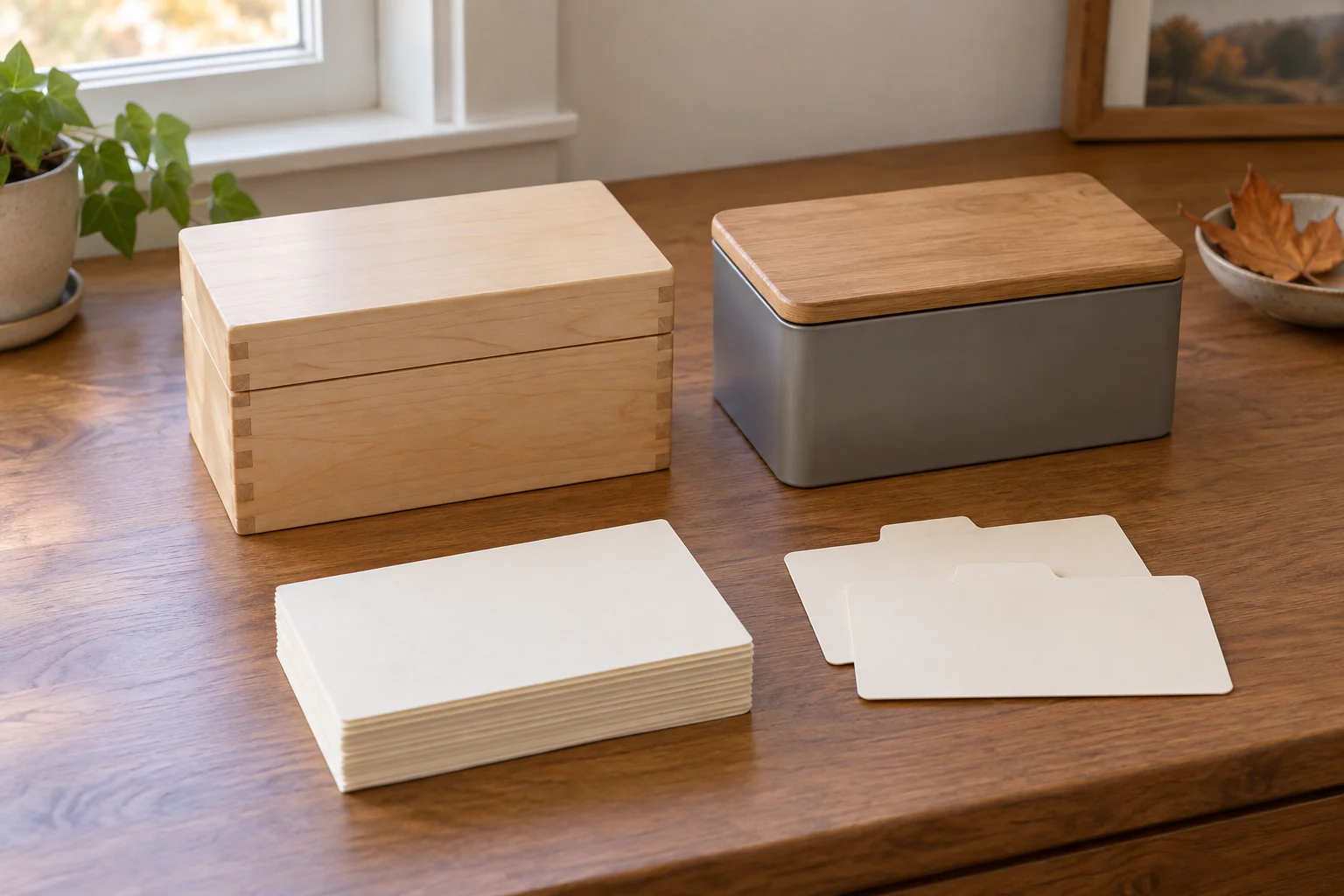
A holiday recipe box can help you find the particular recipe you meant to use when several familiar versions have accumulated. Begin with one upcoming meal and a few dishes you are considering. Find the complete source for each before deciding what belongs in the box. An appealing dish name is a useful reminder, but it is not the recipe itself.
This project concerns finding and organising information you already have. It supplies no cooking instructions, ingredient substitutions or way to complete an uncertain recipe. You can make the index with ordinary cards and an existing suitable container. The two recipe-box offers below are optional purchasing examples, with their contents and unanswered fit questions kept distinct.
Sorting recipes for a holiday meal starts with a short list
For sorting recipes for a holiday meal, choose the occasion you are actually planning. You might be looking for a particular dessert or comparing two dishes you have made before. Keep the first sorting session small enough to finish. Finish finding the sources for the few dishes under consideration before expanding the session to another folder.
Ask the people planning the food which dishes they want to investigate. A requested favourite and an idea someone mentioned in passing need not receive the same attention. Find the recipe behind the actual request first. You can leave other possibilities outside the initial group without discarding them or promising that they will be served.
When someone says they want the usual version, ask which one they mean. The answer may identify a cookbook, a particular relative's copy or a recipe page saved from a publication. Do not choose the first familiar title you find and assume it answers the request. Two sources can use similar names while containing different recipes.
Find the complete source behind each reminder
If your household has more than one edition of the same cookbook, identify which copy you mean. Ask the owner of a borrowed volume how they want it returned. Keep that particular book available for the planned wording check instead of replacing it with another edition because the cover looks familiar.
Look for the actual recipe text or the reference that lets you retrieve it. A cookbook recipe needs enough information to locate the right book and page. A saved online recipe needs its actual source, rather than a screenshot of only the finished dish. A household copy needs a recognisable description that distinguishes it from another version in the same folder.
If a recipe runs over more than one page, keep the complete source available. A short card can point to it without trying to compress every instruction into a small space. Use that card to direct the reader to the complete page. It should tell the next person where to read the recipe, not look like a complete set of directions when essential material remains elsewhere.
For an online source, check that the reference still takes you to the intended recipe before relying on it for the holiday plan. If it no longer does, find an appropriate existing copy or leave that recipe unresolved. A photograph of the food or an ingredient list alone does not supply the missing instructions.
Recipe cards and source references can do different jobs
For recipe cards and source references, decide whether the card contains a complete existing recipe or simply identifies where to find one. Make the distinction apparent in its wording. A card headed with a dish name and a book reference can be useful on its own terms. It should not imply that a few remembered lines replace the rest of the source.
Write the name your household would search for at the top of a reference card. If your household calls a dish by a nickname, that can lead to the published title and source. Keep the relationship understandable to another person. Someone finding the card later should be able to reach the intended recipe without guessing which similarly named book or clipping you meant.
Where a card already holds a complete recipe, preserve the source information that accompanies it. If its origin is unknown, leave that fact unknown rather than assigning it to the person whose handwriting you recognise. Writing a copy and creating a recipe are different roles. You can ask the owner whether they know more about where it came from.
Separate the versions before choosing one
Consider a fictional collection containing three cards all called holiday cake. One points to a cookbook, one is a relative's handwritten copy and one was typed for a previous gathering. Label the fictional cards by their actual source: the cookbook, the relative's identified copy and the earlier typed version. The shared title does not establish that the quantities and instructions match.
Choose the version you intend to consider for this meal, then retain its complete source. A newer typed copy may be easier to read while still needing comparison with the source it claims to copy. This sorting exercise does not verify that comparison or certify a recipe's result. Leave an unresolved version outside the selected cooking plan until the relevant information is established.
A note about the version someone prefers can remain a preference. It does not need to become a claim that the other recipes are inferior. Ask which source they want to use and why it is the one they recognise. Keep that explanation separate from the recipe's actual instructions.
Keep incomplete handwriting out of a guessed recipe
The family-recipe transcription guide describes a separate wording check with a second reader and visible uncertainty markers. Use that process when copying is the actual task. Its GZHJMY and SJJ cookbook-holder descriptions supply no dimensions for either recipe box discussed here.
For this holiday selection, you can simply mark that a source still needs clarification and choose another complete recipe for consideration. You do not have to solve every old handwritten page during the sorting session. An unclear number or missing instruction should not be filled from memory to make a card look ready.
If another person can identify a reliable version, ask them to show you that source. Keep it distinguishable from the incomplete copy. A recollection about a dish can be part of the household's conversation while remaining separate from the instructions someone would need to follow.
Read the SJJ kit as supplied inventory
The SJJ large pine-wood recipe-box offer describes a box measuring 13.5 by six by 5.5 inches overall, with steel hinges and a removable internal divider. It names one hundred four-by-six-inch recipe cards, sixteen paper dividers and an additional kitchen unit-conversion card. Those are stated contents and external dimensions, without an independent storage trial here.
The supplied card count is not a confirmed maximum for every mixture of cards, sleeves and existing clippings. Nor do the overall dimensions identify every internal opening. If you want to keep material you already own, ask about the relevant fit before choosing the box. This guide supplies no divider-removal or other alteration procedure.
The conversion card is an inventory item in the description. Its presence does not verify a particular conversion for your recipe, and this article gives no conversion values from it. The listing's durability and ink-resistance language likewise supplies no independent long-term result. Choose the kit for the actual features you want while leaving those untested outcomes unclaimed.
Keep the Myst Design cards and sleeves with their own box
The Myst Design recipe-box set describes fifty four-by-six-inch cards, fifty clear sleeves and twelve tabbed dividers. Its galvanized iron box has a wooden lid and measures 7.08 by six by 5.9 inches. The listing places this Multicolor set under Restored Tools, with SKU sku-18851413425, UPC 850077186158 and size shown as a dash.
That package gives a different starting inventory from the SJJ kit. Fifty sleeves do not establish room for every sleeved card you might add later, and neither package count determines how many holiday dishes you need. Ask about the actual intended contents if storage fit affects the purchase.
The Myst Design description names lid slots for a recipe card and a smartphone. It also describes the sleeves as protective against dust and moisture. Those statements do not provide a loading method, approval for an unidentified phone or a waterproof preservation result. Follow the actual item's applicable information; this project gives no in-use kitchen placement or sleeve-protection test.
Choose category words that help you find the dish
Begin with the questions you actually ask when looking for a recipe. You might start with a dish name, a course or the person whose version you want. Choose a simple arrangement that suits the collection in front of you. A supplied set of dividers can remain partly unused while your own categories are still taking shape.
If a dish could belong in more than one place, decide where you would look first. A separate reference card can point there from another category if that helps you. It does not need to contain a second rewritten recipe. Keeping one identified source can avoid creating another apparently complete version during the organising project.
Ask another household member to find one of the selected recipes using your proposed wording. Let them describe what they looked for. You can change a heading they did not understand without declaring the whole system wrong. This is feedback on your own small collection, not a test of either unhandled retail box.
Keep appliance-specific information with the actual recipe
The bread-recipe and machine-program guide keeps a recipe's actual wording separate from a machine listing's program names. Its KBS and VAVSEA disclosures do not validate a recipe simply because a familiar label appears in both places. Retain applicable equipment information with a recipe when it matters to the source you would use.
A category labelled bread is still only a way to find material. It does not establish that every recipe behind the divider suits the same appliance or method. Keep the complete source and applicable instructions available. This article supplies no program selection, quantity adjustment or substitute cooking sequence.
Bring the selected sources back to the holiday plan
Once the recipes are findable, show the meal planner the versions you have actually located. Ask the meal planner which of those located versions they want to consider for the gathering. Put aside ideas they do not want this time without presenting them as commitments. The recipe box can support the conversation while the menu is still being decided.
After the gathering, return borrowed material as agreed and keep the references you want to find again. You can add an ordinary note about which version was used, without turning a personal reaction into a guarantee about the recipe. Follow the actual storage product's care information for the box and its contents.
In your holiday recipe box, keep the source reference beside each retained title. Next season, those references can help you begin with the right version instead of another search through similar titles. The new meal can still have its own choices, with any unresolved recipe text left unresolved.
Conceptual holiday recipe box cover with complete generic inactive boxes, separate blank cards and dividers; no exact retail models, readable recipe, capacity or preservation result is shown.