Home & Living
Plan holiday photo sharing with a named recipient for each copy
An original fictional holiday-photo note keeps Rosa and Len as the people pictured and Mira as a proposed recipient, with no copy sent or permission assumed.
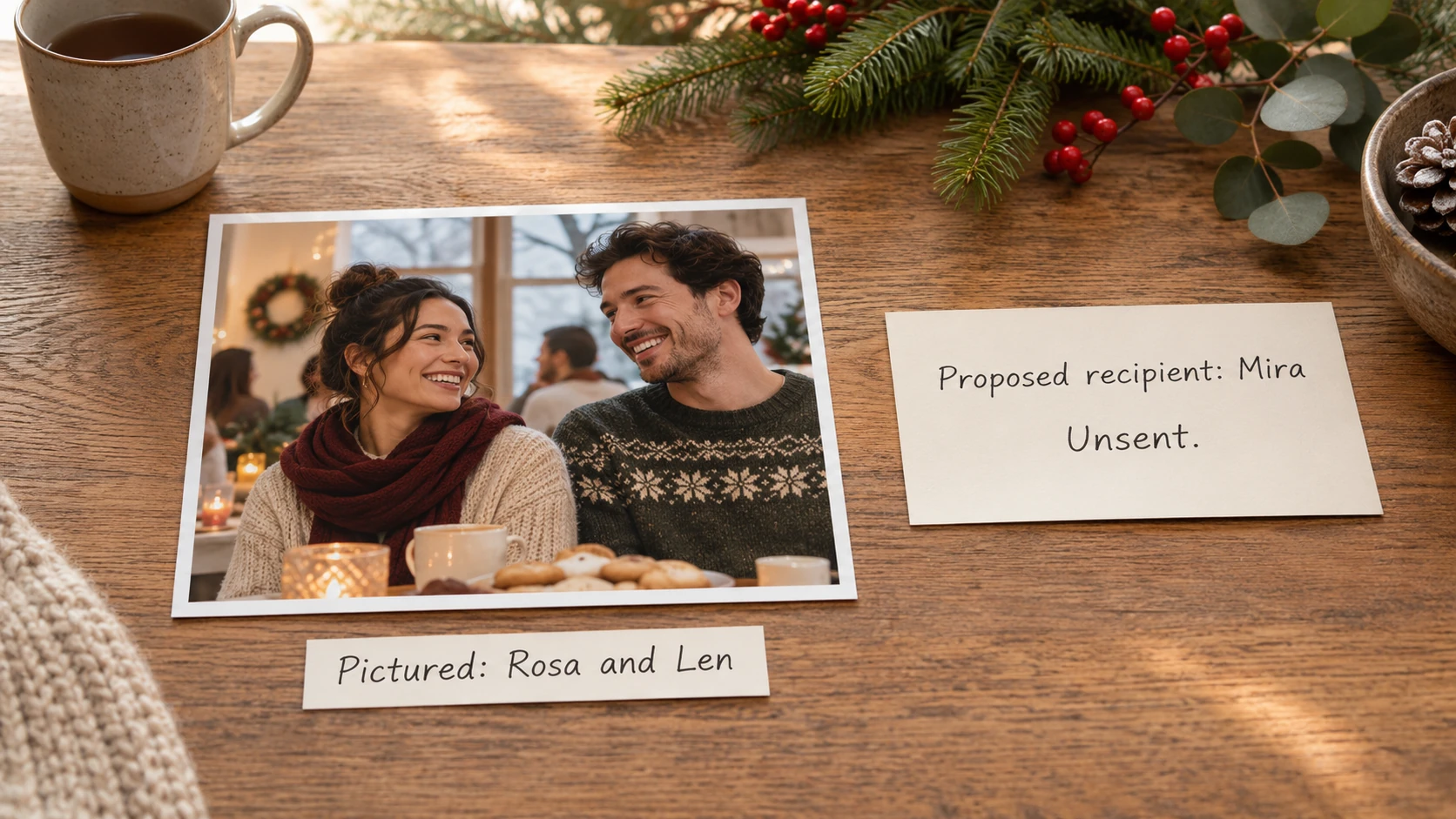
A holiday picture can have one set of names attached to the image and another set attached to a proposed copy. Keep those roles separate when planning holiday photo sharing. In the original fictional example here, Rosa and Len are pictured together at a winter gathering. Mira is the person someone proposes sending a copy to. Writing "Rosa and Len" identifies the people in the picture; it does not tell the person preparing the copy that Mira is its intended recipient. No actual photo, gathering or transmission is reported in this exercise.
Identify the picture before naming its recipients
Begin with enough information to distinguish the picture you mean. For this example, "Rosa and Len in the holiday photo" identifies the fictional image. That description belongs in an image-identification field of a working note. It can remain there while the recipient field is still blank. Naming people in a photograph is different from naming people who will receive a copy. You may know who appears in the picture while having no settled distribution plan at all. Leave the unfinished part visible instead of completing it with the names already available.
A loose note reading "Rosa and Len, holiday photo" leaves its purpose unstated. Someone picking it up might need to ask whether those are the pictured people, the proposed recipients or the people who should answer a question about the image. Add the field label that states what you mean: "Image identification: Rosa and Len in the holiday photo." The extra context describes the role of the names without changing who appears in the image.
Keep a working identifier separate from a public caption. The example uses first names to explain a planning decision; it does not ask you to publish names or personal details with a real photograph. Use an appropriate reference for your actual situation and keep any proposed public caption as its own writing task. This article supplies no identification or family-history verification method. Its concern is whether a name in a preparation note describes the image or identifies someone you intend to receive a particular copy.
Write the intended audience in its own field
The intended audience for the proposed copy in this example is Mira. Put that in a separate line: "Proposed recipient of this copy: Mira." Mira does not need to appear in the photograph for that sentence to describe the proposal. Conversely, Rosa and Len appearing in the photograph does not make them the recipients of this particular copy. This arrangement is an original editing suggestion, not a standard form. It gives the preparer somewhere explicit to record the recipient instead of relying on the image label to double as delivery instructions.
Read the two lines together. "Image identification: Rosa and Len in the holiday photo. Proposed recipient of this copy: Mira." Each name now has a stated role in the note. If the proposed recipient changes, revise the recipient line while leaving the image identification alone if it is still accurate. Do not change the pictured-person label merely to reflect who will receive the copy. The photograph under discussion and the proposed destination can change independently; the working note should say which part of the plan you are revising.
Someone else may be helping prepare the copies. Give them the role-separated note and ask which image and recipient they understand it to identify. Their answer can reveal a wording question to resolve before proceeding; it does not establish that a real transmission has been completed correctly. If they ask, "Does this go to Rosa and Len?", point to the recipient line and clarify the proposal. Keep the discussion attached to this copy rather than issuing an open-ended instruction to send every picture from the gathering to the same person.
Give a group proposal an actual recipient description
A label such as "holiday group" introduces a new question. Does it identify the people pictured, the people at the gathering or a proposed set of recipients? Do not use the same phrase for all of those roles without explaining it. In the fictional example, a proposal to send the picture to a group would be a different proposal from the copy intended for Mira. It needs its own recipient description. The people who attended, appeared in the photograph and would receive that proposed copy are not defined as the same set by this example.
You can leave a group proposal unfinished. A working line might say, "Proposed group recipients: not yet specified." That is more accurate than filling the line with names from the image when nobody has chosen the recipients. Keep that gap visible until the proposed viewers have actually been named. Keep the Mira proposal and the unfinished group proposal distinct so that resolving one does not silently supply an answer for the other.
If an existing group label is being used, establish which proposed viewers the label is meant to name in this plan. This article gives no instructions for a particular messaging service, group-membership screen or account setting. It also offers no assurance about who can later access a message. The preparation note describes an intended recipient set. A real service and the actual sharing action would need their own checks. Do not record the label as a verified audience merely because it sounds familiar to everyone discussing the photograph.
Keep sharing permission separate from recipient identification
Naming Mira as the proposed recipient does not establish sharing permission. For this fictional exercise, that answer remains unconfirmed and no copy is sent. Add a separate line: "Sharing agreement: not yet confirmed." The note can identify a proposal without recording an approval that has not occurred. It also does not settle legal permission, copyright or another person's rights in a real photograph. Those matters belong with the responsible people and applicable requirements. Do not turn this planning example into a legal consent test or a claim about an actual family's wishes.
A request about later forwarding is another statement to keep explicit. If someone proposes asking a recipient not to forward a copy, record that as a proposed request. It is not a technical control or a guarantee about what the recipient will do. The exercise does not supply a secure-delivery method or claim that any platform will enforce the request. Keep the intended recipient, any proposed onward-sharing request and the actual agreement distinct enough that a person reading the note can see what remains unanswered.
Compare the complete working note with the short label
The short label was "Rosa and Len, holiday photo." The expanded working note is "Image identification: Rosa and Len in the holiday photo. Proposed recipient of this copy: Mira. Sharing agreement: not yet confirmed." This version records a proposed recipient while preserving the unfinished agreement. It reports no delivery result. If the image is later replaced with a different photograph, review the image line before carrying the old recipient line forward. A new picture is a new item in the plan, even if it comes from the same gathering.
Keep the note with the actual preparation it concerns. A card beside an album might refer to an intended copy, to an enquiry about a particular image or to something else entirely. Its position alone does not state that purpose. Write the role you mean, then read the words as someone who did not take part in the conversation. This is an editorial check on the note, not a tested claim about reader comprehension. It can finish with a clearer question or with the proposed copy still unsent.
Read the two album offers within their stated limits
The Photo Booth Nook account names model PBNSBM10105 and describes albums with spaces for photo strips and included silver and gold gel pens. Its title says White, while the description specifies black covers and white pages; its own attributes also say Black/White. The description names five albums, and its variants include five and ten. The sole original image combines open and closed album views with two loose pens. Those views do not verify two distinct supplied albums or a delivered pack count. Material, ink behavior, page fit and factory identity have not been authenticated here.
The Your Perfect Day album account describes fifty blank pages and expressly includes eight hundred adhesive tabs for attaching photo corners. Its only original image shows an Our Wedding cover and a partial binding-and-page inset; the tabs are not pictured. Their declared inclusion must remain distinct from a verified delivered inventory. The account gives an 11.75-inch size and also describes the cover as 12.5 inches. This article does not resolve that discrepancy by measuring the image or certify material, preservation performance, page capacity, fit or maker identity.
Recipients for the fictional holiday photograph are named in its proposed sharing plan. A wedding-themed label or sample picture does not identify the proposed viewers of a different image. You can prepare the role-separated note with materials already available. Using an actual album, pen or mounting component would need its own applicable handling information; this exercise gives no physical assembly procedure.
Leave display and shared memories with their own projects
The family photo ornament guide selects a small approved collection, checks crops and trial prints, and arranges hanging frames on a holiday tree. It also raises the audience for a display. This exercise acknowledges that background question while taking a different task: identifying recipients for a proposed copy without confusing them with pictured people. It does not repeat the tree-display, printing or hanging plan.
The photo album conversation guide keeps visible image details separate from attributed recollections and leaves room for different memories. Its optional-note section also distinguishes a private conversation from later public sharing. This article does not reuse that memory or caption framework. Its working note identifies the image and the proposed recipients of a copy; it does not record a recollection, establish an event history or turn a conversation into a public caption.
Keep a possible purchase with its own transaction information
If you separately consider an album purchase through republeq.com, treat that order as a different task from naming a photo recipient. A preference for crypto does not establish that a purchase is necessary or that a particular payment method is available. Read the current checkout choices and terms for the exact proposed order. If cryptocurrency such as USDT is offered, use the transaction's actual asset and network instructions rather than filling a gap from an earlier conversation. Confirm the intended goods, quoted amount and any disclosed fees before deciding whether to authorize payment. Keep the delivery, cancellation, return and refund conditions with the order reference, and ask the responsible service about an essential unanswered instruction. This paragraph supplies no wallet address, transfer procedure, exchange-rate estimate or assurance of payment acceptance. A name in the holiday-photo recipient field is not payment information. Likewise, a merchant acknowledgement would concern the order it identifies, without settling who should receive a copy of a photograph. Keep the personal planning note separate from the merchant's transaction record and keep private credentials out of shared notes or screenshots. If a payment attempt has an uncertain result, establish its actual status before considering another payment; do not treat an unfinished status as a request to transfer funds again. You may leave an order unplaced while continuing the writing exercise with materials you already own. Any remaining question about the proposed photo copy should stay in its own note. A later purchase would not confirm the intended audience, supply an agreement or demonstrate that a message was sent to the right person.
Finish with a named proposal and its actual status
For the fictional starting situation, retain the note naming Rosa and Len as pictured, Mira as the proposed recipient and the sharing agreement as unconfirmed. That is a complete account of this unfinished plan. If the responsible people later settle a different proposal, update the relevant fields with what they actually decided. Keep an image label doing the work of identifying the picture and a recipient line doing the work of naming its proposed viewers. Leave a copy unsent when the actual permission or destination remains unresolved.