Office Supplies & Stationery
holiday parcel sealing station: tabletop or handheld tape dispenser
Choose a fixed bench or moving sealing route for holiday parcels before selecting a dispenser and matching tape.
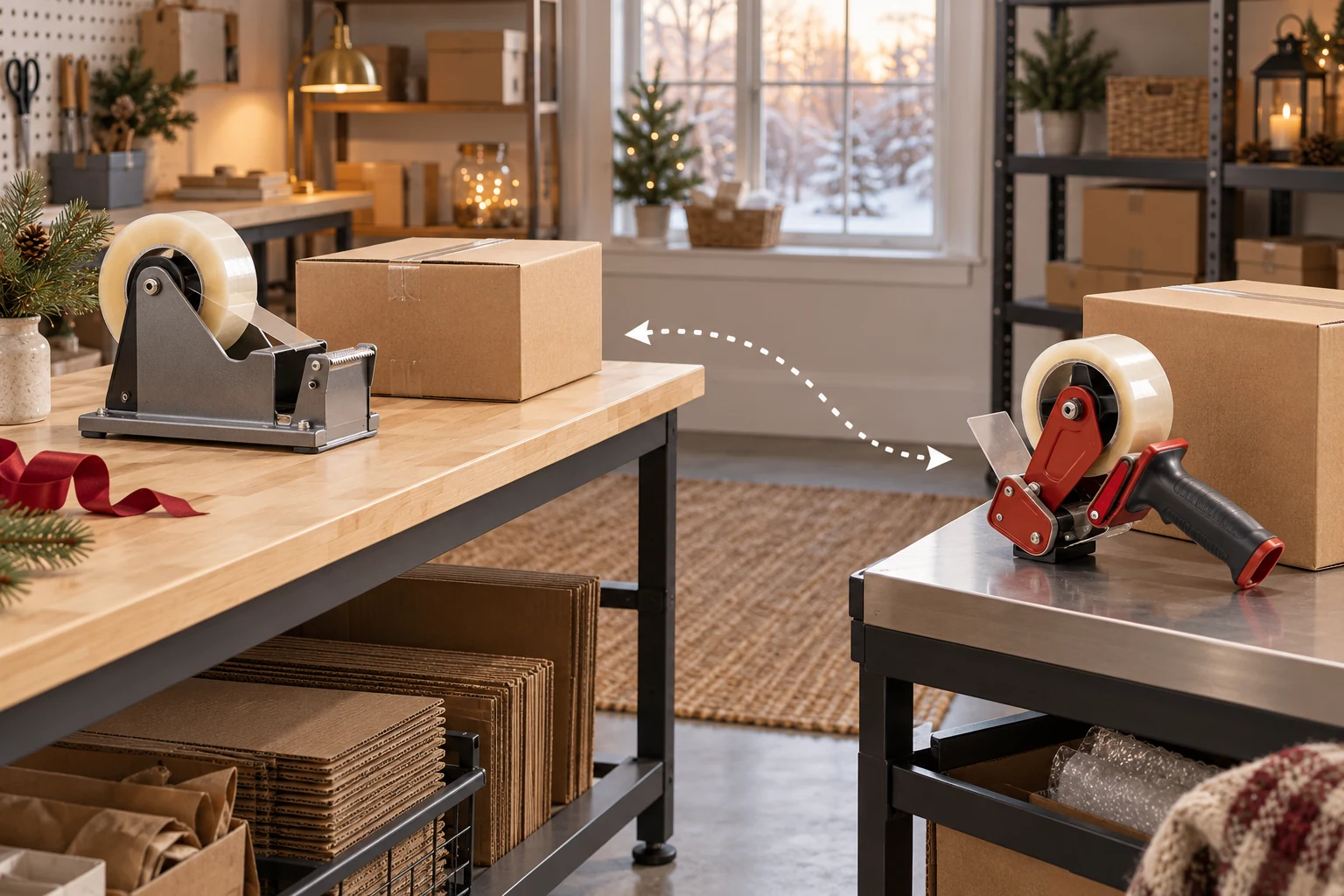
A holiday parcel sealing station starts with the cartons, not the dispenser. A stack of small boxes at one bench calls for a different reach than large cartons spread across a room. Make a short list of what will actually be sealed: how many cartons, where each one can rest, who will close the flaps, and where finished parcels will wait. Keep gift wrapping and mailing work separate if they use different tape. A tape that looks neat on paper is not automatically the tape specified for a shipping carton. Follow the carton and tape makers' instructions for that job.
Match the tool position to the carton route before loading tape.
Two current Scotch listings illustrate the layout choice. The M75 tabletop dispenser is described as a metal unit with mounting hardware for self-adhesive tape up to 2 inches wide. The pistol-grip packaging dispenser is handheld, with a listed 3-inch core, tape capacity up to 2 inches wide and 60 yards long, an adjustable brake and a retractable blade. These are different physical setups. Neither listing establishes that a particular roll in your cupboard fits both tools.
Draw the route through the room
Put one empty carton where you would normally close it. Is that spot a table that can stay clear for the whole packing session? Can the carton rotate there without knocking over cards, ribbons or labels? If yes, a fixed dispenser position may suit the route. If the carton is too large for that surface, or several people close boxes at separate spots, a tool that travels with the carton may avoid carrying each box back to one bench. This is a workspace decision, so try it with the largest carton before placing an order.
Mark the route in ordinary language: open carton, fill, check contents, close flaps, apply the chosen tape, label, and place in the outgoing area. If the label station is elsewhere, leave a clear place for sealed but unlabelled cartons. A box that has moved to the wrong pile creates extra handling even when the tape job itself went smoothly. A small paper note on the bench can help a group keep the sequence consistent. The note does not replace a check of each parcel's destination and contents.
For a fixed bench, ask whether the mounting position is real. The M75 listing mentions mounting hardware, while its gallery shows a bracket-style dispenser. Check the bench material, edge clearance and the seller's installation details before planning around that hardware. The source page does not prove every tabletop can take the same fasteners or that an unmounted unit will stay put while you pull tape. If mounting would damage a borrowed table or crowd a shared dining surface, choose another station or another tool rather than assuming the hardware will solve it.
For a moving route, test where a handheld dispenser would rest between cartons. The pistol-grip listing describes a soft-touch grip, adjustable brake and retractable blade, but it gives no performance test for your specific tape or box. Place the tool on a clear surface when it is not being used; keep the cutting edge away from fingers and loose wrapping material. If several people share the tool, agree on a single resting place. That simple decision makes it easier to find the dispenser without leaving it inside an unfinished box.
Read the exact roll limits before stocking the station
Start with the roll you intend to use and read its width, core and length from its own label. Compare those numbers with the selected dispenser listing. The M75 title says tape up to 2 inches wide; the page identifies self-adhesive tape and mounting hardware. It does not provide a complete fit table for every core size and tape construction. The pistol-grip listing is more specific: a 3-inch core, width up to 2 inches and length up to 60 yards. Those limits describe the listed product; they are not a promise that every roll at the limit feeds the same way.
Open the carton containing the dispenser before the packing day and confirm what arrived. The pistol-grip listing says tape is not included, even though its gallery shows a product package. Do not count a roll simply because a product photograph contains one or because another bundle in the category does. The M75 source identifies a dispenser and mounting hardware, but a separate tape roll should still be verified from the exact offer. If the planned tape is missing, a dispenser alone does not complete the station. Keep the package information until the first roll has been checked.
If you already own rolls, measure or read their marked core rather than buying around a familiar color or brand name. A 3-inch core requirement on one tool does not transfer automatically to the other. The fit check is a gate before a holiday sealing session. Set aside any roll whose dimensions or application are uncertain and obtain the model-specific information. Do not force a roll onto a hub or improvise an adapter for a deadline.
Match the tape's intended use to the parcel as well. The dispenser listing can tell you what it accepts physically, while the tape maker's label tells you what the adhesive product is intended to seal. A narrow desk tape and a wider carton-sealing tape may both be self-adhesive, but that shared term does not certify an application. For valuable or heavy contents, use the packing and carrier instructions that apply to those contents. This article compares dispenser layouts; it does not test seal strength, weather exposure, transit handling or a carrier's acceptance rule.
Choose a fixed station when the bench stays central
A stable tabletop route can work well when each carton reaches the same place in turn. Leave enough free surface to close the flaps with both hands, and put the dispenser where a person can pull tape without crossing a stack of loose labels. If the M75 will be mounted, check the actual hardware and the surface before installation. Keep the roll's tape end accessible without reaching across the cutting area. Run one empty-box rehearsal so the table position reflects the real motion rather than a tidy photograph taken before the parcels arrive.
Consider what the bench will hold at peak use. A pile of tissue, gift bags and ribbon can encroach on the parcel-sealing space, especially when a holiday gathering uses the same table. Put decorative wrapping supplies on a different surface or schedule that work before cartons are closed. The fixed dispenser's advantage is its known location, but a crowded bench can erase that advantage. A clear outgoing area also prevents a finished carton from covering the mounting point or the roll. Move completed parcels away before starting the next group.
The M75 page calls the product a tabletop dispenser for tape up to 2 inches wide; its description mentions a gray metal body even though the product name includes Blue. Treat the physical product and installation instructions as the authority if color matters to the setup. Do not infer the exact metal finish or mounting method from the category label. The gallery makes the bracket form visible, yet a photograph cannot confirm the thickness or strength of a particular tabletop. If those details decide the purchase, verify the exact seller or manufacturer specification before committing the bench.
Choose a moving route when cartons cannot gather
A pistol-grip dispenser can follow a carton placed on the floor, a low packing table or a separate staging surface. That movement is useful only if there is room to handle the box and keep the tape aligned. Plan a clear path for the person carrying the tool, and avoid sealing over a gift tag, address label or inspection note that still needs to be checked. The selected Scotch listing specifies a retractable blade and adjustable brake, but it does not teach a universal operating method. Read the supplied instructions before the first full carton.
Do a short rehearsal with an empty box and a verified compatible roll. Observe whether the user can reach the flap seam without twisting around the carton. Set the tool down safely whenever both hands are needed to square a box. If the tape pulls unevenly or the tool does not feed as expected, stop and consult the instructions for that model. Pulling harder near a cutting edge is a poor way to diagnose a problem. A holiday deadline does not change the tool's stated capacity or make an uncertain roll a suitable one.
Handheld does not mean one dispenser should serve every person at once. If two people close cartons in different corners, count how often one waits for the other before deciding whether to add a second tool. A shared tool may be enough when filling and sealing happen in sequence. If several people seal simultaneously, place each tool at a named station with its compatible tape. Decide this from the actual work pattern rather than from a bundle count on a product page. The pistol-grip listing describes a bundle of five, which may exceed one household's immediate need.
Keep quantity and layout as separate decisions
Do not let a large bundle dictate the workflow. The pistol-grip offer describes five dispensers, and a product page can change its package terms. Check the current seller listing for the exact quantity and included parts before buying. The bulk-tape calculation belongs to a different question: how many usable rolls a run of cartons may consume. The packing-tape bulk-pack guide works through that count. This station plan decides whether the tool should stay on a bench or travel with boxes; a tape-stock estimate can be done afterward.
Make a small trial stack before scaling up. One flat carton, one awkward carton and one carton that needs extra labeling usually reveal where the route slows down. Count the number of moves between filling, sealing and labeling, then adjust the station location. If a fixed setup requires repeatedly lifting heavy cartons back onto a table, that is a reason to reconsider the route. If a handheld setup leaves the dispenser in different places after each box, establish a resting spot. These observations are more useful than assuming one tool form is universally faster.
Holiday gift wrapping may happen in the same room, but it has different finishing steps. A cloth wrap exchange, for example, needs a return plan rather than a shipping seal; the fabric gift wrap guide covers that decision. Keep ribbon, decorative tape and card work away from the carton sealing path so nobody substitutes a visually similar roll without checking its use and fit. If a parcel is being mailed, the relevant packaging instructions govern the closing method. A decorative presentation should not hide an address or required handling mark.
Finish with a repeatable handoff
Before sealing the first real parcel, confirm the carton is ready to close, the recipient details have been checked, the tape matches its intended use and the dispenser accepts that roll. Keep the box steady while applying tape according to the tool and tape instructions. After sealing, check that the needed labels are visible and that the carton is in the correct outgoing group. If a seal looks uneven or a flap reopens, assess that carton with the packaging instructions rather than adding random layers of tape. The point is a repeatable sequence that another person can follow.
At the end of a packing session, put remaining tape with the tool it fits and record the roll specification on a simple note. Store the dispenser according to its instructions, away from children and loose materials that could catch on the blade. If the fixed bench was temporary, remove the mounting setup only as the manufacturer directs and check the surface afterward. If the handheld tool traveled among stations, return it to its named place. The next session should begin with a known roll and a clear work area, not a search through mixed wrapping supplies.
Choose the tabletop M75 route when one suitable bench can remain the parcel-sealing point and its mounting details are acceptable. Choose the pistol-grip route when the cartons stay at separate work spots and the exact 3-inch-core tape specified for that tool is available. Neither choice settles tape suitability or package quantity by itself. A quick rehearsal with the actual boxes, verified tape and selected dispenser will expose the practical layout issue before the seasonal stack grows.