Cooking & Food Prep
Holiday loaf proofing before the baking day
Prepare the basket and liner for a holiday loaf while keeping dough proofing, recipe changes and the baking vessel distinct.
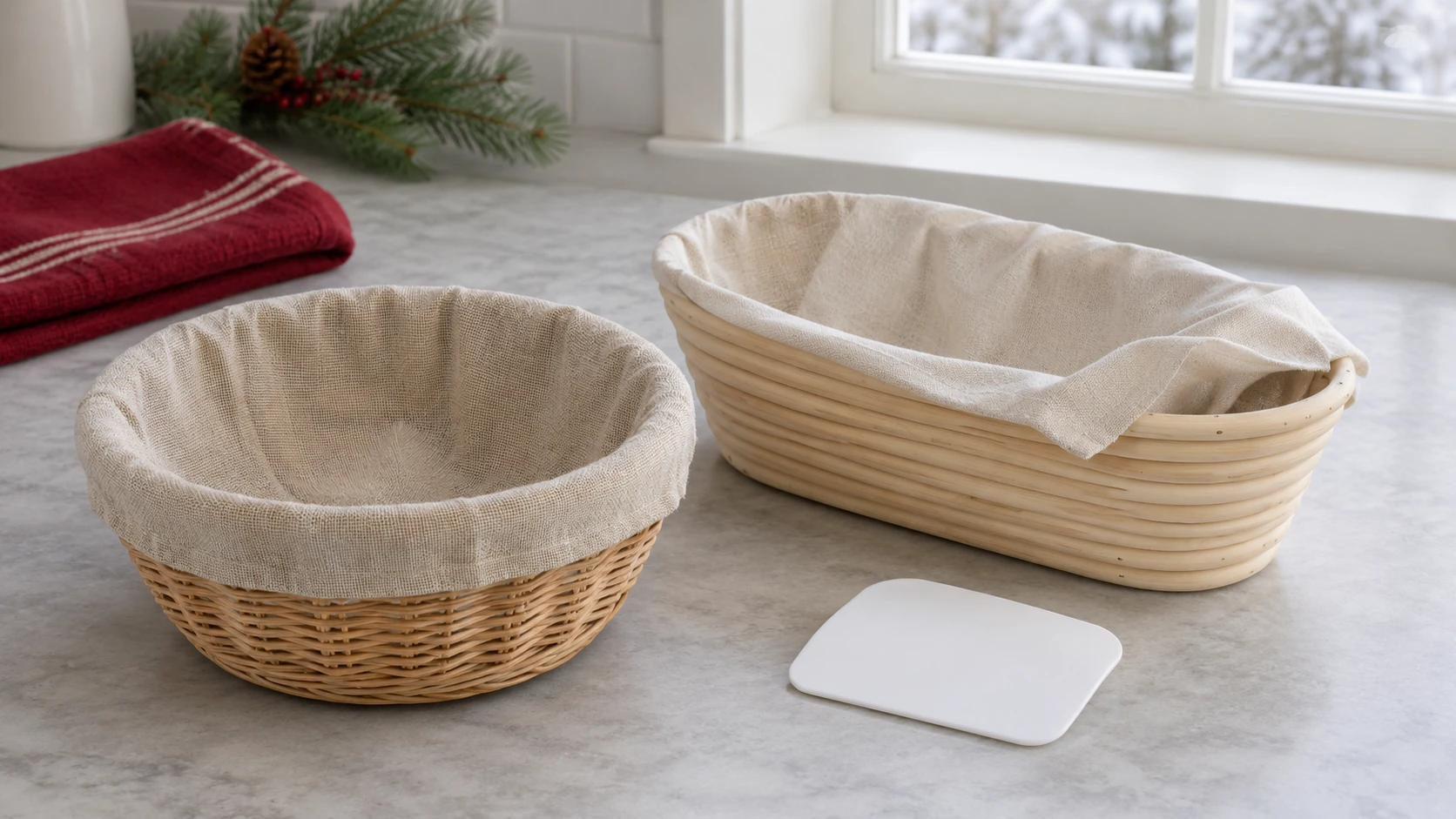
Prepare a basket for the shaped holiday loaf
Holiday loaf proofing is easier to plan when the basket has a defined place in the recipe. King Arthur Baking's banneton guide describes these baskets as supports for shaped dough during its rise. They help a freeform loaf maintain its intended outline before it is turned out for baking.
For a holiday meal, choose the recipe before treating an empty basket as a complete preparation plan. Its shape needs to correspond to the loaf and later baking arrangement. A familiar basket name does not establish that correspondence for every recipe.
The same guide discusses using a basket liner and flouring the surface that will touch the dough. Keep the applicable preparation guidance with that contact surface. A cloth lining does not remove the need to consider release, and an attractive basket photograph cannot demonstrate the outcome of your bake.
Find the final rise in the actual recipe
King Arthur Baking's separate proofing explanation distinguishes bulk fermentation from the rise after shaping. A recipe can use related words for these stages, so read the sequence around the instruction. The final rise concerns the shaped dough that will subsequently be baked.
The guide explains that the environment affects how dough develops. A time printed in a recipe is a guide to that preparation, with the dough's actual condition still relevant. A holiday serving plan cannot supply evidence that an unfinished stage has reached its intended endpoint.
Before starting, identify the recipe passage that describes readiness for the next step. Keep its conditions available while working. This article supplies no replacement endpoint, temperature setting or elapsed-time schedule. If the recipe leaves you uncertain, resolve that question before making a different sequence merely to suit the meal. The basket identifies equipment for a stage, without establishing that the stage is finished. Return to that description whenever the preparation has moved to another stage.
A refrigerator changes the preparation plan
King Arthur Baking's refrigeration article discusses chilling dough during either an initial rise or a shaped final rise. Those choices leave different work to be done afterward. Refrigerating an unshaped dough does not place it at the same point as refrigerating a loaf that has already been shaped.
This is relevant when a holiday meal leaves little attention for bread preparation. Read the applicable recipe and the full cold-fermentation guidance before choosing a change. The presence of refrigerator space alone does not establish a complete revised method.
The article also distinguishes covering practices for different preparations. Its discussion of freeform artisan loaves differs from its guidance for sandwich loaves in pans. Keep those distinctions with their actual context instead of choosing one sentence as a rule for every dough.
When the dough comes out, the article still asks the baker to consider its condition. Cold storage does not itself prove readiness for baking. For your plan, identify the recipe stage you intend to refrigerate and what applicable guidance says happens next. Leave a proposed change unresolved if those connections are missing. No particular refrigeration duration or guaranteed flavor result is supplied here.
Mixing space and shaped support serve different stages
Breadtopia's proofing-basket FAQ describes bulk fermentation in a bowl that gives room for mixing, stretching and folding. It places the shaped final proof in a basket that supports the intended loaf form. The distinction concerns what happens to the dough at each stage.
A mixing vessel can be convenient while working dough. That convenience does not describe the later support required by the chosen freeform shape. Likewise, a basket selected for the shaped loaf does not become the mixing vessel merely because it is already on the counter.
The FAQ discusses lined and unlined baskets and the surface preparation used to help release. It also connects basket selection with the actual recipe. Its numerical size guidelines are outside this article. An offered dimension alone cannot establish that your dough will behave exactly like a different recipe's dough.
Keep the chosen recipe and the equipment identified together before the holiday bake. You should be able to point to the stage that needs mixing space and the stage that needs shaped support. This is a preparation distinction, without a new recipe, a capacity calculation or an instruction to transfer dough into a hot vessel.
Material-specific care stays with that material
Bulka describes its own brotforms as compressed spruce wood-pulp forms. Its use-and-care page addresses those particular products. That account demonstrates why a care instruction needs an identified material and applicable product context.
The page describes preparing the inside contact surface for dough and later drying the form before storage. It also gives a no-water-washing instruction for its wood-pulp product. This statement cannot establish the cleaning procedure for an unrelated wicker or coiled-cane basket.
Keep care information beside the exact form it concerns. If you have another material, obtain its applicable instructions before carrying a method across. Similar purposes do not make the materials identical, and a removable cloth component can have its own care question.
The same distinction applies to heat. A product page's discussion of a particular drying method does not authorize baking a loaf inside a different basket. This article provides no oven-drying procedure or mold treatment. Before putting equipment away for another occasion, follow the actual product's care guidance and keep any unanswered material question open. A holiday deadline supplies no missing permission for a method that has not been established. A material name alone also leaves its condition unverified.
Prepare the basket liner and leave room for later care
Baker's Treat Baking School describes bannetons as supports for freeform shaped dough during the final rise. It emphasizes turning the dough out before baking. That separates the basket's proofing role from the later baking surface or vessel.
Its preparation discussion includes cloth liners and flouring, with the dough allowed to rise according to its recipe. These directions need to be read with the actual equipment. They do not authenticate the material, food-contact suitability or performance of a basket obtained elsewhere.
The school's troubleshooting section lists several possible reasons for sticking, including the condition of the dough and its environment. More flour is therefore not a complete explanation of every release problem. Read the actual recipe and applicable basket information before deciding what needs attention.
Its after-use guidance also calls for thorough drying before storage or stacking. Holiday preparation can include identifying where the used equipment will be cared for. Keep that ordinary care requirement within the exact material's instructions. This article does not offer a repair for damaged equipment or a heat, freezer or chemical treatment for suspected mold. An unresolved condition needs its own answer before further use.
Read the round and oval packages on their own terms
The Matfer Bourgeat round banneton listing describes a lined wicker proofing basket. Its complete gallery shows a rounded interwoven form with coarse fabric folded over its rim. No printed model or size label is visible, and the title and image filename contain different size wording. No dimension is authenticated here.
The Unbranded oval banneton listing describes a removable liner and a separate scraper. Its eight gallery images show an elongated coiled form, liner and broad white scraper. Bakery food and other basket shapes in composites remain illustrations. Conflicting dimension annotations are excluded from this comparison.
The rounded weave and elongated coiled enclosure differ independently of color, brand or offered quantity. The oval package's scraper remains a separate supplied tool. Neither account establishes a tested release result, exact material formulation, food-contact certification or fit for your recipe. No pictured preparation sequence is adopted as a universal instruction. The sole round image shows an empty lined interior. The oval gallery separately shows its bare coiled interior and liner arrangement.
Keep the invitation and machine question separate
The Christmas baking afternoon guide concerns the invitation and the people who want to participate. It leaves room for a guest who wants company without a practical baking role. It also keeps the chosen recipe and responsible supervision separate from optional festive aprons.
The bread recipe and machine program mismatch guide addresses a different equipment question. It compares the words a recipe uses with the program information a particular bread-maker description supplies. A related label or a larger preset count leaves a missing operating sequence unresolved.
Use each linked guide for its own task. An agreed invitation can describe the afternoon people want, while a machine inquiry can identify missing program information. Neither establishes that an actual basket package contains everything pictured in a bakery montage. The social plan and the appliance information remain decisions to settle in their own contexts, without transferring an apron claim or a machine feature onto the two basket offers. The invitation guide can end with a person choosing to come only for company. The machine guide can end with a precise program question still open, retaining both the recipe passage and the actual model identity.
If a later equipment order offers cryptocurrency
If you later consider ordering equipment through republeq.com and prefer crypto such as USDT, keep that choice conditional on the methods presented for the exact transaction. This article does not verify that a particular asset, network or payment route will be offered. Read the current order information before authorizing payment, and leave an unclear option undecided. Keep the exact item you intend to buy identified in your own notes. If someone else is ordering on your behalf, share that offer with them and ask them to bring a changed selection back for consideration. An alternative item creates another purchase decision. A preferred payment method cannot establish that you have agreed to the substitute. Review applicable delivery and return information for the goods under consideration. No delivery date, fee estimate, refund assurance or prediction about a later checkout is supplied here. If a condition affects whether you want to proceed, obtain an answer through the responsible merchant interface before treating the transaction as settled. This paragraph gives no wallet address, network choice, token-transfer sequence, exchange rate or payment-provider procedure. Use the actual transaction's current instructions if a suitable method is available. Retain any real order confirmation and payment record so the purchase can be identified later. These records concern the order you authorized. You can also leave the purchase undecided while considering the item. Reading an article creates no obligation to place an order or choose a payment method. If the available conditions do not suit your requirements, keep the transaction uncommitted. A later decision can use the information presented at that time, with the exact item and applicable terms checked again. No completed order, transfer, reservation or merchant commitment is asserted by this conditional discussion.