Appliance Care & Buying
holiday dish drying station for a calm meal cleanup
Give used dishes a return route and clean dishes a secure drying place during a busy holiday meal.
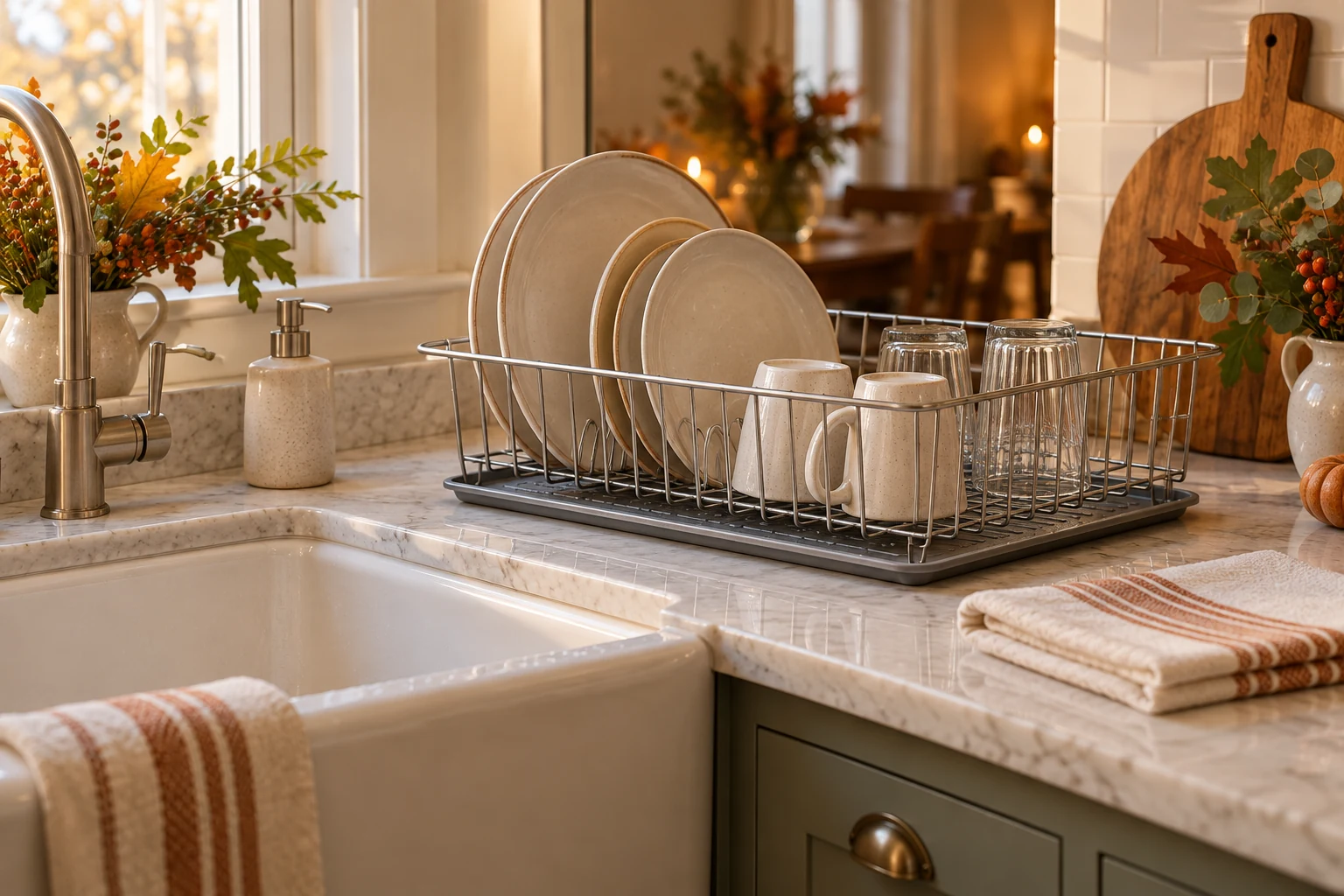
A holiday meal can leave a kitchen full of plates just as people want to linger at the table. A dish-return plan makes the transition gentler: one place for used dishes, a clear path to washing and a modest space for clean items to dry. This holiday dish drying station guide focuses on the household routine around a busy meal. It does not claim that a particular rack can hold every guest’s place setting or replace safe washing and sanitation practices.
Before the meal, look at the counter beside the sink. What area can remain clear when serving platters, drinks and conversation compete for space? Reserve a place for the drying rack and its intended drainage surface. Keep a separate return spot for used dishes so they do not stack on top of clean ones. The two areas may be close, but they have different jobs. A useful plan can be explained to a guest in one sentence.
Set the route before the table fills
Choose a route from dining table to sink that does not cross a crowded serving surface. It may be a short stretch of counter or one end of a kitchen island. Keep the route wide enough for a person carrying a plate to set it down without moving a hot pan or a glass. If the kitchen is narrow, designate one person to collect dishes in small batches rather than inviting everyone into the same space at once.
Place a clearly recognizable return area for used plates, cups and utensils. Do not ask guests to guess whether a rack of clean dishes is also the drop-off place. A tray or open counter segment may serve as a temporary return point, provided it is stable and appropriate for wet dishes. Keep glassware from balancing on a high stack of plates. The aim is a calm handoff, not a formal catering line.
Keep food-scrap handling separate from the clean drying area. Follow the household’s usual washing and food-safety routine, including any instructions for the dishes or dishwasher. This article does not prescribe a sanitizing temperature or a universal order for washing every material. The practical point is to keep used items from traveling backward across the place where clean dishes will rest.
If the gathering includes sharing printed recipes or notes, keep paper away from the wet return route. The holiday recipe card exchange guide covers that separate social activity. A dry table end or another room is a better place for cards than the counter where guests set damp plates. One small separation protects both the conversation and the cleanup flow.
Give the drying rack one defined job
A dish rack is a landing place for clean, washed items while water drains or evaporates according to the rack’s design and the dishware’s care requirements. It is not a general holding basket for every used item after dinner. Before guests arrive, check how many plates and cups the rack can hold without leaning precariously or covering the sink. Use the product’s own instructions and the actual stability of the setup; do not infer a load rating from a photograph.
The two-tier dish rack and drainboard listing is one exact example of a rack with a drainboard as part of the offer. A raised second level changes how someone may group clean dishes, but the listing does not establish that it fits your counter or a full holiday meal. If a rack has an intended drainage direction, place it according to its actual instructions rather than assuming every board sends water to the sink in the same way.
The small kitchen dish rack listing is a contrasting exact example for a tighter counter. A compact footprint may preserve working room, yet it naturally leaves less visible rack space for a large batch. Treat that as a planning constraint, not a product defect. You can wash in smaller batches or keep clean items on an appropriate separate drying surface if the dishware and household routine allow it.
Test the rack location before the meal rather than while holding a wet platter. The counter should support it securely, with access to the sink and room to lift dishes in and out. Check whether a drainboard, mat or other supplied component sits flat. Keep electrical items, paper and foods that should stay dry away from likely drips. The rack’s best position is the one that works with the real counter and normal kitchen traffic.
Consider the dishware that will arrive in waves. Dinner plates may be followed by dessert bowls and cups, while serving pieces return at a different time. A rack that looks spacious before guests sit down may become crowded after the first course. Choose a place for clean items that are ready to be put away so the rack can serve the next wave. Keep that place separate from the used-dish return point and appropriate for the material.
Use batches instead of one high pile
After the meal, begin with one manageable group of dishes. Clear scraps according to your usual practice, wash or load the dishwasher as appropriate, and place only clean items in the drying area. Keep fragile glassware where it will not be knocked by a stack of larger plates. A rack full of items should still leave each piece supported as intended. If the rack is crowded, pause and clear dry items before adding another batch.
Sort the return point by what needs to happen next. Cups may need a separate place from serving dishes; utensils can wait in a stable container or designated area before washing. Do not hide sharp tools beneath a pile of plates. The precise arrangement depends on what was used at the meal, but a visible next step keeps the counter from becoming an unsorted mound that someone must untangle later.
Give helpers small, clear jobs. One person can carry empty cups, another can collect plates, and a third can wipe the dining table once dishes are gone. Someone familiar with the dishware can handle washing and rack placement. Avoid sending several people to the sink simultaneously if there is only one working position. A holiday gathering is easier to clear when the route is obvious and people do not interrupt one another to ask where every object belongs.
Make room for items that should not enter the rack. A large serving platter, delicate piece or material with special care directions may need a different handling path. Follow its actual instructions. The rack is one station in a broader cleanup, not an instruction to treat all dishes alike. If an item will not sit securely, do not balance it across smaller cups just to save a few minutes of counter space.
Keep the dining area and the drying area synchronized. When the return point fills, move one batch through washing before gathering more dishes. When the rack fills, clear items that are ready to put away before washing the next batch. These pauses are not a failure of speed. They prevent a pile from hiding what is clean, what is used and what still needs attention.
Watch the water path while the station is busy
Even a sensible rack placement needs one real check. As the first clean batch drains, look for water collecting where it should not. A wet counter may reflect a loading pattern, drainboard position or spout direction. The dish rack water-path guide handles that specific diagnosis. Here, the aim is simpler: keep the wet area contained and avoid building the rest of the holiday dish flow around a puddle.
Keep a towel for ordinary wiping, but do not let repeated wiping stand in for a rack that is set up incorrectly. If water reaches a vulnerable counter seam or nearby object, stop adding dishes and identify the path before continuing. Follow the rack and counter care instructions. The saved product records do not prove that a particular drainboard, spout or mat will protect every surface in every placement.
Check that the rack remains stable as dishes are removed. A half-full rack may distribute weight differently from a full one. Avoid tugging a plate free if it is caught behind another item. Move nearby pieces gently and keep the wet counter clear enough that you can set one down if needed. No holiday schedule requires lifting an awkward stack in one motion.
Reset the kitchen for the next morning
Once the last batch has been washed, clear the return area. Put away items that are ready, leave any remaining clean dishes in an appropriate drying position and wipe the surrounding counter according to its finish. Empty or clean the rack components as their product directions require. If a large gathering used more dishes than usual, leave a concise note about which station filled first. That observation can improve the next meal without buying anything new.
Return temporary trays, extra towels and serving pieces to their normal locations. A holiday station is useful because it is temporary: it makes an unusually busy meal legible, then gives the kitchen back to ordinary use. If the route blocked an appliance or doorway, adjust it next time. If the rack held only one small batch, plan for more cycles rather than pretending it can handle the full table at once.
Ask a helper what part of the route was confusing. Perhaps guests found the return tray easily but could not tell where cups belonged; perhaps clean dishes stayed in the rack because the usual cupboard was blocked. Change only the unclear step for the next gathering. A short conversation is more useful than adding signs everywhere. The station should feel natural to someone who has never used your kitchen before.
Do not turn the reset into a late-night inventory project. Check for stray cups and utensils, leave the sink and counter in a usable state, and let the rest of the celebration end. The holiday dish drying station succeeds when used dishes have a clear return path, clean dishes have a secure place to dry, and helpers know the difference. A modest rack and an orderly batch routine can make a busy meal feel manageable without unsupported capacity promises.
For the next gathering, start with the same three questions: where do used dishes return, where do clean dishes dry, and who keeps the route moving? The answers should fit the real people, counter and dishware. The two linked racks illustrate different footprints and features, not a universal recommendation. Your best station is the one that stays clear, stable and easy to explain while the household enjoys the meal.