Crypto Commerce
HNWALHN 3.2-cu-ft two-door mini fridge vs KCPOLRE 3.0 Mini Fridges with Freezers
Compare HNWALHN 3.2-cu-ft two-door mini fridge by fresh-food and freezer space, temperature claims, cabinet fit, and daily use.
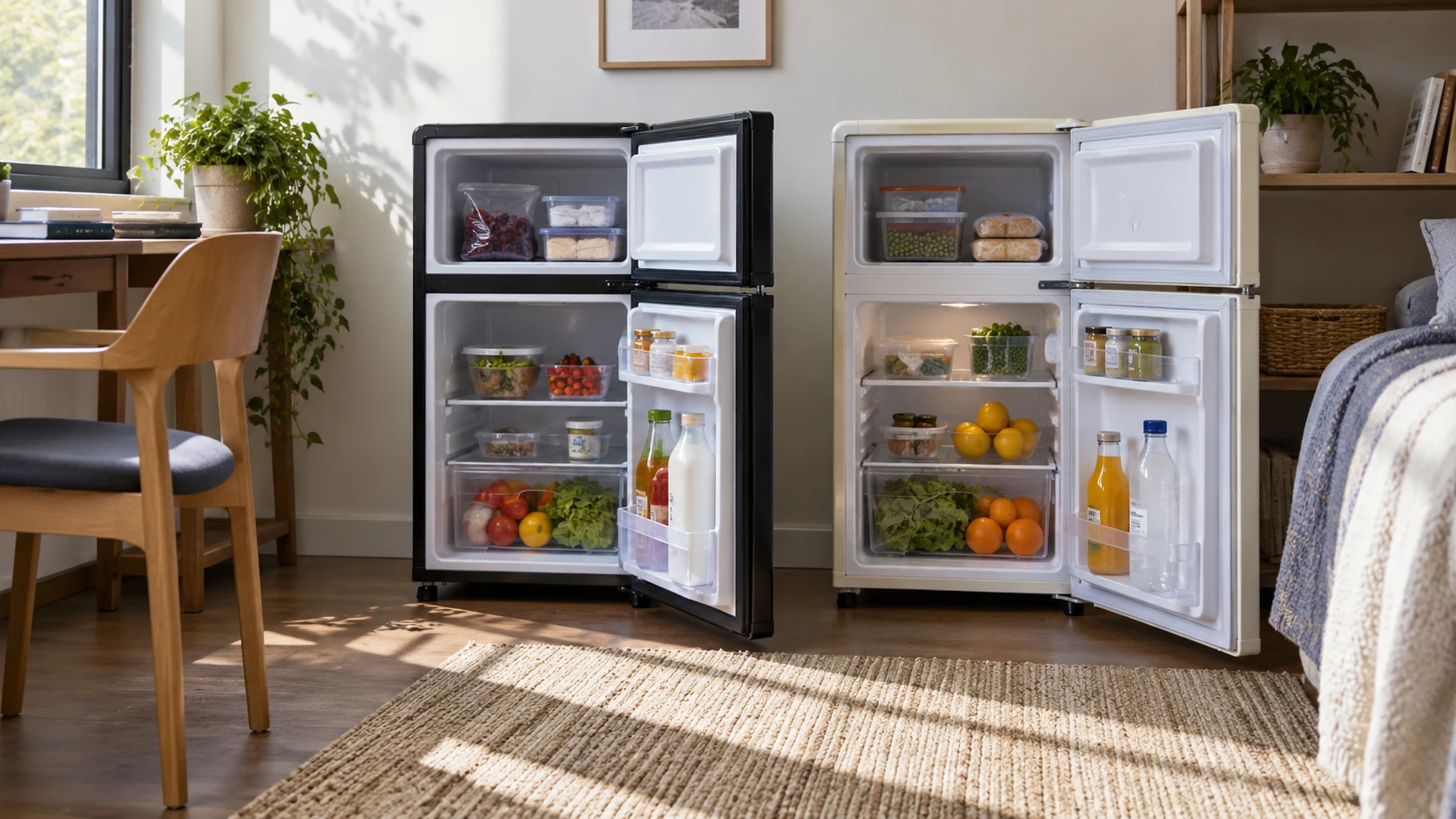
HNWALHN and KCPOLRE both list compact refrigerators with separate freezer doors. HNWALHN calls its model 3.2 cubic feet and breaks that total into refrigerated and frozen-food space. KCPOLRE lists 3.0 cubic feet overall, with a retro finish and exterior measurements. Those two differences matter more than the small gap between the advertised totals. Decide how much fresh food and frozen food you actually store, then check whether the machine can fit and ventilate in the room where you want it.
The saved listings are short product descriptions, not a controlled test of temperature stability, energy use or sound. They also provide different kinds of measurements, so a number from one cannot always be compared directly with the other. Use the descriptions to identify which diagrams and manual pages you need before buying.
Start with the split between fresh and frozen food — mini fridge freezer compartment choices
The HNWALHN 3.2-cu-ft two-door mini fridge is described with 2.26 cubic feet of refrigerator space and a 0.95-cubic-foot freezer. The figures nearly add to the advertised 3.2-cubic-foot total after rounding. That split is useful if you keep a few frozen meals or ice trays alongside everyday groceries. It still does not tell you the freezer shelf dimensions or whether your usual containers fit through the small upper door.
KCPOLRE lists a 3.0-cubic-foot, two-door fridge and freezer without dividing that total between the compartments. Its description names ice-cube trays and ice spoons, but those accessories do not measure the space available for food. Request a labeled interior drawing showing width, depth and height in each section. A freezer can look ample in a wide product photograph while a shelf lip or cooling component limits where a box will sit. Bring the dimensions of an ice tray and the frozen package you buy most often to that drawing. If a shelf is fixed, check the clear height above and below it. Small differences in usable shape can matter more than the rounded total capacity when packages cannot lie flat.
The related guide on mini fridge freezer compartment choices is useful here because a freezer's presence changes how you plan a small refrigerator. Write down your typical load: drinks, lunch boxes, produce, ice trays and frozen packages. Measure the awkward items rather than only counting them. Compare those measurements with the two compartment diagrams, including door bins and the clearance needed to pull out a shelf or drawer.
If the fridge will serve an office or dorm room, think about access during a normal day. A separate freezer door lets someone take a drink without opening the frozen-food compartment. That arrangement does not prove better temperature stability or lower energy use for either model. The saved listings provide no shared test. What you can check now is whether the door swing, handle and shelf arrangement make it easy to retrieve the items people reach for most often.
Temperature claims need a model-specific explanation — KCPOLRE 3.0-cu-ft retro mini fridge
HNWALHN names a five-position thermostat and gives a range from 6.8 to minus 11.2°F. The short description does not clearly explain which compartment those figures describe or how each dial position affects fresh-food temperature. Do not apply a negative value to the refrigerator section just because the range appears beside the thermostat description. Ask for the manual's separate refrigerator and freezer temperature instructions, then use appropriate thermometers after setup to see how the actual unit performs with food inside.
The KCPOLRE 3.0-cu-ft retro mini fridge lists a seven-level thermostat. Its saved text places the refrigerator compartment at 41 to 46°F and names a freezer setting of minus 0.4°F. These are claims in Republeq's catalog, not measured results in your room. The short excerpt does not state how the figures were obtained or how the compartments respond when the fridge is fully loaded. Verify the proper settings for the foods you plan to keep against the current manual and authoritative food-storage guidance. Check both compartments after the machine has stabilized rather than relying on the dial number.
Door opening, room temperature and the amount of food inside can affect what a thermometer shows. Put a thermometer where the maker instructs and record several readings at different times after setup. Avoid packing items so tightly that they block the airflow paths in the manual. If the fridge cannot reach the temperature its instructions require for your intended food, contact the Republeq's catalog before using it as long-term storage. Neither saved description is enough to certify safe storage by itself.
Fit and placement are not settled by capacity — KCPOLRE 3.0-cu-ft retro mini fridge
KCPOLRE gives exterior dimensions of 16.7 inches wide, 17.5 inches deep and 34 inches high. That is a useful starting point for an alcove or a corner, but it may not include the room needed to open the doors, reach a plug or allow ventilation. HNWALHN's saved description does not give comparable outer measurements. Get the official diagram for both products before assuming the 3.2-cubic-foot model is wider or taller than the 3.0-cubic-foot one. A difference in internal volume does not determine every outside dimension.
Measure the available width at the floor and at counter height, then the usable depth with any baseboard or wall outlet taken into account. Check the route from the entrance to the intended spot, especially if the fridge must turn in a narrow corridor. Open nearby room and cabinet doors while you test the footprint with a cardboard template. Leave room to remove a shelf for cleaning. A fridge can fit within a niche yet be difficult to use if its door cannot swing far enough.
Both listings mention reversible doors, and HNWALHN lists two adjustable leveling feet. KCPOLRE's excerpt gives no matching leveling-foot detail. Reversibility can help in a tight layout, but confirm the hinge-swap instructions and whether the handle also moves. Check whether the floor is level and whether the manual requires a specific clearance on each side. Neither saved excerpt supplies the complete installation-clearance diagram, so do not plan the final placement from the body dimensions alone.
Electrical placement deserves the same attention. The short descriptions do not give a comparable cord length or complete outlet requirement. Find the maker's instructions for grounding and any restriction on extension cords. Keep the plug accessible if the unit must be moved or serviced. A small office, dorm or shared workspace may have separate rules about appliances, so confirm those before ordering a fridge for a particular room.
Shelves, light and daily cleaning — KCPOLRE 3.0-cu-ft retro mini fridge
HNWALHN describes an adjustable shelf, a crisper drawer, door shelving and an interior light. Moving the shelf may create a tall space for bottles, though the saved text does not give exact adjustment positions. KCPOLRE lists removable glass shelves and door egg trays. Ask how many shelves come with the selected configuration and whether the door storage can hold the bottles or cartons you use. A crisper is helpful only if it has enough usable depth for the produce you normally buy.
Consider the work of cleaning both compartments. Removable shelves can be washed separately, but check each maker's instructions for the drawer, door gasket and freezer defrosting. Neither short description clearly states whether defrost is automatic or manual. Ask where meltwater collects and how to dry the interior before a long absence. If the unit is under a desk, be sure you can pull it forward for maintenance without disconnecting other equipment.
HNWALHN describes a compressor that cools quickly and runs quietly, with estimated energy savings, but the excerpt gives no test conditions or numerical use figure. KCPOLRE lists 0.54 to 0.62 kWh of daily electricity use. That range is a saved listing claim, not a prediction of your bill or a direct comparison with HNWALHN's unquantified wording. Ask for current energy documentation for the exact model, and consider the sound in the room where the fridge will actually run. A compressor cycling beside a bed can be noticeable even when a listing calls it quiet.
KCPOLRE's retro handles and off-white finish may suit a visible room; HNWALHN is listed in white. Check the actual selected finish and handle projection on current photos, particularly if the unit sits beside a cabinet door. Product photos can obscure the space needed for the upper freezer door. The order confirmation should identify the exact model and color so a replacement part or return can be matched later.
At the saved catalog capture, HNWALHN was listed at $506 and KCPOLRE at $380, both marked available. Those values do not establish today's cart price, delivery charge, warranty or return cost. KCPOLRE's listing instructs buyers to let the fridge stand for 24 hours before use and recommends thermostat level 4 for cooling. Follow the current manual and delivery instructions for whichever model you buy; the two products should not be assumed to share a setup procedure.
HNWALHN is worth a closer look if its stated 0.95-cubic-foot freezer and 2.26-cubic-foot fresh-food section fit the load you measured. Get its outside dimensions and separate temperature guidance before choosing it. KCPOLRE gives a clearer starting footprint and a lower saved price, but you still need its compartment split and temperature instructions. For either model, the decisive checks are the interior diagram, installation clearances and thermometer readings after setup.