Cost & Savings Articles
Heat gun quantity budget: count overlapping reservations before units
An original paper allocation shows why three requests can require two complete eligible units.
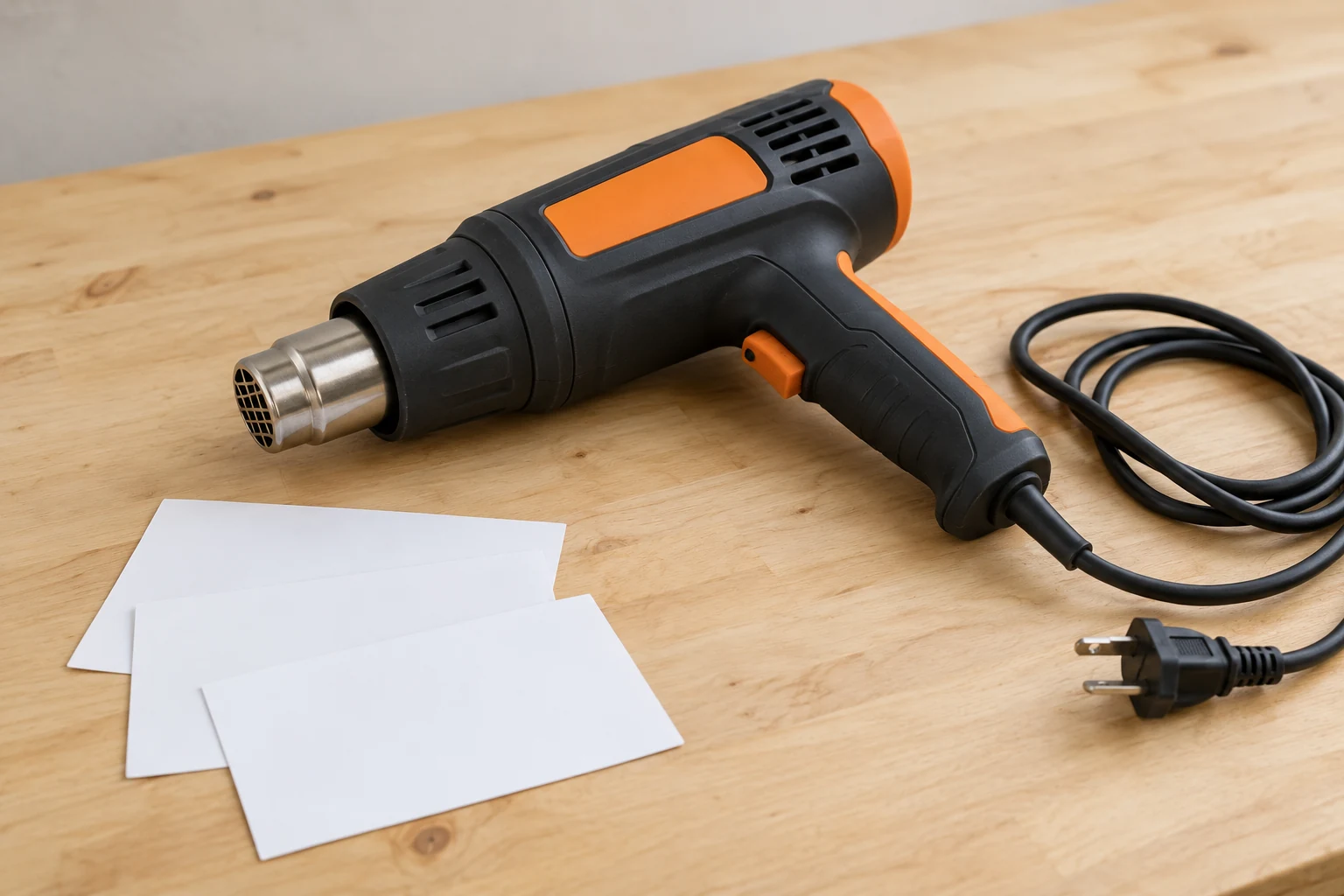
A heat gun quantity budget can change when several requests overlap. Three requests on a page do not necessarily require three separate tools. The useful count depends on the reservations that must be covered together, with suitability and availability already established. This guide uses an invented paper allocation to explain that count before anyone treats it as a purchase quantity.
The CRAFTSMAN CMEE531 heat gun is listed as a corded 1500 W model with a temperature dial and two fan speeds. The Wagner Spraytech WA569355 heat gun has a listed description identifying a 1500 W digital model. Those two actual offers provide product context. Their descriptions do not establish that they can fill the same request.
CRAFTSMAN's own CMEE531 page lists one corded heat gun in its Includes section. That is an item count for that model. The allocation below concerns fictional complete units, without assigning either actual model to a real task or calculating electricity consumption.
Define the shared tool reservations first
For these shared tool reservations, an imaginary planning sheet gives Mara three reservation cards called A, B and C. Each card requires one complete eligible unit throughout its reserved block. The sheet stipulates that every fictional unit is suitable for every card and available at the boundaries shown. These are supplied assumptions for a counting exercise. They are not findings about an actual workshop.
The horizontal scale contains numbered booking positions. These positions have no assigned duration in seconds, minutes or hours. A runs from position 0 up to 20. B runs from 10 up to 30. C runs from 25 up to 45. A reservation includes its starting position and excludes its ending position, so the notation describes precisely where that paper reservation exists.
Each block represents the complete stipulated reservation, rather than just time when a trigger might be pressed. Nothing in the chosen numbers describes heating, cooling, handling or a safe return to service. A real release condition needs the applicable instructions and actual arrangement. The imaginary sheet simply supplies availability as a premise, allowing us to examine the quantity calculation separately.
Mara initially writes three beside the request list because it contains three cards. That is a correct count of requests. To find the number of units that can cover this particular sheet, she needs to inspect which blocks coexist. Counting request names and counting simultaneously reserved units answer different questions.
Find the peak simultaneous tool count
From position 0 up to 10, only A exists. From 10 up to 20, A and B exist together. From 20 up to 25, B exists alone. From 25 up to 30, B and C coexist. Finally, from 30 up to 45, C remains alone. The peak simultaneous tool count on this sheet is two.
Two is a lower bound for the fictional unit requirement because the overlap between A and B needs two distinct units. One unit cannot satisfy both reservations at those positions under the stated rule. The overlap between B and C independently produces the same lower bound. These statements follow from the invented cards; they are not measurements of the selected products.
Mara can also demonstrate that two is enough for this sheet. Label two fictional units X and Y. Assign X to A and then to C, while Y covers B. X's two reservations do not overlap: A ends at 20 and C starts at 25. Y has only one reservation. Every card now has one assigned unit throughout its block.
The assignment matters because a peak count by itself would leave the coverage unshown. Here the lower bound and the explicit two-unit assignment agree. That settles the original three-card exercise under its supplied assumptions. Buying one separate unit for each request would produce three, while the demonstrated allocation uses two.
This is a conditional quantity difference of one complete unit. It supplies no currency saving, rental quote, delivery promise or reason to buy either listed offer. Mara has established what the paper model requires. A real spending decision still needs the actual eligible equipment and the terms of the available order.
Add a request and revise the allocation
Now add a fourth fictional card, D, from position 15 up to 27. Keep the original A, B and C blocks unchanged. Between 15 and 20, A, B and D coexist. Between 25 and 27, B, C and D coexist. The new sheet therefore requires at least three distinct eligible units at those positions.
The old X and Y assignment can remain, with a third fictional unit Z assigned to D. X covers A and C; Y covers B; Z covers D. No unit receives overlapping reservations. Three units cover the revised four-card sheet, so its demonstrated requirement is three rather than four.
Mara writes the revision beside the original result: three cards required two units; adding D raised the requirement to three. The extra request changed the peak because it crossed existing overlaps. The request total increased by one and the required unit count also increased by one in this particular revision. That matching change is a result of these blocks, not a general rule.
To see why, remove D from a separate copy and add E from 45 up to 55 instead. E begins where C ends under the sheet's defined boundary convention. X can cover A, C and E, while Y still covers B. This four-card copy retains a two-unit allocation. The number of cards alone cannot distinguish the D revision from the E revision.
Keep the two revised sheets separate. One contains D and needs three units; the other contains E and needs two. Combining their results would create a request list that neither calculation examined. Mara can name each version by the cards it contains so another reader can reconstruct the result.
Subtract only equipment that can fill the reservations
Return to the original A, B and C sheet with its two-unit requirement. Suppose the fiction explicitly gives Mara one eligible owned unit, available for every block. That unit can take X's assignment. One additional eligible unit could take Y's assignment. Under those assumptions, the additional quantity is one, rather than the total requirement of two.
Now change the owned unit's fictional availability. Suppose it is reserved elsewhere from position 20 up to 25, between A and C, while available throughout both of those reservations. It can still take X's assignment, so the same one additional unit covers Y. A restriction on availability does not automatically increase the purchase quantity; the actual assignment determines whether it changes this exercise.
Change the premise again: the owned unit is unavailable throughout the entire sheet. It cannot fill X or Y. The original two-unit requirement remains, and the exercise now needs two additional available units to cover it. Ownership has stayed at one while useful availability for this sheet has fallen to zero.
These copies explain why Mara keeps an equipment label beside each assignment. A tally saying one owned tool leaves out when it is available and which requests it can fill. The fictional eligibility premise also matters: if a unit is unsuitable for a card, its presence elsewhere on the sheet cannot cover that card.
The actual CRAFTSMAN and Wagner offers have not been declared interchangeable here. A shared 1500 W label cannot supply the missing suitability decision. The worked copies assume identical eligibility only for their invented X, Y and Z units. Replacing those letters with actual product names requires evidence relevant to the real requirements.
Keep the unit count separate from consumable quantities
The castanet machine parts guide distinguishes complete arrangements from their component counts. For Mara's sheet, the assigned object is one complete eligible unit. Counting parts inside it would not create extra units that can occupy separate reservations.
The caulk coverage budget guide works from material volumes and container quantities. Mara's reservation exercise uses a reusable unit allocation. Adding the reservation block lengths does not calculate material consumption, and adding the request names does not calculate the peak unit requirement.
For example, the original A, B and C blocks each span twenty positions. Their spans sum to sixty positions of reservation demand. Two units nevertheless cover them because the demands do not all coexist. Keep sixty with its own label if recording that total. It is neither sixty units nor a duration for operating a heat gun.
Likewise, two units sitting in an inventory list do not by themselves demonstrate coverage. The sheet must still assign each request to an eligible available unit. If both inventory labels are assigned to A while B is left empty during their overlap, the inventory total is adequate but the written allocation is incomplete.
Carry the approved quantity into one purchase request
The listed heat gun offers identify physical products; their purchase quantity must match the particular order being considered. Suppose fictional Mara's separate approval record has accepted the original allocation, confirmed one owned eligible unit, and authorized obtaining one additional unit. That approval concerns a quantity and an identified item, with no selling price supplied by this exercise. Mara records a crypto payment preference, USDT, beside P when considering an order at republeq.com. The payment record should identify which authorized purchase it covers. Mara gives the imaginary order a label, P, and keeps that label beside the approved request. If another person arranges the purchase, both people can refer to P without creating a second request from the same planning sheet. A proposed replacement item needs its own suitability decision before the approval can follow it. A payment method does not establish that the replacement fills B's reservation. If the request changes from one unit to two, Mara records the changed quantity before authorizing the corresponding order. She keeps the current basket, selected item and actual total together when examining the payment instructions shown for that transaction. This paragraph provides no transfer destination, network selection, exchange calculation or completion time. Those details must come from the actual checkout being authorized. A payment confirmation can be attached to P as the record of that purchase. It does not certify equipment availability at the fictional booking positions or turn the paper assignment into a tested work arrangement. If the order is changed or cancelled, that change belongs beside P so the planning record does not count an expected unit as an arrived one. Mara can then distinguish an approved requirement, an order placed to meet it and equipment actually available for the work.
Leave the final fictional sheet with its request blocks, the unit assignments and the version being approved. For the original A, B and C case, X covers A and C while Y covers B. That visible allocation is the reason the quantity is two. Any change to eligibility, availability or the reservations needs its own revised assignment before the old quantity is carried into another request.