Cost & Savings Articles
Handbell set cost: pay for the notes your phrase needs
Compare the notes required by an original buying brief with two handbell inventories, keeping dated prices and exact supplied variants visible.
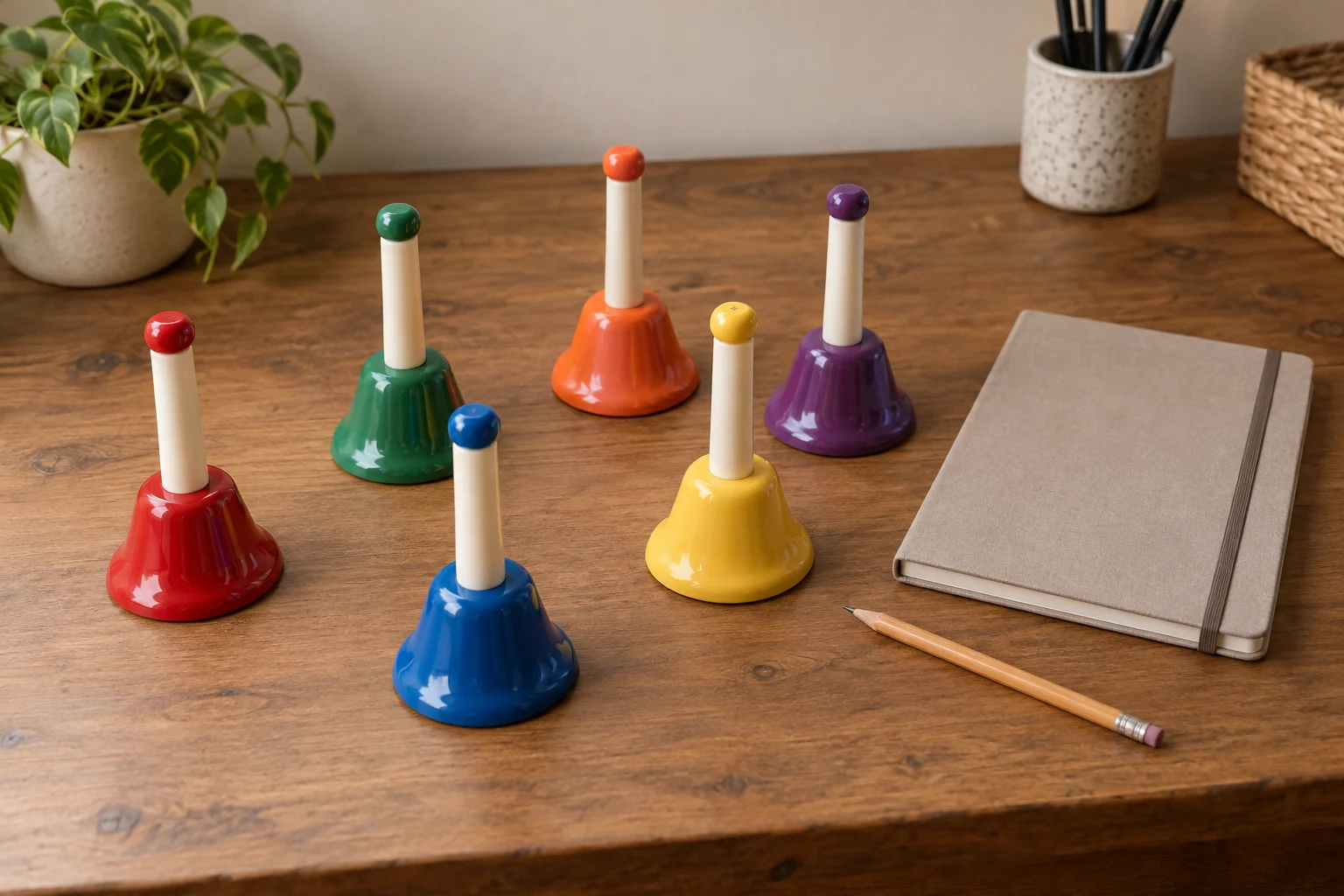
A handbell purchase can look inexpensive until the chosen set omits a note the music needs. Before comparing handbell set cost, write the required pitches beside the proposed purchase. A lower total is useful when the set can do the agreed job. If a missing pitch leaves that job unfinished, the smaller amount answers a different question from the one the buyer intended to ask.
This guide uses an invented purchasing brief requiring C, D, F# and G in an agreed register. It is a note-coverage example, not a song, playing lesson or instruction to replace an existing arrangement. The task is to decide which offer deserves further purchase confirmation and what the extra spending would actually address. No physical sound test or completed order is reported.
Write the musical requirement before choosing a budget
Start with the person responsible for the music. Ask them to write the actual pitches needed and identify the register in a form they can confirm. A note letter alone may leave the intended octave unresolved. Keep that question with the music decision instead of asking a price comparison to settle it. The example here assumes that the intended register will be confirmed before an order.
For the invented brief, each of the four named pitches is required. Mark F# explicitly on the buying note so it survives a conversation about colors, package size or the amount available to spend. Rewriting the requirement as four bells would discard the part that determines coverage. A set containing many bells can still fail that requirement if the required pitch is absent.
Decide who can authorize a change to the brief. A buyer may discover that a cheaper offer fits a revised plan, but the revision needs the music owner's agreement. Keep the original requirement until that agreement exists. This prevents an administrative convenience from silently becoming a change in what the group intends to play.
The harmonica call-and-response session attaches a particular lesson to its confirmed instrument. That guide concerns a social playing activity, with its own harmonica instructions. For purchasing, retain the musical requirement while checking the instrument. Its hole numbers and familiar opening supply no handbell arrangement for this comparison.
Diatonic handbell note coverage in the two offers
The ProPlus PR118333 handbell offer lists eight diatonic notes, middle C through high C: C, D, E, F, G, A, B, C. The Kids Play RB118 handbell offer names a complete thirteen-note chromatic set. The captured product prices on October 16, 2026 were USD94.98 and USD109.99 respectively, a USD15.01 difference. Both rendered purchase controls said Unavailable, so those amounts are dated product-price snapshots, not available checkout totals.
In the stated eight-note inventory, F appears and F# does not. Under the invented requirement, that leaves one required pitch uncovered. Keep that result attached to the proposed purchase. It does not say that an eight-note set has poor sound or that its listed notes are unsuitable for every other piece of music. It says why this particular brief cannot be approved from that inventory.
Rhythm Band's historical 2020-21 catalog places unsuffixed RB118 in the thirteen-note C-to-C chromatic range, including F#. Its current product page heads the set RB118 but gives Product Number RB118-W, without a matching UPC. Use the catalog as historical range evidence, then confirm the exact offered variant and register with the seller; the two identifiers do not prove identical supplied stock.
For diatonic handbell note coverage, keep a short line for each required pitch. In this example the diatonic inventory has entries for C, D and G, while the F# line remains missing. The historical chromatic reference gives a reason to investigate the other offer. Final acceptance still needs the actual supplied set to match the agreed register and required pitches.
The repeated C at the ends of the stated range is also a reason to retain the register. In the proposed buying note, write which C is intended instead of treating every occurrence of the letter as the same requirement. The person specifying the music can resolve that detail. The buyer can then ask the seller a precise question without trying to supply a musical decision from the package count.
Give the extra spending a specific job
The additional amount in this comparison has a proposed purpose: obtaining the required pitch coverage in a confirmed set. It does not buy a documented increase in musical skill, sound quality or enjoyment. Those outcomes have not been measured here. Describing the purpose plainly lets a purchaser explain why the cheaper offer remains incomplete for the brief without inventing a performance advantage for the alternative.
Suppose the person approving funds asks whether the larger set is necessary. Answer with the unresolved requirement: the proposed music needs the named sharp, and the smaller inventory omits it. Then show what remains to be confirmed about the other offer. That response gives the approver a concrete decision instead of asking them to accept a vague preference for more equipment.
A limited budget may still rule out the more expensive purchase. Write that result honestly. The options can include postponing the order or asking the music owner whether a different plan would be acceptable. Do not label a knowingly incomplete purchase a saving on the original job. The brief remains unfinished until the music requirement changes or a suitable purchase becomes possible.
If the music owner removes the sharp from the requirement, record the revised brief and compare again. The earlier coverage finding remains correct for the earlier plan. A revised requirement can lead to another purchase decision without making either set universally better value. Keep the decision date and the person approving the change beside the revised note list.
Keep handbell set cost separate from a per-bell score
Dividing a package amount by its bell count would assign part of the price to each item. That arithmetic would not establish whether the required pitches are present. For the invented brief, the purchasing question concerns a particular missing note and a confirmed register. A smaller numerical average per bell could distract from that question while leaving the music requirement unresolved.
The yarn unit-cost and project-outlay guide distinguishes a common-length calculation from the complete package purchase. Its yardage arithmetic belongs to yarn. Handbell pitches are different requirements, so dividing by a count would not make two inventories interchangeable. Keep the complete amount beside the particular musical job the package is meant to support.
For handbell set cost, the quoted product amount is only one input to an eventual order. Obtain the actual payable total for the confirmed item before committing funds. Keep any charges that appear at that stage with their own order. This comparison supplies no shipping amount, tax estimate or delivery date to add to the captured product prices.
Do not assign a financial credit to pitches beyond the present brief merely because they are included. A future use can be considered when somebody has an actual plan for it. Until then, the extra coverage is a characteristic of the proposed set, not money already saved on another purchase. The amount leaving the budget stays the amount actually paid.
Chromatic handbell purchase check for the exact set
A useful seller question starts with the offer being considered and the required pitches in the agreed register. Ask for confirmation that the supplied package contains them. Include the model wording shown on that offer, and ask the seller to resolve any different variant identifier they give in reply. The answer should identify the package they propose to send. Retain the date of that answer and its order reference if one is supplied, so later correspondence can identify the same proposal.
For a chromatic handbell purchase check, preserve the answer with the buying note. If the reply only repeats a general range description, ask which supplied variant that description covers. An unresolved identifier remains a purchasing question. Do not fill the gap with a photograph of another package or assume that a similar product heading resolves it.
Keep the response focused on the actual uncertainty. A request about pitch inventory does not require the seller to endorse the group's music plan. Likewise, a reply confirming that a package exists does not necessarily confirm the particular register. Compare the reply with the written requirement and identify whichever part still lacks an answer before deciding whether to proceed.
The example does not price an extra individual bell or prescribe a mixed set. If a seller proposes a separate item as a solution, give that proposal its own review of pitch, register and suitability for the intended arrangement. Obtain the actual combined amount. A presumed proportional price for one missing item would create a budget input that neither selected offer supplies.
If the group already owns bells, include only the pitches and registers that somebody has actually identified in that inventory. A remembered color is an unanswered identification question until the relevant note is confirmed. Existing equipment may change what needs purchasing, but this example assumes a complete proposed set and assigns no value to unidentified items. Keep any later decision to combine equipment with the person responsible for the music.
Leave a buying note another person can use
Write the final recommendation in a short paragraph that names the music requirement, explains the coverage finding and states the purchase condition. For this example, the recommendation can say that the eight-note inventory omits the required sharp and that the chromatic offer needs exact-variant confirmation before approval. It can then refer to the dated amounts without presenting them as a live order.
Add the response that settles the register and package identity when it arrives. If it does not settle them, retain the unanswered question. Another buyer should be able to tell whether the recommendation is ready to act on or is still awaiting confirmation. A tidy price comparison should not conceal that distinction.
Once the supplied package and payable amount are confirmed, ask the budget approver to decide against that complete proposal. If the total exceeds the available funds, return the problem to the people who can change the requirement or authorize the spending. Keep any revised music plan separate from the original note list so a later reader can follow the decision.
After purchasing, retain the agreed requirement with the order information. If the received package differs from what was confirmed, describe that specific discrepancy to the seller through the applicable order process. This article supplies no return entitlement or adjustment procedure. The written note gives the buyer a concrete account of what was requested and what remains to be resolved.