Crypto Commerce
Gevi 1000C countertop nugget ice maker vs Kndko Z5820DN nugget ice serving window
Compare Gevi 1000C countertop nugget ice maker by daily output, basket capacity, first servings, water supply, counter fit, and cleanup.
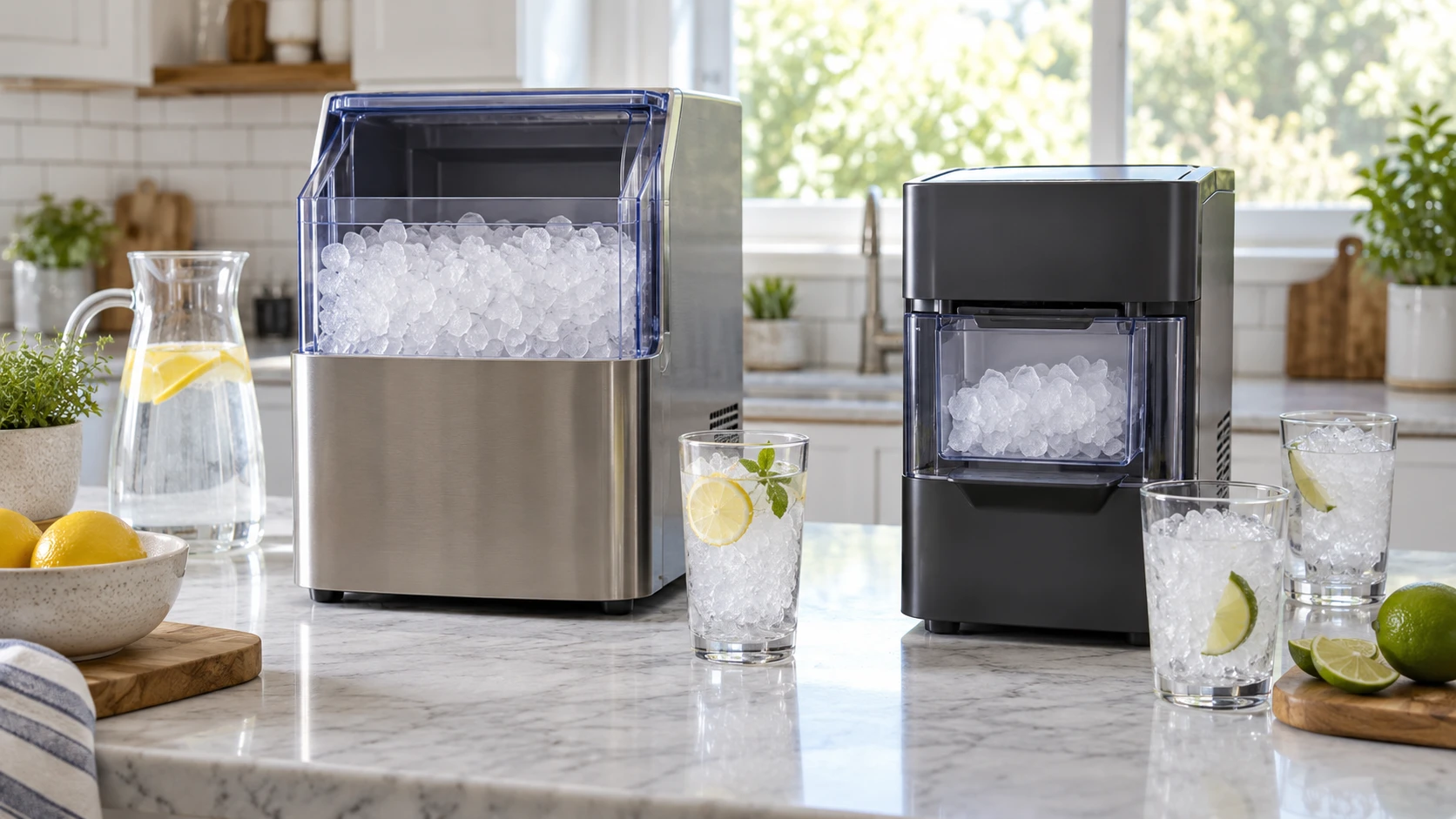
The Gevi 1000C countertop nugget ice maker has a stated capacity of up to 38 pounds a day and a 4.8-pound ice basket. The Kndko Z5820DN claims up to 44 pounds a day but holds 3.3 pounds in its basket. If several people want ice at once, the amount waiting in the basket may matter more than the amount a machine could make over 24 hours.
These are Republeq's product specifications, not results from a matched test. The saved product rows do not give a common room temperature, starting water temperature, or operating schedule for the daily figures. Both describe chewable nugget ice. To choose between them, start with the drinks you expect to serve together, where the machine will sit, and how you will refill and empty it. The basket is part of the machine's working cycle; neither product row establishes it as a long-term freezer.
How much ice will be ready for the first round? — ice-maker capacity during a short serving window
Gevi's 4.8-pound basket offers more room for ice made before guests arrive. Its saved row does not say how long an empty basket takes to fill from a cold start. If you plan to switch the machine on as people walk in, the up-to-38-pound daily figure tells you little about the first drinks. Check the current manual or ask Gevi for first-batch timing and the conditions behind that figure.
Kndko says it can make enough ice for one or two cups in 15 to 20 minutes. Its basket holds 3.3 pounds, while its claimed daily maximum is up to 44 pounds. A machine can cycle through much more ice in a day than it can hold at one time. The saved Kndko row also says the basket can keep ice for five hours, yet advises removing finished ice because the basket is not intended for long-term storage. Treat five hours as a claim about the working basket, not as storage guidance for an event or the next day.
The published guide on ice-maker capacity during a short serving window explains how to weigh basket size and early production alongside a daily rating. Use that method with these two machines, then confirm model-specific timings in their manuals. Count the people who will take ice during the first half-hour. Estimate the amount each glass takes, and compare the total with a basket that is already full. That gives you a more useful first-round question than a 24-hour total does.
Plan the next hour separately. A second round of drinks may come before the basket refills, especially if someone is also taking ice for a cooler. Count cooler ice apart from glass ice; a countertop machine should not be assumed to replace several bags of stored ice. You can start either machine early, but the saved rows do not say when each basket reaches capacity. The difference matters if guests arrive on a fixed schedule and you have little room to hold extra ice elsewhere.
A household freezer could let you move finished ice aside before the gathering. Neither saved row provides a procedure for storing its nugget ice or preserving its texture after transfer. Ask the manufacturer how to handle it and check that you have space before relying on this plan. Without freezer space, the size of the working basket and the machine's actual refill rate become more consequential during a short serving window. The stated daily maximum still describes production across a much longer period.
Water filling changes the routine — Kndko Z5820DN nugget ice maker
Gevi lists a 2.8-liter reservoir, roughly three quarts. Its description says you can add water through the lid or use a connected hose; the box includes a quarter-inch hose. Those options suit different counters. Manual filling may be simple if the lid is easy to reach. A planned water-line setup calls for checking the required adapter, filter, and drain arrangement against the current installation instructions. The included hose alone does not show that it connects to your kitchen plumbing.
The Kndko Z5820DN nugget ice maker row describes adding 2.4 liters of drinking water to a five-pint tank and says melted ice recirculates into the reservoir. It lists no water-line option. For a machine placed away from the sink, carrying water to it becomes part of each use. Check whether you can reach the fill opening under the cabinets without pulling the appliance forward. A convenient spot for serving may be an inconvenient spot for refilling.
Reservoir size cannot be translated directly into servings. Water remains in the machine, some ice melts and recirculates, and glasses take different amounts. The Kndko row makes several time and fill claims, including an ice-box fill claim within 150 minutes, but it does not give a matched test against Gevi's 2.8-liter tank. If you already use a countertop ice maker, note how often you refill it during an ordinary day. That routine will tell you whether the difference between these listed reservoirs is likely to matter at home.
Water quality and cleaning instructions matter because the ice goes into drinks. Follow each manual for acceptable water, descaling, and sanitizing rather than choosing a cleaning solution by guesswork. A connected Gevi hose belongs in the maintenance plan. If you refill Kndko by hand, keep the fill area clean and deal with standing water when the machine will be unused for a while. Neither saved row supplies a complete maintenance schedule.
Also plan for the water left at the end of a gathering. A machine far from the sink may be easy to serve from but awkward to empty. Check how to reach its drain and whether you can move it safely while it contains water. The saved Gevi row lists the hose and removable basket without describing a drain procedure. Kndko names a bottom drain cap. Read the current manuals for both before deciding where either machine will stay on the counter.
Make room to fill, serve, and drain — Kndko Z5820DN nugget ice maker
Gevi lists exterior dimensions of 17.3 by 9.7 by 16.7 inches, though the saved row does not label the three axes. Confirm width, depth, and height in an official drawing before measuring a cabinet opening. Allow space above the lid for water and around the exhaust fan. A space can fit the body while blocking the fill opening or restricting airflow. The saved Kndko row does not give a complete exterior dimension set, so request one rather than measuring from a product photograph.
Think through the movements you will make every day. Gevi lists a removable basket and scoop. Kndko describes a lever above the control panel that dispenses nugget ice, plus a bottom drain cap used after self-cleaning. A front dispenser could spare you from lifting a lid for each drink, provided there is room for a cup beneath it and access for cleaning around the outlet. Check whether its basket must be removed for routine maintenance. Either design still needs a clear path for draining water and cleaning the parts that touch ice.
Noise can decide where the machine belongs. Gevi describes components designed to reduce noise but gives no measured level in the saved row. Kndko says the machine makes noise and recommends keeping it away from rest areas. There is no matched sound test here. If the breakfast counter is close to a bedroom, ask about normal cycle sounds before planning to run either compressor machine overnight. A spot that works for a quick afternoon batch may be less comfortable during a long run.
Compare cleanup and support — Kndko Z5820DN nugget ice maker
Gevi lists a self-cleaning function without describing the full procedure in its saved row. Kndko describes holding the ON/OFF button for five seconds, letting self-cleaning run for 10 to 15 minutes, and opening the bottom drain cap afterward. You will need somewhere for that water to go. Neither description says a self-clean cycle replaces washing removable parts or following the manual's sanitation schedule. Check how you can reach each reservoir, basket, and ice path before buying.
The Gevi row describes stainless-steel housing, a viewing window, extra-thick insulation, and automatic ice refill. The window may let you check the basket without opening it. Kndko lists ice-making status lights and the dispensing lever. These are different ways to see or access the ice, but both machines still need regular removal of old water and cleaning of surfaces that touch ice. Decide which controls and access points will be practical in the place you measured.
Gevi states a twelve-month warranty and lifetime technical support for products bought through official or authorized channels. Confirm the Republeq's catalog eligibility and the warranty's current terms. The saved Kndko row does not provide a comparable support statement, so ask for its current terms. Pumps, fans, water paths, and moving parts make service instructions and replacement-part access useful questions for either machine.
Gevi's larger basket and choice of manual or hose-fed water are worth investigating if the first serving round is your main concern. Kndko lists higher all-day output and a dispensing lever, with a smaller basket and the manual-fill routine described in its row. Confirm first-batch timing, counter clearance, water handling, cleaning, and warranty details before choosing. Those answers will show how each machine fits your actual serving schedule better than the daily pound figures alone.