Tablets
Galaxy Tab S6 Lite case fit: hand strap or folio for 2020/2022
Confirm the exact Galaxy Tab S6 Lite 2020/2022 model, then compare the two fitted case forms and controls.
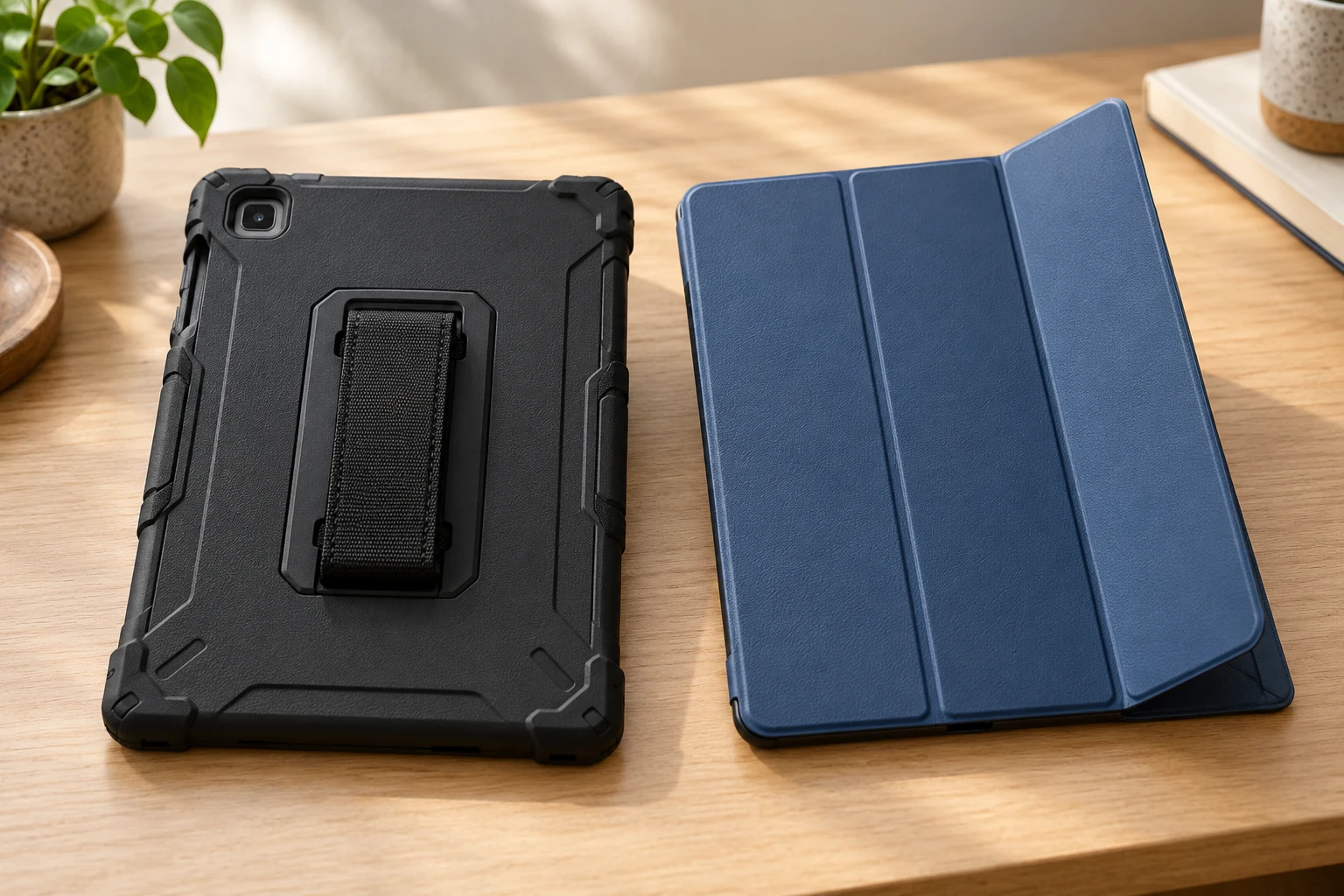
Galaxy Tab S6 Lite case fit begins with the tablet in your hand. Two cases can name the same device and still be inconvenient in different ways. A hand strap changes how you carry the tablet while standing. A folio changes how you cover and prop it on a table. The two Sahara Case listings here both name Galaxy Tab S6 Lite 2020/2022 fit. That wording gives you a starting point, provided your tablet is one of those versions. It does not settle every question about access to buttons, a stylus, or another accessory you already use.
Before comparing features, write down the device name and model information shown in the tablet's settings or original purchase record. If you have only a family name from a search result, look more closely. The case pages identify the device family and years they intend to fit; they do not give permission to treat every device sold under a similar name as interchangeable. The two products also serve different habits. Use the model check to establish eligibility, then use your ordinary day to choose the form.
Start with the tablet's exact identity
A case surrounds a particular arrangement of edges, controls, speakers and camera. A close-looking tablet can require a different cutout or grip. Find the model label on your tablet or its purchase documentation before deciding that a listing applies. Keep that label beside the product page as you read. If a seller shows several versions in one search result, open the exact selected offer. A broad search heading may combine devices that the individual product description separates.
Both saved Sahara Case offers here say Galaxy Tab S6 Lite (2020/2022). That is the narrow shared fit claim to test against your device. Neither source establishes fit for a 2024 version or for every Galaxy Tab model. If your record says a different year, or if the year is unclear, do not settle the question from the general tablet name alone. Ask the seller for the model-specific fit statement, or find a listing that names your exact version. A case that has to be forced around an edge has already failed the practical fit check.
Keep the listing open when the case arrives. Compare the camera opening and the locations of controls before pressing the tablet into place. That physical check is useful even when the model wording matches, because a shipped item can differ from the image or selected variant. Do not obscure a control to make a case appear to fit. If an opening does not align, photograph the case and its packaging, then resolve the discrepancy with the seller. The product name is a reason to inspect the match, not a reason to overlook a mismatch.
Another small distinction matters when shopping online: a product photo may show a cover in a closed position, while the description explains how it is used open. Read the whole offer, including the chosen color and included components, before inferring how it attaches. These two listings describe different forms. One photo shows a dark back shell with a central strap. The other shows a blue folding front. The images help identify form and color, but they cannot prove a fit against your own tablet.
What the hand strap case actually offers
The Sahara Case TB00259 hand strap case is the black option in this comparison. Its native listing names Galaxy Tab S6 Lite 2020/2022 fit, a hand strap, a built-in screen protector and a kickstand. The gallery shows the back of a fitted shell, with the strap centered inside a circular area and a camera opening near one corner. That image is enough to recognize a hand-carrying form. It does not show the case installed on your exact tablet.
Think about when the strap would be used. Someone who holds a tablet while walking around a room may value a grip on the back. Someone who mostly leaves a tablet on a desk may spend more time using the stand. The listing supports both features, but it does not tell you whether either feels comfortable for your hand or viewing angle. If that choice matters, check the seller's return terms and test the actual case before making it a permanent part of your setup.
The listing also describes covered controls and protection around the display. Treat those as features of this exact case, not as a guarantee that the tablet becomes waterproof or immune to damage. A built-in screen protector may change the feel of the touch surface, and the product page does not establish how it will work with every separate film, stylus or keyboard. If you already use another accessory, verify the combined arrangement from a seller statement or a careful physical test. The tablet's own controls should remain usable without pressing against an ill-fitting edge.
Set the case on a table before installation and identify the top, bottom and camera side. Check where the strap lies when your hand takes the weight. A strap on the back can make one-handed carrying convenient, but the grip position may also change how the tablet rests flat when you are writing or drawing. That is a use question, not a property that a catalog photograph can decide. Try your normal activity with the actual item and keep the test short enough to catch an awkward position before you depend on it.
What the folding folio changes
The Sahara Case TB00257 folio is the blue option. The listing also names Galaxy Tab S6 Lite 2020/2022 fit. It describes a folding cover, a kickstand, a built-in screen protector, openings for controls and ports, and a wake and sleep action when the cover opens or closes. Its native gallery shows the front folded shut. Those details point toward a desk or bag routine in which the screen is covered between uses.
A folding front changes the sequence of everyday actions. To look at the screen, you open the flap and decide where it rests. On a crowded desk, the folded material occupies space that a simple back shell may not. In a bag, the front cover may be useful because it sits over the display. The saved listing does not establish how the folio behaves in every bag or at every viewing angle. If those details determine your choice, inspect the exact case after delivery with the things you normally carry.
The wake and sleep feature is a seller claim about this folio. It is not a claim about the hand strap case, and it should not be treated as a substitute for checking your tablet's own settings and response. Open and close the delivered cover while watching the screen. If the behavior differs from the offer, record the exact result and ask the seller. Likewise, the listing's account of port access is a reason to inspect each opening on your device. Check the charging cable you actually use without forcing its connector around the case.
A folio can be attractive when the tablet moves between a table and a bag, but the front flap is another surface to manage while holding it. Try a short reading session and a normal carrying movement. Notice whether the cover rests where you expect and whether your hand can reach the controls. These observations are personal and repeatable. They provide better evidence for this purchase than a generic claim that one case form is more protective or convenient for everyone.
Compare access before appearance
Put the two offers side by side and make a small access list from your own device. Include the camera, charging port, power and volume controls, speakers and any accessory you use regularly. For each listing, mark what the seller actually states and what the gallery actually shows. Leave a question blank when the source gives no answer. A blank is useful: it tells you what to verify with the seller or the delivered case before you rely on it.
For the TB00259, the visible back shows the strap and a camera opening, while the description supplies the screen protector and kickstand claims. For the TB00257, the image establishes a folding blue front, while the description supplies the opening and wake/sleep claims. Neither image proves every cutout. Avoid transferring a feature from one Sahara Case model to the other merely because they share a brand and target tablet family. The exact model number on the product page is part of your comparison.
Also decide whether you intend to use the case with a separate keyboard cover, screen film or stand. The saved case pages do not establish every combined fit. A protective shell can occupy an edge that another accessory expects to grip. If you cannot find a combined-use statement, test with the real accessories during the return period or ask for model-specific guidance. The keyboard cover fit guide explains why a cover's intended role and exact layout need their own check. It does not certify either tablet case here.
Color and texture are easier to judge from the galleries, but they should come after fit and access. The black shell and blue folio look different even before installation. That visual difference is useful if you already know which form suits your use. It cannot repair a model mismatch. If a seller offers several colors or versions on one page, confirm the selection in the cart and on the order record. Keep that record with a photo of the delivered packaging if you need to resolve a variant mistake.
Use a short, repeatable fit check
When the case arrives, start with the device powered off or resting securely on a soft, clear surface. Read any instructions supplied with the case. Compare its openings to the tablet before pressing any corner in. If the alignment looks wrong, stop. Do not cut the case or stretch a rigid corner to make it appear compatible. Photograph the case and the tablet label separately so you can describe the mismatch to the seller without handling the device repeatedly.
If the openings line up and the instructions support installation, seat the case as directed. Check each control with a light touch. Connect the cable you use most often, then remove it normally. Take a photo through the camera if the case edge appears close to the lens. Try the kickstand on a stable surface, and test the strap or folio in the ordinary posture you plan to use. These are observations of your delivered unit; the listing alone cannot replace them.
Make only the checks relevant to your routine. A person who reads at a desk may care about the folio's fold and wake/sleep action. A person who carries the tablet around a workshop may care about the hand strap and grip. If both activities matter, test both. Keep the result specific: “the charging cable fits with this case” is more useful than “all accessories fit.” It also leaves room for a different cable or dock to require a separate check.
If the fit is uncertain, pause before relying on the case. A wrong case can press a control or leave an opening in the wrong place even if it seems to surround the tablet. Ask about the exact model and case number. The iPhone 17 case compatibility guide makes a related point about keeping device variants separate. Its phone examples do not establish tablet dimensions; use your Galaxy Tab's own label and the two tablet listings for this decision.
Choose the form that survives both checks
The first decision is eligibility: your tablet must match the model and years named by the exact offer. The second is use: the case must leave your needed controls and accessories accessible in the delivered configuration. Only then does hand strap versus folio become a helpful preference. The TB00259 offers a back grip and stand. The TB00257 offers a folding front and stand. Those are different ways to carry, cover and prop the same stated tablet family.
If you own a Galaxy Tab S6 Lite from 2020 or 2022 and both cases pass the exact model check, choose by the action you perform most often. Consider where your hand goes, whether a front flap would get in the way, and how often you place the tablet on a table. If the device version is uncertain or a required accessory remains unverified, resolve that point before ordering. A practical fit decision ends with the exact tablet, exact case model and a short check of the delivered item.