Vehicle Care & Accessories
Frozen windshield wipers. Pause before switching on
Pause the operation question when blades are frozen to the glass. Keep the observed ice-bound state distinct from a component diagnosis, and obtain the actual vehicle guidance before deciding on a replacement.
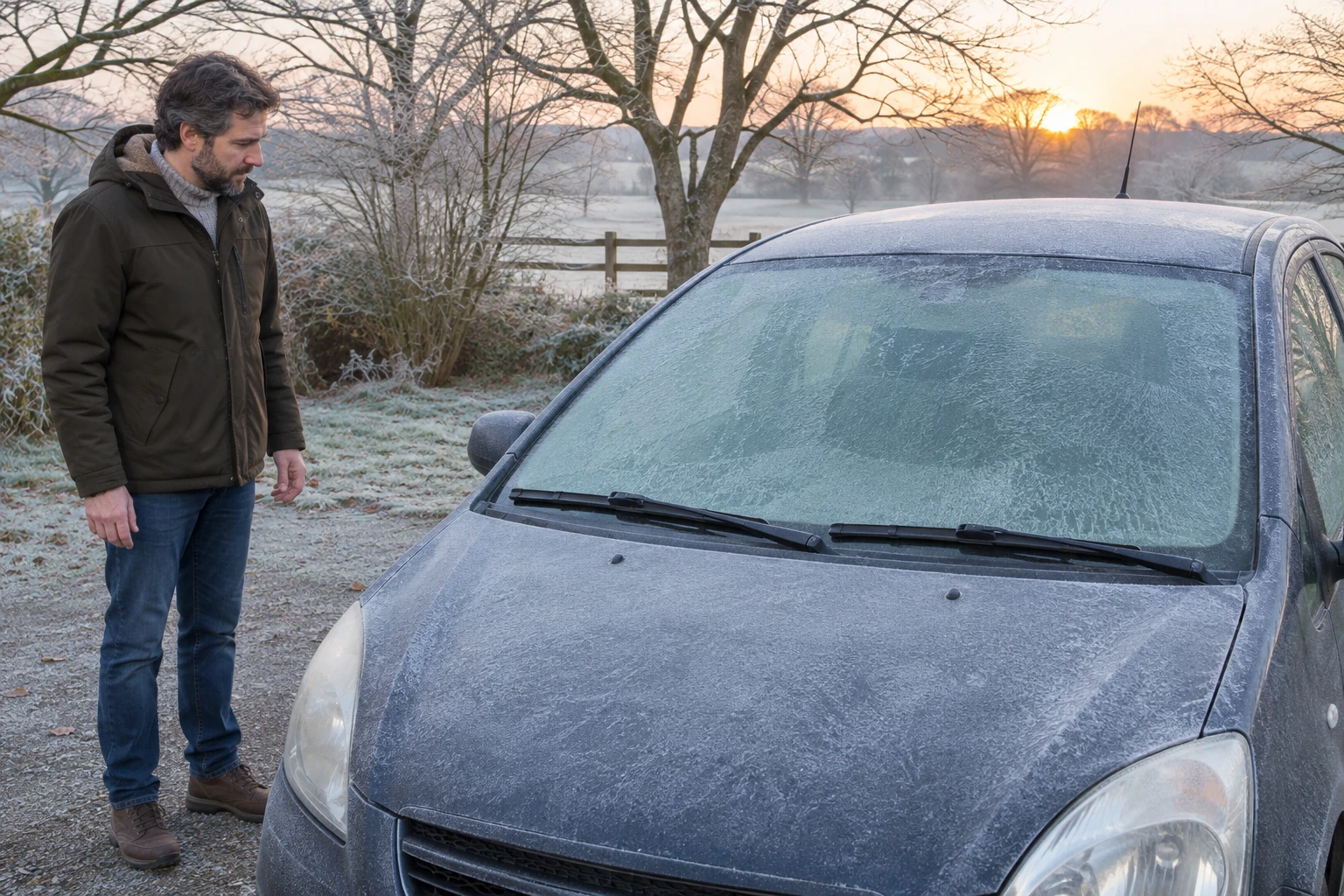
A frosty morning can change the first question
Frozen windshield wipers can turn an ordinary departure into an uncertain equipment question. You see the car outside, remember yesterday's errands and start thinking about a replacement before you have described this morning's condition. Give that description its own space. A note saying what you can actually see gives the next person something specific to answer. A note naming a broken component already contains a conclusion. This guide concerns the point before that conclusion, when the weather is relevant and the cause of any possible fault remains unresolved. It does not establish that a particular vehicle is ready for use.
Consider a fictional household on a frosty morning. Ines looks at the parked car and writes Owen a message saying that the wiper motor is broken. Owen has been arranging the day's plans and starts looking for parts. Neither has yet obtained an assessment of the vehicle. Their first exchange already sounds more certain than the information behind it. The useful conversation begins when Owen asks what Ines observed. That question gives her room to revise the message without defending an early guess. No replacement has been selected, and no component has been identified as faulty.
For their winter wiper check, Ines and Owen agree to keep two separate notes. One records the condition that prompted the concern. The other records the unanswered question they want to take to the actual vehicle instructions or an appropriate service contact. They do not put a remedy in either box simply to make the note look finished. This is a reporting choice they can make at the kitchen table. It also leaves their morning arrangements open while they seek the relevant guidance, instead of treating an online parts listing as an answer about what happened outside.
Keep the caution attached to its source
AAA Oregon's winter wiper guidance cautions against operating blades frozen to the windshield because blades, the motor or linkages can be damaged. It also warns against pulling frozen blades away from the glass or using wipers to remove ice. Keep those cautions together when facing ice-bound blades. The guidance supports a pause before operation. It does not diagnose this car or establish which replacement, if any, it needs.
Ines changes her message to say that she can see an ice-bound condition at the blade and glass. She deletes the component diagnosis. Owen can now ask a narrower question about the relevant guidance without having to accept or disprove her earlier wording. Their revised note preserves the uncertainty that was present all along. It also gives them a record they can recognize later. If someone asks what was known at this stage, the answer is the description they saved, with the question still open. They have no observed remedy, successful test or departure to report.
The native Rareelectrical rear-blade listing names a 12-inch rear wiper blade, SKU 5837006393. Its description uses Bosch H300 wording. One gallery image is a generic RARE ELECTRICAL machinery collage, while another shows a complete black rear blade. Those catalog and image details do not authenticate a Bosch relationship, prove an application-list match or identify a fault on a reader's car. The machines in the promotional collage are not included equipment.
A blade listing answers a different question
The native Geelife front-blade pair listing identifies SKU 5615982534 and part TPWWS00346. Its catalog brand is Geelife, its manufacturer field says Unbrand, and a gallery closeup shows TRICO lettering. Preserve those different labels without assuming an authenticated alias. Other images include blades and adapters alongside generic promotions. The Ice wording does not establish cold-weather performance or permission to operate a frozen assembly. Neither this front pair nor the rear-blade offer diagnoses the parked car.
The RAC winter-preparation guidance separately warns about frozen wipers and describes possible fuse, motor or mechanism damage from operation. That possibility is a reason to seek the relevant guidance for the actual vehicle, rather than assign a failed component from a frosty view. The RAC page covers many other winter topics. This discussion adopts the narrow operation caution and leaves the wider preparation advice outside its scope. It supplies no electrical test or service procedure.
For Owen, the distinction changes what belongs in the shopping note. He can record that he saw two retail offers without presenting either as a recommendation for their car. He leaves the prospective purchase blank while the vehicle question is unanswered. The blank is an accurate part of their record. Filling it with whichever listing he opened first would give an ordinary browsing action more meaning than it has earned. Ines can still find the saved pages later if a properly identified replacement question arises. At this point, the pages remain catalog references in their fictional conversation.
Make the request understandable to someone else
Ines reads the revised note aloud before sending an enquiry. It says what prompted the concern, separates that observation from her initial guess and asks which actual-vehicle guidance applies. Owen listens for words that imply someone has already established a cause. When he hears one, they change the sentence to a question. They do not add a confident outcome to make the message sound decisive. The recipient can then see where the information ends. Their request is short enough to follow without needing the earlier household conversation, yet honest about the questions it cannot answer.
They also keep an account of what has and has not occurred in the fictional example. Their note does not describe an operation, a repair or a completed assessment. This matters to the story because a later reader might otherwise read a phrase such as “still broken” as a report of another event. Ines chooses wording that stands on its own. She can explain that her original component label was a guess and that the revised message replaces it. Correcting that description does not require them to invent an earlier test or supply a cause that nobody has established.
The same approach can help when someone else is organising the day. Owen tells the household that their vehicle question remains unresolved and asks them to discuss their arrangements separately. He avoids saying that a part order will settle the morning. In their example, there is no confirmed order and no confirmed repair. A relative reading the message should be able to distinguish a request for planning flexibility from a report that the car has been assessed. Ines and Owen leave the timing open instead of attaching a promised departure to the unanswered equipment question.
Keep a reply within the question it answers
If a response arrives, Ines intends to keep it beside the question she sent. That lets her see whether it addresses her actual vehicle concern or merely supplies information about a retail item. An answer about an offer's catalog identity would belong with that offer. An answer about the vehicle would need its own context. The fictional household has not received either answer here. Describing how they would file a response is not a report that a seller or technician has approved anything. Their unfinished record remains useful because another person can see which part is still waiting for an answer.
Owen would also avoid merging two replies into a conclusion that neither person gave. A product contact might address an item description, while a vehicle contact might address a different question entirely. In the household's planned record, each reply keeps the wording of the request that produced it. If a new question emerges, they would label it as new. This gives their conversation a straightforward sequence without constructing a diagnosis from fragments. They do not need a polished story about the cause in order to ask for help understanding the concern they actually brought forward.
As the morning conversation continues, Ines notices how easy it is to shorten an unresolved question into a settled label. Saying “the motor” takes fewer words than repeating the concern, but it also restores the guess she removed. She and Owen choose a short neutral description they can both recognize. They can refer to the saved enquiry when they need more detail. The aim is consistency in their own messages. They have not discovered a fault through better wording, and their record does not claim that changing the description changes the physical condition outside.
Use the related guides for their own decisions
The published winter car snow-removal guide has a broader clearing and preparation scope. It considers vehicle areas, equipment and the conditions surrounding a snowy drive. Read that discussion for its own planning decision. It does not turn this narrow description of a wiper concern into a complete clearing plan or approval to travel.
The published windshield-wiper compatibility guide addresses a replacement decision involving the arm connection, application details and the particular offer. That becomes a different enquiry when replacement is actually relevant. It does not establish a failed component from an ice-bound appearance, and this article does not repeat its fitting or installation discussion.
Those boundaries help Ines keep her reading organised. She labels one saved item as a wider winter-preparation discussion and another as a replacement-compatibility discussion. Her current enquiry retains its original question about the observed condition and the relevant vehicle guidance. She has no reason to combine the three into a single completed checklist. Each document can remain available for the decision it actually addresses. Owen can understand the same folder without mistaking the presence of several saved pages for evidence that all the corresponding questions have been answered.
Leave purchasing until there is a purchasing question
If you later decide to shop at republeq.com, keep the product decision separate from the payment decision. A saved product page can help you identify the offer you meant to review, but it cannot settle the unanswered vehicle concern in this example. Confirm the actual item and the terms presented at the time you intend to order. If the checkout offers cryptocurrency, read the current instructions there before choosing a payment route. Do not treat an older article, a remembered screen or someone else's completed order as a promise that the same option is available for yours. If USDT is presented, establish the token and network specified by that checkout before considering a transfer. A familiar ticker alone does not supply those details. Review the recipient and amount in the current checkout context, and understand the transaction you would be authorising before proceeding. If an instruction is unclear, pause the payment question and seek clarification through the merchant's current support route. Keep the item identification and any relevant correspondence with your order information. That record can help you explain a question about the purchase without mixing it with an earlier vehicle enquiry. Payment availability does not authenticate a catalog brand, establish compatibility, identify a failed component or demonstrate that a vehicle is ready to use. The fictional household described here has not selected a product, submitted an order, made a crypto payment or received an assessment. Their browsing remains browsing. Any later purchase would need its own current information and a deliberate decision based on the question they are actually trying to answer.
Return to the RAC's narrow caution when summarising why the operation question remains paused. Its winter guidance describes possible damage when frozen wipers are operated. It provides no diagnosis for the particular car in this example. A frosty observation and a catalog page cannot determine which component, if any, requires replacement. Keep the relevant actual-vehicle guidance as an unresolved requirement here, without adding a deicing method, a trial operation or a successful outcome to the account.
At the end of their fictional exchange, Ines and Owen have a clearer message and an open vehicle question. The first claim about a broken motor has been withdrawn, the observed condition has its own description, and the enquiry asks for the relevant guidance. Their plans remain separate from a promised repair. That is where this account ends. There is no service result, remedy or departure to infer from the final paragraph. A reader taking the same reporting approach can preserve an honest record of the concern while leaving the physical question with the appropriate actual-vehicle information.