Home & Living
Make a food use-up plan before the next grocery shop
Choose a real opportunity to eat food you already own, keep its storage-history question separate, and remove duplicate ingredients from the grocery list.
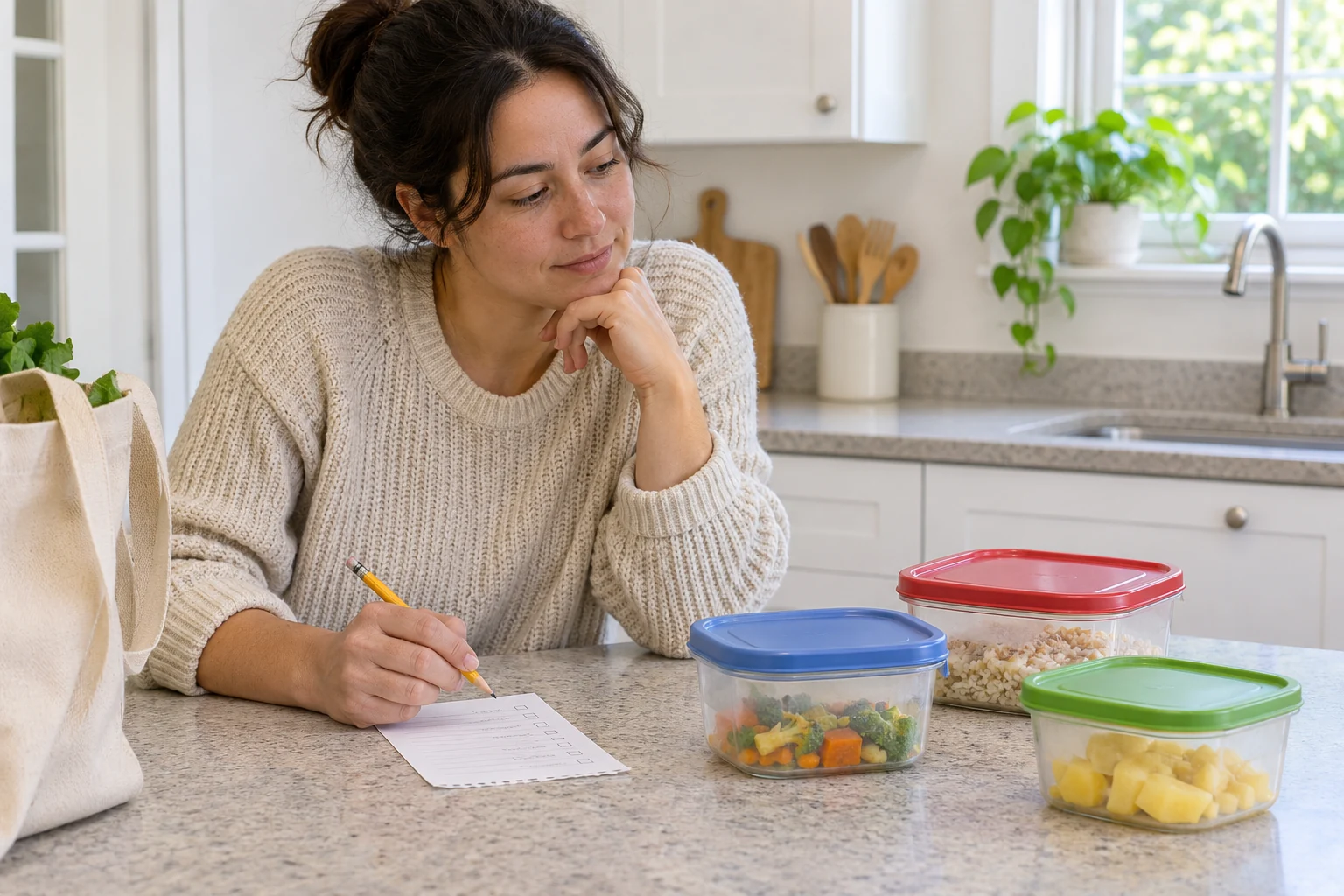
Illustrative household planning scene; no food-safety assessment, purchase or measured savings is shown.
A food use-up plan starts with a practical question before the next grocery shop: what food already at home has a real, appropriate use? Look at the existing food and the meals people actually expect to eat, then revise the shopping list. Buying another storage set does not answer either question. Keep food safety as a requirement throughout, rather than treating a container or a handwritten plan as permission to eat something questionable.
This guide concerns the purchase decision after a household checks what it already owns. It supplies no recipe, storage deadline for a particular dish or assessment of anyone's food. The two container offers provide physical context, without a claim that either set prevents waste, pays for itself or makes an unknown food safe. An actual use-up decision still needs the food's identity, handling history and applicable guidance.
Begin with what is already available
Imagine Lin is preparing a grocery list for the next few days. A covered container in the refrigerator reminds her that the household already has something she had intended to buy again. This is an invented situation, not a reported storage trial. Before changing the list, she needs to identify the contents and establish whether they remain appropriate to use. The scene does not assume that recognizing a familiar container answers the food question.
Keep an unknown item out of the proposed meal until its question is resolved. In Lin's example, a family member may know what the container holds and when it was prepared, or may know only that somebody put it there. Those are different answers. An uncertain recollection should stay uncertain. Do not turn an empty space on a note into a guessed date simply to make the grocery plan look complete.
EPA's Preventing Wasted Food at Home page recommends checking the refrigerator, freezer and pantry before shopping and planning around food that needs using. It connects the list to meals the household will actually eat, including meals away from home and intended leftovers. It also warns that a large-quantity promotion saves money only when the food gets used before spoiling. Its storage and preparation advice keeps food-safety conditions attached. This article adopts that planning principle without claiming a particular household saving or prescribing a preservation method.
Separate a food question from a shopping question
The FDA's Are You Storing Food Safely? guidance says refrigerated foods should be kept at 40°F or below and frozen foods at 0°F. It directs prompt refrigeration of perishables, attention to label storage directions and room for air circulation. It also warns that food can cause illness without looking, smelling or tasting spoiled. A fresh-looking photograph, a closed lid or Lin's desire to avoid waste cannot establish a food's condition or temperature history. Follow the guidance that applies to the actual item; this plan performs no safety assessment.
For a shared household, identify who is responsible for answering the food question. Asking before using another person's meal can also prevent a different mistake: removing something that was already reserved for their lunch. Lin can note that an item belongs to someone else and leave it out of her proposed grocery substitution. Ownership and storage suitability are separate matters, and both can remain open without forcing a decision.
Do the planning from notes and ordinary brief checks, rather than leaving perishable food on the counter while discussing every possible meal. This guide gives no new holding allowance. Keep the applicable handling instructions in force while working out what to buy. If a food cannot be cleared for its intended use through appropriate information, do not make a grocery reduction depend on it.
Give the proposed use a real place in the week
Once the relevant food information supports the intended use, ask who actually expects to eat it and at which meal. Lin may have written lunch beside an item without noticing that she will be away that day. A real place in the household schedule is more useful than an indefinite promise to get to it. The example assigns no safe storage interval; the food guidance governs whether that opportunity is appropriate.
Ask the people involved before counting their appetite as part of the plan. A family member who expects to eat elsewhere has not agreed to finish the food at home. Keep that answer with the proposed opportunity rather than assuming everyone will adapt to a purchase that has already been made. This is an ordinary household conversation, not a prescribed meal schedule or portion recommendation.
Lin can now compare the intended meal with the shopping list. If the existing item genuinely covers the same need, she can remove the duplicate entry. If it covers only part of the intended meal, she should name what is still needed instead of crossing out an entire group of ingredients. Use the actual recipe or meal requirements where relevant. This guide does not invent quantities or treat two differently named foods as interchangeable.
Keep the reason for a changed entry understandable to the person who shops. An unexplained crossed-out item may be added again because someone thinks it was removed by mistake. A short note such as already planned from home can explain the decision without turning the list into a detailed inventory system. Confirm that the note refers to the food actually reserved for that occasion, rather than an earlier container that is no longer available.
Read dates without turning them into a verdict
The FDA's How to Cut Food Waste and Maintain Food Safety explains that quality-based date wording is not uniform in the United States. It supports Best if Used By as a quality phrase and distinguishes infant formula from the general discussion. It recommends contacting the producer about food quality, safety or labeling questions and using appropriate storage information. A date label should therefore remain attached to its actual product and meaning. This article does not convert a quality date into either a universal discard deadline or clearance to eat an item with an uncertain history.
Keep the package when its wording matters to the decision. If someone transcribes a date into a household note, identify which date it was and which food it belongs to. A number separated from its label can become misleading when the note is read later. Lin's planning page is meant to help the next grocery choice; it is not a substitute label or a new storage instruction.
Keep the container purchase separate
The Rubbermaid Brilliance twenty-piece account shows a main set of ten covered vessels and packaging that counts containers and lids together. Its own model field is SAP_1990616. Lifestyle frames also depict divided styles, so the complete gallery does not authenticate the exact delivered assortment from every scene. Food, cutlery, a board, dishwasher and microwave are demonstration context, not supplied stock. This plan adopts no advertised freshness or appliance-use result.
The Ello ten-piece meal-prep account describes five containers with locking lids. Its package frame explicitly identifies five containers plus five lids and item 1338515. The colored sleeves and latches belong to those container assemblies. Those observations do not test sealing, authenticate material performance or establish a food-storage period. Read the delivered product's actual care and use information before choosing it for a particular job.
If Lin considers a new set, she can name the storage problem it would address. Perhaps the household lacks an appropriate vessel for an already established task; perhaps no additional vessel is needed. Keep that question distinct from the food purchase she has just reviewed. This article provides no reason to buy more containers merely because a use-up note exists, and no assurance that an advertised set will fit a particular cupboard or food.
Revisit the decision when the week changes
If the intended meal falls through, return to the actual food information and the revised household schedule. Do not simply move the same note to a later day. Lin might need to change the grocery plan again, seek applicable storage guidance or leave the proposed substitution unresolved. No new safe holding period follows from a cancelled appointment or an empty evening on the calendar.
Before the next shopping trip, check whether the food reserved in the plan is still available for that purpose. Someone may have eaten it, used an ingredient elsewhere or changed their meal arrangements. Update the affected grocery entry from what is now known. The point is to prevent an old note from silently controlling a new purchase after its underlying situation has changed.
The published slow cooker batch setup guide begins with recipes, appliance requirements and the sequence of two planned dishes. It does not assess the existing food in Lin's refrigerator. Keep a new cooking project separate from this review of what the household already has.
The meal prep container station guide concerns filling space, lid pairing and the movement of clean and filled containers. That workspace decision does not decide which grocery item can be left off the next list. The present plan begins with the food and its appropriate use.
A food use-up plan produces a specific purchasing decision, rather than a promised saving. Identify the existing food, keep its suitability question with applicable guidance, give its proposed use a real household opportunity and revise the relevant shopping entry. Leave unresolved information visible. A new container, a smaller grocery list and a safe meal are different outcomes; none should be claimed merely because the planning page is finished.
Read any later payment choice on its own terms
If a later visit to republeq.com displays cryptocurrency payment, inspect that actual checkout before choosing USDT or another offered asset. A payment preference supplies no evidence about food safety, household waste or whether a new storage set is necessary. Identify the exact container offer and selected option before reading the quantity, delivery and return information. Keep the account's containers-and-lids wording with the offer; do not turn a headline piece count into a different delivered quantity. Likewise, demonstration food and kitchen equipment do not become part of the purchase. Where a transfer requires a network, use the network, recipient and amount shown for that current checkout. An asset name alone cannot settle a missing network, and instructions saved from an unrelated order do not establish the destination for this one. Leave payment unsubmitted if an essential detail remains unclear while asking through the relevant support route. Confirm who is placing the order and who can follow up if the transfer and merchant result need reconciling. After an actual submission, retain its transaction reference with the order details. A pending screen is not a dispatch receipt, and a payment reference alone does not verify the contents or condition of a delivered set. This article has not tested checkout, verified settlement, calculated charges or established that all shoppers will receive the same payment options. USDT remains conditional context for a separate purchase. Keep the grocery use-up decision grounded in the food and household plans, and make any equipment order from its own current product information and payment instructions. Neither choice establishes a measured saving or replaces the applicable food guidance.