Home & Living
food container vented lids: check the intended mix
A set description can specify vented lids for only part of an assortment. Compare the actual lid forms with that statement while keeping delivery and use questions separate.
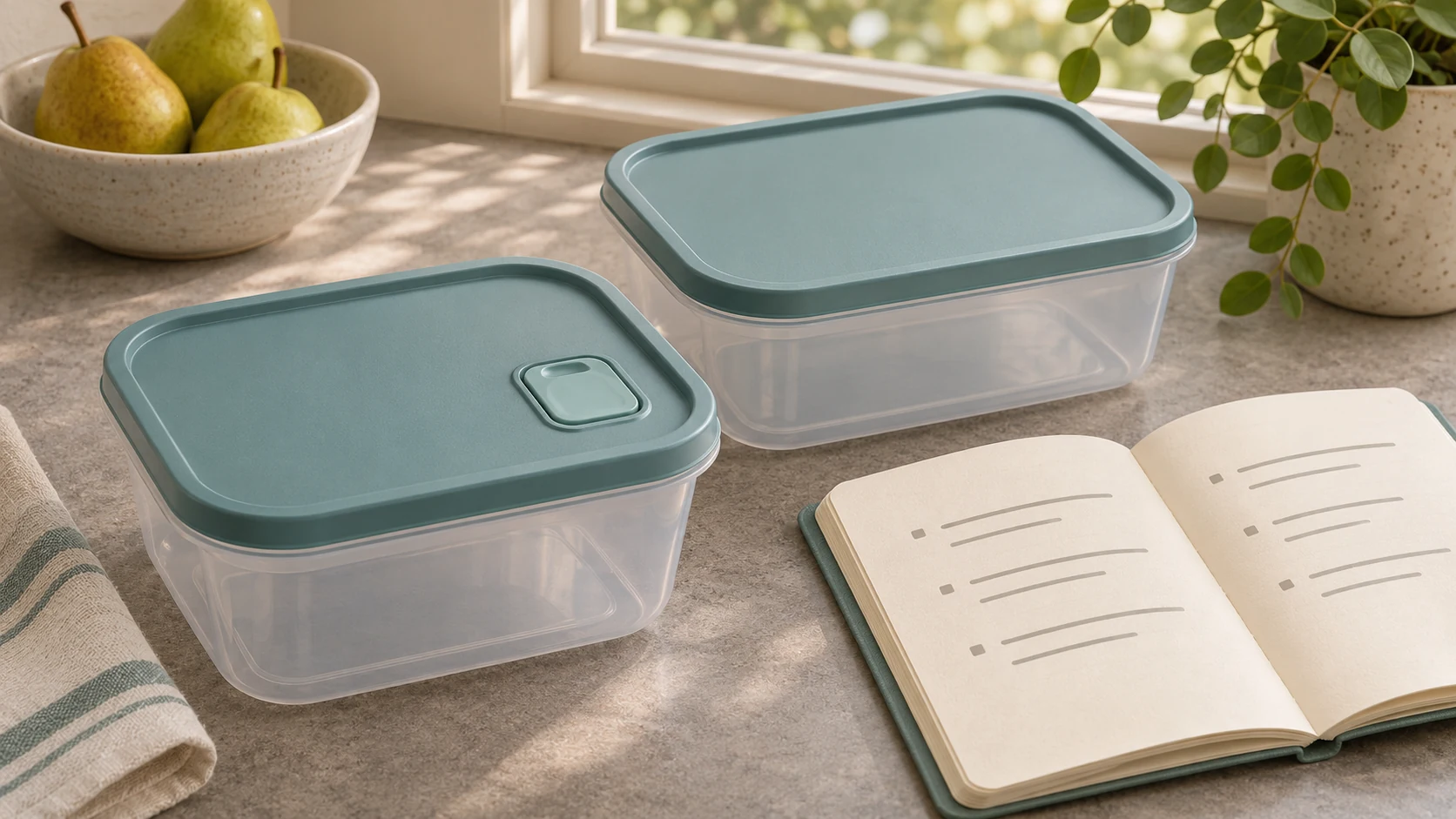
When a set includes food container vented lids, an intact plain lid can leave you wondering whether a feature is missing. Start with what the description says about the selected assortment. A statement covering particular lids needs a different question from a promise covering every lid.
This guide helps you frame that question before deciding whether the assortment meets your needs. It does not test a vent or provide a heating procedure. Keep the advertised feature, the parts actually received and the performance of a particular part as separate questions throughout the enquiry.
Describe the lid you are asking about
Write down the observation in ordinary language: an intact lid appears plain beside another lid with a visible vent feature. Identify which lid you mean in a photograph. Leave its intended function unconfirmed until you can connect it with the applicable product information.
A useful opening question is whether the selected assortment was described as including a vent on that particular lid. That gives the supplier something specific to answer. Calling the whole set defective at this stage can leave the actual disagreement unclear: the issue might concern the description's coverage, the selected option or a particular part.
Keep your expectation in the same note. For example, you might have chosen an assortment because you wanted a vented lid for each container you intended to use. That is your purchase requirement. Record where you thought the offer promised it, and allow the answer to establish whether that reading applies to your order.
Read the complete feature statement
The Easy Find Lid assortment account uses vented-lid wording in its title. Its description ends its component list with “plus lids (three vented).” That qualifier matters when asking whether every lid in the described assortment is meant to have the feature.
The Flex & Seal assortment account describes soft, flexible lids and shows a different lid design. Its account cannot establish the feature coverage of an Easy Find order. These are two separate retail accounts, with no inspected shipment, authenticated factory identity or confirmed fulfilled quantity established here.
Read the title together with the component statement for your exact selection. Retain both if they seem difficult to reconcile. You can ask the supplier to explain which parts a feature statement covers without deleting the broader wording that created your expectation.
Keep plain food container lids identifiable
When discussing plain food container lids, identify the particular photographed part instead of relying on a general name for the set. Say which visible feature you are asking about. A description such as “the lid at the left of my photograph” can support the enquiry if the photograph actually shows that arrangement.
Use a whole view to establish which part a close view belongs to. If your photograph does not show the relevant surface, take a view that does, without altering the lid. Leave any unseen detail unconfirmed. This guide supplies no procedure for opening, modifying or testing a vent.
Do not substitute a picture from another assortment when you need an answer about your own part. You may include it as a clearly identified comparison, but explain that it comes from another account. The supplier should be able to tell which image shows your concern and which image merely explains what prompted the question.
Separate the questions before contacting support
A physically absent lid presents an inventory question: which expected part was not received? An intact plain lid presents a feature-coverage question: does the applicable description promise a vent on that part? A visible vent whose function is uncertain presents another question. Record the situation you actually observed.
For an absent part, retain the applicable order and contents information. For an intact plain lid, retain the wording that created the feature expectation. For uncertain function, identify the part and ask for the applicable information. You can report more than one concern, provided each remains identifiable in the message.
A response to one question may leave another open. An explanation that some lids are plain would not establish what was physically delivered to you. An inventory response would not demonstrate vent performance. Keep unresolved questions in your own record until the responsible party addresses them.
Read mixed container lid designs within one account
Compare mixed container lid designs within the exact assortment you selected. Check whether the description identifies a subset for the feature you want. Keep any unanswered mapping between the described subset and a particular lid explicit, rather than assigning it from an unrelated illustration.
If the supplier explains which lids the statement concerns, retain the explanation with its order or product reference. If it answers only for the assortment in general, ask whether that answer applies to your selected option. A useful clarification needs a clear connection to the purchase you are considering or questioning.
You may decide that selective feature coverage suits your needs, or that you require something different. State that decision as your requirement. There is no need to turn a preference for a vent on each relevant lid into a performance claim about a set you have not tested.
Keep adjacent buying decisions in their own place
If your question concerns how many usable container-and-lid pairs you need, the container pack-count and portion guide addresses that planning decision. The question here concerns whether an intact lid falls within an advertised feature statement. It does not calculate a meal-preparation workload or certify a pack quantity.
If you already own a base and want another lid, the replacement food-container lid guide concerns identity and fit. A clarification about which lids have vents does not establish that a separately offered lid fits an existing container. Ask the question that belongs to your actual decision.
Keep those references separate in your message if more than one issue matters. For example, you can first ask what the selected assortment includes, then ask whether a particular feature applies to a named part. You do not need to purchase a replacement merely to resolve an unclear description.
Write a precise enquiry and retain the answer
Here is an original enquiry example, with no supplier answer assumed: “I am considering the selected assortment shown in this order reference. I read the vented-lid title and the component statement. My photograph identifies the intact plain lid I am asking about. Is that lid included in the vented subset described for this selection?”
Replace the example's references with your actual information. If you have no order yet, say that the question concerns a proposed purchase. If the photograph is a merchant image, label it accordingly. Avoid presenting a planned order as a received shipment or a comparison image as your own inspected part.
Read the reply for the specific connection you requested. A response may identify the relevant subset, request another reference or leave the point unresolved. Record what it actually says, including any limitation about the selection or part to which the answer applies. If it answers a different question, follow up by naming the remaining feature-coverage issue without treating the earlier acknowledgement as a determination.
Before choosing what to do next, compare the clarification with the requirement you recorded at the start. If you need more information, retain that open question. If you decide to pursue an order-related remedy, use the responsible service's applicable process; this guide establishes no entitlement, return deadline or outcome.
Make an incomplete answer easy to follow up
Consider a hypothetical reply saying only that the assortment contains vented lids. That repeats the broad feature statement but may leave your identified lid unanswered. Your follow-up can point back to the same photograph and ask whether the reply covers that particular part. There is no need to introduce another product or enlarge the question.
In a different hypothetical reply, the supplier might explain that the description concerns a subset but ask which selection you mean. Supply the missing selection reference if you have it. If you cannot establish that reference from your records, say so. An answer about an unidentified option remains limited even when its explanation sounds plausible.
Suppose the reply clearly addresses your selected assortment and your identified lid. Record that connection before moving to a new question. If your remaining concern is whether the feature meets your intended use, request the applicable information for that concern. The original description enquiry alone supplies no operating instruction or test result.
These examples illustrate how to keep a conversation specific; they report no actual supplier statements. In your own record, preserve the wording you received rather than substituting an example's wording. Include the reference needed to understand a later clarification, and distinguish a proposed explanation from an answer the responsible party has actually confirmed.
When another person helps with the purchase, share the remaining question as well as the available answer. They should be able to see whether the feature issue is settled for your selection or whether further information is still needed. This avoids making an order decision on a conclusion your correspondence never established.
Keep purchasing and payment decisions conditional
If you decide to buy through republeq.com after resolving the lid-feature question, check the payment options actually offered for that order. Treat any USDT payment option as conditional on the live checkout and the responsible payment service's instructions. This guide does not establish that either linked assortment currently accepts cryptocurrency, that a particular network is available or that a purchase has been completed. Confirm the selected product, order amount and payment details in the actual service before authorizing a transaction. Product-description clarification and payment confirmation answer different questions, so retain the supplier's feature explanation alongside the relevant order information. If a service presents a wallet address or network, use the exact current instructions for that transaction and seek clarification from the responsible service when anything is unclear. Do not send a second payment merely because an order page has not updated. An uncertain payment needs a determination of its actual status before another transaction is considered. Never share a wallet recovery phrase or private key with someone helping identify a lid. A product enquiry requires the relevant item or order reference, not access to your wallet. Retain the actual payment and order records if you proceed. A payment receipt does not establish which parts arrived, whether a lid has a particular feature or whether a vent works as intended. Those questions still concern the applicable assortment information and the actual goods. This article reports no inspected delivery or completed cryptocurrency transaction. Keep any unresolved feature or payment state visible in your records, and obtain the relevant answer from the party responsible for that part of the purchase.