Troubleshooting & Repairs
EPS10HC won't run: check matching operating instructions
Match the EPS10HC operating sheet for a silent sharpener, tray safety condition and conditional thermal reset, keeping replacement questions separate.
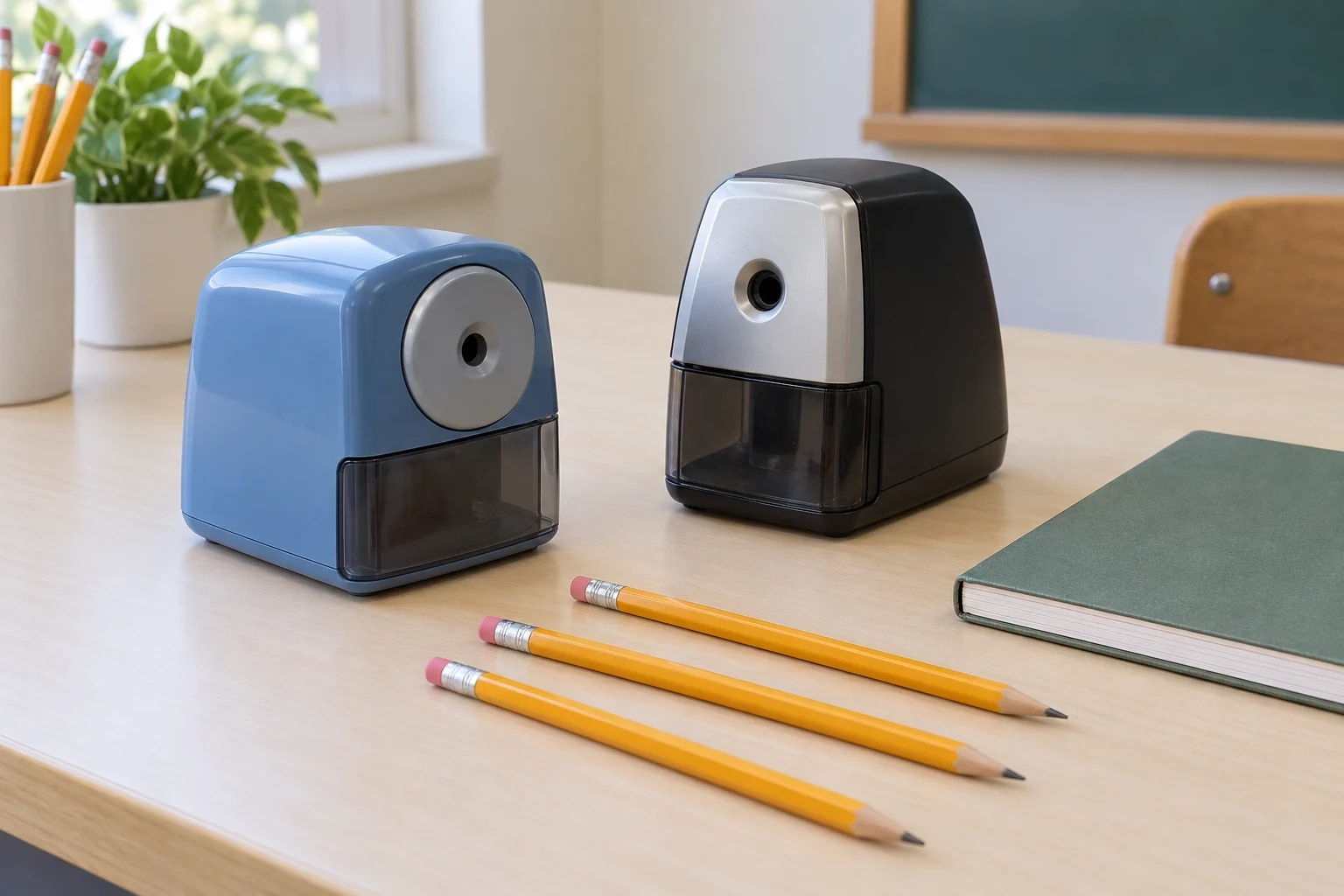
When an EPS10HC won't run, first identify what happened at the desk. A machine that stayed silent after someone emptied it presents a different starting point from one that stopped during a long session. Neither observation identifies the internal fault. Match the label on the actual unit to its operating instructions before applying a remedy.
This guide uses the BOSTITCH EPS10HC and a separately listed Westcott iPoint Evolution Axis to explain that model boundary. The operating guidance below belongs to the matching BOSTITCH instructions. The Westcott listing helps frame a replacement enquiry; it supplies no shared reset procedure. Keep the present fault separate from the question of what to buy if service becomes necessary.
Identify a silent start or a stop during use
Begin with the last ordinary event you actually observed. Perhaps the machine worked before the desk was cleared, someone removed the shavings container, or several people sharpened pencils in succession. Ask the person who last used it what happened. Their answer can tell you which event came first; the internal cause may still be unknown.
Separate silence from poor sharpening. A pencil that enters and receives an uneven point has produced a different symptom from a sharpener that makes no sound. A pencil that cannot enter presents a fit question. Changing the description midway through an enquiry can lead someone to answer a problem you do not have.
For example, saying that the sharpener stopped after a class used it conveys more than saying it is broken. Add whether it has remained unused since then and whether anyone has already taken an action. Report only what someone can actually identify. If nobody knows how long the unit has been unused, say so in the enquiry.
Match the actual machine before using instructions
The BOSTITCH EPS10HC offer identifies a blue classroom electric pencil sharpener, SKU sku-520330483 and UPC 013135570010. Keep EPS10HC attached to a service request. Another BOSTITCH model number can require a different operating sheet even when the housing looks familiar.
Read the machine's own label in a position that does not require operating or dismantling it. If that label is missing or illegible, obtain help identifying the unit before choosing model-specific guidance. A shopping page can identify the offer you bought, but a nearby box or a remembered colour may belong to another appliance.
Shared classrooms sometimes contain more than one sharpener. Keep the affected one associated with its actual instructions while the question is being resolved. A spare unit can let the activity continue under its own instructions. Moving every pencil to another machine should not be described as repairing the first one.
EPS10HC shavings tray and thermal switch guidance
BOSTITCH's linked EPS10HC/EPS12HC operating sheet, revision 167153REVA 02/05, specifies a standard 120 V AC outlet and unplugging the unit in a malfunction. Its safety device prevents operation unless the shavings receptacle is firmly in place. For the EPS10HC shavings tray, follow the matching sheet with power disconnected; never bypass its safety device. For thermal switch guidance, if overheating has activated that switch, the sheet allows approximately 20–30 minutes for cooling and automatic reset. That condition does not diagnose every silent unit. At the sharpening cycle's end, changed motor sound and reduced resistance indicate completion; apply no extra force and remove the pencil.
Use the complete applicable sheet beside the actual machine. If the present unit or its supplied instructions differ from that linked revision, resolve the difference with the manufacturer. This article supplies no case-opening, cutter-removal or internal electrical repair method. An unclear part or an unresolved symptom is a reason to seek the correct service guidance.
Keep the time spent waiting separate from any conclusion about the cause. A machine remaining silent after an interval does not establish which component failed. A machine later running does not prove that every earlier interruption was thermal protection. Describe the observed result, including whether the original problem returns, when asking for support.
Continue the writing activity while the fault stays unresolved
Take the affected machine out of the shared activity while its malfunction is being addressed. Tell the next adult responsible for the room which unit is involved. This avoids a second person independently restarting the same enquiry or treating a machine left on a desk as ready for the next group.
Prepare enough already sharpened, suitable pencils for the immediate work if they are available. For a drawing task, a small selection that participants can share may be sufficient while the equipment question is handled. A spare sharpener remains subject to its own limits; the fact that it is available does not establish suitability for every pencil in the room.
Decide whether sharpening is actually needed during this particular activity. A writing exercise may continue with usable points already present. A task requiring a very fine point may need a suitable alternative or a different schedule. Make that decision from the work and supplies in front of you, without claiming the interrupted machine is ready.
Assign the group and the service enquiry to different adults when staffing allows. One adult can continue helping the group while another handles the equipment enquiry. The service question should not require several pupils to recreate the fault. An account from the last ordinary use is enough to explain the initial observation.
When the symptom is pencil fit or a broken point
If the actual problem is that a pencil will not enter, use the pencil diameter and short-pencil fit guide to understand which dimensions an offer must specify. It examines different sharpener offers. Their numerical limits remain attached to those products and do not establish the accepted range of either machine discussed here.
A point breaking during writing also needs a description of where it broke. A wood-cased pencil leaving an electric machine and a mechanical pencil failing to feed replaceable lead are different equipment questions. Keep the actual writing instrument identifiable before looking for a maintenance method.
The Kuru Toga Metal lead-jam guide uses a matching mechanical-pencil sheet for its refill and service discussion. It can help someone whose real problem concerns that pencil. Its grip, slider and refill instructions provide no procedure for an electric sharpener.
Identify the affected item before deciding which equipment needs replacing. If a pupil handed over a pencil because no writing point emerged, ask which tool was being used when that happened. The classroom's electric sharpener may never have been involved. Identify the affected item before adding another appliance to a shopping list.
Ask about the Westcott offer as a separate replacement
The Westcott iPoint Evolution Axis offer names a black/silver heavy-duty electric pencil sharpener for office or school use. Its description lists a multi-hole dial and helical 10-blade technology. It also makes speed and noise claims. Those statements do not supply a troubleshooting sequence or an independently measured comparison with the EPS10HC.
If replacing the present machine becomes the chosen outcome, ask for the Westcott model's applicable instructions before relying on a particular maintenance arrangement. State the intended pencils and how the machine will be shared. Ask which requirements apply to that exact offer. Keep answers about operating limits distinct from general suitability for a school.
A replacement can solve the need for a usable sharpener without identifying the old one's fault. That may be a sensible practical decision when service information or time is limited. Describe it honestly as a replacement choice. It does not establish that the previous motor was damaged or that a different model would never experience an interruption.
Think about who will handle the new equipment between groups. The adult responsible for supplies needs access to the actual instructions, and the people using it need an arrangement they can follow. A purchase selected for one supervised room may require a different plan when moved to a shared staff area. Resolve that use question before ordering another unit.
Plan the next session from the work people need to finish
Consider the moment sharpening is needed. If everyone arrives with an unprepared pencil at the same time, one shared appliance becomes a queue even when it is working normally. Preparing identified suitable supplies before the group arrives can reduce that interruption. This is a change to the activity's organisation, without a new claim about the machine's permitted workload.
For a small homework table, the immediate need might be one usable pencil for each person. For a drawing session, different colours may need to remain available while other pupils work. Place the ready supplies where participants can find them and keep pencils awaiting attention in a separate location. Someone should be able to choose a usable pencil without handling the unresolved appliance.
A busy classroom description does not supply a numerical continuous-use allowance. Ask the manufacturer for the exact model's applicable limits if the intended workload depends on repeated sessions. Do not invent a duty cycle from the size of the group, the motor's marketing language or the time another model remained in use. Where an operating limit exists, plan the session around that actual instruction.
Review whether the alternative arrangement worked for the people using it. A shortage of ready pencils is a supply problem you can address before the next session. Repeated difficulty accessing a shared station is a layout or supervision question. Neither observation requires another attempt to demonstrate the original electrical fault. Prepare more suitable pencils or change access to the shared station according to the difficulty you observed.
Give support a precise unresolved question
A useful service enquiry can begin with the exact model and a plain account: the machine remained silent at the start of use, or it stopped during a session and has not been returned to the activity. Add the applicable actions already taken and their observed results. This gives support a specific starting point without asserting an unconfirmed diagnosis.
If someone has already opened the housing or used an improvised method, disclose that fact accurately to the person advising you. Do not continue the same intervention because it has already begun. The appropriate next action depends on the actual condition and qualified guidance, which this guide cannot establish from a catalogue listing.
Ask what the manufacturer needs to decide between service and replacement for the identified unit. Keep any requested purchase information tied to that machine. A response about another model, or one that repeats general advertising without addressing the symptom, leaves the service question open. Request clarification about the specific unresolved behaviour.
When the EPS10HC won't run, the useful outcome is an applicable action or a service decision tied to the actual unit. Return it to shared use only when its condition and applicable guidance support doing so. Until then, keep the activity supplied through an identified alternative and leave the original symptom accurately described.
Conceptual EPS10HC won't run cover with complete generic inactive sharpeners and separate pencils; no exact models or repair result is shown.