Home & Living
Check why an entry mat still lets dirt inside
A practical way to trace grit beyond a front-door mat, test placement and cleaning, and decide whether a separate indoor runner has a role.
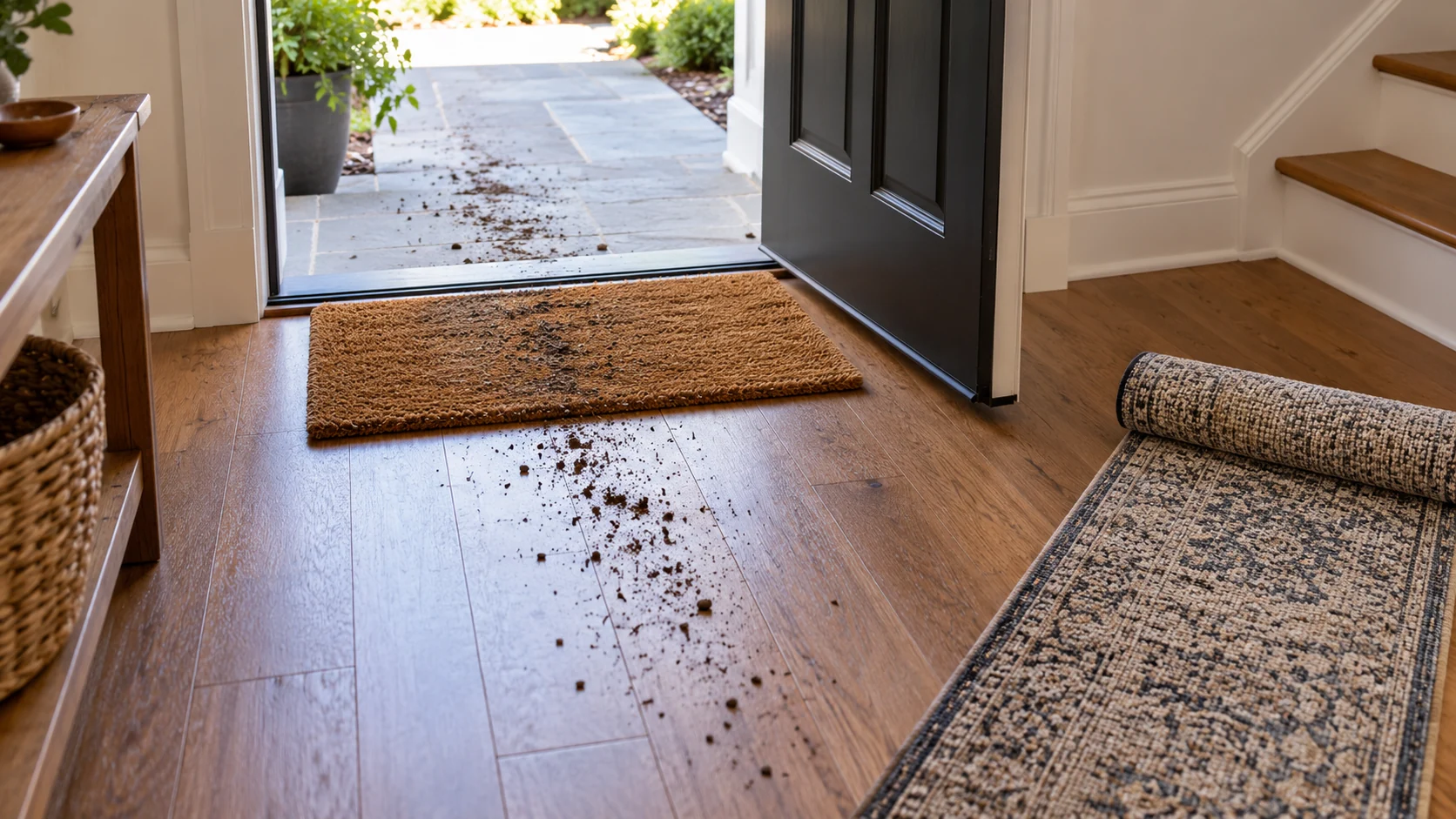
Check why an entry mat still lets dirt inside by following the marks, not by buying a larger mat immediately. Look at the first place shoes land, the next few steps, and the point where grit or damp marks begin. A front-door mat may be outside the walking line, too small for the usual pause, or simply holding debris that needs to be removed. The visible trail helps you separate those possibilities before comparing another product.
This guide considers a single coir door mat and a separate indoor entry runner as examples of two positions in an entry. Their listings describe materials, sizes, and intended uses, but neither listing tests your floor or the way people cross your threshold. You may need to move or clean an existing mat, leave the arrangement alone, or ask a seller a specific compatibility question. The goal is to identify the failed part of the route, not to promise that another layer will stop every tracked mark.
Find where the marks begin
Start with a dry, reasonably clean entry floor so fresh marks are easy to identify. After ordinary use, look at the threshold, the current mat, and the first stretch of floor beyond it. Do not infer the source from the dirtiest spot alone. A mat can collect grit while a few particles continue past it. Note whether the trail begins at one edge, follows a turn toward storage, or appears only after someone crosses the room without stepping on the mat.
Watch the usual first step. People may step across a small mat when carrying bags, or turn immediately toward a coat hook. Mark that route on a quick sketch of the entry. Include the door swing, shoes left nearby, and any furniture that changes where someone can stand. You do not need a precise laboratory measurement. You need to know whether the mat occupies the spot where shoes actually pause and whether the next steps leave its surface.
Separate dry grit from a wet patch. Damp marks after rain may come from shoes, an umbrella, or another object placed near the door. If a wet area starts under stored umbrellas, use the published guide on an umbrella stand drip tray and wet entry floor to trace that water path. Do not credit or blame a doormat for water that never crossed it. For shoe tracking, keep observing the steps immediately before the mark appears.
Inspect the mat already in place
Lift the current mat only as its care instructions allow and check what it has collected. A surface packed with grit cannot be judged from a clean product photograph. Follow the mat maker's cleaning directions, then put it back flat in its normal place. Observe a later ordinary entry, rather than claiming one quick shake solved the problem. If the marks change after cleaning, record what changed; if they do not, continue to placement and walking-path questions.
Look at the mat's position relative to the door and first step. If most shoes land beside it, moving it into the actual landing area may be more useful than choosing a different texture. Check whether the door can open and close normally with the mat in that position. Do not force a thick edge under a door that catches it. If the mat folds, shifts, or leaves a curled corner, note that separately instead of assuming its advertised backing will hold on every floor.
The floor surface matters to the backing question. A seller may describe a mat as slip resistant, but that is not an independent test on your tile, wood finish, or other surface. Check the product's own care and placement guidance before using a mat there. The guide on felt rug-pad material and size labels explains how to read an underlay's stated material and dimensions; it does not turn an unknown doormat backing into a suitable rug-pad recommendation.
Read the coir door mat as one first-step option
The coir front-door mat listing presents one 30-by-18-inch mat with a printed greeting. Its Product description calls the surface natural coir and the backing slip-resistant PVC rubber. The native gallery shows a whole rectangular mat and a close view of the fiber and backing. Those are exact-offer details, not proof that the mat will capture the marks you saw or stay put on your floor.
Compare the stated footprint with the first-step sketch. The 30-inch side may look broad at the door, but the relevant question is whether shoes actually land and pause within the mat's placed area. A person turning immediately after the threshold may put the next step beyond its 18-inch depth. That does not make the product defective. It tells you that a small first-step surface alone may not cover the walking line you observed.
If you already own a coir mat of similar shape, do not assume this exact listing is a replacement solution. First check whether the current mat is clean, flat, and located where people step. Compare its real dimensions with the listed 30 by 18 inches only if size is the unresolved issue. A new greeting or a different color does not change the walking path. The seller's backing claim also needs confirmation against your floor before you rely on it.
Read the indoor runner as a follow-on option
The SHIYOU indoor entry runner listing identifies a long 20-by-59-inch mat for an indoor route. The Product text calls it absorbent and washable, with a low-profile form, while the native gallery shows a whole patterned runner in an entry. Those are seller descriptions and photographs. They do not establish how much moisture it will hold, whether it will stay flat in your home, or whether your shoes will cross it.
Set its stated outline on the floor with removable markers before treating the runner as an answer. Put the long dimension along the observed walking route, then check whether the door swing, a stair, or nearby furniture interrupts that placement. If the trail turns sharply, a straight runner may miss part of it. If the floor remains dry and the problem is only grit at the threshold, added absorbency may not address what you observed. Keep the question tied to the actual marks.
The gallery includes a seller graphic about removing a fold line, and the Product description warns that temporary creases may appear on arrival. Keep that detail in mind if the delivered runner does not lie flat immediately. Follow the exact item's instructions rather than weighing down a corner or applying an unapproved treatment. A temporary crease and a continuing dirt trail are separate observations. You should not call either one resolved because a picture shows the runner flat in a staged room.
Choose a change that matches the trail
Use the observations to decide on one change at a time. If shoes miss the current mat, test a sensible repositioning within the door's safe clearance. If the mat holds visible grit, clean it as directed and observe the next ordinary use. If marks begin after the first step despite a clean, well-placed mat, a separate indoor walking surface may have a role. Write down that reasoning so the decision is based on the trail rather than a general claim that two mats are better.
Check the available space before assigning a follow-on runner. Mark where its leading edge would start and where the far end would stop. Make sure you are considering the entire walking line, not only the attractive section of a product photo. A narrow entry might have a doorway or cabinet that changes the route. If the proposed runner cannot lie in the space without interfering with ordinary movement, leave it unassigned and look for another way to address the observed source.
Measure the existing mat and the clear floor beyond it with the same tape. Record which dimension lies across the doorway and which lies along the route indoors. A 30-by-18-inch first-step mat and a 20-by-59-inch runner cannot be compared by area alone because they occupy different positions. If the next step lands to one side, a long runner placed straight ahead could miss it. Sketch the route with both proposed outlines before asking whether a second surface has a useful location.
Some entries have more than one kind of mark. A wet area beneath an umbrella stand can coexist with dry grit beyond the doormat. Make two notes rather than buying one product to answer both. The umbrella's water path belongs to its holder and tray; the grit trail belongs to shoes and the landing zone. Keeping them separate lets you tell whether a changed mat placement helped the shoe problem even if the unrelated wet patch remains.
Neither exact offer should be treated as universally safe for every floor finish. The coir mat's backing is described as slip resistant, and the indoor runner is marketed with a non-slip backing, but those are seller claims. Check current floor-care instructions, the exact mat's placement guidance, and the delivered backing. Do not add a rug pad or adhesive merely to make a purchased mat stay put without checking whether those materials suit both the mat and floor.
Check the result in the actual entry
When you move a mat or receive a new one, check the whole item against its listing: count, size, backing, and care directions. Lay it only where its instructions allow. Open the door through its usual swing and walk the ordinary route. Watch for catching, folding, or shifting before focusing on dirt control. A mat that obstructs the door or bunches underfoot needs its placement resolved first, even if its size matches the paper outline.
Observe later entries under comparable conditions. If you cleaned a mat on a dry day, a rainy arrival tests something different. Note the weather, the first step, and the position of the marks. You do not need to declare success or failure from a single staged walk across a spotless mat. The practical result is whether the specific change reduced the trail you identified without creating a new fit problem in that doorway.
Keep a short record of the route and the change you tried. It will help if the mat is moved, the door hardware changes, or the household starts using another entrance. The two listed products illustrate a short first-step mat and a long indoor follow-on surface. Your own entry may need one, both, or neither. The marks and the actual fit determine the next action.