Crypto Commerce
Element EFD8027EBW electric dryer vs VIVOHOME 3.5-cu-ft dryers for laundry space
Compare Element EFD8027EBW electric dryer by load size, electrical and exhaust requirements, controls, and laundry-room fit.
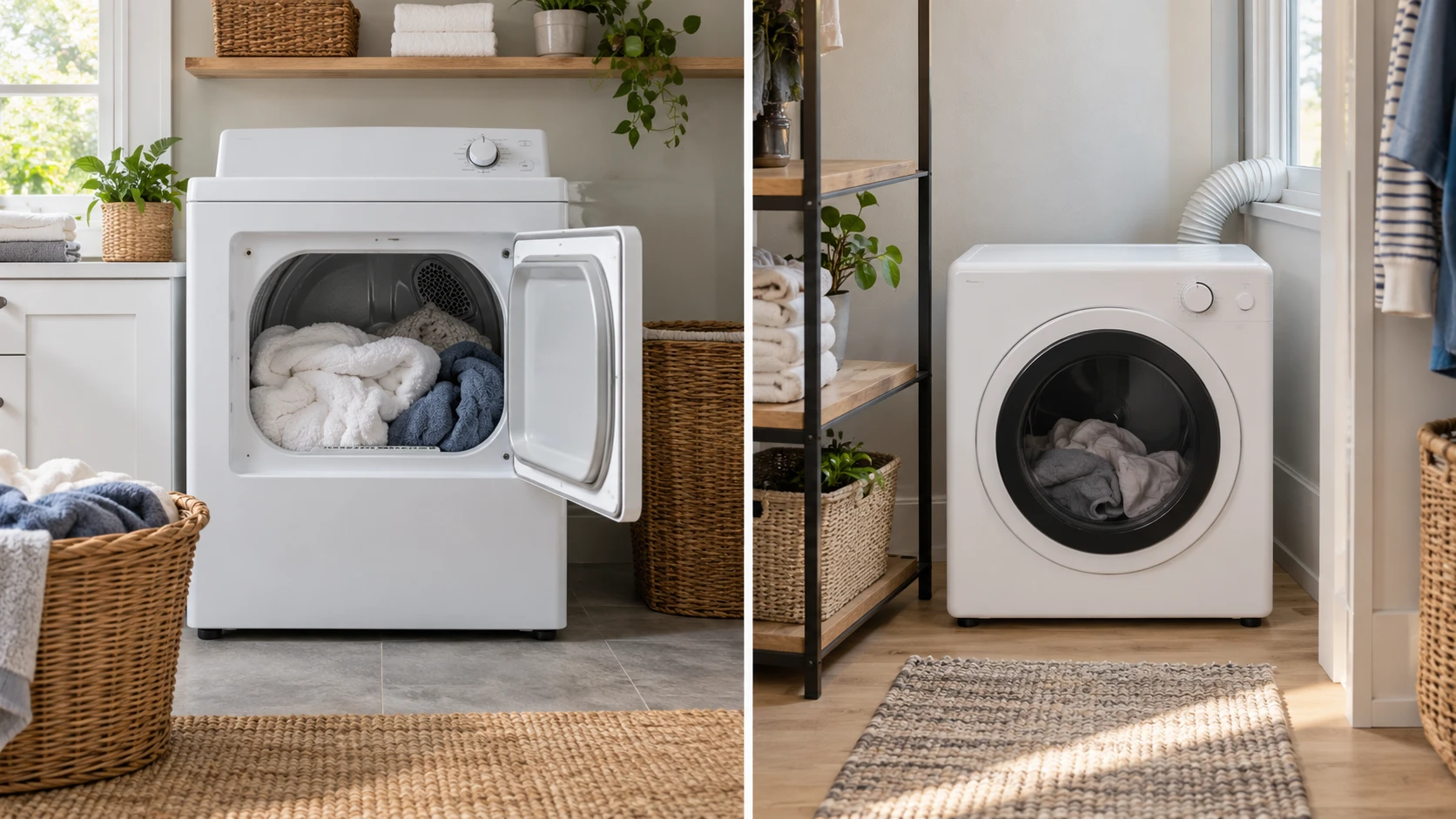
The Element EFD8027EBW electric dryer is listed with an 8.0-cubic-foot drum, steam function, moisture sensing, wrinkle care, and an ENERGY STAR certification claim. The VIVOHOME X002IDZO8V is described as a 3.5-cubic-foot portable dryer with a 13-pound load claim and 120 V electrical rating. Those numbers put the machines in different laundry plans. A household drying large bedding or several days of clothes at once has a different space problem from someone fitting a compact dryer into a small apartment. The first decision is whether the room and utilities support the machine, then whether its load size matches the washing routine.
Measure the actual laundry area before comparing features. Include floor width and depth, door swing, access to the lint filter, space behind the appliance, and the path for moving it into place. VIVOHOME lists dimensions of 23.6 inches long, 18.9 inches wide, and 26.8 inches high, with a net weight of 57.3 pounds. Verify which side the listing means by "long" in the current drawing. Element's saved excerpt gives no exterior dimensions. Ask for its exact installation sheet, including clearances and door-open depth. An 8-cubic-foot drum does not tell you whether the cabinet will pass through a doorway or fit behind a laundry-room door.
Also check the room's rules before planning a purchase. A rental agreement, condominium policy, or building code may limit dryer exhaust, electrical changes, or appliance placement. A smaller machine is not automatically exempt from those requirements. If the laundry area shares space with a closet or living room, ask about the permitted ventilation and clearances for that exact model. Plan where the dryer will be serviced and where clothing will be sorted after a cycle. These everyday movements can reveal a poor layout even when the appliance itself fits between the walls.
The published guide on compact dryer 120V installation concerns a different model, but its electrical and placement questions are useful here. VIVOHOME's description specifies 120 V, 60 Hz and a 1500 W rating. Element's excerpt does not give a voltage, current, plug type, or circuit requirement. Do not assume it uses the same outlet as the compact machine because both are electric dryers. Check each manufacturer's current rating label and manual, then have the intended outlet and circuit assessed before ordering. A convenient socket is not proof of a permitted installation.
Compare loads that come out of the washer — compact dryer 120V installation
VIVOHOME lists a 3.5-cubic-foot drum and a 13-pound load. Element lists an 8.0-cubic-foot drum without a corresponding weight limit in the saved description. Drum volume and garment weight are different measures. A load of light shirts may fill the space before it approaches a weight limit; wet towels may be heavy before the drum looks full. Ask both manufacturers for their load guidance for the items you actually dry. The washer's capacity and spin performance also matter. A very large wash load may need to be split for the smaller dryer, while an almost empty full-size drum may not make the best use of its space.
Try a simple count. List the towels and bedding washed on the busiest day, then estimate how many dryer loads each machine would require under its manual's guidance. If a compact unit needs two or three cycles for the same wash, include the extra handling and time in the comparison. If the household washes small loads frequently, the larger Element drum may rarely be filled. The correct size is the one that fits the actual wash pattern while leaving enough room for clothes to tumble as directed, not the model with the largest printed cubic-foot number.
For a fair timing comparison, start with similarly spun laundry. A washer that leaves more water in towels makes either dryer work longer, and densely packed clothes may dry unevenly. Record the cycle used, fabric mix, and whether any items were still damp at the end. A manufacturer's cycle estimate may not match the household's actual washer and room conditions. If one machine must run twice for a single wash load, count the time needed to unload, separate, and restart the second load. That makes the comparison about the full laundry routine rather than one advertised cycle.
Bulky pieces deserve a separate check. A comforter or large blanket may fit through the door yet have too little room to move and dry evenly. Neither saved excerpt identifies bedding sizes or a tested comforter program. Ask the manufacturer about permitted bulky loads and compare their dimensions with your bedding. If some items must go to a laundromat regardless, include that in the household plan. A compact dryer may still handle routine clothes while occasional bedding is dried elsewhere; a full-size unit may be justified if bulky laundry is frequent and the installation supports it.
Trace the exhaust and moisture path — VIVOHOME X002IDZO8V portable dryer
VIVOHOME describes an adjustable exhaust vent. That does not say whether the unit may vent indoors, what duct material and length it requires, or where the exhaust can terminate. Follow the exact manual and local requirements; do not treat a portable label as permission to release lint and moisture into a room. Element's saved listing does not describe its venting or steam-water arrangement. Obtain those details before building cabinetry or placing the dryer against a wall. A dryer that fits electrically but has no approved exhaust route is not ready for use.
Check how the lint filter is reached and how often it must be cleaned. Neither excerpt gives a filter-location diagram or a complete maintenance schedule. Lint buildup can reduce drying performance and become a safety concern, especially where a long or obstructed exhaust path is involved. Ask what parts can be inspected by the owner and when professional duct cleaning is recommended. Leave physical access for these tasks. A tight closet that hides the rear connection can make routine checks harder, even if it meets the minimum footprint on paper.
The Element description names a steam function intended to reduce wrinkles and refresh clothes. It does not state whether steam needs a water-line connection, a removable reservoir, or a specific cycle accessory. Resolve that requirement before counting steam as a usable benefit. If the laundry space has no suitable water supply, the installation may need additional work. VIVOHOME's saved description does not claim a steam function. A household that mainly wants dry towels may not need one; someone who often refreshes work clothes may want to understand its actual setup and care instructions.
Read the controls as part of the routine — VIVOHOME X002IDZO8V portable dryer
Element lists auto-sensor dryness, wrinkle care, and a drum light. The sensor is described as stopping when the load reaches a selected dryness level. That may help avoid overdrying in normal use, but the source does not define the programs, sensor location, or performance with one heavy towel mixed into light shirts. VIVOHOME lists fast, delicate, air, and timer modes selected by a knob, plus automatic stopping in some modes when clothes are detected dry. Ask for the cycle chart of each exact model. A named mode matters when it treats your fabrics appropriately and finishes reliably, not because it appears in a long feature list.
VIVOHOME also describes a child lock activated by holding a button for three seconds. Learn what that lock prevents and whether it works when the dryer is off or during a cycle. Element's excerpt does not mention a child lock, which is not proof it lacks one. The Element drum light may make it easier to spot a small item left behind. The saved VIVOHOME excerpt gives no light detail. If controls must be reachable in a stacked or raised installation, check their exact position and the mounting instructions. A machine's interface can be practical at counter height and awkward above shoulder height.
VIVOHOME specifies a 304 stainless-steel drum, steel-sheet body, and a 50 RPM rotation figure. Element's excerpt does not describe drum material or tumble speed. Those omitted details do not settle durability. Ask about the drive, replaceable parts, warranty terms, and local service. A compact dryer moved frequently could face different wear from a full-size machine left installed; the listing supplies no transport procedure. If it will be stored between uses, verify how to cool, clean, disconnect, and move it safely under the manufacturer's instructions.
Element's ENERGY STAR claim is relevant to operating cost, but the saved source does not give a model-specific annual energy-use figure. VIVOHOME's excerpt supplies a 1500 W rating, which is an electrical input claim, not a measured cost per finished load. Avoid comparing the two from wattage alone. A smaller dryer can run for more cycles to finish the same laundry. Find current energy labels or comparable tests, estimate the number of weekly loads under each setup, and apply local electricity rates. Include any steam-water or vent-maintenance requirements that would matter in practice.
The VIVOHOME X002IDZO8V portable dryer is a candidate for smaller loads where the verified 120 V supply, approved exhaust route, and compact dimensions fit. Element's larger drum and described steam, sensor, wrinkle-care, and light features may suit a household with frequent large loads, once its installation contract is known. Put the outlet, vent route, room measurements, and ordinary laundry weight on one page. Then compare manuals and a realistic week's drying time. That evidence will be more useful than choosing by drum volume alone.