Crypto Commerce
Electrolux ELFW4222AW front-load washer — A few inches can decide the laundry layout
Compare Electrolux ELFW4222AW front-load washer by cabinet fit, door swing, load capacity, controls, stacking evidence, and electrical requirements.
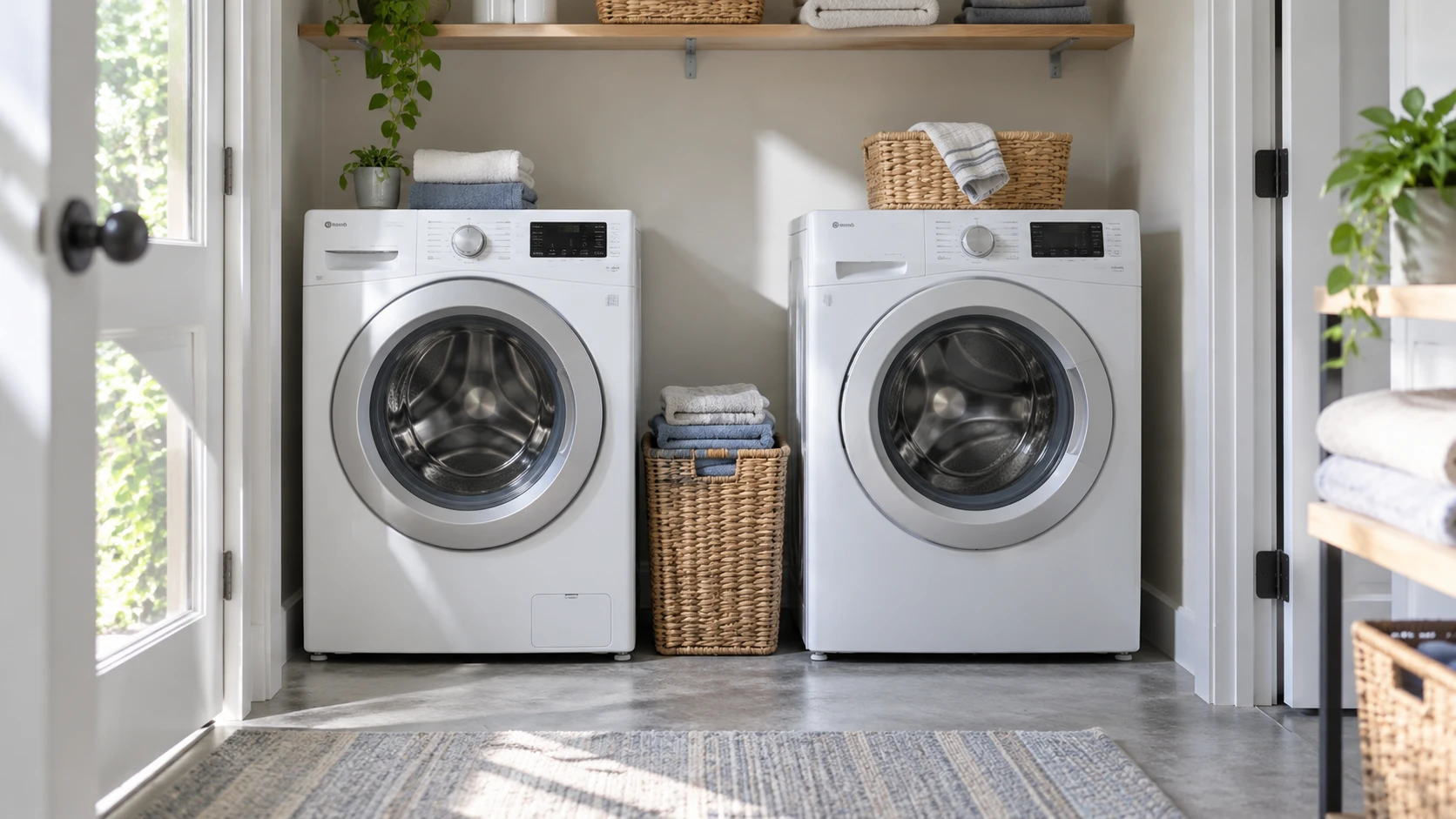
The Electrolux ELFW4222AW front-load washer is listed with a 2.4-cubic-foot capacity, twelve cycles, and a compact design that allows a compatible dryer to be stacked. The Summit LW2427 is listed at 2.7 cubic feet, just under 24 inches wide, with a left-hinged door and a depth of 43.75 inches when that door is open at 90 degrees. Both are candidates for a small laundry area, but the right choice depends on the exact opening, door travel, utility connections, and daily load. The difference in drum volume cannot settle those fit questions.
Measure the space with the laundry-room door both open and closed. Record width at several heights, depth to any pipes or trim, floor-to-shelf height, and the clear area in front for loading. Summit gives cabinet dimensions of 33.5 inches high, 23.75 inches wide, and 24.75 inches deep. Its saved listing states two inches of rear clearance and one inch at the sides and top for a built-in placement. Those figures should be checked against the current installation drawing and local requirements, including the hose and cord path. Electrolux's short excerpt gives no outside dimensions or clearances. Obtain its model-specific drawing before assuming that a similarly described compact machine fits the same closet.
The published guide on compact washer closet-depth fit concerns another washer, but its measurement method is useful here. A cabinet depth is only one part of the space. The front door needs room to open, a person needs room to crouch and transfer clothing, and the closet door may need to close without touching the washer. Summit supplies an open-door depth; Electrolux does not in the saved excerpt. Compare both current diagrams with a floor sketch that includes the laundry basket and the path to the dryer.
Test the door swing and the floor — Summit LW2427 compact washer
Summit's door is left-hinged and not reversible according to the listing. That can be helpful or awkward depending on which side the dryer, shelf, or wall sits. Stand at the proposed position and mime opening the door and moving wet clothes. A door that swings toward the only clear transfer path can make every load more cumbersome. The Electrolux excerpt does not state hinge orientation or whether its door can be reversed. Ask for the exact manual and verify the door's full swing before selecting a side-by-side or stacked arrangement.
Summit lists four leveling legs and a weight of 161 pounds, with a shipping weight of 172 pounds. Those numbers matter for moving it through stairs and placing it on a sound floor, but they do not tell you the installed vibration in a particular building. Electrolux describes its Perfect Balance system as reducing noise and movement, including near bedrooms or on a second floor. It provides no measured noise or vibration figure in the saved text. Ask installers to assess the floor, leveling, and any building restrictions. A quiet-operation claim cannot compensate for a poorly leveled machine or an unsuitable structure.
If stacking is necessary, Electrolux's listing says its compact design allows a stacked dryer. It does not identify the compatible dryer model or the required stacking kit. Confirm both with Electrolux, then measure total height, dryer-door reach, and vent or electrical routes. Summit's source does not claim stacking support. Do not place a dryer on it merely because both machines have similar widths. A manufacturer-approved stacking arrangement has to account for mounting hardware, vibration, and access for service.
Compare ordinary loads with the stated limits — Summit LW2427 compact washer
Summit's 2.7-cubic-foot drum is nominally larger than Electrolux's 2.4-cubic-foot drum. Summit also lists a maximum wash weight of 26.4 pounds. Electrolux's short description gives no weight limit. Ask how each maker defines capacity for different fabrics. A thick blanket can fill a drum well before reaching a weight limit, while wet towels create a heavy load that may need to be divided. Check the manual's guidance for bedding, delicate garments, and highly absorbent items. A slightly larger volume is useful only when the clothes can move and rinse as intended.
Build a comparison from a normal week. Count work clothes, towels, linens, and any sports gear. Note which loads you already separate by color or fabric care. A household that does several small loads may never use a maximum drum volume; one that waits for a weekend wash may care about the extra room. The drying setup matters too. If the dryer is smaller than either washer, a full washer load may still need to be split after washing. Balance the whole laundry sequence instead of buying the largest washer that fits the closet.
Electrolux says its LuxCare system combines wash actions with temperature control. The source names twelve cycles, including delicates, activewear, and whitest whites. It also describes a steam-refresh cycle that removes wrinkles and refreshes lightly soiled items without a full wash. Confirm how that cycle works, what fabrics it permits, and whether any water or additional hookup is required. A refresh cycle should not be treated as a substitute for cleaning heavily soiled garments. The saved source does not provide cycle times, water use, or a detailed program table.
Summit lists fifteen settings, including cottons, quick wash, activewear, babywear, delicates, wool, permanent press, easy iron, and a high-temperature tub-clean cycle. Tub-clean is maintenance for the machine, not automatically a sanitizing cycle for clothing. Ask for the actual temperature and spin options on the programs you will use. A higher count of named cycles does not mean better cleaning for a specific recipe of water, detergent, fabric, and soil. Compare two or three routine loads under each manual's guidance rather than counting labels on the control panel.
Check controls, water, and power — compact washer closet-depth fit
Summit describes a touchscreen and selector knob, delayed start, add-garment option, pull-out detergent dispenser, and child lock. The short source does not specify at what point in a cycle an item can be added or which buttons the lock disables. Try the controls at the height where the machine will be installed, especially if a dryer will sit above it. Electrolux's excerpt gives no control layout or dispenser details. Request its current manual and compare the steps for selecting a regular load, changing temperature, and clearing a fault. Controls used weekly deserve more attention than a seldom-used specialty cycle.
Summit specifies 110 to 120 V operation on a standard 15-amp circuit, a pre-installed six-foot three-prong cord, and an electrical label of 115 V AC at 60 Hz. That is useful installation evidence, not a guarantee that the existing outlet is correctly located or dedicated as the manual requires. Electrolux's saved excerpt gives no voltage, plug, or current detail. Have the installation requirements checked for each exact model. Also trace the hot and cold water supply, drain height, and hose clearances. Neither description supplies the complete plumbing contract in the source reviewed here.
Summit's source calls the washer non-vented, a phrase that does not resolve any dryer exhaust requirement. Washers still need an appropriate drain and water setup. If a dryer will share the closet, verify its venting or condenser arrangement separately. A small laundry nook can have enough floor space for the washer while lacking a safe route for the dryer. Keep the two appliances' installation drawings together so an installer can assess the full system rather than treating the washer as an isolated box.
Both product descriptions mention ENERGY STAR certification. Summit gives an annual energy figure of 75.0 kWh, while Electrolux's short excerpt provides no comparable annual number. Do not rank total operating cost from one figure. Check current model-specific labels and their assumptions for water, electricity, load frequency, and cycle selection. A longer or hotter cycle may use more resources than the label's representative test. Local utility rates and the number of weekly loads will affect actual cost. A washer that fits and finishes the household's loads without repeats can be a better practical choice than one chosen from a certification badge alone.
Look at service access before the closet is finished. A technician may need to reach the supply valves, drain, filter, or rear connections without dismantling a cabinet. Summit's listing mentions a stainless-steel tub and a high-temperature tub-clean program but does not locate every service point. Electrolux's excerpt gives even less maintenance detail. Ask for the owner and installation manuals, note where each filter or cleaning access sits, and leave the prescribed clearances. Also compare warranty terms and local service coverage from current documents; neither short description establishes them. A machine that fits tightly on delivery may be expensive to pull out for a simple repair.
The Summit LW2427 compact washer gives unusually detailed cabinet, door, electrical, and load information in its saved listing. It may suit a narrow built-in space if the left-hand door and the approved clearances work. Electrolux offers a slightly smaller listed drum, a stated stackable design, steam-refresh option, and balance feature, while its exact dimensions, hinge, utility needs, and stacking kit must be obtained. Measure the closet and transfer path, then check the manufacturer drawings and a typical week's loads. Those facts will decide whether either machine is a comfortable long-term fit.