Personal Care & Grooming
An electric toothbrush setup for a calmer bathroom counter
A ready-to-use toothbrush needs a charging spot and a place for its accessories. Arrange those before adding more items to the counter, then choose the routine that fits the room and travel habits.
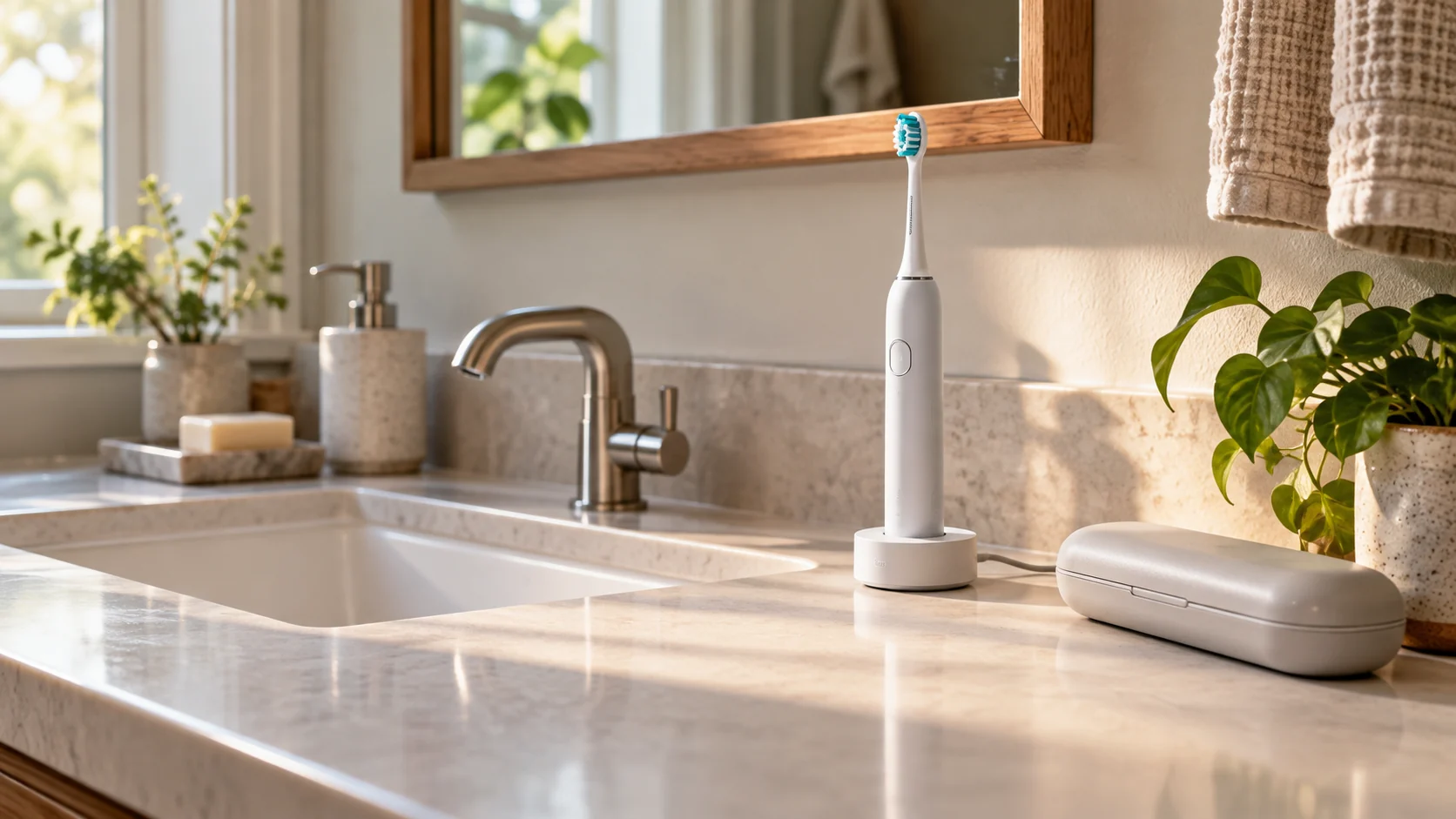
A toothbrush can be one more object competing for room around a small sink. The charger sits near a bottle, the travel case lives in a drawer, and the brush is sometimes left wherever there was a dry patch of counter. An electric toothbrush setup works better when each piece has a place that makes sense for the room. Start with the space you use every morning and evening. You can decide what belongs there before choosing how much technology you want in the brush.
This is a modest bathroom project. Clear enough room to use the sink, decide where charging can happen, and keep the accessories together. The two toothbrush listings here offer different ways to handle those ordinary details. Neither listing tells you how your bathroom is wired, how much free counter space you have, or what a dentist would recommend for your mouth. Those parts of the decision remain yours to check.
Give the brush a real landing place
Pick up the things currently beside the sink and put back only what you reach for during a normal morning. A toothbrush that needs to charge should have a predictable landing place after use. That place may be on a dry part of the counter, on a shelf within reach, or somewhere else that fits the supplied charging arrangement. Check the actual outlet, cable route, and available surface before settling on a spot. A charging feature in a product listing does not establish that a particular bathroom position is suitable for it.
Leave room to set the brush down without moving bottles. You should also be able to reach the sink and wipe the surrounding surface. These are small tests, but they reveal whether a proposed layout works during a rushed evening as well as in a tidy photograph. If the charger can only fit after you push several other items into the basin area, the layout probably needs another pass. Move one item at a time and see what makes the routine less awkward.
Keep the travel case near the brush only if you actually pack it often. Otherwise, place it with the other travel items and make a short note of where it went. A visible case can be useful when a trip is approaching; it does not need to occupy daily sink space all year. The same goes for manuals, extra heads, and packaging. A designated drawer or container prevents them from becoming loose counter clutter.
Compare the charging arrangement you will live with
The Global Care Market sonic toothbrush listing describes automatic charging when the brush is returned to its travel cup case. It also lists four modes: Cleansing, Whitening, Polishing, and Gum Care. Those are the seller's named controls, not proof of a particular clinical result. For a buyer arranging a counter, the more concrete question is where the case can sit, how its charging connection reaches power, and whether returning the brush to that case feels natural in the room.
The Oral-B Genius X Limited toothbrush listing says its set includes a rechargeable handle, one brush head, a charger, and a travel case. It also describes Bluetooth connection to a smartphone and coaching about coverage, pressure, and brushing time. The page does not establish how often you would use the phone feature. If you want a simple sink routine, decide whether a phone belongs in it at all. The charger and case are tangible pieces to place; the app-related feature is an option to evaluate separately.
Set the boxes aside and sketch each layout with the objects you already own. One layout gives the Global Care Market cup case a home near power. The other gives the Oral-B charger its own surface and stores the travel case until needed. Neither sketch needs to be elaborate. You are checking reach, clear space, and whether the accessories will be easy to put away. A brush with more functions is not automatically easier to keep ready if its supporting pieces have nowhere convenient to go.
Make the evening return easy
A bathroom arrangement succeeds when you can repeat it without a cleanup session. After brushing, the return action should be obvious: place the handle where its charging method requires, keep the counter surface accessible, and leave the extra items in their assigned place. Follow the product's own care and charging directions for the device you buy. The listing is useful for identifying supplied parts, but it is not a substitute for the manufacturer's use instructions or personalized dental advice.
Try the movement with an empty hand before deciding that a shelf is ideal. Can you reach it after using the sink? Is there enough light to see where the brush belongs? Does the door or drawer swing through that space? These checks keep the project grounded in your actual bathroom. They also expose the difference between a neat display and a working daily station. If the only convenient charger spot is hidden behind several bottles, moving the bottles may solve more than buying another organizer.
Think about who else uses the sink. One person's charging place should not block another person's mirror space or leave a cord across a shared task area. A shared bathroom may need a simple agreement about what stays out and what returns to a drawer. The agreement can be as small as leaving the basin edge clear. It need not turn into a complete redesign.
Choose one useful change instead of buying a whole new counter
A bathroom refresh can easily become a shopping list. You notice the brush, then the hairbrush, towels, storage cups, and hooks. Pause before treating every visible item as a replacement candidate. The hairbrush replacement cost guide is a useful companion for that pause: it asks readers to consider the actual care needs of a brush before buying another. Apply the same discipline here. Identify the problem you are trying to solve at the sink, then change the piece that addresses it.
If the problem is simply that the current toothbrush has no stable charging place, first test whether moving a bottle or clearing a small shelf solves it. If you are choosing a new brush, compare the supplied charging pieces and how they fit that cleared place. A travel case may be useful if you regularly take the brush away from home; it may matter much less if the brush almost never leaves the bathroom. The product pages describe different accessories, but only your routine can determine which one earns a place.
The bath towel replacement budget guide offers another helpful boundary for a shared bathroom: agree on the items that genuinely need replacing and stage the rest. A toothbrush decision does not require you to refresh all the towels or buy a coordinated set of containers. You can make the brushing area work this week and revisit the rest of the room when there is a separate reason to do so.
Let the room decide how much feature use fits
The Global Care Market listing presents four named modes. The Oral-B listing describes phone-connected coaching. Those features can be considered without making them the center of the bathroom layout. If you prefer to brush without looking at a screen, you can still evaluate the Oral-B handle, charger, head, and case as physical objects. If you like selecting a mode, ask whether the control is easy for you to use at the sink. Feature labels alone do not tell you how a brush will feel in hand or whether a given mode is right for you.
Keep the clinical language in the product pages in its proper place. The pages make claims about whitening, cleaning, and personalized coaching. This room-planning guide does not verify those outcomes. For dental needs, technique, replacement timing, or whether a device is suitable for you, use qualified dental guidance and the product's own instructions. Here, the decision is about making space for a device and its supplied parts so the routine is easy to maintain.
A quiet routine can be deliberately low tech even when the brush is electric. Choose the time you normally brush, put the brush where you can find it, and keep the charger and case in known places. A timer or an app feature may give you a cue, but the simplest cue may be seeing the brush ready by the sink. You can decide later whether another feature improves the experience enough to keep using it.
Plan for the trip before packing day
Both listings mention a travel case or case-like charging arrangement. Before a trip, locate the case, check which supplied parts belong with the brush, and review the charging instructions for that model. Do this while the bathroom is calm, not as you are closing a bag. A case that is easy to find can reduce last-minute rummaging; it still needs to fit the way you pack. The exact power arrangement matters, so verify the product's instructions and the power available at your destination.
For the Global Care Market model, the listing connects charging to returning the brush to a cup case. That makes the case part of both home storage and travel planning. For the Oral-B model, the listing separates the included charger and travel case in its set description. Check the actual supplied pieces and instructions before assuming that a case also charges. A similar sounding accessory can play a different role in each package.
When you come home, restore the brush to its ordinary place before you unpack everything else. If the case lives in a drawer, return it there after following the relevant care instructions. This is less about having a perfectly styled counter than avoiding a routine that collapses after every trip. A designated home for each item makes it easier to see what is missing and what can be put away.
Test the setup for a week
Once the surface is arranged, leave it alone for several days and notice what moves. Does the brush end up away from its charger? Do you keep pulling the case out of storage? Is another person moving your things to use the sink? Treat those observations as layout feedback. Move the charger or accessory storage if needed, as long as the new location follows the device instructions and is suitable for power and moisture exposure. The goal is an arrangement you can repeat, not one that stays untouched.
Keep the trial narrow. Do not judge the whole bathroom by whether every bottle remains lined up. Ask whether you can pick up the brush, use the sink, and return the brush without clearing a path. If those steps feel easy, the setup is serving its purpose. If they do not, remove one unnecessary object or relocate one accessory and try again. Small changes are easier to evaluate than a full counter makeover.
The two product listings can help you choose the arrangement to test. One describes a sonic brush with a cup case tied to charging and four named modes. The other describes a rechargeable handle with a charger, travel case, brush head, and optional phone connection. Check the current product pages and supplied instructions before purchase, because package contents and descriptions can change. Pick the setup that fits the space and habits you actually have. The best-looking shelf in a photo matters less than a brush that has a dependable place to return tonight.