Crypto Commerce
EcuFlyAi V168 GPS camera drone vs Fessiconys FLY-S+ GPS camera drones
Compare EcuFlyAi V168 GPS camera drone by video claims, live-view setup, return behavior, batteries, range, obstacle sensing, and flight checks.
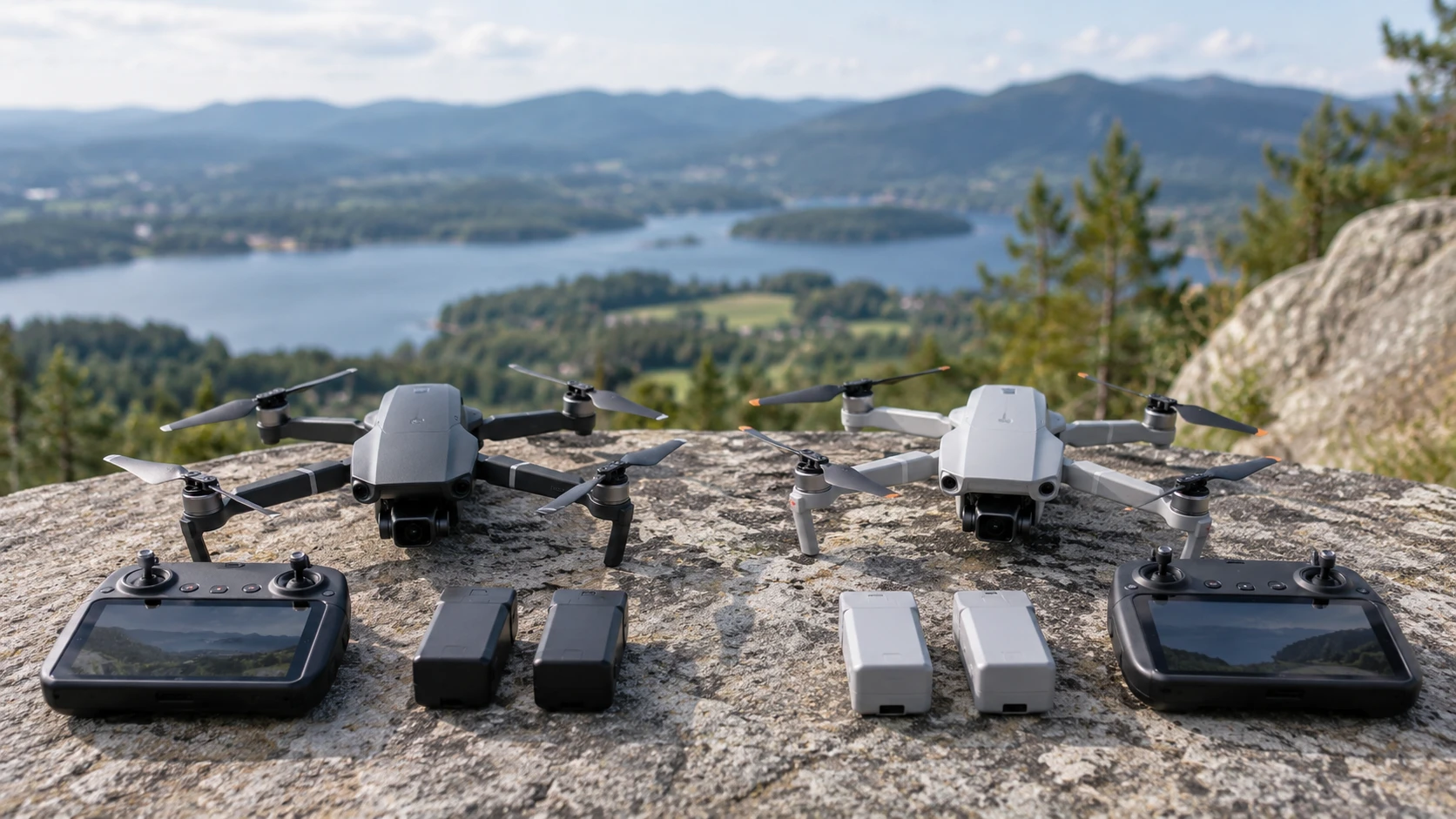
The saved listings for the EcuFlyAi V168 GPS camera drone and Fessiconys FLY-S+ promise similar broad jobs: fly a foldable camera, show a live view, and use GPS to help return it. EcuFlyAi names 4K recording at 30 frames per second, a screen described as "5G HD," two batteries with up to 25 minutes total flight time, and a stated 1,000-meter range. Fessiconys names dual 4K UHD cameras, an adjustable gimbal, a 5 GHz live feed, two batteries with up to 50 minutes combined, and a claimed live-feed range of 2 kilometers. Those figures are listing claims under conditions the excerpts do not define. Plan the flight and review actual footage before trusting a headline.
Start with the task: family photos in an open field, a slow view around a building, or practice flights for a beginner. Each needs a safe place, a stable live view, and a way to handle wind and obstacles. The camera description matters, but it is only one part of the system. Check current local flight rules, registration or operator requirements, airspace, and privacy limits before flying. The product listings do not establish where either drone may be used. A successful first flight should happen in a suitable open location, not over people or near a difficult structure.
Video labels and the viewfinder — Fessiconys FLY-S+ camera drone
EcuFlyAi's saved source states 4K video at 30 frames per second and high-resolution photos. It also mentions an included 8 GB memory card. Ask whether the quoted video is stored on that card, on a phone, or in the aircraft, and what codec and bitrate are used. A resolution and frame-rate label does not show how much detail survives compression or how stable the image looks when the drone turns. Check sample files from the exact model at full size, including moving subjects and a scene with trees or fine lines.
Fessiconys states a 4K UHD dual-camera system on an ESC gimbal, a remotely adjustable 90-degree camera angle, and a 50-times zoom claim. The saved excerpt does not say whether the zoom is optical, digital, or a combination. Ask for the camera sensor, stored-file resolution, and sample at native view and at the advertised zoom. Enlarging an image digitally can make a distant subject look closer on a screen without adding detail to the recording. An adjustable gimbal or camera angle can help composition, but its stabilization performance should be judged from footage rather than the part name alone.
EcuFlyAi's description says a "5G HD screen" supports FPV piloting. That wording does not identify whether the display is integrated into the controller, how large it is, or whether "5G" refers to a radio band or a marketing label. Fessiconys says a 5 GHz FPV HD live feed but does not mention an integrated controller screen in the saved excerpt. Confirm the exact controller and display arrangement for each box. If one requires a phone, check app compatibility, mounting size, and whether the phone remains available for calls or maps during flight.
The published guide on GPS drone screen-controller checks provides a useful way to separate navigation and display questions. A built-in screen can reduce phone setup, while a phone-connected view may offer different controls or storage. Neither arrangement is automatically better without seeing brightness, latency, battery use, and controls in the field. Test a live view in daylight and confirm that the displayed frame matches what is recorded. A clear viewfinder does not guarantee a clear saved file.
GPS return is an aid with prerequisites — GPS drone screen-controller checks
EcuFlyAi lists GPS Auto Return Home, low-battery protection, one-key takeoff and landing, altitude hold, headless mode, and optical-flow hovering. Fessiconys says GPS return to the takeoff point can be triggered by low battery, lost control, exceeded range, or a return command. These features can help a pilot, but neither saved excerpt gives the required satellite lock, return altitude settings, or behavior around a building. Read the manual and set the home point in a safe open location before a longer flight. Practice a deliberate return at close range while the aircraft is clearly visible.
The home point can be wrong if takeoff occurs before positioning is ready, if the device is moved, or if the controller's status is misunderstood. Watch the actual confirmation shown by the product, then test the return path. Do not use an automatic return as permission to fly beyond visual control or into a place where a direct line home crosses obstacles. If the aircraft responds unexpectedly, follow the maker's manual and local rules for regaining control. A feature that works in an empty field may behave differently near trees, buildings, or interference.
EcuFlyAi says four-direction obstacle avoidance. Fessiconys describes a 360-degree laser system that stops flight when it detects an obstacle. The excerpts do not state sensor range, lighting requirements, direction coverage in every flight mode, or behavior with thin branches and wires. Treat both as limited aids. An obstacle sensor can miss a transparent, narrow, or low-contrast object. Keep a generous margin and choose a route that remains safe if avoidance does nothing. Test sensing cautiously in an open setting according to the maker's instructions.
Battery time is a combined claim — Fessiconys FLY-S+ camera drone
Both listings include two batteries in their stated packages. EcuFlyAi claims up to 25 minutes total flight time from the pair; Fessiconys claims up to 50 minutes combined. The words "total" and "combined" suggest a sum across two batteries, not one uninterrupted flight. Ask for the rated time per battery, charging duration, and conditions behind the claim. Wind, speed, repeated climbs, filming mode, and cold weather can reduce useful time. Land with a reserve rather than planning a flight that ends exactly at an advertised maximum.
EcuFlyAi lists Type-C cables and spare blades among box contents. It does not state charger output or whether both batteries can be charged simultaneously. Fessiconys says its two batteries display their power levels, but the excerpt does not list a charger or spare propellers. Check the exact packing list, battery identifiers, and replacement availability for both. A second battery helps only if it is compatible, charged, and stored safely. Follow the maker's guidance for cooling after flight and for transport or storage of lithium batteries.
For a practical flight trial, time a short, ordinary circuit on one battery while recording video. Note the battery level on landing and repeat with the other battery. This confirms whether the advertised combined time is plausible for the way the drone is used, without draining either one to failure. Check how the controller warns about low battery and what the aircraft does if return is triggered. A beginner should learn those signals in a safe location rather than at the far edge of a claimed range.
Read range figures precisely — Fessiconys FLY-S+ camera drone
EcuFlyAi states a 1,000-meter range without defining whether it refers to control, video, or another measurement. Fessiconys states up to 2 kilometers for its 5 GHz live feed. Those are not necessarily the same contract. Ask separately for maximum control link, live-view link, and any operating limits in the region where the drone is used. Radio conditions, terrain, interference, and battery reserve can shorten a usable distance. A long claimed link does not change the need to follow local visual-line-of-sight and airspace rules.
At a short test distance, turn the aircraft slowly and watch whether the image remains smooth and control commands are prompt. Do not increase range merely because the product page displays a large number. If the screen freezes, the pilot needs to know whether the aircraft is still responding and what its documented loss-of-link behavior is. Practice that understanding with the manual and a nearby flight. The safest maximum for a particular location can be much shorter than a laboratory or figure in Republeq's catalog.
Modes and everyday handling — Fessiconys FLY-S+ camera drone
EcuFlyAi names six-axis gyroscope stabilization, gravity sensing, 360-degree Surround Flight, and a foldable body. Fessiconys names optical-flow hovering, waypoint flight, gesture photo and video, surround flight, and intelligent following. These modes need enough clear space and an accurate understanding of what the aircraft will do next. Ask whether a phone app is required to set waypoints or follow a subject and whether the modes operate with obstacle sensing active. A feature list is not a substitute for a supervised, close-range test of each mode the owner will actually use.
Fessiconys gives folded-body dimensions of 11 by 8.2 by 3.1 inches in its saved source. EcuFlyAi does not state size or weight in the excerpt. Ask for travel dimensions, aircraft weight, and whether a carrying case is included. Weight can affect transport and regulatory obligations; verify the exact delivered unit rather than assuming a category from photographs. Fold propellers according to the manual and inspect them for damage before flight. The included EcuFlyAi spare blades should be matched to the right positions, not installed by guesswork.
Camera drones also create a file workflow. Check whether either model records sound, how files are transferred, and what happens when the memory card fills. The EcuFlyAi listing includes an 8 GB card; the Fessiconys excerpt does not state card inclusion. Ask about supported card types and maximum capacity. Review footage on a larger screen after the first flight, because a controller preview may hide shake, soft focus, or compression. Keep an original file for assessing the camera rather than judging a social-media upload that may have been recompressed.
EcuFlyAi provides clearer saved information about a controller-screen claim, a 4K/30 frame-rate claim, and included card and spare blades, while leaving several technical meanings undefined. The Fessiconys FLY-S+ camera drone claims longer combined battery time, a longer live-feed range, a dual-camera gimbal arrangement, and more named flight modes. Neither excerpt proves image quality or dependable obstacle avoidance. Confirm the exact box contents and controls, then test a short legal flight with a safe return and inspect the saved video before planning a demanding shoot.