Troubleshooting & Repairs
Door won't stay open: check the actual stop
Describe a moving door and identify the actual stop, its documented function and missing fit information before choosing another item or arrangement.
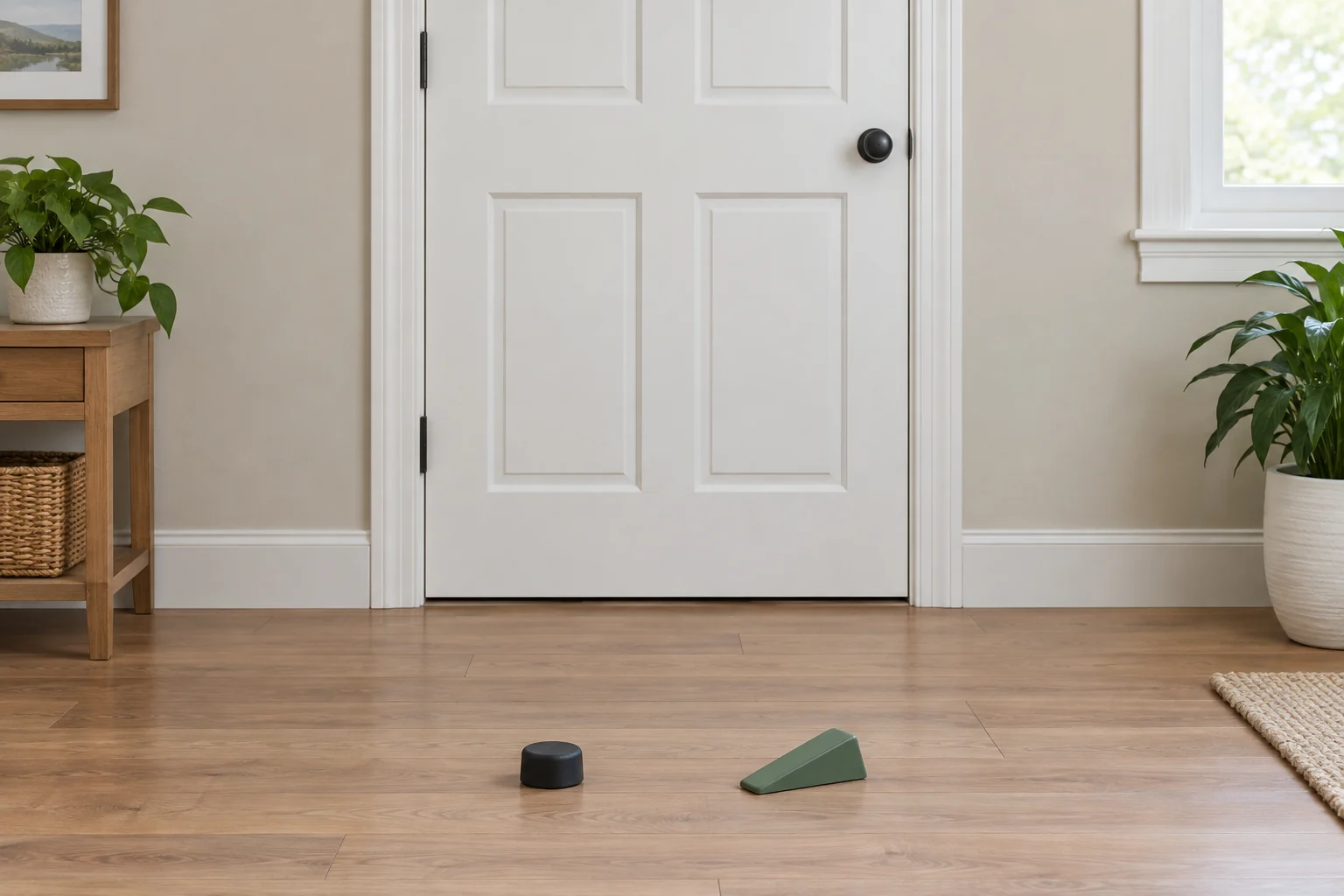
If a door won't stay open, identify what happened before buying another stop. The door may move back after you leave it, an object may shift, or the item you selected may have no documented hold-open function. A stop that moved away needs a different account from a stationary stop beside a moving door. A product called a door stop does not, by its name alone, answer all of them.
Begin with the ordinary purpose of the doorway and the exact item involved. Keep any applicable building rules and door instructions in force. This guide provides no method for overriding a closer, adjusting hinges, mounting hardware or testing a door against a stop. If the door has a required closing function, obtain the appropriate advice before proposing a hold-open arrangement.
Describe what moved without naming an unverified cause
Say whether the door moved, the separate stop moved, or both changed position. Include whether you were carrying something through, leaving the room or expecting the doorway to remain open for a longer task. Tell the supplier whether the loose item remained where you left it as the door moved. It does not prove the material is defective or the stop is the wrong size.
Use the movement you already saw when writing the enquiry. You do not need to push harder, repeat a failed placement or obstruct the door to make the account sound more certain. If you already saw the stop move during ordinary use, describe that event. Leave the mechanical explanation open until applicable product information or an appropriate assessment establishes it.
Also identify what changed since the arrangement last seemed suitable. You might have moved to a different doorway or begun using a different item. The same familiar product name can conceal a different setting. A previous successful use elsewhere does not establish that the current door, surface and intended arrangement have the same requirements.
Door stop function and placement need the actual product
For door stop function and placement, ask what the exact product is documented to do. Limiting a door's travel, protecting an adjacent surface and holding a door open are different jobs. A brief retail name may leave the relationship unclear. Establish the stated function before interpreting the symptom as a failed holding result.
A supplied height can help identify an item while leaving its purpose and permitted arrangement unanswered. Likewise, a photograph of a small object beside a door does not provide a mounting instruction or confirm where it belongs. Ask for the applicable model information. Avoid filling an incomplete listing with a method remembered from a different accessory.
Ask about the unresolved function before choosing a different size or pack. If you cannot establish that the item is meant to hold a door open, ask about that function first. If it expressly has that function, ask which conditions and arrangements its instructions cover. Buying more pieces does not answer either question.
Read the Rockwood 465 offer within its limits
The Rockwood 465 black door-stop offer states a two-inch height, wrought brass material and rubber finish. Its current title includes SKU sku-1766476765, and the description gives UPC 461766476766. Those details identify the selected offer. The supplied account does not describe a hold-open method, mounting arrangement or holding-force rating.
That absence does not prove the item cannot perform a particular function. It means this listing has not answered the question. If you selected it because you wanted a door to remain open, request the model-specific explanation before deciding the product has failed. A material label and a height cannot supply the omitted operating account.
Do not derive an installation position from the two-inch figure. The dimension describes a stated height; it does not identify your door's gap, a permitted mounting location or the clearance needed by other hardware. Ask which actual product and instructions the response concerns. A reply about a different Rockwood number would leave the selected offer unresolved.
Keep the Wedge-It holding claim and caution together
The Wedge-It green twelve-pack offer, identified by UPC 652143024490, expressly describes holding a door open at ninety degrees using three positions. It names the top of the door, the hinge area and the floor. The listing describes a ribbed Lexan body and four polyurethane pads. These are supplied product claims, without an independent result on your doorway.
Wedge-It's official instructions caution against attempting to close a door while its stop is at the top or over the hinge, because that can damage the door or stop. Keep that warning with the holding claim. This article does not tell you to try those positions, force a closure or use pressure to discover a limit.
The official general specifications describe over-moulded TPR pads without stating a pad count. Preserve that distinction from the selected retail account rather than replacing its four-pad wording. The official page does not independently confirm every package detail of this exact green twelve-pack. Ask about the actual offer if the pad description or supplied version affects your choice.
The maker also describes additional arrangements whose success depends on the door. A general holding claim therefore does not certify every angle, gap or doorway. Use the complete applicable instructions for the identified product. If your situation falls outside what they establish, leave suitability unanswered while seeking the missing guidance.
Ask for door stop fit information that addresses the symptom
For door stop fit information, tell the supplier which item you have or would buy and what you need the doorway to do. Include relevant facts you already know about the door and the observed event. Ask which instruction addresses that arrangement. A general statement that a product is suitable for many doors may still leave your particular question open.
If the response requests a measurement, establish what is being measured and which units apply. Do not substitute a product's advertised height for a doorway measurement. Nor should a measurement taken from a retail photograph become a fact about your room. The useful answer connects the actual product, the actual setting and the intended function.
If the reply supplies only another product photograph, ask for the applicable instruction before ordering. You can prefer a colour or package quantity while still lacking suitable operating information. Those preferences do not need to disappear, but they cannot resolve the doorway question. Establish the decisive requirement before choosing an inventory.
Consider the route through the doorway
Think about the ordinary task that led you to want the door open. Carrying a laundry basket, moving between adjacent rooms and attending a delivery are different uses. Describe your actual task without treating any of them as permission to obstruct a required route. An accessory that appears convenient in a photograph has not been assessed for the way people use your entrance.
The shoe-rack entryway access guide separates furniture body dimensions from the room access still needed around it. Its SONGMICS and Miumaeov measurements concern those storage products. Apply the question about the actual route to your doorway, while obtaining the relevant door information separately. No rack dimension establishes a permissible door opening or passage width.
If other people use the same doorway, include their ordinary needs when describing the intended arrangement. Someone may need to move equipment through or use the door differently from you. That information helps define the request. It does not establish a universal access standard or make an unexamined placement suitable.
Separate a complete stop from a replacement component
If you think an existing component needs replacement, identify the complete item and the component before choosing another listing. A black rubber-looking piece could belong to a different design. Similar colour does not supply the attachment, dimensions or approved relationship. Obtain the applicable part reference before treating a separate piece as a compatible repair.
The coat-rack supplied-parts guide distinguishes a complete stand's named features from an identified replacement accessory. Its Spaco and Geemuslly hook information applies to those stands. Use that distinction when asking for a stop component: name the existing product and the proposed part. A coat-rack hook count supplies no door-hardware reference or repair method.
Neither selected door-stop account here provides a replacement-pad catalogue or a component repair sequence. Do not make one from the material names. A request about a worn or missing piece needs the actual product information. Leave disassembly, attachment and modification questions to the applicable instructions and an appropriate assessment.
Give the installed door its own identity
The accessory listing identifies only one side of this question. If the door already has a product reference or applicable instructions available, keep those with the enquiry. Use information you can obtain ordinarily; this guide asks for no removal of covers or hardware to look for a number. A door, its closer and a separately purchased stop need their own applicable information.
For a rented or shared space, ask the person responsible for the doorway about its intended operation before selecting an accessory. Describe the task you wanted to complete and the movement you observed. They may be able to identify the installed equipment or direct the question to someone who can assess it. A retail stop's general holding description does not answer a question about the building's required door operation.
When someone supplies a document, check which product it names. An instruction for a closer is useful information about that closer; it does not identify a compatible stop by itself. Conversely, a stop instruction may leave the installed door's requirements unanswered. Ask how the proposed arrangement satisfies both applicable accounts before relying on it. If that relationship remains unresolved, choose another suitable way to complete the household task while the doorway question receives an appropriate assessment.
Make the next decision from the answer you actually receive
A useful response may establish that your selected item has a documented holding function, identify a different relevant product, or show that more information about the doorway is needed. A reply identifying the applicable instruction answers more than a request for additional doorway information. Keep the unanswered part visible instead of treating any reply as a complete approval. A model name alone may still leave the intended arrangement unresolved.
If you change products, check the new item's own documentation. Rockwood's stated height does not become a Wedge-It clearance, and Wedge-It's holding claim does not supply a Rockwood operating method. The twelve-pack quantity also does not indicate how many pieces a particular doorway needs. Each choice needs the function and conditions attached to that actual item.
When a door won't stay open, use the observed movement to ask a focused question. Establish the intended function, the exact product and the applicable arrangement before relying on a replacement. Keep required door operation intact and obtain the missing information before trying to make an uncertain accessory solve the problem.
Conceptual door won't stay open cover with generic separate door-stop shapes beside a closed household door; no exact retail model, installed placement or tested holding result is shown.