Holiday Decorations
door-frame garland hanger styling for a welcoming holiday entry
Balance garland, wreath and a restrained accent palette around a holiday door without crowding the arrival route.
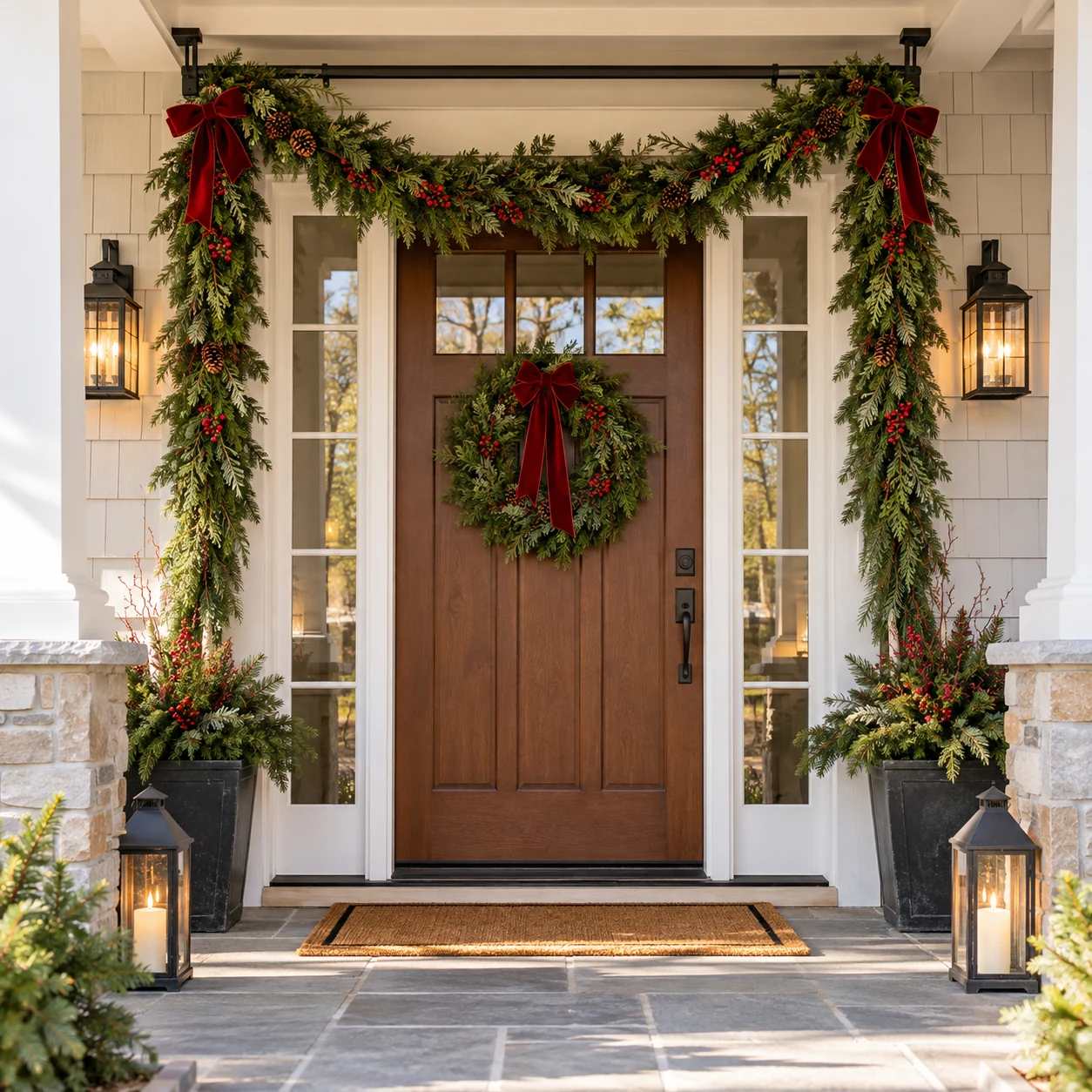
A door-frame garland hanger can make a holiday entrance feel complete without filling the doorway with decorations. The strongest look gives guests a clear path, keeps the door usable, and uses a restrained mix of greenery, color and light. Start with the actual entrance rather than a catalog picture: its frame width, adjacent windows, porch depth and everyday traffic will decide how much decoration belongs there. This lifestyle guide focuses on the finished composition and guest experience. A separate troubleshooting guide handles a hanger that shifts, and the product maker's instructions control installation and load.
Look at the doorway from a guest's approach
Stand where a visitor first sees the entrance. Notice whether the frame is narrow, whether the door is recessed, and whether steps or a handrail already draw attention. A garland can outline an opening, but a full, low-hanging arrangement may make a small entry feel crowded. Choose one visual anchor, such as a wreath on the door or greenery above it, then decide what supports that anchor. Leaving some bare trim visible often helps people read the shape of the entrance.
Walk the route carrying an ordinary bag before adding decoration. Guests and delivery workers need space to turn, reach the bell, see the address and operate the handle. Do not place loose foliage across a light, lock, camera or safety feature. If a planter already narrows the landing, keep garland ends higher or simplify them. The composition should work from the sidewalk and at arm's length, where people actually arrive.
Look at the door at different times of day. Afternoon light can make dark greenery visible, while a shaded porch may need a simpler shape or a lighter ribbon for contrast. If you add lights, use products appropriate for their location and follow their instructions. Avoid routing cords through moving doors or across walking surfaces. A welcoming arrangement does not need to be the brightest one on the street; it needs to remain legible and safe in the real entry setting.
Choose a support that belongs to the frame
The current Fuliko door-frame hanger listing describes a metal adjustable support intended for wreaths and garlands, with a threaded installation approach and flat seasonal storage. The listing's load language is a product claim, not proof of safe capacity for your particular frame and decoration. Confirm the actual fit, attachment method and maker instructions before placing a garland on it. This article uses the hanger as a visual support, not as evidence that every doorway will accept one.
The current AOOOWER door-frame hanger listing describes a steel frame support with a soft grip pad and threaded adjustment. Its different contact design may suit a different frame arrangement, but a listing cannot establish compatibility with your trim or prove that the finish will never mark. Use the exact delivered hardware and instructions for the physical fit. In a styled entrance, the support should stay secure and visually quiet behind the greenery.
Do not conceal an uncertain support under more foliage. Before planning a large drape, identify where the hanger contacts the frame and whether the manufacturer permits your type of trim. If the frame is fragile, unusually wide, or shared with a storm door, choose another approved display location. A lighter composition can be more inviting than a dramatic garland that shifts whenever the door opens. Let the actual support limit the design, rather than asking the design to hide a poor fit.
Build one clear visual rhythm
Choose a simple relationship among greenery, wreath and ribbon. For example, place fuller greenery at the upper corners, keep the center of the top span lighter, and use a small repeated ribbon color on the door wreath. The repetition helps the entrance feel intentional without requiring identical decorations. If the wreath is ornate, let the garland be quieter. If the garland carries berries and pinecones, a plain wreath may give the eye a place to rest.
Work with the doorway's proportions. A wide porch can handle an arching top line; a narrow entrance may benefit from greenery concentrated above the frame instead of running to the floor. Check the composition from a distance after placing the first section. If the garland makes the opening seem shorter, lift or reduce its lowest points. Avoid a heavy cluster directly above the handle where it can snag sleeves or obscure the door's useful features.
Use color sparingly. A deep red bow can connect to berries in the wreath, while a neutral ribbon can let textured greenery provide the interest. There is no need to match every planter, mat and light fixture. Keep the palette coherent by repeating one or two accents, and allow the house's existing door color and trim to remain visible. A doorway that looks like an ordinary home with seasonal warmth often feels more welcoming than one covered edge to edge.
If the porch already has two large planters, try a quieter garland with less material at the lower corners. The planters can supply the visual weight at ground level, leaving the top of the doorway to frame the door. If there are no planters, a fuller but controlled side drape may create a similar sense of balance. Stand back after each change. The goal is to distribute attention across the entrance rather than collect every ornament at eye level.
Consider the view from inside when the door opens. Some garland arrangements look balanced from outside but spill into an interior passage or catch against a screen door. Ask someone to open and close the entrance while you observe the decoration from a safe position. Adjust the hanging ends if they sweep into the opening. Styling is complete only when the entry still works during the ordinary motions of guests arriving and leaving.
Keep the arrival moment easy
Leave the bell, knocker or intercom visible. A guest should not have to move a branch to announce arrival. Keep house numbers readable in daylight and at night. If the entry has a camera, avoid blocking its intended view. These details may seem less decorative than ribbon placement, but they determine whether the display welcomes people or makes them hunt for basic information.
Think about people wearing coats, carrying packages or using mobility aids. A trailing garland can brush shoulders or narrow a landing. A planter may be attractive beside the door but leave too little turning room when paired with long greenery. Move either item rather than asking visitors to squeeze through. The entrance should express hospitality through ease of use as much as through color and texture.
Consider maintenance when choosing the material and density of the garland. A very full arrangement may shed, trap windblown debris or hide a loose ornament. Leave enough space to see the frame contact points and inspect them without dismantling the whole composition. Check after strong weather or heavy door use. If one section sags, remove it from service until the support and attachment can be assessed. A neat entrance comes from small routine adjustments, not from pretending a display never changes.
Keep loose decorations away from flames and heat sources. A lantern may look good in a photograph, but its placement and type must suit the location and product instructions. If you use electric lighting, manage cables and power sources according to their ratings. Do not thread a wire through a door seam or over a step as a styling shortcut. A simple unlit garland can still give shape and welcome without adding a power problem.
Make seasonal changes without rebuilding everything
The holiday wreath changeover guide covers changing a doorway display while preserving a usable entrance. Use it when swapping the wreath or seasonal accents. For this composition, keep the frame greenery neutral enough that a new ribbon or wreath can change the mood without moving the whole support. This can make the display easier to maintain through a season and reduces repeated handling of the frame.
The Christmas wreath welcome guide owns the door wreath's guest-facing role. Here the wreath is one element in a larger doorway composition supported by a frame hanger. If the wreath alone already draws the eye, you may need only a restrained top garland. Resist adding an equally large decoration on every side. A strong focal point gives guests a clear, calm first impression.
When an accent comes loose, remove it and reassess the whole arrangement before attaching it again. A bow or small ornament may no longer sit where it did after several windy days. Do not pile more ties onto an unstable support to preserve a planned look. Use the maker-approved attachment method, or simplify the arrangement. A display that is easy to inspect and adjust tends to stay better looking than one built from hidden layers that no one wants to touch.
Before a gathering, do a short entrance walk-through. See the display from the street, ring the bell, open the door fully, carry a bag through and look back from inside. These steps reveal practical problems that a single front-facing photograph misses. Shift a bow or shorten a trailing end if it catches a sleeve. If the arrangement requires constant rescue, reduce it. Guests will remember the ease of arriving more than the exact number of accents on the frame.
Plan what happens after the season
Choose decorations you can reasonably remove, inspect and store. A garland that is too long for your storage space may be crushed or tangled by next year. Note which sections sit on the top span and which hang at the sides before taking them down. Keep clips and accessories with the corresponding greenery where safe. Do not assume the hanger should remain installed year-round; follow its instructions and your property's rules.
Clean and dry the greenery as its material allows before storing it. Check for loose wire ends, cracked decorative pieces or damaged lights. Separate fragile ornaments from the main garland when needed. A photograph of the finished entrance can help you rebuild a successful arrangement next year, but treat it as a memory aid, not an obligation to repeat every detail. The door and household may change.
When you next decorate, begin with the same two questions: can people use the entrance easily, and does the arrangement have one clear visual focus? A door-frame garland hanger can support an attractive outline when it fits and is installed as directed. Keep greenery within the real frame, leave working space around the door, and repeat only the accents that help the entrance feel warm and readable. The result should welcome guests in ordinary use, not only in a still picture.