Product Compatibility & Accessories
Dog harness size compatibility: same L/XL, different limits
Compare selected Ruffwear Front Range and Bestia Maximus harness offers against named maker charts, using invented chest and lower-neck profiles.
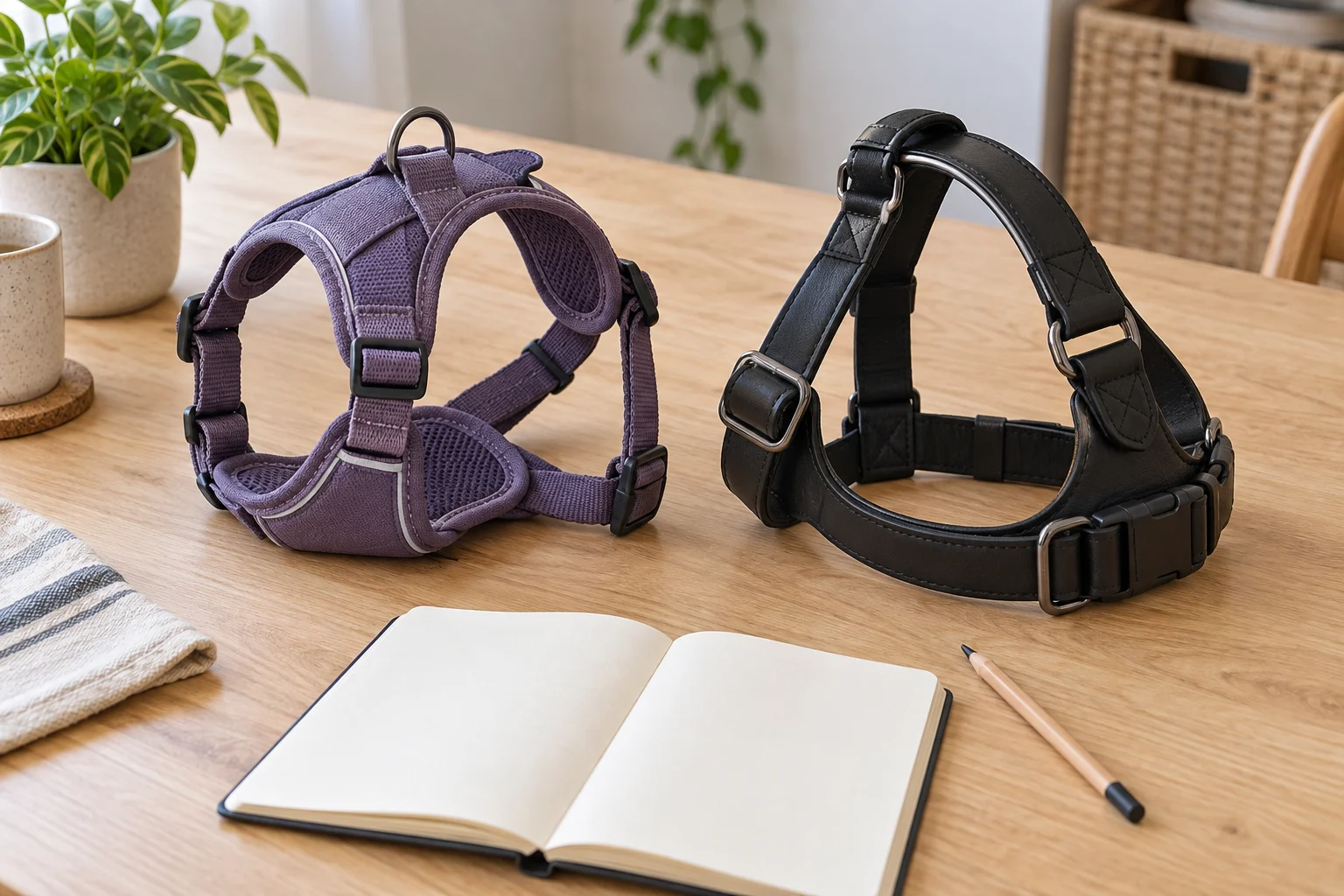
Dog harness size compatibility depends on the named harness and its applicable measurements. Two products labelled L/XL can describe different size ranges. Even when their chest ranges overlap, a second published measurement can change which candidate remains worth investigating for a particular dog.
The selected Ruffwear Front Range and Bestia Maximus offers illustrate that shopping question. The examples below use invented dog profiles and published maker charts. A profile falling within a chart's numbers is a reason to continue a model-specific enquiry. It is not a report that a harness was tried on, a guarantee of fit or a demonstration of restraint, comfort or training performance.
L/XL harness measurements are model-specific
The Ruffwear Front Range offer names Purple Sage and Large/X-Large. Its description lists four adjustment points, a back aluminium V-ring and reinforced chest webbing for two leash attachment positions. Those details identify the offered design. They do not turn L/XL into a measurement shared with another maker.
Ruffwear's current Front Range chart lists L/XL girth as 32–42 inches, alongside 81–107 centimetres. The page describes its girth measurement around the widest part of the rib cage. Its current page does not list Purple Sage among the displayed colours. Confirm which applicable chart accompanies the selected Purple Sage offer before using the current family chart as an order decision.
The Bestia Maximus MXHN1SV offer names a Black and silver leather dog harness, SKU sku-5374316816. Its description lists L/XL with a 23.6–45.3-inch chest range, but also calls the item a classic buckle collar. Retain that contradiction in the enquiry and have the supplied item confirmed as the described harness.
Bestia's current Maximus Silver page gives the same L/XL chest span and additionally lists lower-neck circumference of 17–25 inches. Its centimetre figures are 60–115 for chest and 43–63.5 for lower neck. Those named ranges provide two boundaries to retain when considering that model.
For L/XL harness measurements, write the model beside each range. “L/XL, 32–42-inch girth, Front Range chart” and “L/XL, 23.6–45.3-inch chest plus 17–25-inch lower neck, Maximus Silver chart” keep the labels connected to their sources. Combining them into one universal L/XL range would create a chart neither maker published.
Chest and lower-neck fit limits answer separate questions
Assume the fictional profiles used here already contain the measurements called for by the relevant instructions, recorded in inches. They are supplied examples for reading charts, rather than directions for handling or measuring an actual animal. Keep the named body location with each value when comparing the examples.
First consider Fern, an invented dog whose recorded chest is 30 inches and lower neck is 20 inches. Thirty falls below the current Front Range L/XL chart's 32-inch lower girth boundary. The selected L/XL offer therefore has no chart-based support from that supplied chest number.
Fern's 30-inch chest lies within the published Maximus Silver L/XL span. The 20-inch lower-neck figure lies within its separately stated neck span as well. In this paper comparison, both named numerical conditions are covered. The actual item-description conflict still requires an answer before treating the selected offer as an identified purchase.
The two chart comparisons give different answers. Both selected offers say L/XL. Fern’s supplied chest number is covered by one published chart and falls below the other. That result gives no reason to relabel Fern as a universally medium or large dog. The letters describe the respective product sizing systems.
Nor does it establish that the Bestia design is better for Fern. A chart comparison has screened named dimensions. It has not assessed the worn shape, applicable fitting instructions, the dog's movement or any proposed use. Retain the limited result rather than turning a numerical comparison into a product recommendation.
Keep chest and lower-neck fit limits together
Next consider Otis, with an invented 34-inch chest and 26-inch lower neck. The chest number is inside the published Front Range L/XL girth span. It is also inside the Maximus Silver L/XL chest span. A chest-only comparison would therefore leave both candidates on the list.
For the Maximus Silver example, however, 26 inches exceeds the published L/XL lower-neck maximum of 25 inches. The chest result cannot erase that second condition. Otis's supplied profile does not meet both named L/XL chart ranges, despite its chest number being covered.
For chest and lower-neck fit limits, preserve both results in the same note: chest inside, lower neck outside. A reply that repeats only the chest span has not answered the whole question. The missing answer concerns a particular named dimension, with no need to guess from breed, weight or a photograph.
Ruffwear's cited size table does not provide a separate lower-neck range. This article does not invent one or borrow Bestia's range for it. Otis's chest comparison with the Front Range chart remains a chest comparison. The applicable instructions and exact offer confirmation must address the rest of the actual fit question.
Compare a third invented profile, June, with a 34-inch chest and 22-inch lower neck. June and Otis have the same supplied chest figure. June's lower-neck value is inside the Bestia L/XL span, while Otis's is outside. Matching chest numbers did not make their full chart comparisons identical.
A larger label does not automatically solve a mismatch
Suppose the fictional buyer responds to Otis's lower-neck mismatch by looking at the next Maximus size. The maker's XXL chest span starts at 37.4 inches, with lower neck listed at 21–33 inches. Otis's 26-inch lower neck is inside that second span, but the 34-inch chest is below the XXL chest minimum.
Changing the size label therefore changes which condition is covered. It does not produce a chart match for both supplied values. The L/XL comparison had chest inside and neck outside; the XXL comparison has neck inside and chest outside. A larger letter combination has not resolved the example.
The buyer now has a reason to reconsider that model’s published sizes. The buyer can retain the measurements and look for a separately documented candidate or request model-specific guidance. There is no need to order a size merely because one of its numbers looks more generous.
A different size within the Ruffwear family is another separate offer question. Its current Medium chart lists girth at 27–32 inches, covering Fern's fictional 30-inch value. That does not change the selected Purple Sage L/XL listing into Medium. If another size is wanted, establish the actual variant that would be supplied.
Likewise, a confirmation that a maker sells several sizes does not identify the contents of the selected order. Keep the model, colour and chosen size together when requesting an answer. A general size chart and a specific offered variant have different jobs in the purchase decision.
Overlapping ranges can leave more than one size to examine
A fourth fictional profile, Aspen, has a 44-inch chest and 24-inch lower neck. The chest exceeds the current Front Range L/XL chart's 42-inch maximum. The same supplied chest number is inside the Maximus Silver L/XL range, and its lower-neck number is inside that size's neck range. This example reaches the upper side of the Ruffwear span, while Fern's earlier example fell below its lower side.
Aspen's supplied values also fall within the Bestia XXL ranges. Both named dimensions are covered by more than one size in that chart. The numerical screen has therefore produced a different kind of result from Otis's mismatch: there are multiple sizes to examine, rather than a reason to force one uncovered measurement into a range.
The next enquiry can state the comparison directly: the supplied profile is covered by both L/XL and XXL numerical ranges, and the selected offer is L/XL. Ask how the applicable fitting information distinguishes those options for the actual dog. Replacing that question with “send the biggest one” would discard the distinction the comparison revealed. Nor would an answer about XXL silently change the size named in the selected listing.
Keep Aspen's enquiry separate from Otis's. The two profiles reached different outcomes because their recorded chest and lower-neck combinations differ. A single generic reply about large dogs would lose the reason one profile has overlapping candidates while the other has a mismatch in each considered size.
Preserve units and body locations when sharing the profile
Imagine the buyer sends a short message containing only “34 and 22.” The recipient cannot tell which value is chest, which is lower neck or whether the figures are inches or centimetres. The message has lost information already present in June's fictional profile.
Writing “chest 34 inches; lower neck 22 inches” preserves the two named quantities. Add the intended model and the exact chart being discussed. The enquiry can now ask whether the selected item and applicable sizing information have been identified correctly, rather than asking someone to reconstruct an unlabeled pair of numbers.
Both maker pages also show centimetre ranges. Use the chart column that corresponds to the units in the measurement record. Do not copy a bare value from an inch note into a centimetre comparison. The same printed number in those two units describes different physical lengths.
The body-location labels matter just as much. An old harness laid flat, a strap's adjustable length and the circumference called for by a maker's chart are different descriptions. This article has supplied no conversion that makes one an acceptable substitute for another. Retain what the applicable chart actually requests.
Ask for a reply about the selected harness
For the Bestia offer, an enquiry can name MXHN1SV, Black and silver, L/XL and SKU sku-5374316816. Ask whether the supplied item is the Maximus harness described by the chest range, given the conflicting buckle-collar wording. Keep the model-specific lower-neck question beside the chest question instead of losing it in a general request for a large harness.
For the Ruffwear offer, preserve Front Range, Purple Sage and Large/X-Large. Ask which applicable sizing and fitting information accompanies that selected version. A response describing a different colour or size should be reconciled with the offered variant before it is treated as confirmation of the item originally considered.
In either case, retain the actual answer with the enquiry. A reply about the wrong item is a reason to clarify its identity, even if the reply contains a familiar size letter. The original profile and chart comparison remain useful because they make the unanswered part of the purchase visible.
The Miele bag-family compatibility guide similarly keeps the equipment identity ahead of a package count. Its cleaner and bag references provide no harness sizing information. The picture-frame return-cost guide concerns what a particular return or exchange might involve after a wrong variant is chosen. Its frame example cannot confirm a harness fit or remedy.
Dog harness size compatibility remains tied to the actual design, selected variant and named dimensions. Fern, Otis and June show three different chart outcomes without claiming that any dog wore either product. Use the applicable measurements to identify a candidate for further confirmation, then keep that confirmation attached to the exact harness being considered.