Appliance Care & Buying
Read dish rack cleaning instructions for each part
Separate a rack, its fitted holders and its tray when checking applicable care information; leave unsupported dishwasher or chemical cleaning choices unapproved.
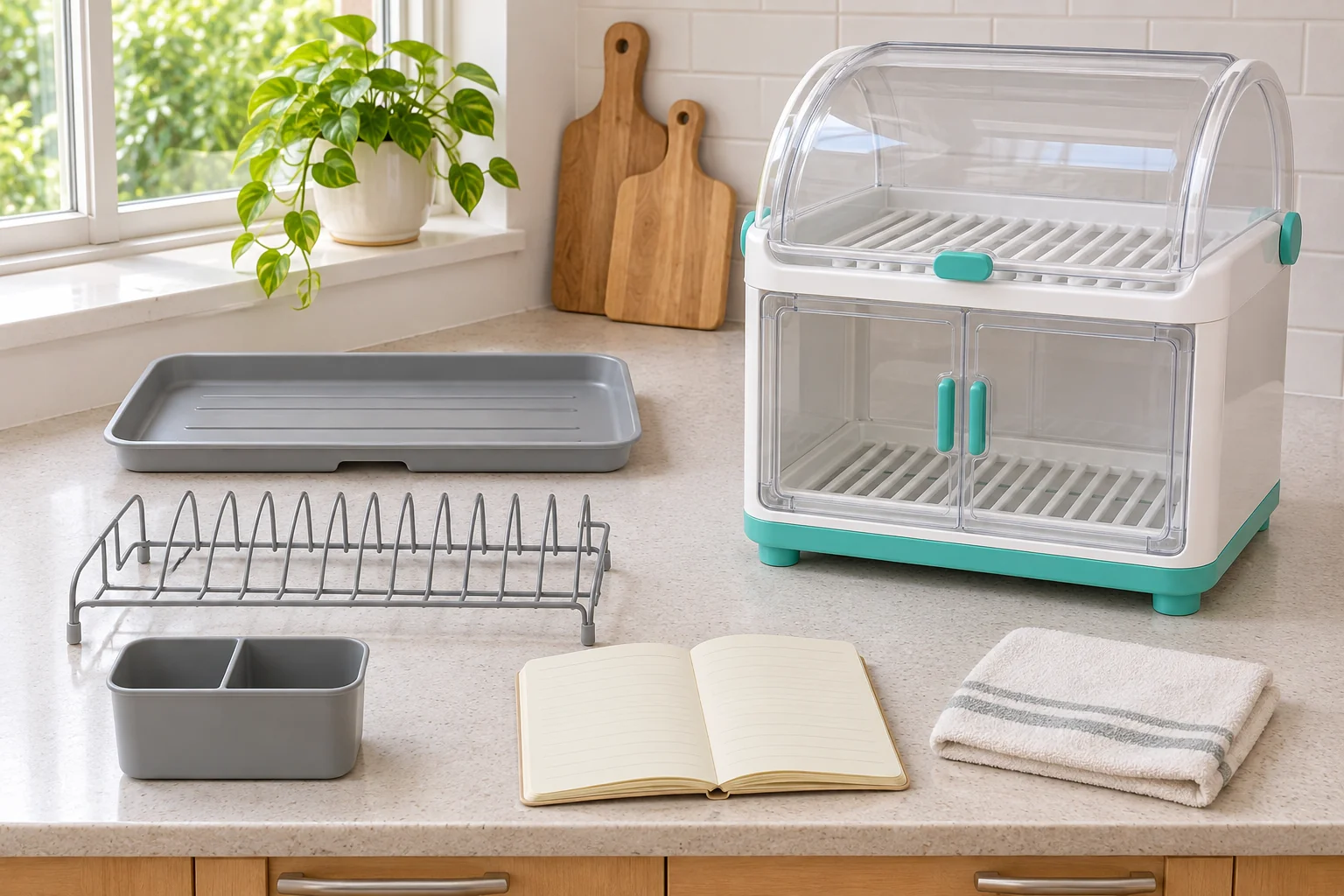
Before choosing a wash method, put the actual dish rack cleaning instructions beside the part you want to clean. In this guide's imagined example, Leena has emptied her drying area and wants to know what to do with a holder, a tray and the rest of her rack. She has not identified a permission for the whole assembly. Her next task is to find the applicable directions and keep any unanswered question visible. This example supplies no cleaning recipe, heat setting or test. It shows how to make a care decision without turning an incomplete answer into an instruction.
Read the maker's qualification about dishwasher use
Simplehuman's steel frame dishrack support page generally advises against placing dishrack parts in the dishwasher. It explains that plastic can deform under intense heat, allows that some parts may be dishwasher safe, and directs readers to explicit wording in the product description. Retain that qualification when considering dish rack dishwasher permission. The page also discusses plastic and stainless-steel cleaning separately. For stainless steel, it describes a soft cloth, warm water and mild detergent, followed by rinsing and drying, while warning against steel wool, bleach, salts and acids. Do not merge its separate material discussions into one soaking method for an assembled rack. This guide adopts no chemical mixture or soaking procedure. The support page is useful for its instruction to check the actual product and part; it does not authenticate an unfamiliar item or certify that every version bearing the brand has identical care requirements. Ask the maker about a version or component that remains unclear before choosing a method.
A product description may leave the care question open
OXO UK's Aluminum Fold Flat Dish Rack page identifies SKU 13322800, an aluminum frame, a removable utensil cup and a built-in drainboard. It explains the rack's upright arrangement and folding function. The captured complete page does not state dishwasher permission. That is a limit of this particular source, not a finding that no applicable instruction exists elsewhere. Obtain the actual care information instead of converting a material name, removable cup or folding feature into a washing direction. A page can answer a configuration question while leaving the cleaning question unresolved. Keep the product reference with that unresolved entry so a later answer concerns the correct item. Instructions for another rack would need their own identity check. This OXO page is a separate example of reading what a source actually supplies; it does not establish care permission for either of the two offers below.
The gray rack offer identifies fitted components
The simplehuman gray steel-frame dish rack offer describes a plastic inner tray, a central drain and an integrated wine-glass holder. Its native metadata names model KT1181, but no printed model or maker was authenticated from the nine gallery images. The pictures consistently depict one complete rack with fitted holders, trays and a drainage outlet. Dishes, glasses and utensils demonstrate use; they are not an enumerated supply of kitchenware. The listing's coating, corrosion-resistance and drying claims are not cleaning permissions or demonstrated results here. Keep its catalog identity and the actual supplied product information together when requesting care directions. A removable-looking component still needs its applicable removal and cleaning instructions. Neither a product photograph nor the seller's general description certifies that the offered unit is genuine, that a particular part belongs in a dishwasher, or that a chemical treatment is suitable for its surface.
The covered rack leaves its washing method unstated
The covered two-tier plastic dish rack offer describes a transparent cover and detachable drip tray under the catalog brand Enwood Games. Its seven images show one white-and-blue rack with an upper cover, lower doors and fitted drying areas. Multiple views in an image do not mean several supplied racks. No readable maker or exact model was authenticated; a small indistinct emblem supplies no established brand identification. The native PP-plastic and hygiene statements remain listing claims. They do not establish a dishwasher temperature, chemical compatibility or sanitizing result. Ask for the care information covering the actual doors, tray and rack before selecting a method. A clear cover is not evidence of a heated appliance or sterilizing function. Keep the catalog reference with the inquiry, and leave the wash choice unconfirmed if the required product answer is unavailable. The staged plates and bowls are separate demonstration props.
Make one original care record for the question
For Leena's fictional inquiry, start a dish rack care record with the identity she can actually establish. She writes where that identity came from and leaves a blank where she has no answer. Under it, she names the particular part she is asking about in ordinary words and keeps a photograph with the question. She does not invent a model number to make the record look complete. If she has an instruction sheet, she notes its title and the place where the relevant passage can be found. If she has only a product page, she records which page she read. The record is a pointer to the complete information, not a newly written manual. It remains useful while an answer is pending because another person can see exactly which question she has asked and which evidence she already has.
Give the proposed action its own line. In the worked example, Leena is asking whether a named part may be washed in a dishwasher. She records that as a question, with no affirmative mark beside it. A second question concerns the rest of the assembly. She keeps the two entries apart so a reply about one part cannot silently complete both. If the reply names another model, she asks how that answer applies to her actual item. If it refers her to an instruction she has not found, the entry remains pending until she can read it. These are choices for organizing the inquiry. They supply no permission to remove a fitted part, choose a machine cycle or improvise a wash method. Keep the complete response with the original question so the eventual decision has a traceable basis.
Keep a water-path problem in its own record
The published dish rack water on the counter guide follows a different problem: where water first appears and whether loading, the board or the intended outlet explains its path. It separates those observations from a general assumption that the rack needs replacing. Its drainage discussion does not provide dishwasher permission for an unknown component. If both questions concern the same rack, retain the water observation separately from the care inquiry. An answer about how the outlet should reach the sink does not identify which cleaning method a tray can tolerate. Equally, a care response does not establish why a particular counter gets wet. Keep the actual rack reference with both records, and use each answer for the question it addresses. The drainage guide's limited ordinary-use observations should not become an improvised cleaning experiment or a reason to pour water into an uncertain assembly.
Folding and washing are separate permissions
The fold-flat dish drying rack guide distinguishes an empty storage configuration from an expressly described flat drying mode. It also asks which confirmed components belong in the complete arrangement being considered. Those configuration questions can help identify the object you mean in a care inquiry, but they do not select its wash method. A compact folded shape supplies no dishwasher rating. Keep a confirmed folding instruction with the configuration it covers, and obtain cleaning guidance independently for the actual product and part. The guide's cupboard measurements and footprint examples answer a storage question; they do not establish that a frame can tolerate heat, detergent or a soak. If an instruction covers removing a component for a particular purpose, retain that purpose with the instruction instead of treating it as a general invitation to take apart the rack.
Read a partial answer without enlarging it
Imagine Leena receives a reply that identifies only one item in her question. She marks that entry as answered only after checking that the reply concerns her actual product and proposed action. The remaining entry stays open. She saves the response in full instead of replacing it with a single word in the notebook. If someone else is helping, she can show both the answer and the pending question. That person does not have to guess whether a blank means permission was refused, permission was granted elsewhere, or no answer has arrived. This fictional record illustrates a deliberate pause before an unsupported action. It is not a report of a supplier response or a claim that a particular company will provide one. Follow the applicable directions once the actual question has been resolved.
Review the record when the item or the question changes. A replacement component should be identified as the replacement, with the information that belongs to it. Preserve the old answer as an explanation of the earlier decision; do not silently attach it to the new object. In Leena's example, she dates the changed entry and writes the next question she intends to ask. She can also decide to leave an unconfirmed method unused. The practical result of reading dish rack cleaning instructions is a decision tied to an identifiable part and an applicable instruction. A neat list, familiar photograph or completed shopping order cannot supply a missing permission. Keep the unanswered field visible until the evidence needed for that particular decision is available.
Treat a possible order as a separate decision
A care inquiry does not require an immediate replacement purchase. If you later consider ordering through republeq.com and want to investigate crypto such as USDT, first decide which exact offer the proposed transaction concerns. Save its reference with the questions that affect your decision to buy. This article supplies no confirmation that a current checkout offers USDT, another asset or a particular payment route. Examine what is actually presented for the intended order and obtain clarification when an essential term is unclear. A product discussion cannot identify a payment destination or authorize a transfer. Keep any payment information you choose to rely on attached to that order, so it remains possible to distinguish it from another basket or an earlier purchase. If the offered item changes during the discussion, reconsider both the product information and the applicable transaction terms. You may leave the order unplaced while those matters are unresolved. If you proceed with a purchase, retain the record showing what you agreed to buy and any acknowledgement supplied through the actual payment process. Keep dispatch and delivery information when it is provided, without treating a payment record as proof of either event. An apparent payment issue needs reconciliation through the documented channel for that transaction before another payment action is considered. Do not make a second transfer merely to see whether it clears an uncertain status. Whether you ultimately purchase an item or keep the one you own, return to its applicable care information before choosing a cleaning method. Payment administration and product-use permission remain separate questions, each requiring its own actual answer.