Office Supplies & Stationery
desk calendar pack budget: count usable copies through June 2027
A purchase worksheet for a SKYSONIC desk calendar and three-pack that counts working locations and future pages without naming a price winner.
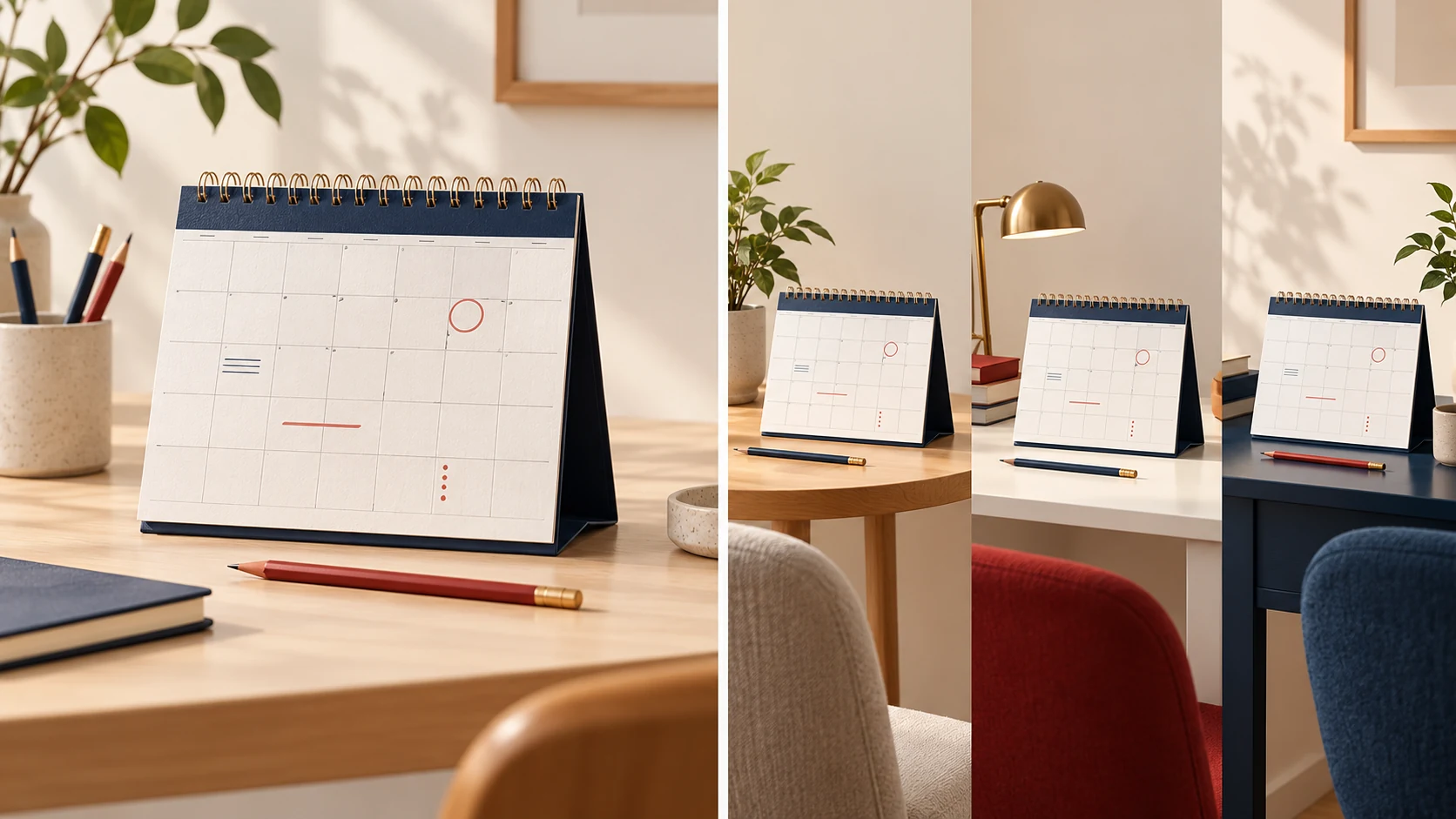
A calendar pack can look generous because the cover lists 18 or 21 months. Those numbers start in the past for someone shopping in late October 2026. The practical purchase question is smaller: how many separate places need a paper monthly calendar between now and June 2027? Count those places, check the pages you will actually use, and compare the current checkout totals for the exact offers. A longer printed range does not give you more future months when both offers finish at the same point.
Count calendars with named places to use them, then compare the current checkout totals.
Put the required end date on paper first
Write down the last month you need to plan on this calendar. If your project, school schedule, or office rota needs a page for June 2027, the stated end date on both products considered here reaches that month. If the plan continues into July, neither listing establishes a July page. You would need another calendar or a different offer with a confirmed later end date. This check comes before counting packs or comparing prices; a cheap set that ends too early still leaves an uncovered part of the plan.
The SKYSONIC black desk calendar listing states a January 2026 to June 2027 range. Its product account describes monthly layouts, holidays and note space, with a listed 22 by 17 inch size. The single gallery image shows a January 2026 monthly page with a notes column. That image supports the page style, but it cannot show every later page. If the last month is decisive, ask for confirmation of the actual page sequence before ordering.
The SKYSONIC red three-pack listing states October 2025 through June 2027. Its one gallery image shows three matching calendars and labels that range. The product account describes ruled daily boxes and a separate notes area. It also says the calendars can sit on a desk or hang using two apertures and a cord. The image confirms the displayed pack concept and opening month, though it likewise does not provide a photograph of each future sheet.
Separate printed months from usable months
October 2025 and January 2026 are different starting points, but both stated ranges end in June 2027. At the time of this review in October 2026, pages before this month have already passed for forward planning. The 21-month label on the three-pack includes those elapsed pages. The 18-month range on the black calendar includes elapsed pages too. Neither number tells you that one option gives you a longer runway after today.
Make a small list from the month when you will start writing through your required end month. If you begin with October 2026 and need June 2027, that list contains October, November and December 2026, followed by January through June 2027. That is nine named monthly pages in the stated ranges, assuming the delivered item follows its listing. If you will not begin until November, count eight. This is an inclusive count of intended pages, not a promise about how many sheets will arrive or how long a calendar lasts in everyday use.
Do not price the older pages as if they could be reclaimed. A three-pack with a 2025 start may still be useful because three people need copies, but its 2025 pages add no forward planning capacity in late 2026. The relevant question is whether the remaining dated pages appear in every copy and whether each copy has a real place to be used. A second calendar kept unopened “just in case” is not automatically a benefit. Give it a named location or person before treating it as useful quantity.
The distinction between a named month and an interval of four weeks is handled in the separate calendar month and four-week guide. Here the count is simply the set of monthly pages you intend to write on. It does not convert a month into a fixed number of weeks or predict the timing of an appointment.
Count locations before you count the pack
Take a tour of the places where the plan has to be visible. A desk calendar at one work station may be enough if one person maintains the schedule there. A second location is useful only if someone will actually read and update its own copy. A shared room, home desk, and separate workshop could justify three calendars, but writing the same appointment three times also creates a maintenance task. Decide who will keep each copy current. If no one owns that task, the extra copies can become conflicting versions of the schedule.
For the black listing, the name and product description present a desk calendar, with one calendar pictured. The listing should still be checked for the exact shipped unit count. Product photos can show a representative item without proving everything in the package. For the red offer, the title, description and image all point to a three-pack. Check the selected variation at checkout so that the cart still names that three-pack. This matters because a price comparison between one unit and three units answers a different question from a comparison between two single calendars.
Set up a simple three-line worksheet: required calendar locations, confirmed copies supplied, and copies that will be used. If there is one required location, the three-pack may leave two unused copies. If there are three independently maintained locations, the three-pack may cover all of them. If there are two, price the third copy as a spare only if a spare is part of the plan. Avoid treating every included copy as value by default. Count a copy once for each distinct use, with no invented resale or sharing benefit.
Placement can also rule out a copy. The black offer lists a 22 by 17 inch footprint; the red account describes desk or wall use. Measure the actual desk or wall area where each calendar would go. Leave room for the keyboard, mouse, monitor base, or items already on the surface, rather than assuming the calendar's stated width is free space. The desk pad dimensions guide walks through a related surface-layout check. It does not establish fit for either calendar; your own space measurement does.
Compare the exact checkout, not a headline unit price
Once you know the usable copy count, open the current carts for the exact two offers. Record the item total, any shipping charge, taxes shown at checkout, and the selected variation or pack count. Prices and availability can change; this article does not name a current winner. An apparent bargain based on a product-card price could disappear after shipping or after you discover the cart selected a different pack. Save the comparison date if you are making a purchase note for a team.
For one location, compare the complete cost of the black offer with the complete cost of the red three-pack, then note how many copies each order would leave unused. For three locations, compare the complete three-pack cost with the cost of enough confirmed single calendars to serve three locations. Do not multiply a single-calendar price until its shipped unit count is verified. If the black offer turns out to have a different pack configuration, redo the arithmetic with that real count. The result depends on the actual cart, not on the word “calendar” in the title.
A cost per used copy can help when pack sizes differ. Divide the complete order cost by the number of calendars you will actually place, not by every calendar printed on the offer. If a pack of three costs more in total but only one copy has a location, dividing by three hides the unused two. If all three have owners, dividing by one exaggerates the cost of each useful copy. This is a budgeting aid, not an estimate of money saved. You need the current checkout numbers and the confirmed shipment contents before calculating it.
You can also note the planning horizon for each used copy. Both product accounts state an end of June 2027, so the longer 21-month label should not be counted as extra future coverage over the black calendar. If a buyer begins in November 2026, both accounts still point to the same last month. Buying three copies is a quantity decision; buying a calendar with a later confirmed end month would be a separate date-coverage decision. Mixing the two makes the budget look more precise than the sources permit.
Resolve the details that could change the order
Confirm the delivered start and end pages, especially if you need a date near either boundary. The gallery images show the opening layouts, while the descriptions supply the longer date ranges. A single photo is not a full page-by-page inventory. If a seller cannot confirm June 2027 pages on the selected variant, do not count those pages in the purchase case. Make the same check if a product name changes or the listing is later revised.
Confirm the number of physical calendars shipped. The red product describes and pictures three; the black product is presented in the singular, but the final variant and order summary determine what you are buying. Verify the paper format, hanging arrangement and usable surface dimensions only to the extent they matter for your locations. A wall position requiring a particular mounting method or a desk with little free area can change which purchase is useful. Do not infer that a calendar will fit from a product image without measuring.
Keep a version of the plan that works if a person misses an update. If three copies will track the same schedule, assign one person to carry changes across all of them, or decide that each copy has a separate purpose. A pack can create value for distinct teams; it can also create three stale calendars. That organizational cost is real even though it has no listed price. Write the owner next to each planned location in the worksheet so a spare does not masquerade as an active copy.
Make the purchase note answer the actual question
A useful purchase note is short enough to revisit when the cart changes. State the last required month, the first month you will use, the number of staffed locations, and the confirmed contents of each offer. Add the current total for each cart and how many copies each cart would put to work. If the plan extends past June 2027, mark both offers as incomplete for that horizon. If it ends by June and one location needs a calendar, focus on the one-location total. If several locations have named owners, compare the cost of enough usable copies.
Keep the selected variation and pack count with the purchase note. If either one changes in the cart, recalculate the number of copies you can place. A changed delivery estimate or shipping charge also calls for a fresh total before you order.