Crypto Commerce
Costway EP23693RE stand mixer vs KitchenAid KSM154GBQ3GC stand mixers
Compare Costway EP23693RE stand mixer by bowl size and material, counter clearance, included tools, and regular batch needs.
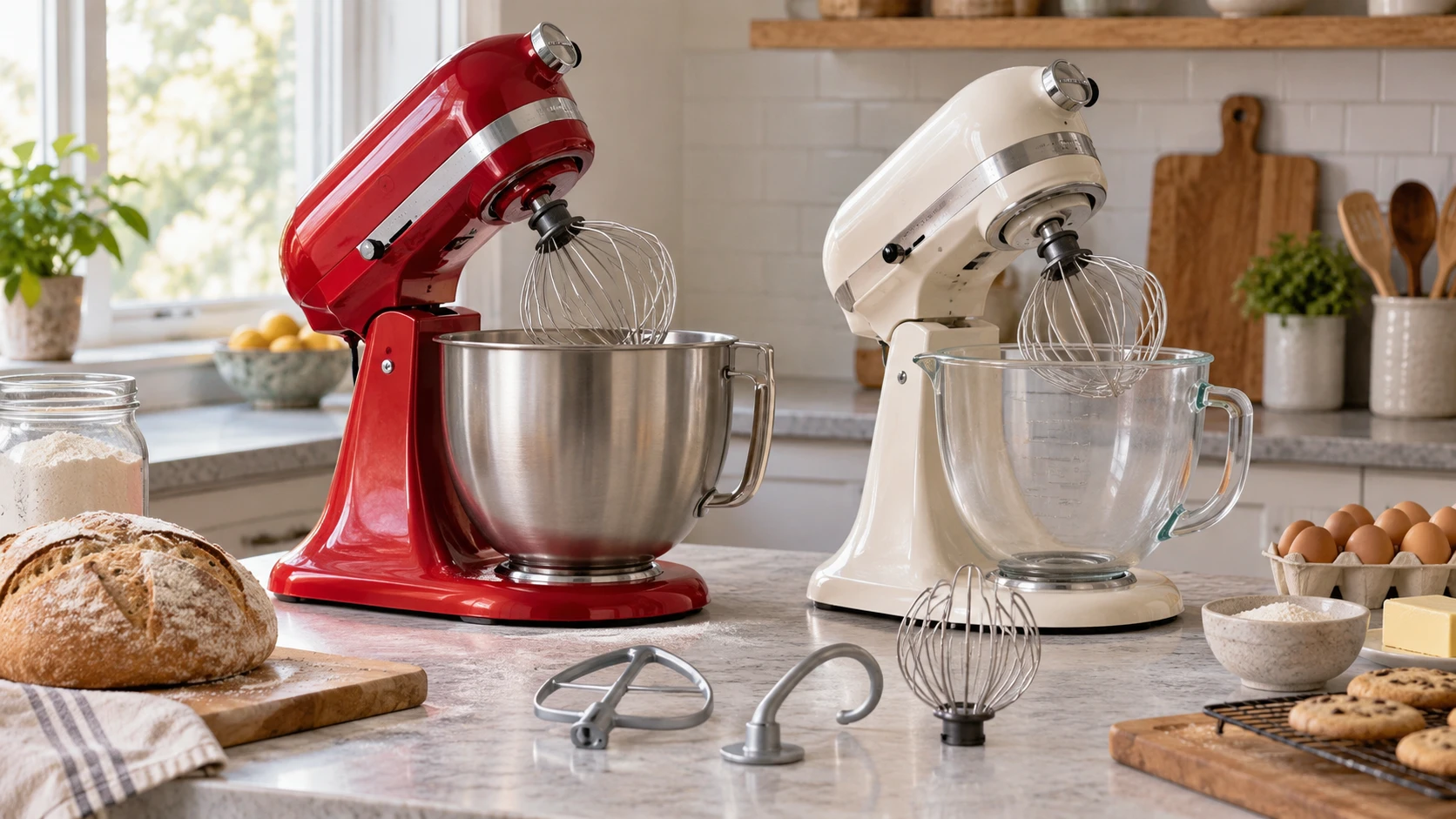
A stand mixer can look settled in a catalog photo and still demand more space than your kitchen can spare. The Costway EP23693RE has a stated 6.3-quart steel bowl and published body dimensions. The KitchenAid KSM154GBQ3GC has a 5-quart glass bowl with measurement markings, but its saved listing leaves out several specifications a baker might want. Both open at the head for bowl access. Compare the batch you usually make, the space above the counter, and the included tools before treating bowl capacity as the whole decision.
The Costway EP23693RE stand mixer listing gives six speeds and a 660W electrical rating. Its tilt head exposes a 6.3-quart stainless steel bowl, and the box is described as including a dough hook, beater, and whisk. The listed body dimensions are 15 by 9.5 by 13 inches, in length, width, and height order. Those figures describe the mixer body in the saved row; they do not say how much overhead room the raised head requires.
KitchenAid's saved row describes the KSM154GBQ3GC as a 5-quart tilt-head stand mixer with a glass bowl marked in liters and cups. It says the beater moves around the bowl and that the metal construction helps limit movement on the counter. The listing notes that additional accessories can be purchased, but it does not name the included tools, provide a speed count, or give body dimensions. Check the current package and manual for those details. A familiar brand name is not a substitute for the specifications of this exact bundle.
Decide what a full batch means at home — KitchenAid KSM154GBQ3GC glass-bowl mixer
The nominal difference between 6.3 and 5 quarts is visible on paper. It will matter most when your regular recipe nearly fills a smaller bowl, especially while you add flour or other dry ingredients. A larger vessel may leave more room for a batter that rises up the beater or a batch that needs several additions. Yet the labeled volume is not a universal dough limit. Heavy bread dough places different demands on a mixer from whipped cream or a loose cake batter. Consult each exact model's instructions for permissible loads and mixing intervals.
Think about the recipes you repeat, not a rare holiday project. If you make a single loaf most weeks, write down its flour amount and note whether your current mixing bowl feels crowded. If you make cookies, consider the point when chips or nuts are added and need room to fold through the dough. The Costway's extra stated volume may help with a large batch, but the saved listing does not document a maximum flour quantity or a measured kneading result. The KitchenAid row likewise gives no tested recipe capacity. Neither claim justifies doubling a recipe without checking the manual.
Small batches need attention too. A wide bowl and a small amount of egg white may leave the whisk working above the mixture. The saved rows do not specify minimum workable volumes or whisk-to-bowl clearance. If a single frosting or whipped-cream portion is the main job, seek a model demonstration or a clear maker recommendation. The marks on KitchenAid's glass bowl can help you measure an ingredient in the bowl, but they do not establish whether the attached tool will reach a shallow mixture.
Measure for the head in its working position — KitchenAid KSM154GBQ3GC glass-bowl mixer
Costway provides a length, width, and height for the body. Start with those measurements on the counter, then add room for the cord, bowl removal, and the head tilted up. A 13-inch listed height is of limited use if an upper cabinet prevents you from locking the head open. Check the current diagram for the raised-head height and any required clearance from a wall. Leave enough space to attach the whisk without scraping a cabinet door or tipping a full bowl.
The KitchenAid saved description supplies no exterior dimension set. Obtain the exact manual or maker drawing for KSM154GBQ3GC rather than using measurements for a different KitchenAid mixer. The published stand mixer bowl access guide discusses access on another model. Its useful question here is practical: can you lift the head, reach the bowl, add ingredients, and remove a filled bowl in your kitchen? Do not transfer that guide's model-specific measurements or hardware details to the KSM154GBQ3GC.
A mixer that remains on the counter also affects the work around it. Draw a rectangle for each machine, allowing a place to set the removed bowl and tools. If the mixer will be stored after every use, inspect its actual weight and where a safe handhold is located. Costway's saved dimensions do not give a weight; KitchenAid's row describes metal construction but no weight. A heavy base can be welcome during mixing and troublesome when moved from a low cupboard. Test the storage route before assuming the appliance will be brought out weekly.
Examine the bowl material and included pieces — stand mixer bowl access guide
The Costway row describes a stainless steel bowl. The KitchenAid row specifies glass with markings in both liters and cups. Glass lets you see the mixture against the side and read a volume while adding liquid. It also needs careful handling, especially when the bowl is full or the counter is crowded. Stainless steel is an ordinary choice for a working bowl, but the listing does not tell you its weight, handle shape, or whether it nests with another bowl. Inspect how each bowl locks into its base and comes free with one hand occupied.
KitchenAid's row says the beater moves around the bowl for thorough mixing. It does not provide a comparison against Costway's mixing path or a result for a specific recipe. Costway's included dough hook, beater, and whisk cover the usual jobs named in its listing. The KitchenAid description does not identify the tools packed with this particular unit. Ask for a current box-content list and the exact tool model numbers. A photograph of an accessory sold separately can look like an included item unless you check the list.
Neither saved description states how to clean its bowl or attachments. Check the care section before putting any part in a dishwasher. Glass, steel, and coated tools can have different instructions even when they are sold in the same package. Look at the beater and whisk connection as well. If a replacement is eventually needed, the exact model number matters more than a broad label such as "5-quart mixer." Keep the manual with the appliance so a later accessory order can be checked against it.
Use speed and wattage with care — KitchenAid KSM154GBQ3GC glass-bowl mixer
Costway names six selectable speeds and a 660W rating. Its saved text does not explain the speed steps, load limits, or how the control starts with dry ingredients in the bowl. KitchenAid's row gives no matching speed or wattage specification. A wattage comparison would therefore be incomplete, and electrical input would not by itself predict how well either machine handles a stiff dough. Tool shape, gearing, recommended duty cycle, and recipe consistency also matter. Seek the exact manual's instructions for the task you care about.
In a store or a permitted home trial, practice starting a flour-heavy mix at the lowest suitable setting. Notice whether a shield is needed and how easily you can stop the machine to scrape the bowl. Costway's saved contents name three tools but no pouring shield. KitchenAid's row does not say whether one is included. Verify the actual package before buying a separate accessory. A bowl that looks roomy when empty can still throw flour if the control starts too abruptly for your recipe.
Neither listing provides a reliable noise measurement or a timed mixing test. If noise matters in a small apartment, look for a return policy that allows a normal baking trial and follow the terms in Republeq's offer. Compare with the same recipe, similar batch size, and the tools intended for it. One brief video filmed in an unknown kitchen cannot establish the sound level you will hear at home. The useful evidence is how the machine behaves on the food you make while standing where you normally work.
Make the purchase decision from one baking session — KitchenAid KSM154GBQ3GC glass-bowl mixer
Choose a representative recipe and record its ingredient quantities before shopping. For a bread recipe, check the maker's flour or dough limits, how long the machine can knead, and whether it needs a rest. For cake or cookies, think through creaming, adding dry ingredients, scraping, and removing the finished mix. Verify every accessory you expect to use is actually included or available for the exact model. Costway's known dimensions and tool list make that check easier to begin; KitchenAid's glass-bowl markings and accessory note invite a closer look at its particular bundle.
Set out a tape measure on the intended counter and trace the full routine from storage to cleanup. An accessible outlet, raised-head clearance, safe bowl removal, and a place to dry the tools all matter more often than a peak capacity claim. The KitchenAid KSM154GBQ3GC glass-bowl mixer may suit a baker who wants the marked glass bowl and can confirm the required accessories. The Costway may suit someone who needs the larger stated bowl and its documented three-tool set. The exact manuals should settle the remaining load, cleaning, and clearance questions before either one takes its place on the counter.