Computers & Gaming
How to copy a folder location as text in Windows
Use documented address-bar selection and copy/paste controls to prepare a folder locator for a note, while leaving file delivery and access rights unclaimed.
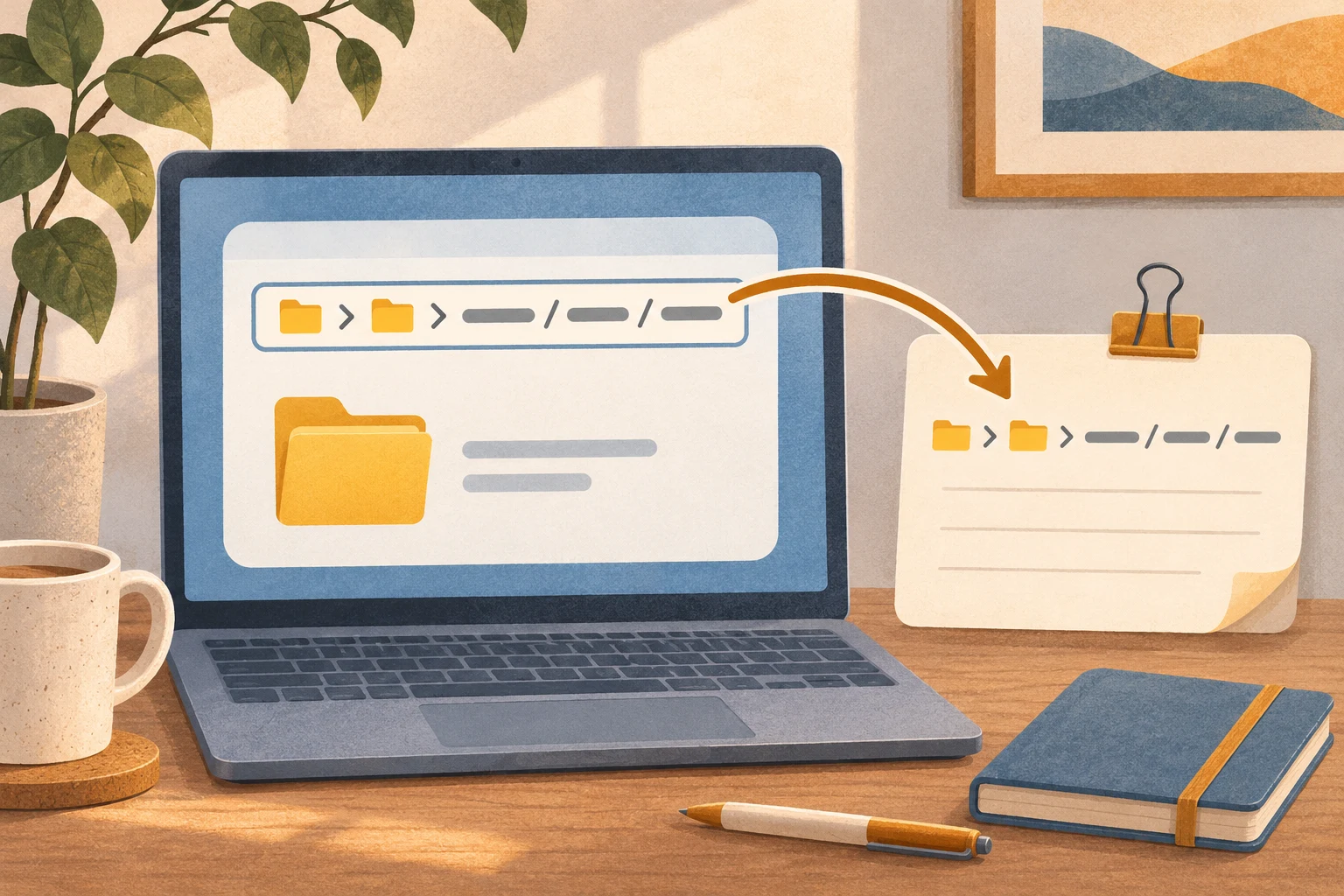
Conceptual folder-locator text and a separate note; no real path, file transfer, access permission or exact Windows interface is demonstrated.
If someone asks where you kept a document, you may need to copy a folder location into a note. Begin with the folder you have already identified in Windows File Explorer. This tutorial concerns that known folder's locator text. It does not find a missing download or send a document to another person. Decide which of those tasks the request actually calls for before preparing the note. A short location reference can be useful without becoming a claim that a file was delivered, opened elsewhere or made available to someone else.
The Verbatim USB drive account describes four drives per carton in a bundle of ten cartons, forty drives in total. Its gallery pictures four red Verbatim-marked units. The Centon USB drive account describes a ten-pack; its gallery pictures ten DataStickSport-marked units with protective caps. Those catalog quantities and pictured subsets do not independently authenticate delivered stock, capacity, performance or a stored file. Neither offer demonstrates this Windows operation or a completed file transfer.
Start with a folder you already mean
Keep this first choice outside the copying step. In a fictional example, Erin has identified a folder on a computer called StudyComputer. Its example location is C:\Workshop\Handouts. Casey is helping Erin prepare a note about that folder. These invented names and characters are illustrative, not a real path to paste into your computer. Start with the folder you actually mean. If the folder is still unidentified, resolve that question before using this tutorial to communicate a locator.
Ask what the recipient needs. A request saying where did you put it can mean a location reference for a conversation, a request for the actual document, or a question about which copy you chose. Ask for that distinction when it is unclear. You can then prepare the requested information without silently promising the other results. Erin might answer the location question while leaving delivery of the handout to the person organizing the workshop. The note should say which limited question it is intended to answer.
Write the source context beside the proposed locator. Erin could start a private note with “Computer: StudyComputer” and “Purpose: workshop handout preparation.” Those are invented labels for this example. They explain where the observation belongs and why Erin is keeping it. Leave space for the actual copied text and a remaining question, such as which document the organizer wants. This is a proposed note layout, not a file-naming convention or a record of a Windows action that happened here.
Select the address bar, then use text controls
Microsoft's Windows 11 File Explorer shortcut table says Alt+D selects the address bar. Its selected-text shortcuts list Ctrl+C for copying and Ctrl+V for pasting. Its file-path reference uses backslashes between path components. Follow the applicable instructions for your system and application. These documented controls and the fictional paths below establish no completed action here. This tutorial does not use a Copy as path action or change keyboard mappings.
With the intended folder already open, use the documented address bar selection control and inspect what is selected before copying. Keep your attention on the chosen folder. If the selection or displayed location differs from what you intended, resolve that difference first. You do not need to type a replacement address to complete this first inspection. The important observation is what the actual current view shows, rather than a path you remember from another task or assume belongs to a similarly named folder.
Use the documented selected-text copy control for the selected locator. Then choose an appropriate text note you are permitted to edit and use the documented paste control there. This is a proposed sequence for preparing location text, not a report of a successful paste. Inspect the actual result if you carry it out. Keep any result that differs from your intention with the question you need to resolve, instead of calling the note complete because you remember pressing the keys.
If your current application handles a key differently or you cannot identify the selection, consult its applicable instructions. Stop at the actual unresolved point. A question about a key action is separate from the folder's identity. This article supplies no remapping, registry, installation or clipboard-history procedure. You can retain a written account of what you intended to select while asking for help with the actual control you have. An unconfirmed keypress should remain an unconfirmed action in that account.
Read the pasted text as a locator
Compare the location text in the note with the intended selection. Suppose Erin's fictional note shows C:\Workshop\Drafts while the folder Erin meant to reference was C:\Workshop\Handouts. Both examples begin alike, so reading only the beginning would miss the difference. Erin would need to resolve which folder was selected. Changing Drafts to Handouts in the note would manufacture the expected locator instead of preserving the actual observation. Keep the unexpected text while checking the source selection.
Read the complete locator before deciding whether to send it. Erin's proposed note can remain private if its purpose is a personal reminder. For a helper, include enough context to identify the observation without adding unrelated personal details. If an actual copied location includes a name or folder label you do not intend to disclose, decide how to handle that information before sharing the note. A shortened description can be useful, provided you label it as a description instead of presenting edited text as the exact copied result.
Keep the locator beside a short statement of scope. Erin's fictional note could say that it identifies the folder Erin selected while preparing the workshop handout. It should not claim that another person has the handout or can open it. If someone needs the actual document, settle an appropriate delivery method separately with the responsible person. This tutorial establishes no share link, network location, recipient permission or available remote copy. The note can answer its small location question while those other arrangements remain open.
Use the note for the question it answers
Consider a fictional same-computer discussion. Casey is beside Erin at StudyComputer and asks which folder was selected. Erin's note identifies that computer, the folder locator and the workshop-preparation purpose. Casey can ask about the particular view Erin meant. The example still reports no actual keypress or document inspection. Its useful detail is the shared source context: the note refers to one named computer and one selected folder, rather than promising that everyone who receives the characters has received the handout.
Now change the invented context. Casey is using another computer, TravelLaptop. In this stipulated example, a folder there has the same label but contains a different practice document. Erin's location text from StudyComputer does not settle which material Casey is discussing. Keep the source-computer label beside the locator and ask whether Casey wants a location reference or the actual handout. This authored example demonstrates an ambiguity in the request; it does not test another machine, establish a network path or grant recipient access.
A personal reminder has a different stopping point. Erin may only want to remember which folder to inspect during the next preparation session. The note can remain private, with a sentence about the unfinished handout question. There is no need to turn that reminder into a shared-folder project. If the task later changes from remembering a location to distributing material, make that new requirement explicit. The earlier locator can retain its original purpose without being treated as evidence that the later delivery work has happened.
Keep location, filename and content questions apart
The Windows downloaded-file guide concerns finding the intended saved copy through browser records, folders and scoped searches. The workplace file-naming guide develops subject, covered period and revision labels. Those are separate decisions. This tutorial starts after you have identified a folder and concerns communicating its locator as text. It does not repeat a download search, design a naming convention or infer a document's contents from the words in a location.
When a colleague disputes the document itself, return to the actual content question. Perhaps they want to know whether the handout contains the agreed introduction. A folder reference would not be the observation needed for that question. Erin can identify the particular document under discussion and seek an appropriate content check separately. The original locator note can remain intact. It records one part of the preparation account without being asked to settle which wording was approved or which version should be distributed.
Similarly, leave a hardware question attached to the equipment it concerns. A USB drive listing supplies catalog context, while this task concerns selected text in a Windows view. This guide reports no inserted drive, measured transfer, supported port or successful storage operation. Buying another device does not supply the missing account of what was selected. If you have a separate equipment problem, retain its actual details for an appropriate enquiry. You can still decide whether a proposed location note says what you intended it to say.
A location-reference task can finish without an equipment order. In the fictional workshop example, Erin may already have suitable equipment and only need a clearer note. If Erin separately considers a USB drive through republeq.com, the product question should concern the actual offer and intended use. A cryptocurrency preference supplies no evidence about the folder, the handout or a completed transfer. This article verifies no current checkout session or USDT payment option for either linked account. If a real seller presents a crypto route for the intended order, the buyer would need to inspect that transaction's terms before deciding whether to proceed. Confirm the exact item, selected quantity, delivery arrangement and applicable return conditions. A bulk offer deserves particular attention to what the order quantity means; do not replace the native package description with the number of objects visible in a photograph. Any requested asset, network, amount, fees and receiving destination would belong to the actual payment instructions for that order. This example supplies no wallet address, payment instruction, promised discount or transaction result. Keep an order reference separate from the folder-locator note so the two records retain their own purposes. If an order or payment remains uncertain, resolve its actual status with the responsible service before considering another transaction. A note about a selected folder cannot show that a seller accepted an order. Equally, an accepted order would not establish that the workshop handout has been delivered or that another person can read it. Erin can postpone the purchase while retaining the original document question and the limited locator reference. Neither an approaching workshop nor an unconfirmed key action establishes a need to buy replacement hardware.
Finish with the text and the remaining task
When you copy a folder location, finish by stating what you actually checked. Identify the chosen folder context and the location text you obtained if you performed the sequence. Keep an unexpected result or an unconfirmed action explicit. Then name any remaining task, such as inspecting the intended document or arranging its delivery through an appropriate route. The note can preserve a useful locator without claiming that those separate tasks are complete.