Crypto Commerce
Compare appliance finish descriptions before matching a kitchen
Two listings can use the words “stainless steel” and still leave the appearance of the appliances unresolved. If you want a range and a countertop oven to look at home together, decide which visible parts you care about and how close the match needs to be. A shared material term is a starting point for questions, not evidence that the fronts, handles or controls will have the same color, sheen or texture.
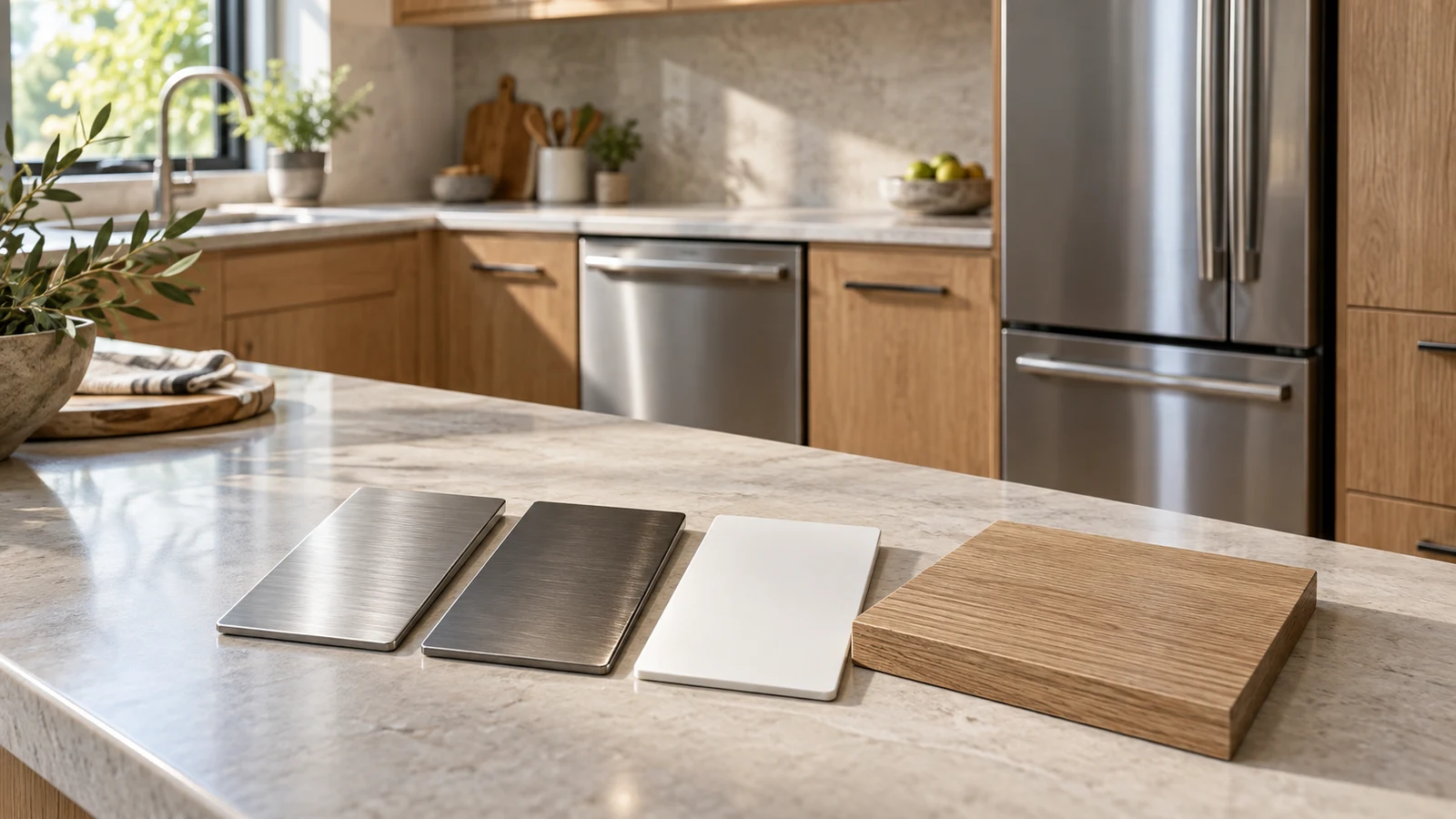
Two listings can use the words “stainless steel” and still leave the appearance of the appliances unresolved. If you want a range and a countertop oven to look at home together, decide which visible parts you care about and how close the match needs to be. A shared material term is a starting point for questions, not evidence that the fronts, handles or controls will have the same color, sheen or texture.
Start with the view you will actually see. Will the countertop appliance sit near the range, or across the room? Do you care most about the broad front surfaces, or will different handles bother you more? The answers are personal. Someone happy with a loose resemblance needs less evidence than someone trying to reproduce a particular finish across several appliances. Decide where you fall before interpreting a product title as a promise about the whole exterior.
Read Stainless Steel Countertop Pizza Oven Wording Alongside The Range
The gas range listing calls the product a 36-inch range with a “Stainless Steel Finish.” That wording describes the listing’s stated finish; it does not assign a color, sheen or texture to each visible part. The oven door has glass, and the listing also mentions grates and knobs. Those details make the phrase “all stainless” a poor substitute for identifying which parts of the front you are hoping to match. The range’s appliance finish descriptions are worth reading as written, with questions left open where the text stops.
The countertop oven listing has a different kind of phrase. Its title describes a stainless steel countertop pizza oven, and its description refers to stainless steel construction. Neither statement tells you whether its outward-facing panel resembles the range’s front. “Stainless steel construction” may speak to material in general while leaving the finish of an individual handle or control area unspecified. It also does not identify a finish code shared with the range. Compare the two claims separately rather than merging them into a single imagined appearance.
Suppose the range’s broad front face is the visual reference you want to follow. You could ask what the countertop oven’s front face looks like in comparable lighting, but first check whether the listings actually identify that face as the part described by their stainless steel wording. If they do not, record “front finish unknown” for that surface. You can still like the product or continue investigating it. You simply do not yet have evidence for the visual match you want.
The same distinction matters for smaller details. A handle might occupy little area but sit at eye level or catch your attention whenever you enter the kitchen. Controls may appear on a different plane from the door. Trim can interrupt a large surface. A listing title seldom maps its general finish phrase to each of these parts, so write down only the surface-specific details you can actually find. Treat any missing description as a missing description, not as an invitation to extend the title to every piece.
Compare The Stainless Steel Countertop Pizza Oven By Visible Surface
A small comparison note is more useful than a yes-or-no box marked “stainless.” Put the appliances side by side in your notes. For the range, name the broad front, the door surround if relevant, the handle and the controls. For the countertop oven, name the front face, door area, handle and controls. Use the parts you would notice in your intended arrangement; there is no need to inventory hidden panels. Beside each part, copy the exact finish wording available for it, or write “not specified.”
Keep three separate questions for any surface that matters: What color does it appear to be? How reflective is it? Is a surface pattern or texture visible? These are observations to seek, not conclusions supplied by the word “steel.” If a listing offers only a general material description, leave the three answers blank. Even if a photograph appears to show a match, its lighting and display conditions may differ from those of the other product. An image can help you judge whether further investigation is worthwhile without serving as a precise color standard.
For example, your note might say that both titles contain stainless steel wording, that the range title explicitly calls its finish stainless steel, and that neither supplied excerpt identifies the sheen of the two handles. That is a useful result. It tells you exactly which appearance decision is still open. Writing “matching stainless appliances” instead would bury the uncertainty under an attractive label. You can choose whether a handle difference would matter to you once the question is visible.
Do not collapse visual resemblance and material identity into one column. Two visible surfaces can look similar in a photograph without being described as the same material. Conversely, a shared material description can leave room for different-looking surfaces. Your shopping decision here concerns appearance, so record appearance evidence and product wording separately. You do not need to settle what every internal component is made of to decide whether the fronts would coordinate in your kitchen.
If you already own one appliance, use it as the reference rather than treating two product photos as equal authorities. Note which portion of the existing appliance you want the new one to echo. Is the important comparison the broad front panel, the dark area around a window, or a handle? A large glossy panel next to a small matte-looking trim piece may matter less to you than two handles that sit close together. That is a preference to state in advance, not an attribute the listings can decide for you.
When the arrangement is still hypothetical, sketch the intended sight line in words. “The countertop oven would be visible from the same doorway as the range” gives you a reason to compare their fronts. “The oven would usually sit out of sight” may lower the value of chasing an exact resemblance. Neither sentence predicts how the products will look. The point is to spend your attention on the surfaces you are likely to see together, while avoiding a demand for information that would not change your choice.
Use appliance finish descriptions to narrow uncertainty, not to fill it in. If a seller or manufacturer has a finish identifier for each model, you can ask for it and find out whether the identifiers refer to a specific visible surface. A matching-sounding label alone still needs interpretation: it might name a broad product finish rather than specify the handle and trim. If no identifier is available, a clear answer about the relevant panels may be more useful than an unqualified assurance that both products are “stainless.”
Ask for comparable views if such images are available. A useful request names the parts and the comparison: “Can you provide straight-on views of the range front and countertop oven front in similar lighting, including their handles and control areas?” You might also ask whether the photos show the exact listed models. There is no reason to assume additional photographs will be provided, or that photos alone could guarantee a match under your kitchen lighting. The request is a way to find out what evidence exists.
If your concern is the sheen, say so plainly rather than asking whether the products “go together.” Ask whether the visible front on each model is described as polished, brushed, matte or another finish, if any such designation is documented. Do not supply those labels as facts about either product. If the concern is color, ask which surface the available color description applies to. A surface-specific answer is easier to use than a broad assurance about the appliance as a whole.
Avoid treating a confident answer about one part as an answer about all parts. Confirmation of a front-panel finish would not establish the look of a handle. Likewise, a clear photo of the door would not reveal the appearance of an unseen side. Keep the scope of each answer attached to the surface it describes. This protects you from both excessive caution and premature certainty: you can resolve the parts you care about without requiring an impossible guarantee about every angle.
Imagine two shoppers considering the same range and countertop oven. One wants the overall fronts to feel related, accepts some difference in handles, and is comfortable with the uncertainty left by the listings. That shopper may decide that a general resemblance is enough. The other is replacing a carefully coordinated set and would be disappointed by a visible change in sheen. If the relevant surface details remain unclear, waiting for better information is a reasonable choice for that shopper. No additional product claim is needed to explain the difference; the standards for a satisfactory match are different.
Set a stopping rule before you browse more wording. Write a sentence such as “I can accept a difference in handles, but I need to know how the two front panels appear” or “A close-looking pair is enough even if no exact finish match is documented.” Then assess the information you have against that sentence. If a decisive detail remains unknown, leave the choice open or choose a product on other grounds while accepting that visual risk. Do not transform an unanswered appearance question into a claim of compatibility.
Buying Appliances With Crypto After The Appearance Decision
Appearance is one part of the choice. If you move toward an order, the related guide to buying appliances with crypto covers broader purchasing questions. Keep those questions separate from this finish comparison so a satisfactory photograph does not stand in for decisions about the purchase itself. Check the currently offered payment methods and the applicable terms in the actual buying flow rather than assuming a cryptocurrency option is available for either product.
Before leaving the appearance question, save the exact model names and the particular surfaces you asked about. If you received a finish designation or a model-specific photograph, note which appliance and surface it concerns. That way a later choice can be traced back to what you actually learned, rather than to the shared phrase in two titles. If nothing more becomes available, the uncertainty stays visible instead of quietly turning into a supposed match.
Return to the two listings with your own standard in hand. Appliance finish descriptions can tell you how a product is labeled, and a sufficiently specific description may help with one visible part. They cannot, on the supplied wording alone, establish that these two appliances share the same color, sheen or texture across the surfaces you want to coordinate. Decide whether the unresolved parts are acceptable to you before making an appearance-dependent purchase.