Kitchen & Appliances
Set a coffee grinder budget after choosing your coffee input
Decide whether you are changing from already-ground coffee to whole-bean preparation before budgeting for a separate grinder.
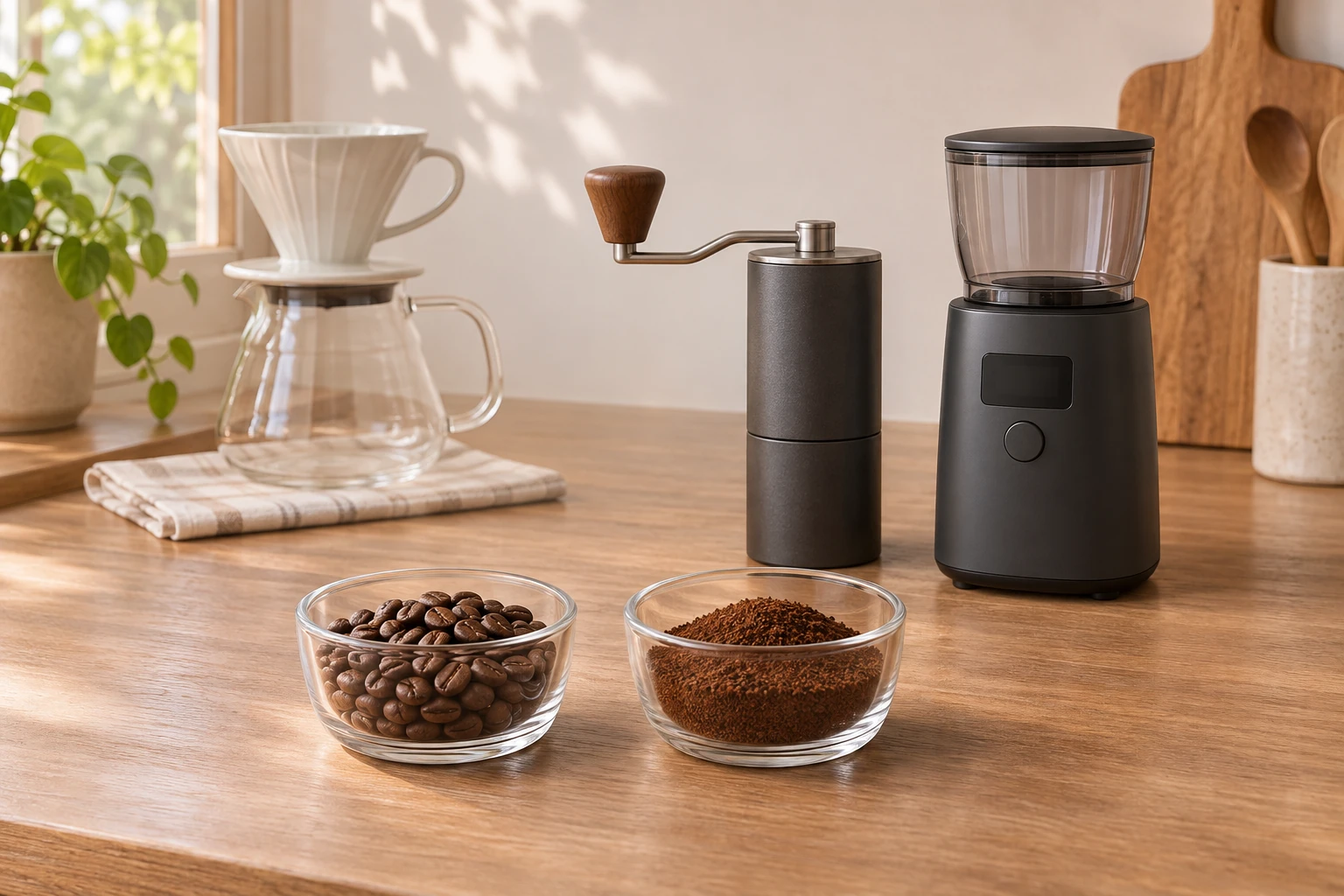
A coffee grinder budget can start with a question: are you actually planning to change the coffee input, or only looking at equipment? Settle that before adding a standalone grinder to an order.
A new grinder belongs in the budget only when you can name its job. It does not rank manual and powered mechanisms, promise better-tasting coffee or assign a grind setting. Start with the coffee and equipment you actually use. An appealing product page can remain an interesting possibility while you decide whether there is a new job for that product to do.
Name the input you currently use
Put the actual coffee package beside the information for your current brewer. Read the package’s input description rather than guessing from a picture of beans on the front. If the label is missing or the coffee was transferred into an unmarked container, identify what you can and leave the rest unresolved. A shopping decision does not need a confident description invented to fill that gap.
Write a short account of the current arrangement: which coffee you buy, which appliance you use and who prepares it. Describe your own routine without adding a proposed grinder to the account. This gives you a starting point that remains useful even if you decide to leave everything as it is. Someone sharing the kitchen should be able to recognize that account.
Separate an actual input change from an equipment wish
You may enjoy reading about grinders while still intending to buy the same already-ground coffee. Keep those two decisions separate. An equipment preference does not itself commit you to changing your coffee purchases. Ask what you intend to obtain next and why. An answer such as “I want to try this particular whole-bean coffee” describes a proposed change more clearly than “a grinder would complete the counter.”
For a whole-bean input switch, name the intended coffee and the actual brewing arrangement it is meant to serve. Do not buy an appliance merely to make an undecided plan feel settled. You can investigate the requirements without ordering either the new coffee or the equipment. Where the intended input remains undecided, leave the equipment part of the budget undecided too.
A personal preference can be a sufficient reason to investigate a change. You do not have to turn it into a claim that the change will save money, improve every cup or suit everybody in the household. Tell the other people involved which preference is yours and which practical requirements still need an answer. Their existing coffee routine can remain a separate choice.
Check whether a separate grinding job remains unfilled
Read the applicable information for the exact equipment you already own. If you believe it already performs a grinding function, find the model-bound statement that establishes that function and its supported use. A familiar brand or a photograph of another version is not enough. Record what your actual arrangement does before deciding that the next coffee purchase requires an additional standalone appliance.
The coffee grinder parts explanation distinguishes loading whole beans, processing and collecting grounds, while keeping the actual assembly and its documents together. That role map can help identify the job being discussed. It does not prescribe a setting, establish a brewer’s requirements or prove that your current appliance needs replacement.
State the remaining standalone grinding need in a sentence. You might have confirmed a change in input while still needing applicable equipment guidance. Alternatively, the coffee input may remain unchanged, or an existing documented arrangement may already cover the intended job. Treat these as different budget states. Do not merge them into an automatic instruction to buy a new grinder.
An existing grinder that is currently unavailable needs an honest status of its own. Do not list it as working equipment simply because its case is still on the counter. Equally, do not diagnose its fault from the fact that it was put away. Record the actual unresolved condition and the applicable support question. That keeps a possible repair or replacement decision separate from a new plan to change the coffee you buy.
Read the X25 account within its sparse disclosure
The X25 Trailmaster Dune account has a description that repeats its title. Four originals show a closed cylindrical grinder and hand crank. Its native brand field says unknown, while the title and embossing use Comandante. These are identification observations, without maker authentication, a grinding test or a brewing procedure.
A sparse account leaves questions to resolve. If this offer interests you, identify the information that would decide your actual purchase rather than filling the gaps with another model’s specifications. Keep the exact reference with the enquiry. A helpful reply about a different grinder would still leave this order question unanswered. The appearance of a complete object does not establish the instructions you need to use it.
Keep the Neretva grinder distinct from a brewing kit
The Neretva electric grinder account names a portafilter holder and explicitly says the portafilter is not provided. Its gallery shows the complete grinder, upper hopper, front outlet and collection jar, alongside staged coffee equipment. No cup-quality, uniformity, timing or mess-control claim was independently tested here.
When considering an offer, separate the item you want to purchase from the surrounding scene in its photographs. Keep any answer about included equipment attached to that exact offer. If your plan depends on another item, resolve that item’s own requirements rather than assuming the grinder order settles the whole arrangement. You are defining the proposed purchase boundary, not assembling a brewing method from product pictures.
An invented household can leave the purchase uncommitted
Imagine that Noor likes a bag of whole-bean coffee she received as a gift. Her ordinary weekday purchase is already-ground coffee, and her existing brewer still serves that routine. She begins looking at a standalone grinder. Before ordering, she distinguishes two plans: trying the gift coffee on a chosen occasion and changing the household’s regular coffee input. They are not the same commitment.
In this invented example, Noor has not yet established the applicable preparation requirements for the gift coffee and her brewer. She keeps the gift’s actual label and asks the relevant equipment question. She leaves the grinder order open. That decision does not judge the coffee or either retail grinder. It simply avoids assigning a purchase to a plan whose requirements she has not settled.
Now suppose Noor decides to continue her current weekday input and postpones the whole-bean project. Her immediate equipment budget can reflect that actual decision. If she later makes a definite change and identifies an unfilled grinding job, she can reopen the purchase with a clearer purpose. The earlier pause has not committed her to buying a more expensive or cheaper device later; it has kept an undecided project out of today’s order.
A mixed routine can remain mixed. A proposed whole-bean occasion does not silently change every other coffee purchase in the house. Name the occasion to which the new input belongs, without assigning a recipe, amount or future schedule that nobody has chosen. If the project is occasional, keep it occasional in the enquiry. The equipment question should describe that real intention rather than a more ambitious daily routine invented to justify the order.
Include the person who will actually prepare the coffee in this decision. Ask whether the proposed input change is theirs too and which equipment question they consider unresolved. Someone who selected a gift bag may not be the person responsible for the household’s ordinary preparation. A specific answer about the intended occasion is more useful than assuming that enthusiasm for a gift commits another person to a different everyday task.
Keep the budget attached to the job you have confirmed
Once the intended input and any remaining equipment need are clear, ask for the exact current offer and the information relevant to that job. Keep optional additions separate from required equipment. A proposed accessory can be useful to investigate without becoming a necessary purchase merely because it appears beside the main item. Retain an unresolved inclusion or compatibility question instead of inserting a guessed cost for it.
The Cuisinart and OXO grinder comparison examines its own electric-grinder batch, timer and captured-price questions. Those questions come after a grinding need has been identified. Its prices, capacities and controls do not transfer to the two offers here, and this article supplies no current price comparison.
Someone arranging the purchase for another person should receive the actual decision, not just a link to attractive equipment. Say whether the input change is definite, which existing equipment has been identified and what remains unanswered. If the recipient has not agreed to the proposed coffee routine, keep that preference question open. An order confirmation would not establish that the new routine is wanted.
Keep payment separate from the equipment decision
If you decide to consider an order on republeq.com, review the exact current item and checkout for that order. A preference for cryptocurrency does not establish that a grinder is needed or that a particular payment method is available. If you prefer USDT, first confirm that the actual transaction offers it. Obtain the applicable asset, network, amount and receiving destination from the responsible service for that specific order. Do not copy instructions from another purchase, a product picture or an unrelated message. Check the seller, selected item, variant, supplied package, delivery details, displayed total and terms. Leave any unclear field unresolved while you seek clarification. Review an applicable fee or conversion term from the current transaction instead of inserting an estimate. Keep the real order reference and the instructions that were confirmed. If an acknowledgement arrives, retain what it actually confirms rather than treating it as proof that the equipment will suit the intended coffee. If payment status becomes uncertain, reconcile that status before considering another transfer; uncertainty does not establish that nothing happened. This article supplies no wallet address, transfer guarantee or recovery procedure. A completed payment cannot resolve an unidentified brewer, an undecided input change or a missing compatibility answer. You can leave an order unplaced while those product questions are answered. If somebody orders on your behalf, provide the exact selected reference and the remaining limitations, so an unresolved equipment assumption is not carried silently into the transaction. Retain the confirmed transaction information with the actual order, and keep any later product enquiry attached to the item that was selected.
Finish with the actual input decision and the job still uncovered. A definite whole-bean plan can justify investigating appropriate grinding equipment. An unchanged input or an already-covered job can leave a new standalone purchase uncommitted. Set the budget around that decision, then obtain the applicable product information without turning interest in equipment into proof of a need.
Choose the coffee input before adding a grinder to the basket.